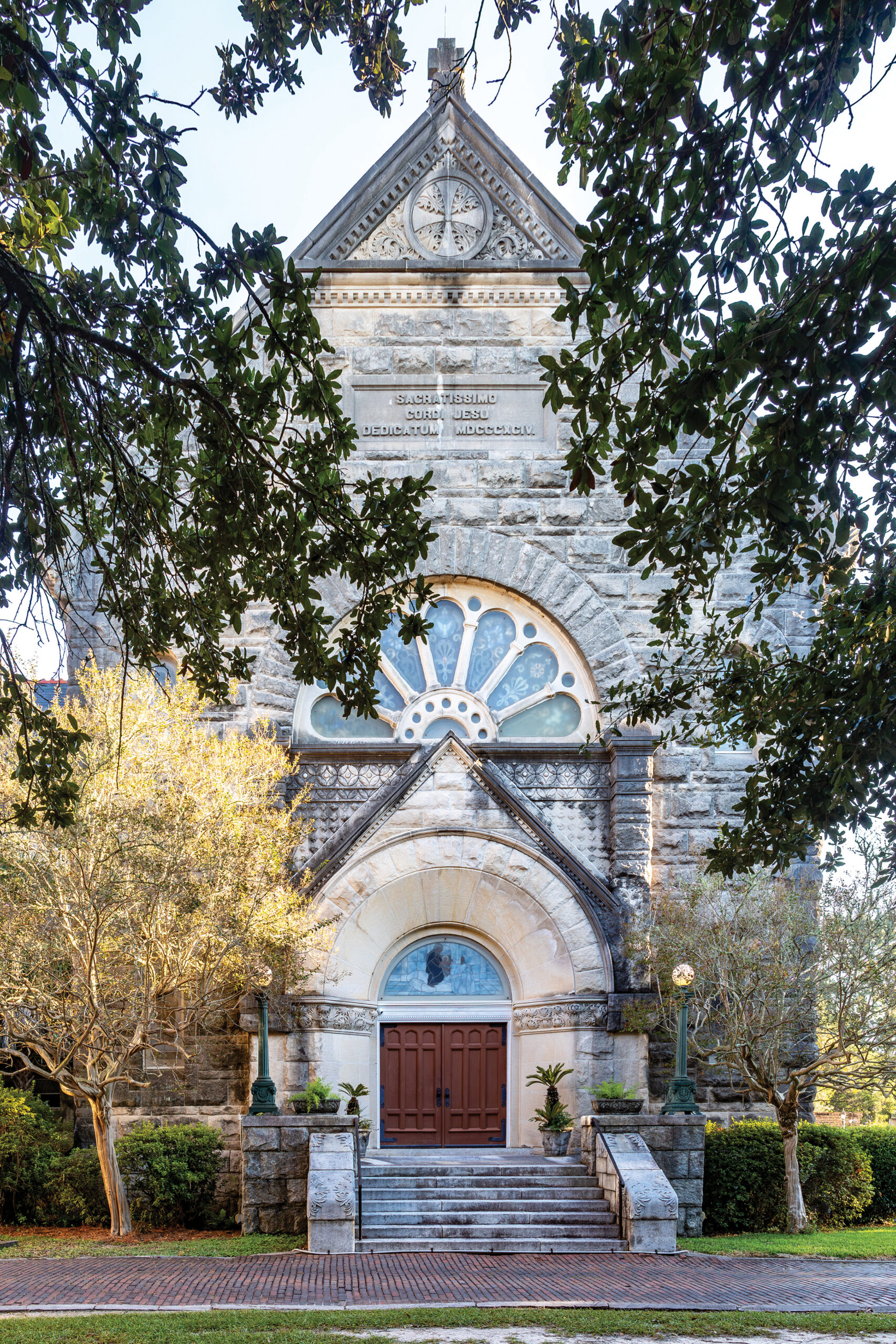
Beneath the steeple, a pipe organ thrums. Faint voices of a choir chime in, harmonizing. Their hymn drifts on the Sunday morning breeze, beckoning all to come and celebrate this holy season. Glancing up, I notice the darkened grid of arched windows above. My fingers clasp the giant iron doorknob, and the door groans open.
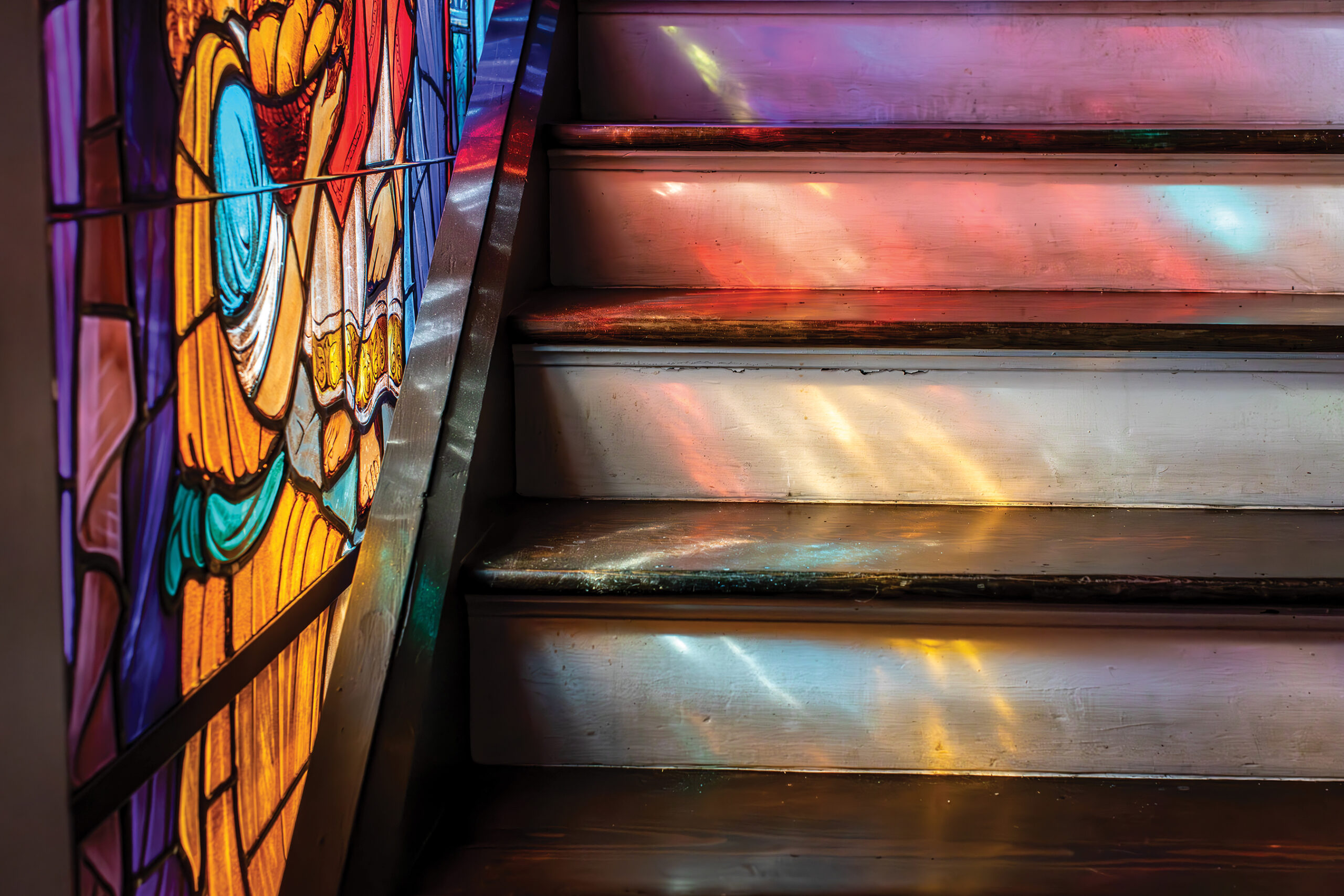
The volume swells, hallelujahs spilling out into the narrow cobblestone path. Colorful beams of light rain down on the sanctuary, ricocheting with the angelic voices. Stepping into the light, I blink back the glare until my eyes adjust to the brightness. All at once, everything comes into focus. The beauty surrounding me is overwhelming — otherworldly.
Thousands of tiny shards of multi-colored glass soldered together, some nearly 200 years ago, merge into a complex tapestry not unlike the miraculous stories illustrated. What may have seemed nothing more than a shadowy silhouette outside moments before, indoors becomes an illuminated artistic display rivaling European Gothic cathedrals. At its pinnacle, magnificent depictions of Jesus Christ at the nativity, his baptism, upon the cross, ascending into heaven.
Sister Elizabeth, a nun of the Order of the Visitation of Holy Mary fondly recalls taking her solemn perpetual vows, light pouring through the majestic windows at Sacred Heart Chapel, the Holy Spirit overcoming her. “I remember the glory of the light,” she says, eyes smiling, her voice meek. “It was a foretaste of heaven.”
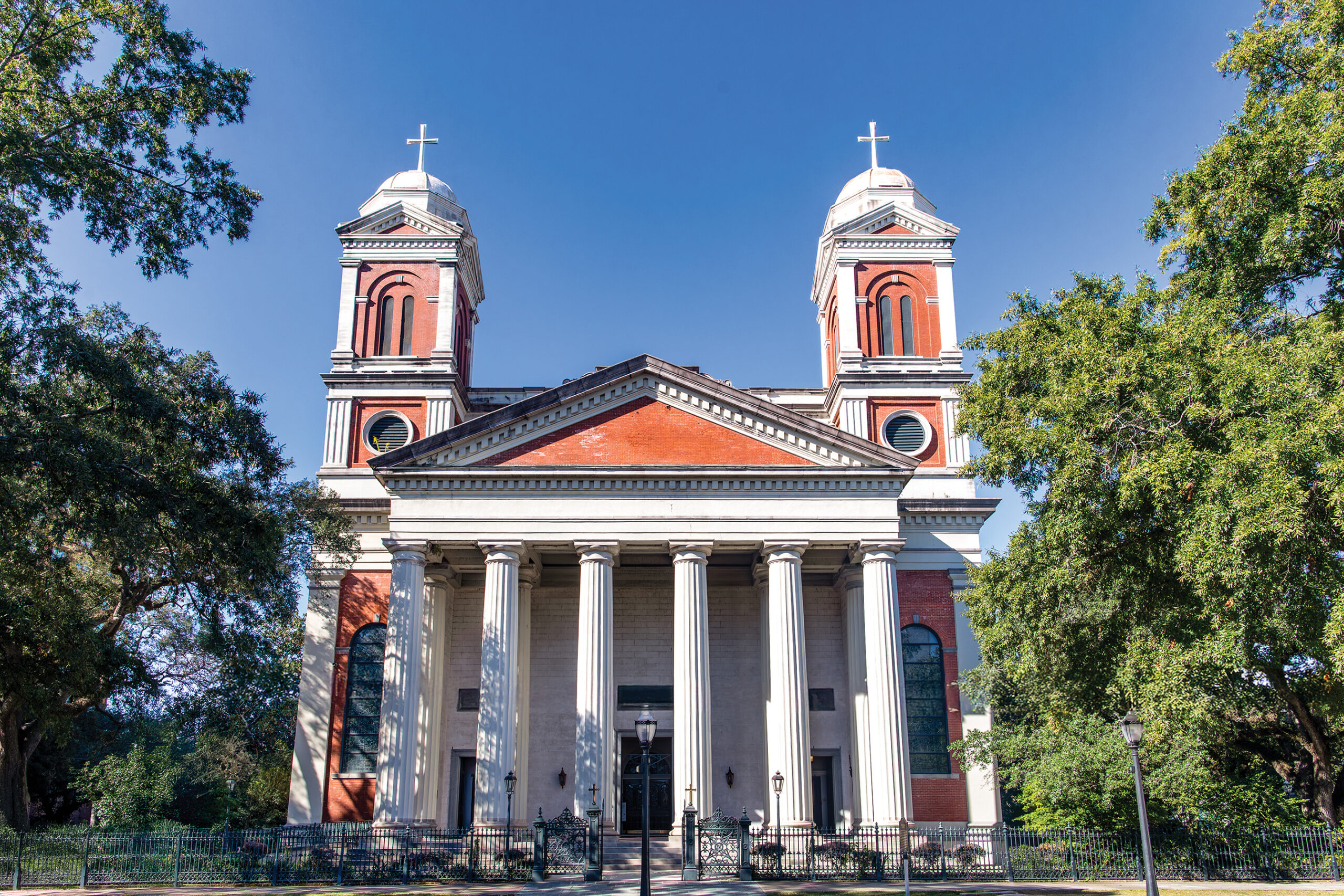
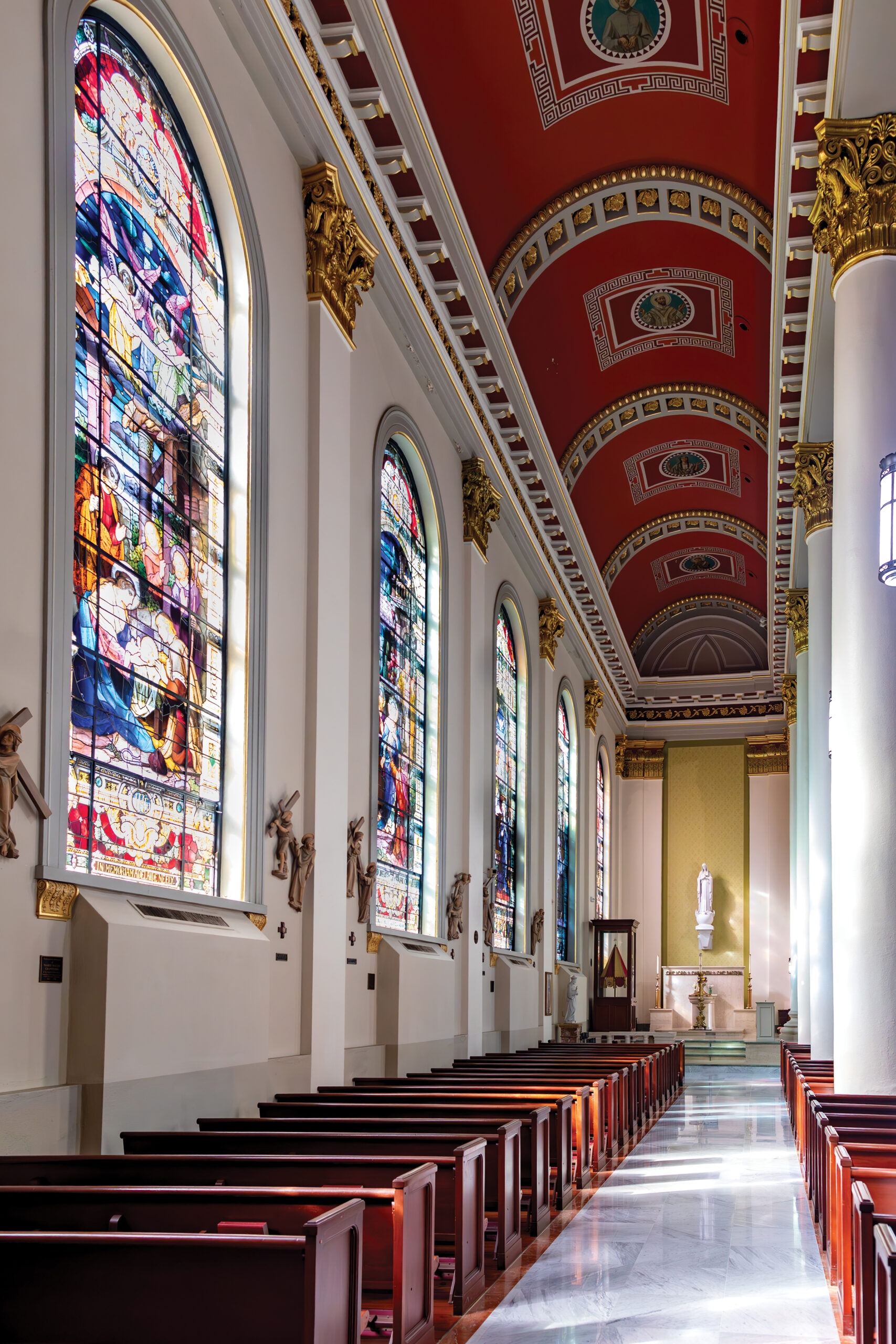
Cathedral-Basilica of the Immaculate Conception
307 Conti St.
Parish Established: 1703
Cathedral Begun: 1835
Cathedral Completed: 1850
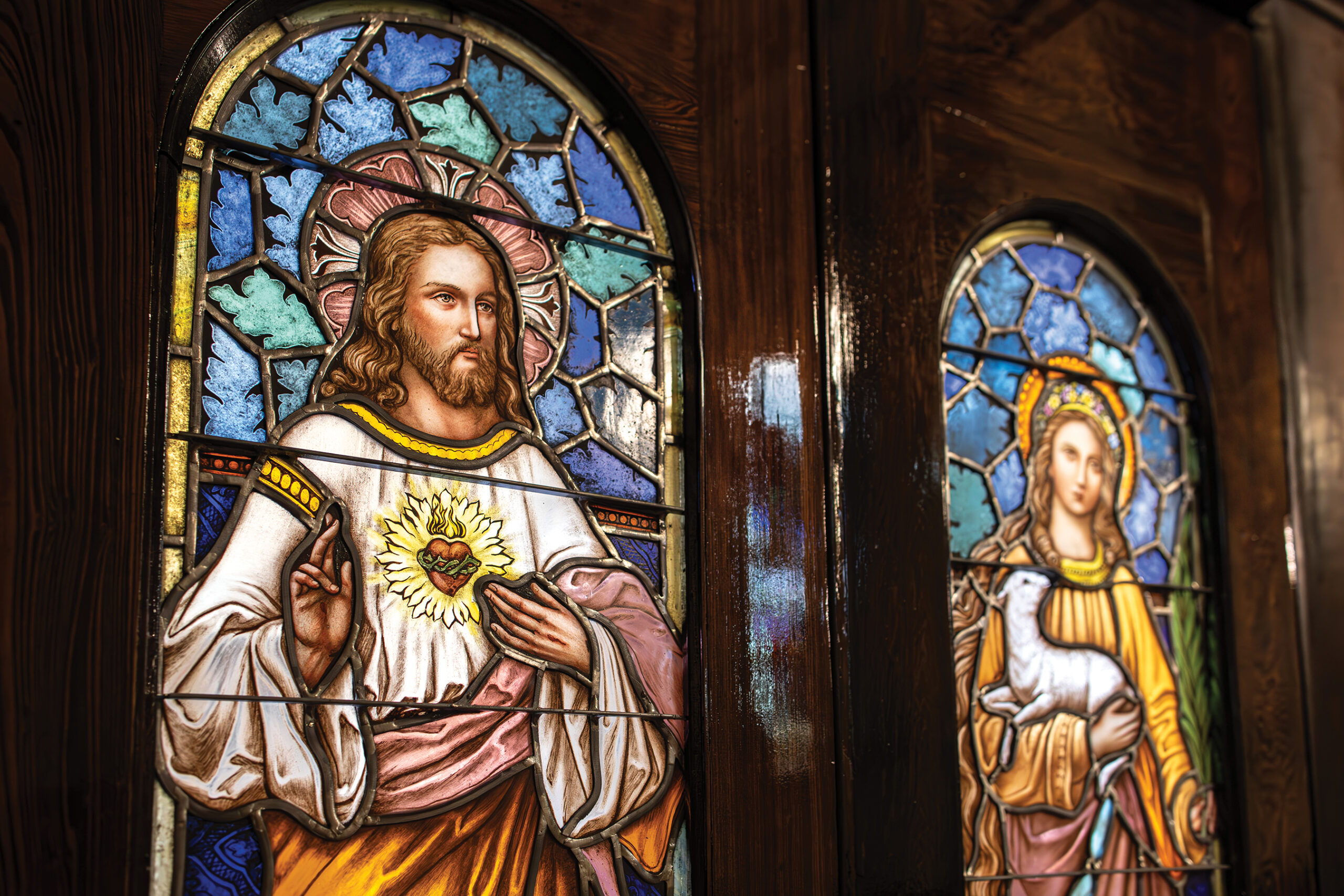
On Earth, it is a tiny glimpse of the glory of Heaven. Though not original to the structure, for more than a century, the radiant stained-glass panels inside Mobile’s famed Cathedral-Basilica, have been an inspiring biblical teaching tool for generations of parishioners in the city.
Just before the turn of the century, the Diocese commissioned Franz Mayer of Munich to create stained-glass windows befitting the already magnificent 60-foot-high barrel-vaulted ceilings. It took 20 years to complete. Most highlight Mary’s role in the life of Jesus and the Church. Popular scenes include the annunciation, visitation, nativity, baptism and crucifixion.
A 1954 fire devastated the building, and many of those pieces were badly damaged. However, miraculously, some were salvaged and sent
back to Munich workshops for restoration and later reinstallation.
Protective clear panes were installed in 2001. Then, in 2017, Archbishop Thomas J. Rodi initiated a five-year-long cleaning and restoration project, to preserve the art for future generations.
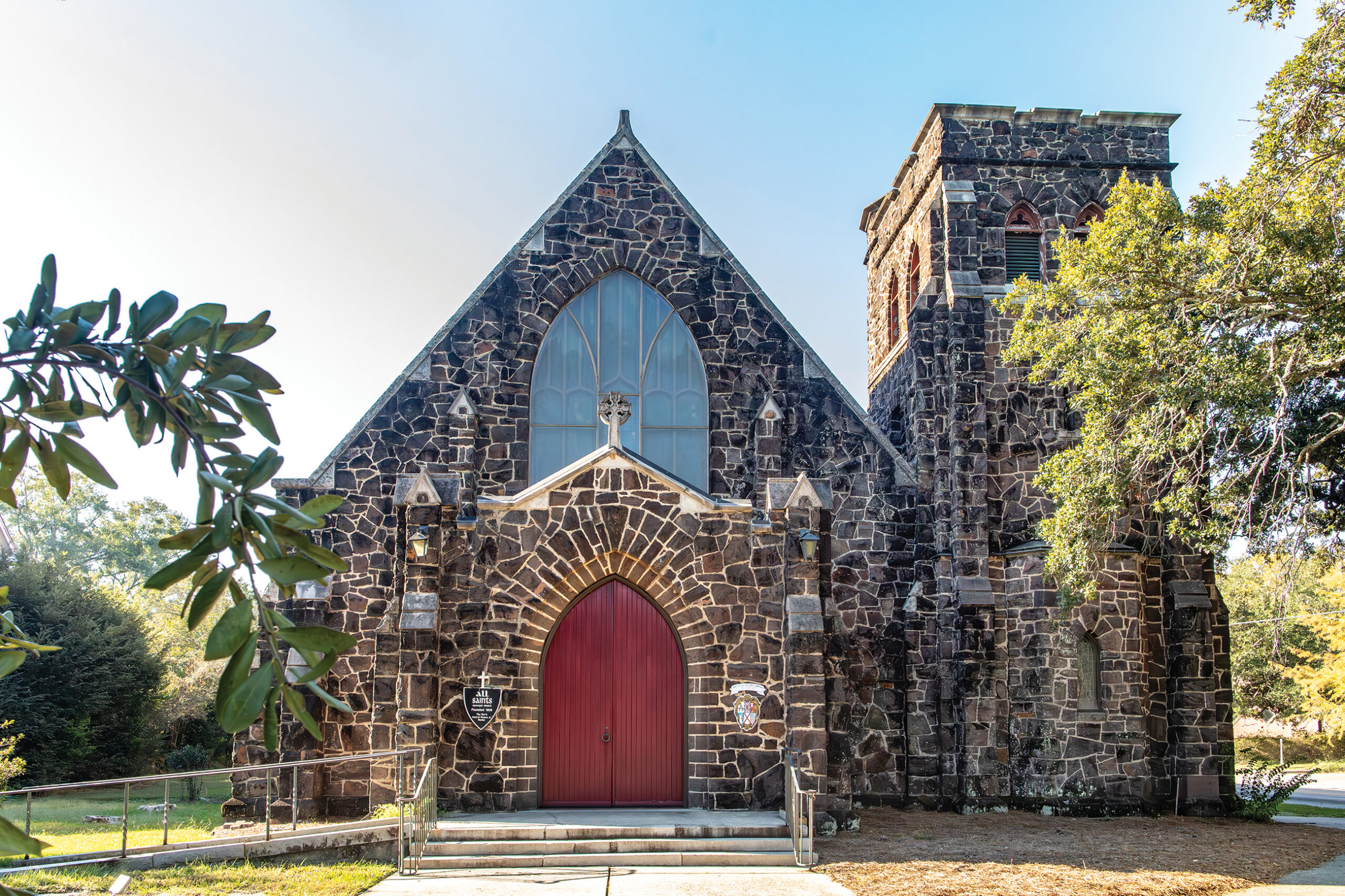
All Saints Episcopal Church
151 S. Ann St.
Congregation Established: 1909
Current Church Built: 1915
In Joshua, at the Lord’s command, he gathers stones of remembrance to remind their descendants of God’s power, faithfulness and provision. The plethora of stained-glass windows at All Saints Episcopal are likewise meant to inspire congregants to reflect inwardly on God’s presence in their lives. Though not part of the original English Gothic-style structure, they were added as they became popular in the Anglican church. To complement the local sandstone exterior and old-world interior, many of the windows at All Saints were heavily painted to add realistic detail and shading to faces, hair and draped fabrics.
The pinnacle piece, an ornate pointed arch, hangs above the north entrance. It was created by renowned J&R Lamb Studios, the oldest continuously operating stained-glass company in America. Its design portrays God the Son seated on a throne, wearing a victory crown and carrying a scepter. A dove above him symbolizes the Holy Spirit. At his right are apostles Matthew and Mark, and at his left, Luke and John, all wearing halos to signify their sainthood. They are shown in the order their books appear in the New Testament, each accompanied by a symbol emphasizing different aspects of Christ’s character.
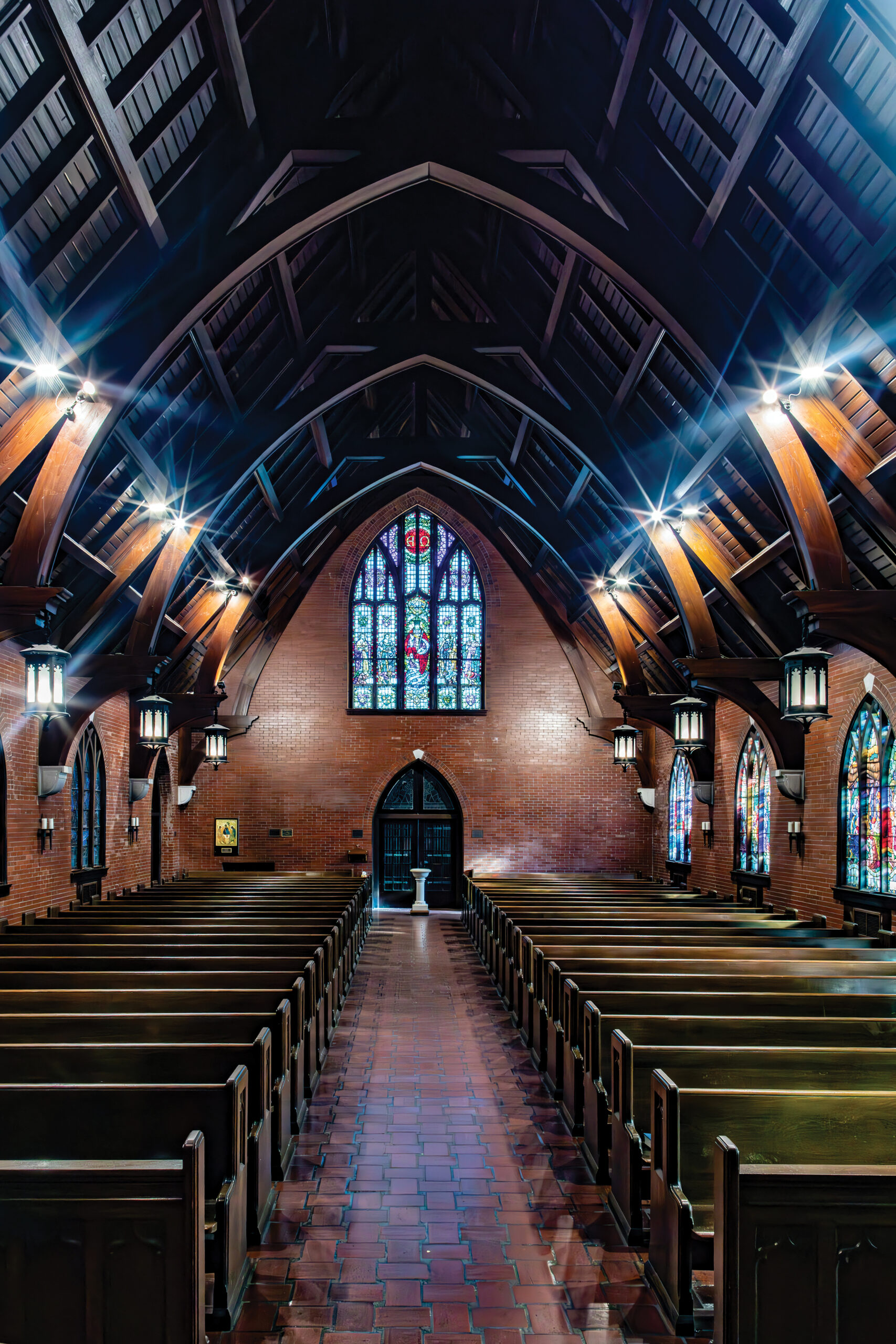
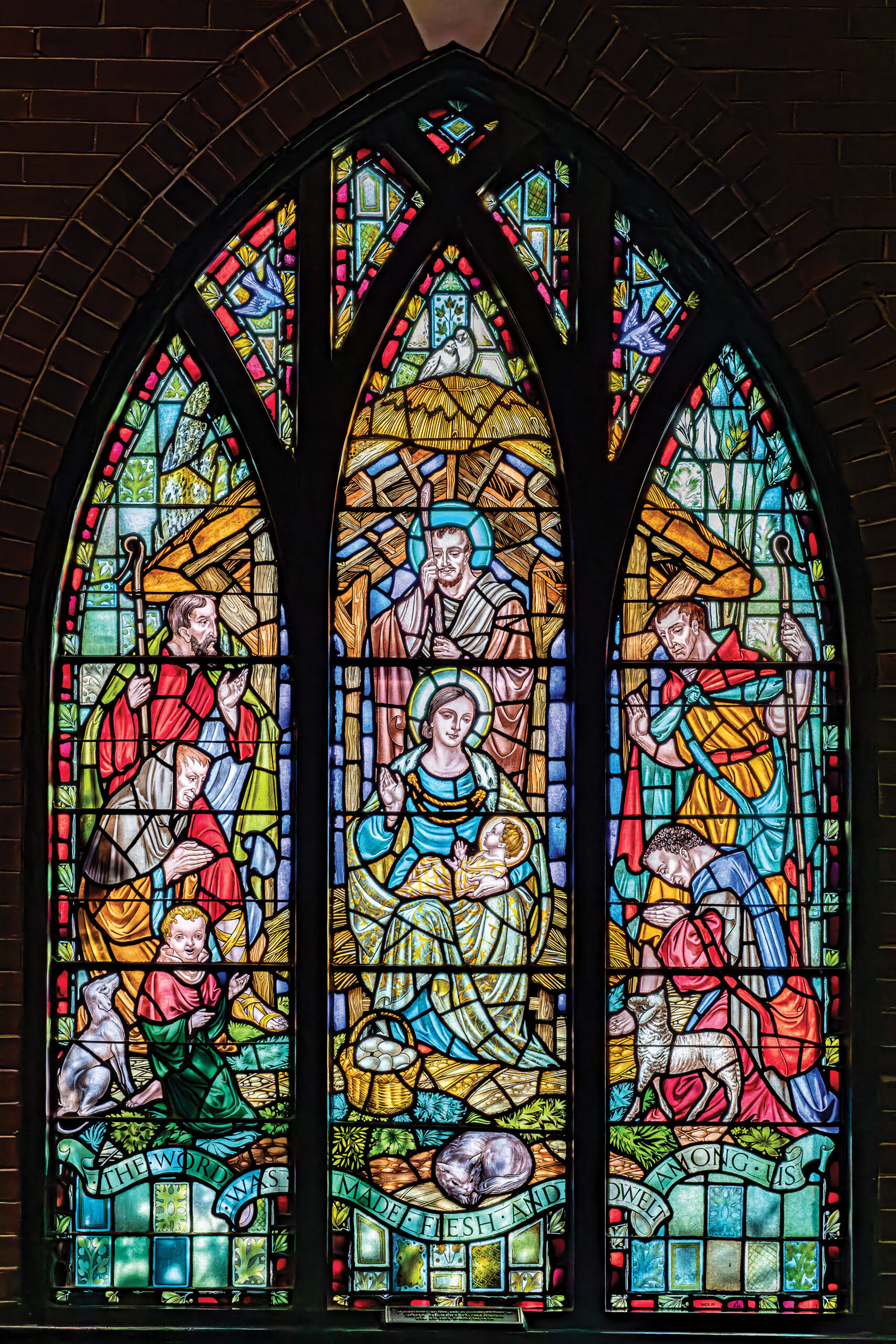
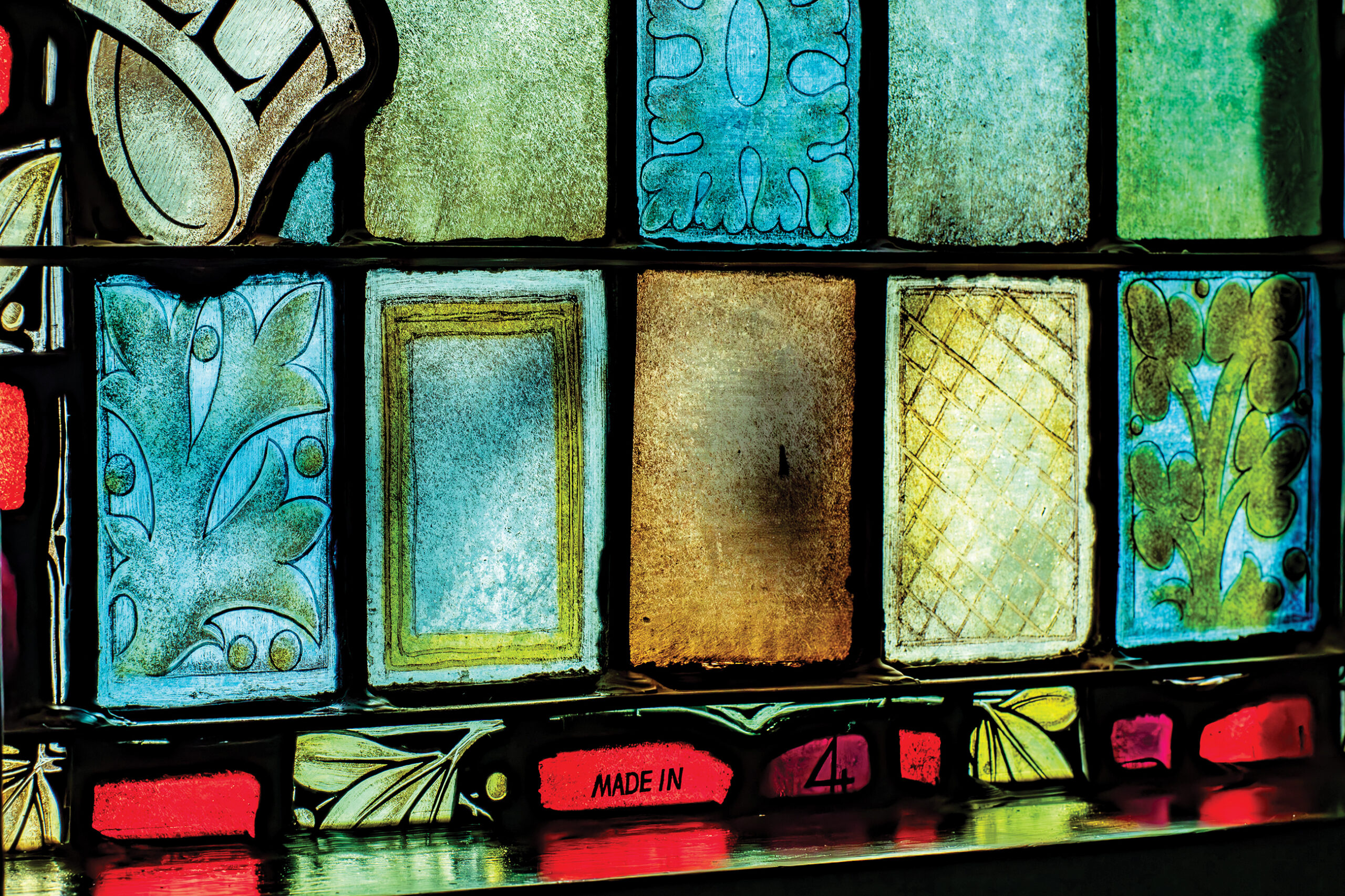
One of the sanctuary’s most unique windows shows the adoration of the magi, in which the three kings present gifts to the older Christ child, who is dressed in red, the color of martyrs. Another rarely illustrated scene portrays the calling of the disciples with an image of Jesus on the shore, his followers in a fishing boat.
In a nod to Medieval church tradition, a portrait of St. Barnabas can be seen to the left of the altar. According to custom, a St. Barnabas gate would be at the same location for the poor to come to be served.
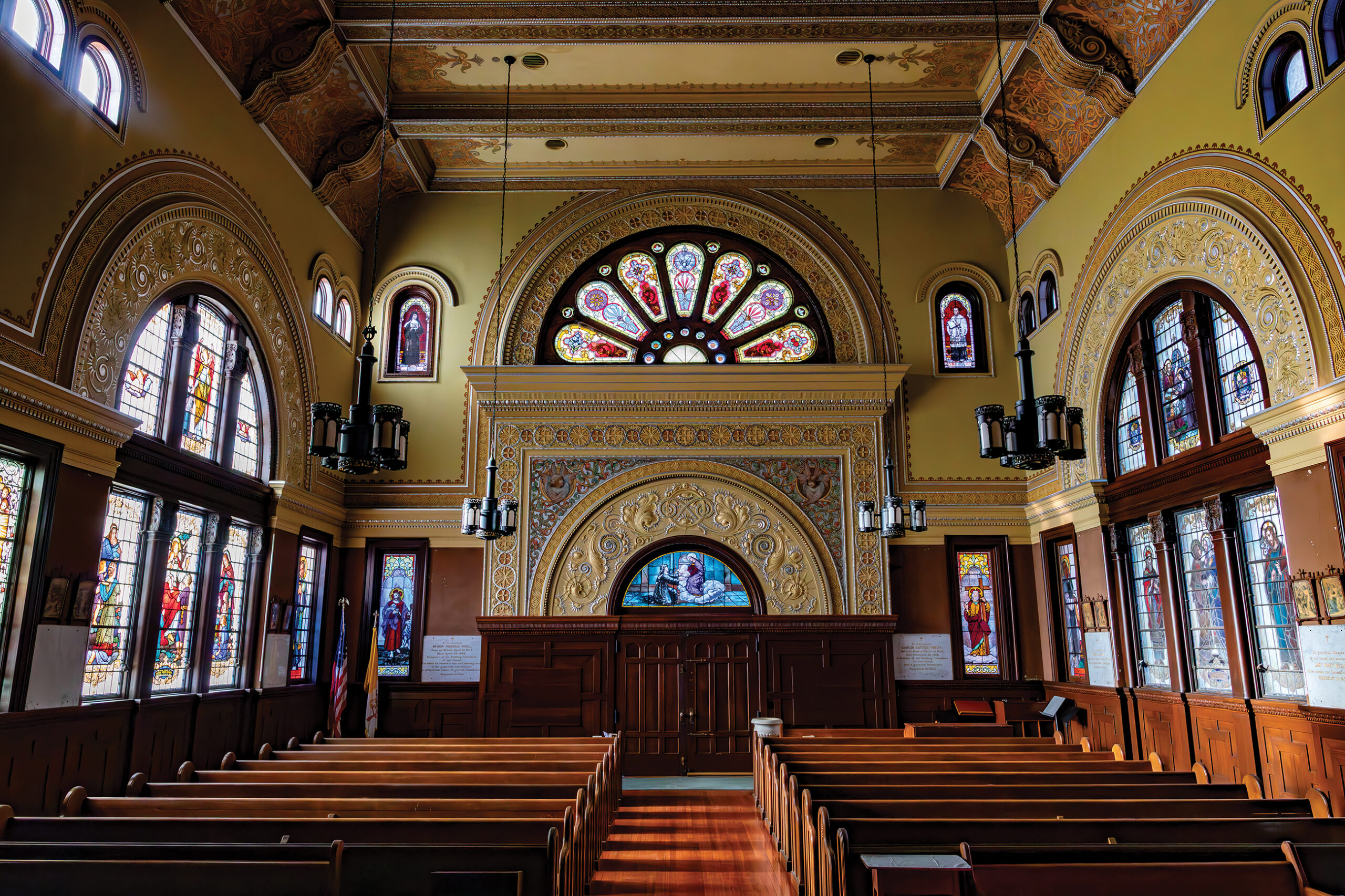
Visitation Monastery’s Sacred Heart Chapel
2300 Springhill Ave.
Convent Established: 1833
Chapel Completed: 1895
Inside Sacred Heart Chapel’s Romanesque Revival walls, splendid Aesthetic Movement glass work appears in every direction.
On the right wall, the center panel is an homage to the convent’s namesake. It shows Mary’s visitation with her elder cousin Elizabeth, from the book of Luke. In it, Mary tells Elizabeth she will give birth to the Son of God, and inside Elizabeth’s own womb, John the Baptist leaps. To the left, Elizabeth’s husband, Zechariah, carries a tablet, alluding to his being struck mute for doubting God could give them a child in their old age. To the right, Joseph holds a lily symbolizing his and Mary’s purity.
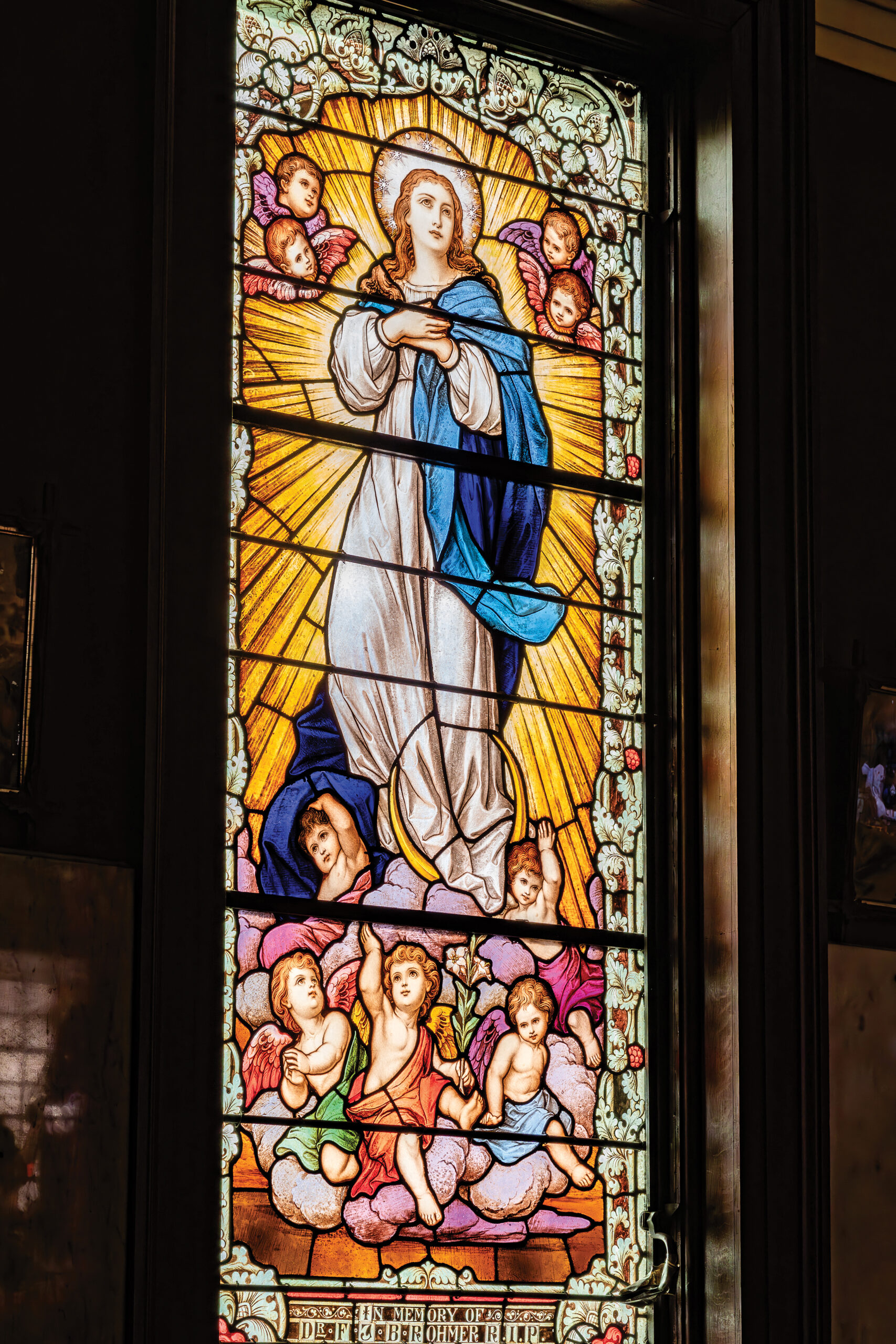
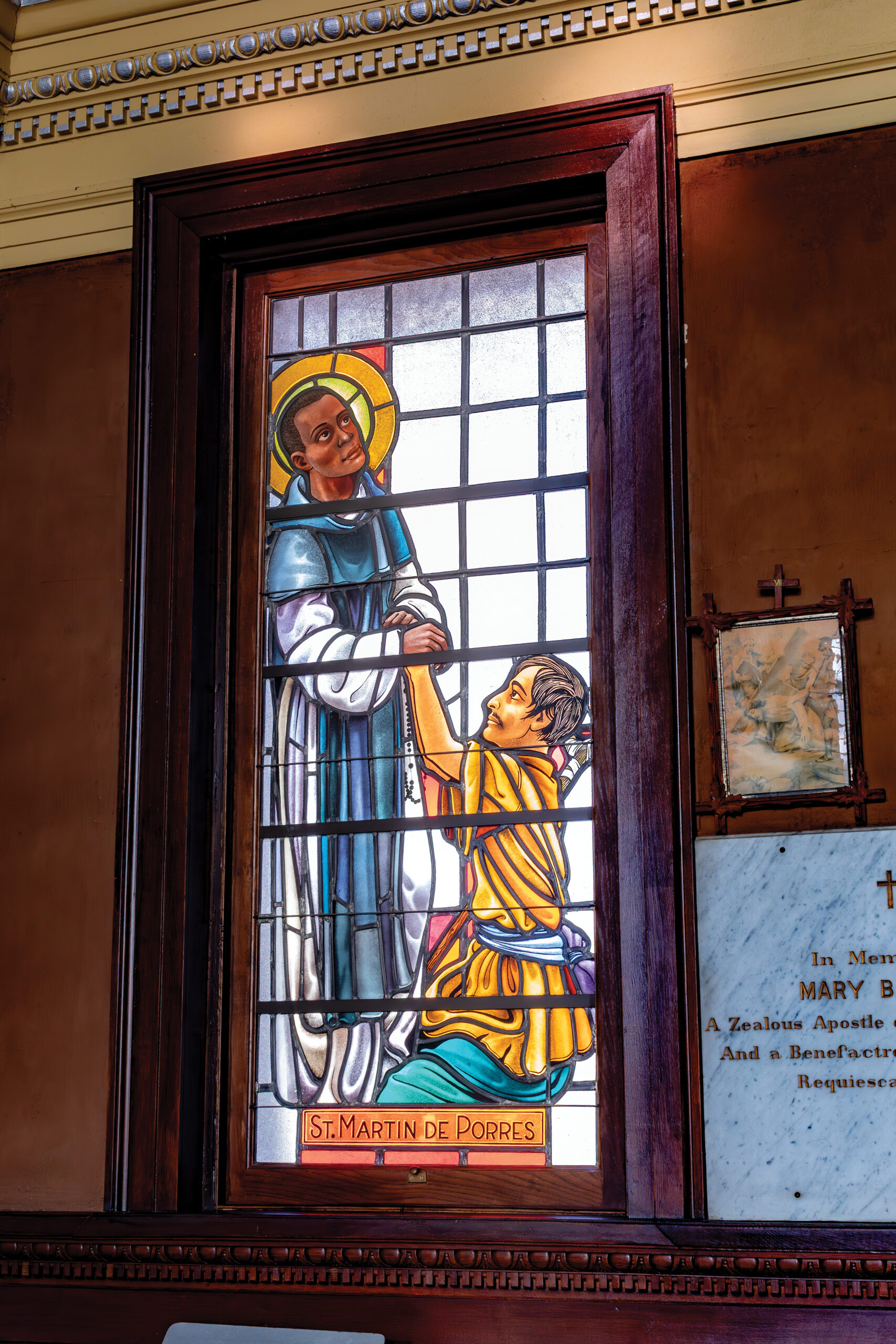
More modern works portraying later saints were gradually relocated to Sacred Heart Chapel from other local Catholic buildings. One of the most beloved showcases St. Martin de Porres, a 16th century Peruvian saint and illegitimate son of a Spanish nobleman and a freed Black slave. He was known for his dedication to caring for the sick. Prior to segregation, this window hung in the circa 1950 St. Martin de Porres Hospital, which was a maternity ward for Black women on Wilkinson Street.
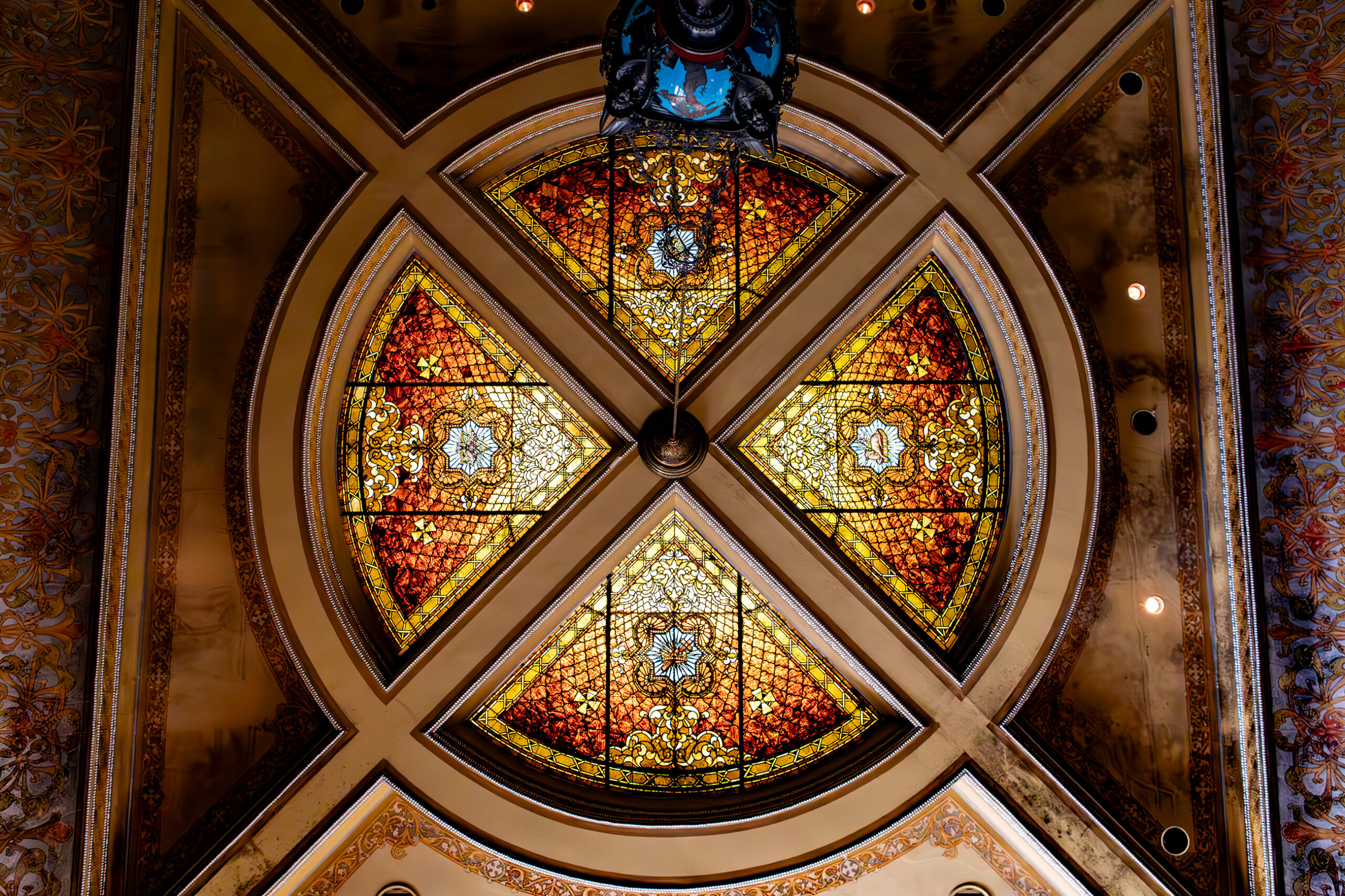
Above the chapel’s chancel, the eye-catching electricity-lit cupola incorporates intricate imagery, such as a cross, crown, lamb and chalice. Sadly, Mobile’s heavy rains have caused it significant damage. The cost for repairs is more than $100,000, and donations are welcome.
Christ Church Cathedral
115 S. Conception St.
Congregation Established: 1822
Cathedral Built: 1835
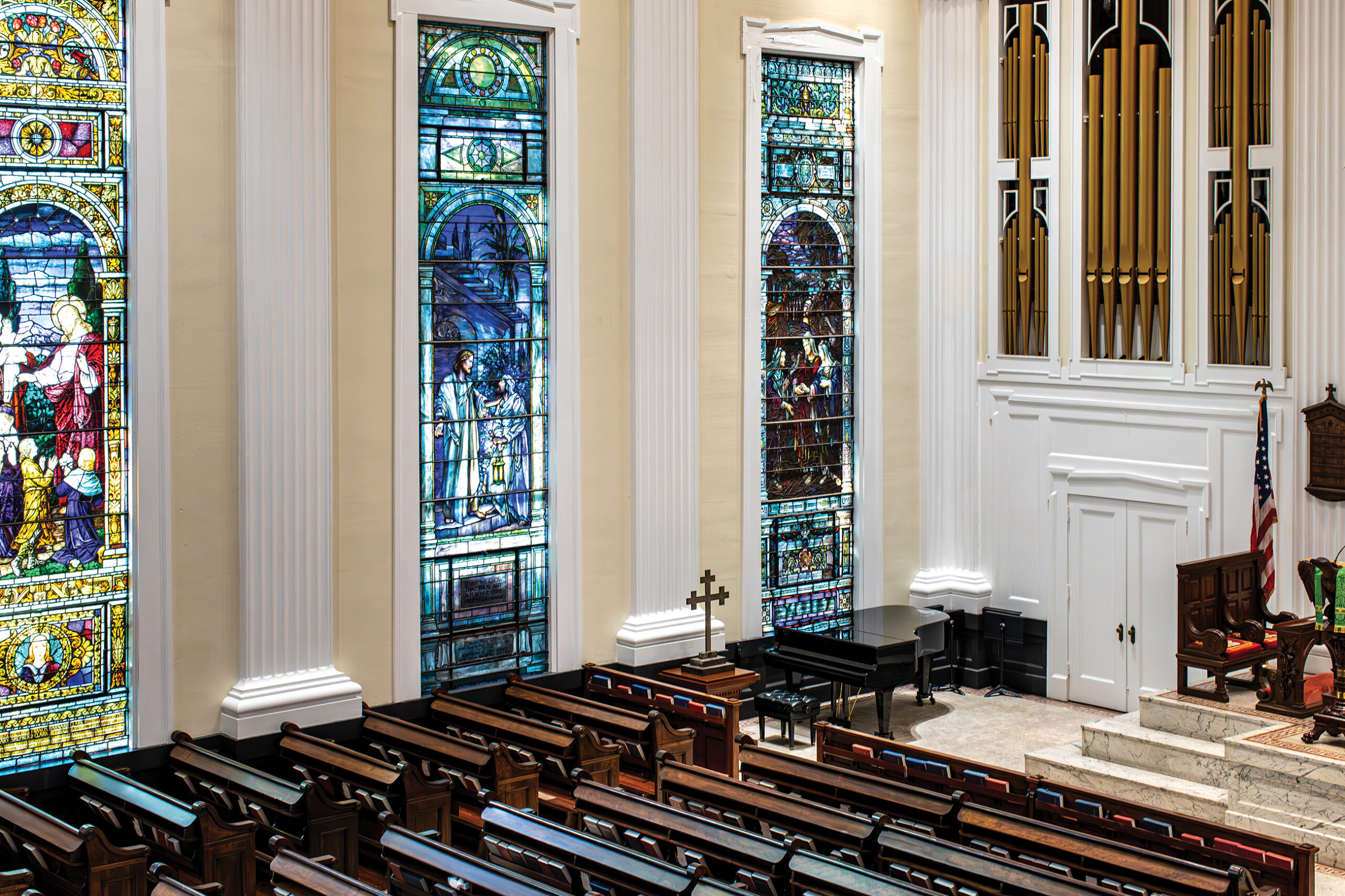
Generations of Mobilians have grown up admiring these towering floor-to-ceiling nave windows on Sunday mornings. It’s hard to believe the original church did not include them. In the 1906 hurricane, the steeple collapsed through the roof, forcing a massive reconstruction. It was decided the new (and current) sanctuary should incorporate majestic stained-glass.
The extensive collection has been installed gradually, but keeping a cohesive style. Most feature hand-painting on larger panels of glass, with intricate columns or pilaster borders adding a unifying element. Larger bottom frames often reference a scripture or memorial.
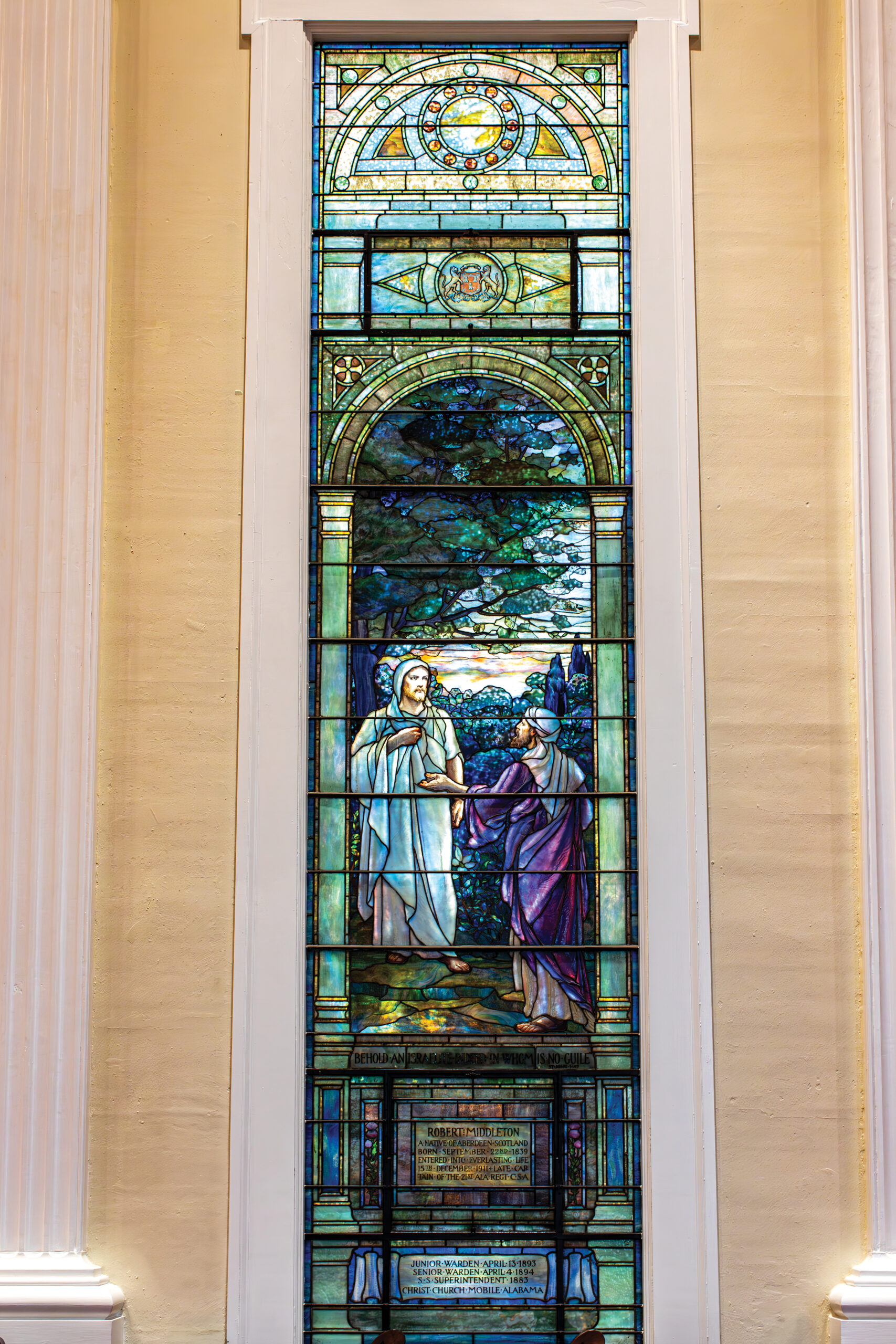
One of the most treasured is a stunning 1927 Tiffany window portraying Jesus meeting Nathanael beneath the fig tree. In it, Jesus reveals his omniscience, leading Nathanael to believe and become one of the first disciples. Remarkably, it was designed by a 19th century Alabama artist, Clara Weaver Parish, who worked for New York’s Louis Comfort Tiffany. This is one of two Tiffany windows at the Cathedral and a brilliant example of the studio’s classic opalescent glass.
A favorite, particularly among children, is the Jackson family memorial. A simplified Franz Mayer of Munich piece, it describes the New Testament story of Mary, the sister of Martha, anointing the feet of Jesus. The bottom frame includes two puppies with the inscription SPCA. In the 1950s, it was given in memory of Laura Jackson, Mobile SPCA’s first female president. Incidentally, Jackson also organized south Alabama’s first animal shelter.
In another vivid and memorable design, an armored St. Michael is shown defeating Satan, the great dragon, the deceiver of the world thrown down from heaven.
A newer addition, fabricated in England in 1979, illustrates creation as described in Psalm 118:24. Colorful, stylized hills, trees, a stream and sunlight are splayed out beneath the hand of God.
In its most recent appraisal, the Christ Church Cathedral windows have been valued at more than $1.5 million.
Government Street Methodist Church
901 Government St.
Congregation Established: 1826
Current Church Built: 1890
Sanctuary Built: 1917
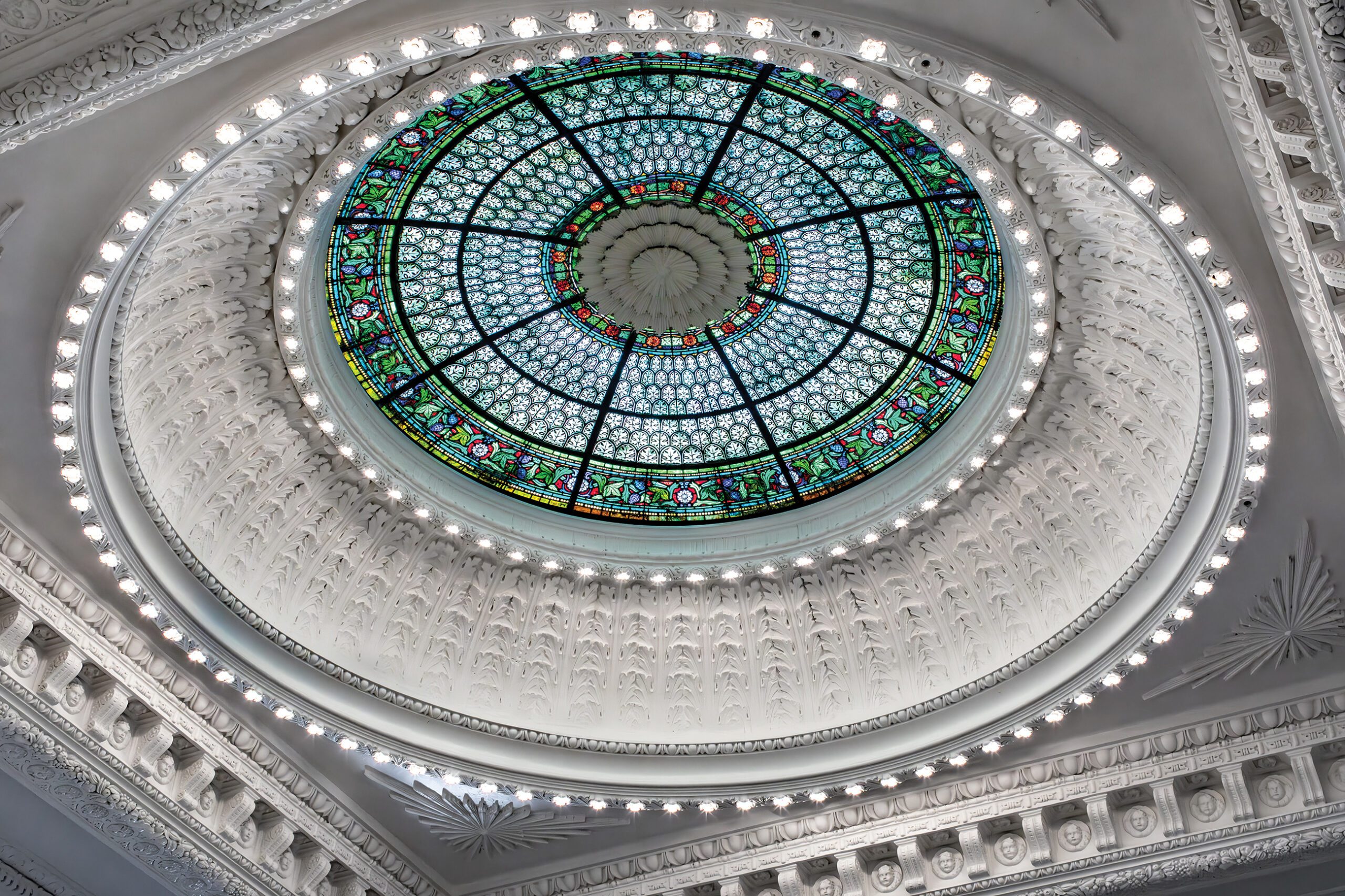
Installed during a 1907 expansion, Government Street Methodist’s crown jewels were once two lavish stained-glass domes. One still adorns the sanctuary today, while another once overlooked the open, two-story auditorium, with its horseshoe-shaped balcony. When Sunday school rolls ballooned in the 1950s, a series of unfortunate remodels resulted in the auditorium dome becoming mostly hidden, only to be enjoyed by a single upstairs classroom.
Surrounded by intricate plaster moldings of acanthus leaves, symbolizing immortality or rebirth, the intricate dome glasswork has been said to rival that of the Battle House Hotel lobby. Although the designs include Baroque spiritual symbols, such as pomegranates (Christ’s sacrifice and resurrection), shells (the transience of life), urns (baptism) and sunbursts (God’s majesty and eternity), they were not intended to literally illustrate specific scripture.
In addition to the domes, three massive ornamental windows anchor the north entrance, as well as the west and east walls of the sanctuary. These were among the last works of American stained-glass master Harry Goodhue, who was known for using translucent glass, faithful to that in Medieval European cathedrals.
Unfortunately, time has taken its toll on many of these delicate antiques. The Gulf Coast’s high humidity and frequent hurricane-force winds wreak havoc. Exterior protective clear glass can only do so much to prevent decay. Maintenance and restorations are not only difficult, but also pricey. As city populations have migrated westward and to the Eastern Shore, congregation numbers (and thus financial support) have dwindled.
Historic Government Street Methodist is a perfect example. In October 2023, the structural support for a 15-foot-by-20-foot window on the west facade collapsed. Mercifully, most of the original stained glass was rescued, and temporary traditional glass has been installed to prevent further damage. However, the cost of repairs and reinstallation still looms at more than $200,000.
To protect some of these jeopardized masterpieces, it may take a miracle. Yet, like so many of the biblical stories these stained-glass windows illustrate, we see constant reminders that, with faith, there is always hope. The congregants of these beloved churches are trusting not only for the future of their beloved stained glass, but also for the glory to come — on Earth as it is in heaven.
The Art of Stained Glass
The timeless art of religious stained glass has a rich history. Early forms can be traced back to 7th century Ancient Rome. But it was not until the Medieval Ages they became popular in the elaborate Gothic architecture across Europe. At that time, the majority of parishioners were illiterate, and only the wealthy could afford paintings for their homes. Clergy and artists designed panels recounting biblical stories as a teaching tool, or a “peasant’s Bible.”
With the dawn of the Renaissance, artistic realism came into fashion. Stained glass significantly declined until techniques evolved to fit the aesthetic. Artisans began using more muted colors of glass, then added detail, shading and depth with enamel paints and silver stain.
By the turn of the 16th century, the Reformation changed things. The new Protestant iconoclasts considered these religious depictions idolatrous. As a result, many of the earliest masterpieces were destroyed in the 1640s, particularly in Scotland and England. Older examples survived in areas with higher Catholic populations, such as France.
By 1702, Mobile was founded as the first capital of French Louisiana, and a Catholic parish was established the following year. As local chapels and cathedrals were built during the Gothic Revival and Gilded Age, the European traditions of exquisite stained-glass craftsmanship were employed.
To fund the windows, churches allowed congregants to purchase them as memorials of loved ones who had passed on. However, even in a port city, European imports were incredibly expensive, due to exorbitant international tariffs. Consequently, major stained-glass art studios emerged in the U.S. The highly regarded J&R Lamb Studios, Tiffany Studios and a U.S. branch of the German company, Franz Meyer of Munich, were among the first, all clustered in New York City. Many of the most historically significant examples in Mobile’s oldest houses of worship today were created by these artisans.