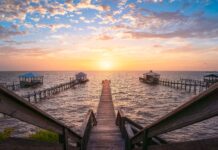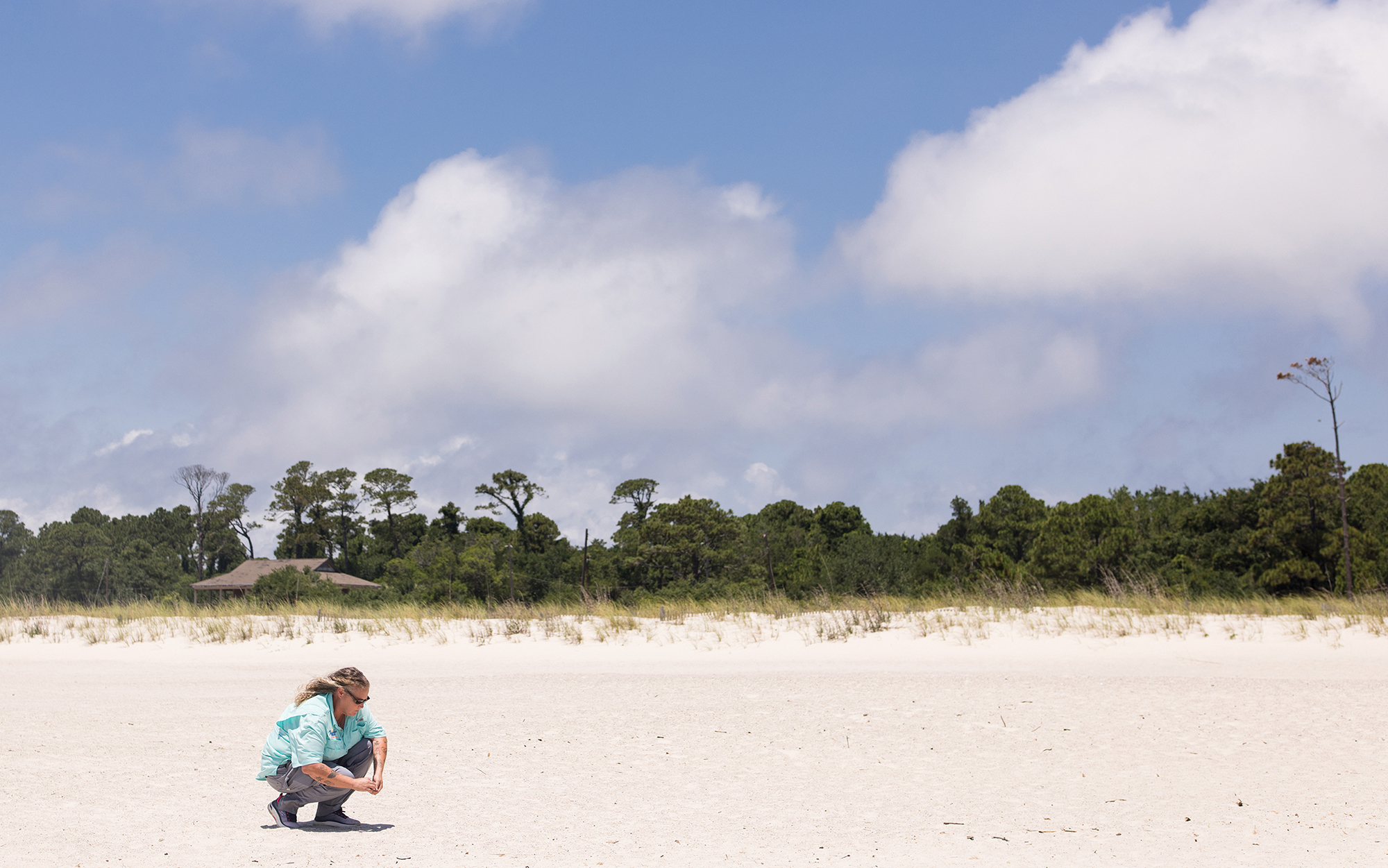
Leslie Norris makes her way from Semmes to Dauphin Island almost every day. Most days of the week, she’s on the island for her jobs as beach ambassador for the Town of Dauphin Island and supervisor over the West End Bird Conservation Program. But on the weekends, she comes for a different purpose. “I’m not like most people who go to the beach to relax,” she says. “I’m there all day long. The only reason I come back is to shell.”
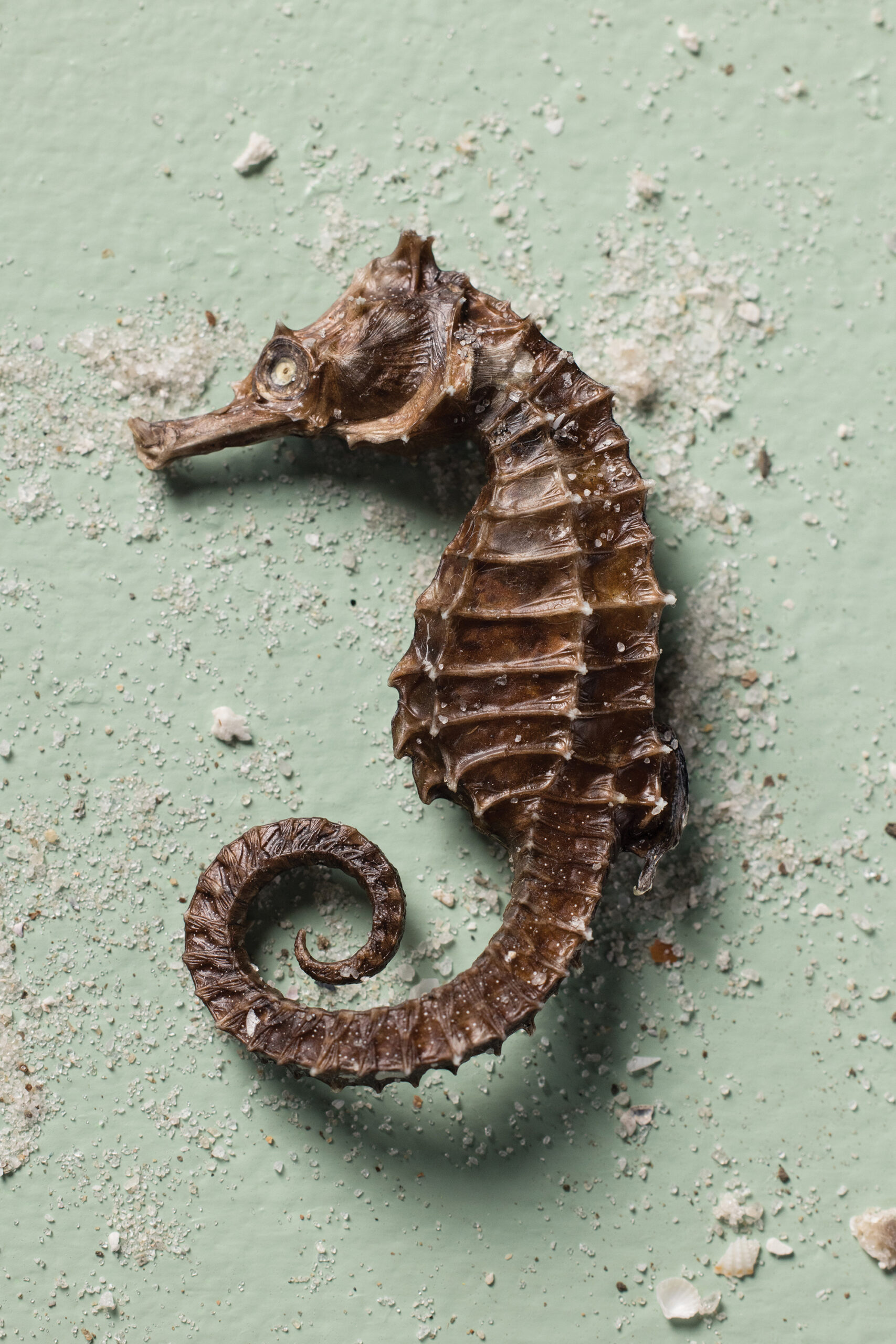
Norris has been a shell collector for around 12 years. In that time, she has amassed a giant assortment. “I have more shells than I’d like to admit,” she says. Shells piqued her interest when she started working on the beach and she realized she could find a large range of intricate seashells in the process. “My best friend’s mom was part of a big shell group in Mobile, and she helped me learn the names of everything,” she says. “I’ve always loved marine sciences, so I really enjoy the scientific aspect of it.”
While she sometimes makes trips out to Navarre and Pensacola, her finds from Dauphin Island represent an impressive range of species, colors, sizes and shapes. “There’s not very much that you can’t find on the island,” she says. The east end of the island is the best for finding small shells, including Norris’ favorites, wentletraps. Some of the shells are so small that Norris has to wear her reading glasses to look for them. The west end usually turns up bigger varieties, which the jetties prevent from reaching shore on the east end. Of the shells she’s found, scallops, lightning whelks and fighting conchs are just a few of the most common.
She says that hurricane season is the best time to find some treasures, thanks to the waters churning shells from the depths to the shoreline. But on regular days, the number of shells she finds ebbs and flows, just like the tide. “Some days, there is absolutely nothing. And some days, there are shells everywhere,” she says.
She can normally tell when a day is going to be a good shell day or a bust by paying attention to what’s at the edge of the water. “A lot of times, that will tell you what you’re going to find. If every time the wave hits the sand, it leaves a bunch of little, tiny stuff in there, then it’s going to be a good shell day for the most part,” she says. “And when I start seeing the stuff washing up, it’s like an addiction. I can’t help it.”
One of Norris’ best finds was a Johnstone’s junonia shell. Despite being the state shell of Alabama, it is a notoriously rare find. Norris searched far and wide for the treasure to no avail. “I was determined I was going to find one, but I never did,” she said. “Then, one day, I was working with the Sea Turtle Stranding and Salvage Network doing winter patrols, and I just drove by one, and I said, ‘Oh my gosh!’ And then 10 feet later, there was another one. Some people look their whole lives and never find one, so it was crazy.” While she enjoys researching the science of the shells she collects, Norris also appreciates their beauty. Some of her shells are displayed and others are used in her art pieces. “I make flowers and mount them on driftwood,” she says. “I make them out of white shells, and then I’ll use green sea glass as the leaves. Or I’ll get shadow boxes and arrange them in there, or make wind chimes out of shells and driftwood.”
Norris has a plethora of shells, but she is also aware that she maintains the environment in which she shells. “I do practice ethical shelling,” she says. “Some shellers will go scuba diving and will find a live animal, and they’ll take it and kill the animal just to get the shell that it’s in. I do not do that.” She leaves any living creatures on the sands. She’s also conscious not to over-shell, even redistributing her excess shells back to the beach. “The shells do build the beach up, and they are homes for other things,” she says. It has become common practice for her to hand out her finds to people on the beach when she’s out working. Their reaction of delighted surprise never gets old. “Shelling makes me happy, and it needs to make other people happy, too,” she says.
Tips for a First-Time Shell Collector
- The best time to collect shells is typically after a storm or during hurricane season. The wind and waves churn the shells that are at the bottom of the floor, sending them to the shore.
- Bring a bucket or a bag to store your finds! Norris uses a mesh bag for her shells, which allows the sand to run through. If using a bucket, be careful not to scoop up too much sand, as it can weigh down your vessel.
- Norris brings a sand rake, which comes in handy on days where shells are plentiful. Use the rake to scoop up the shells, leaving the sand behind. Bonus tip: Sort through your shells on the beach to get rid of any sand particles.
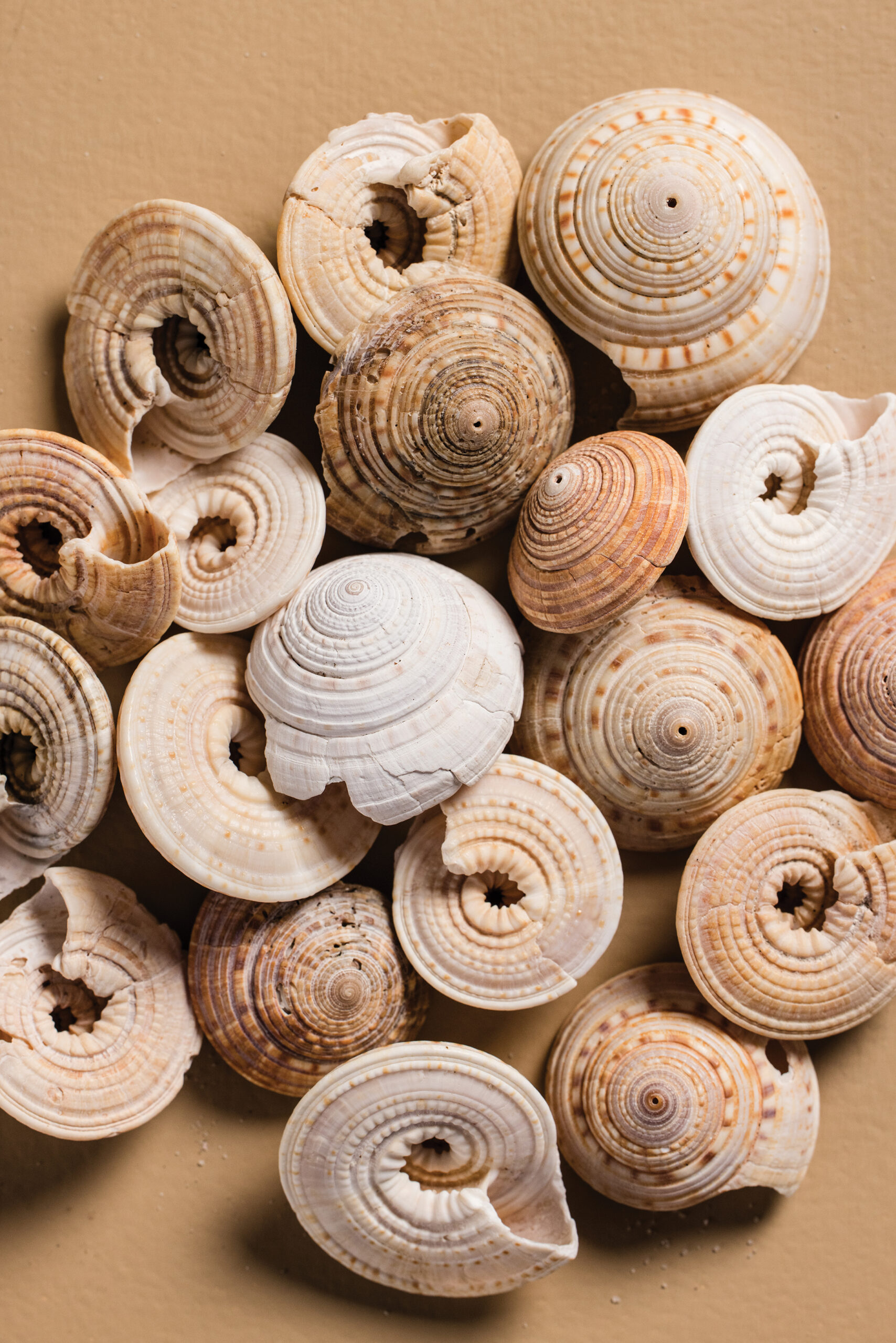
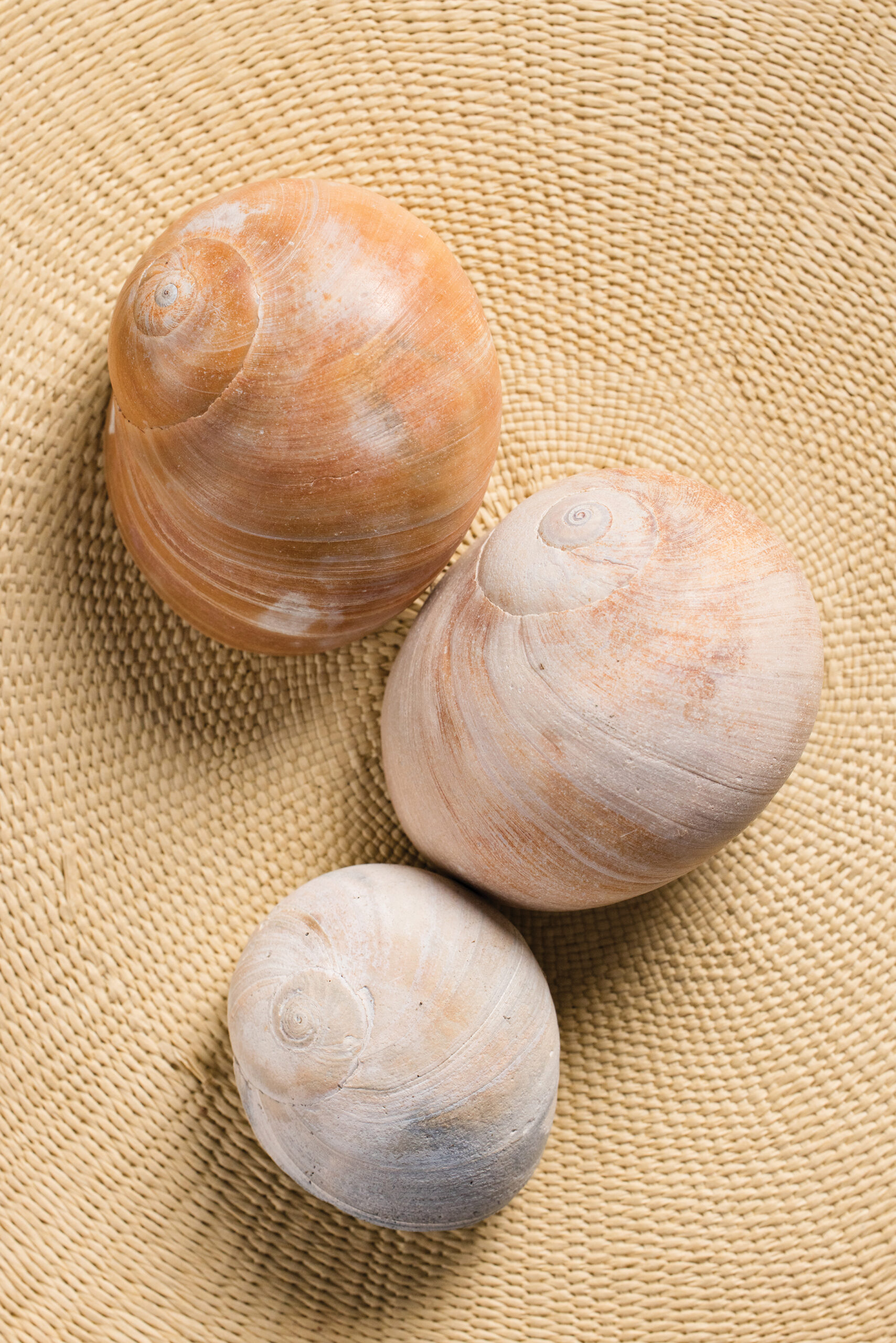
Shell Varieties
Johnstone’s Junonia (Scaphella junonia johnstoneae)
The species is named after the ancient Roman goddess Juno. It typically lives in water from 29 meters to 126 meters and usually only washes onto beaches after strong storms or hurricanes. Its pattern of brown, closely knit circles creates a striped design.
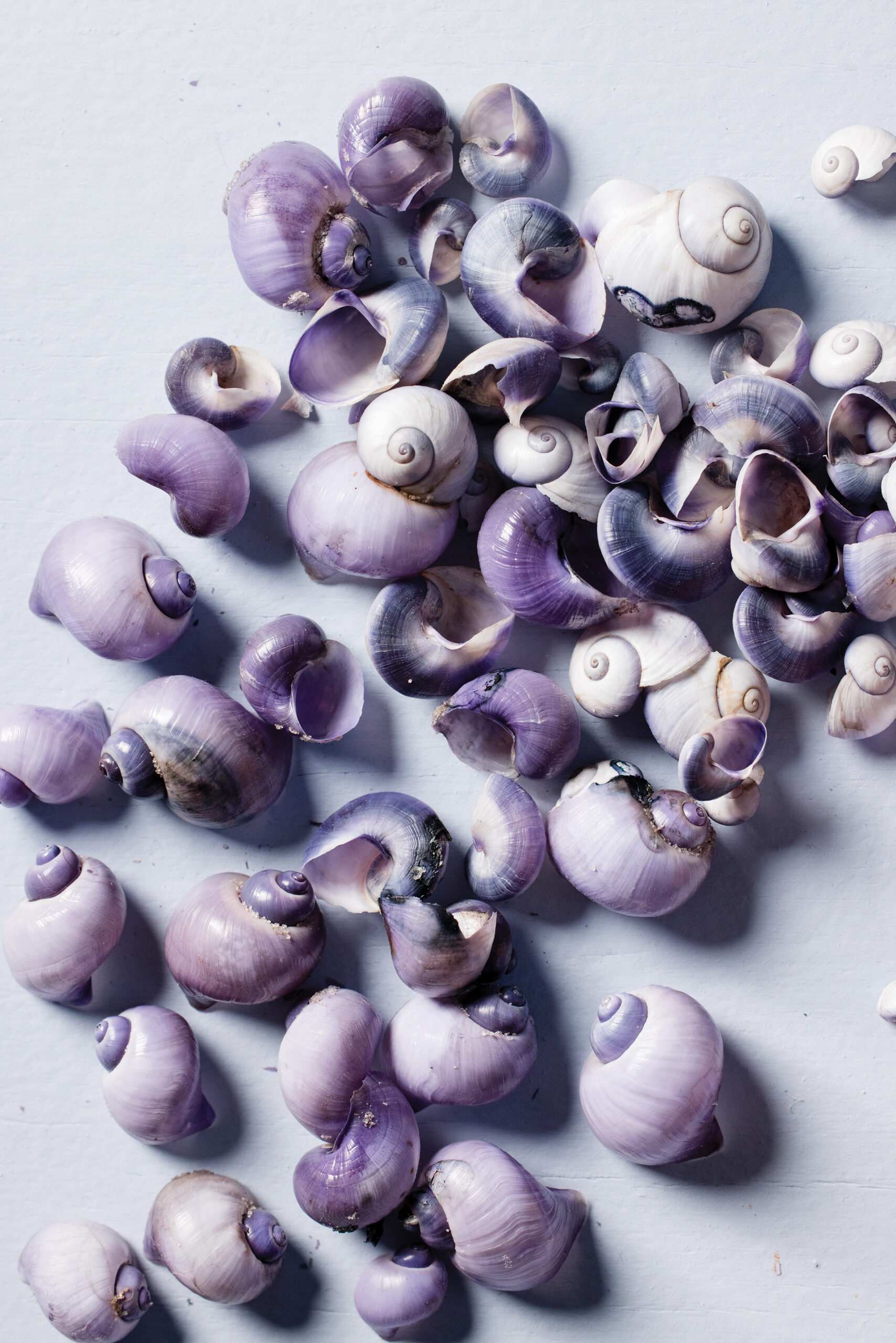
Violet Snails (Janthina janthina) If you ever see the Portuguese man o’ war wash up on the beach, these tiny shells won’t be far behind. They surface with the animals because they attach themselves to them and prey on them while alive. When they’re in the water, they blow small bubbles to stay afloat.
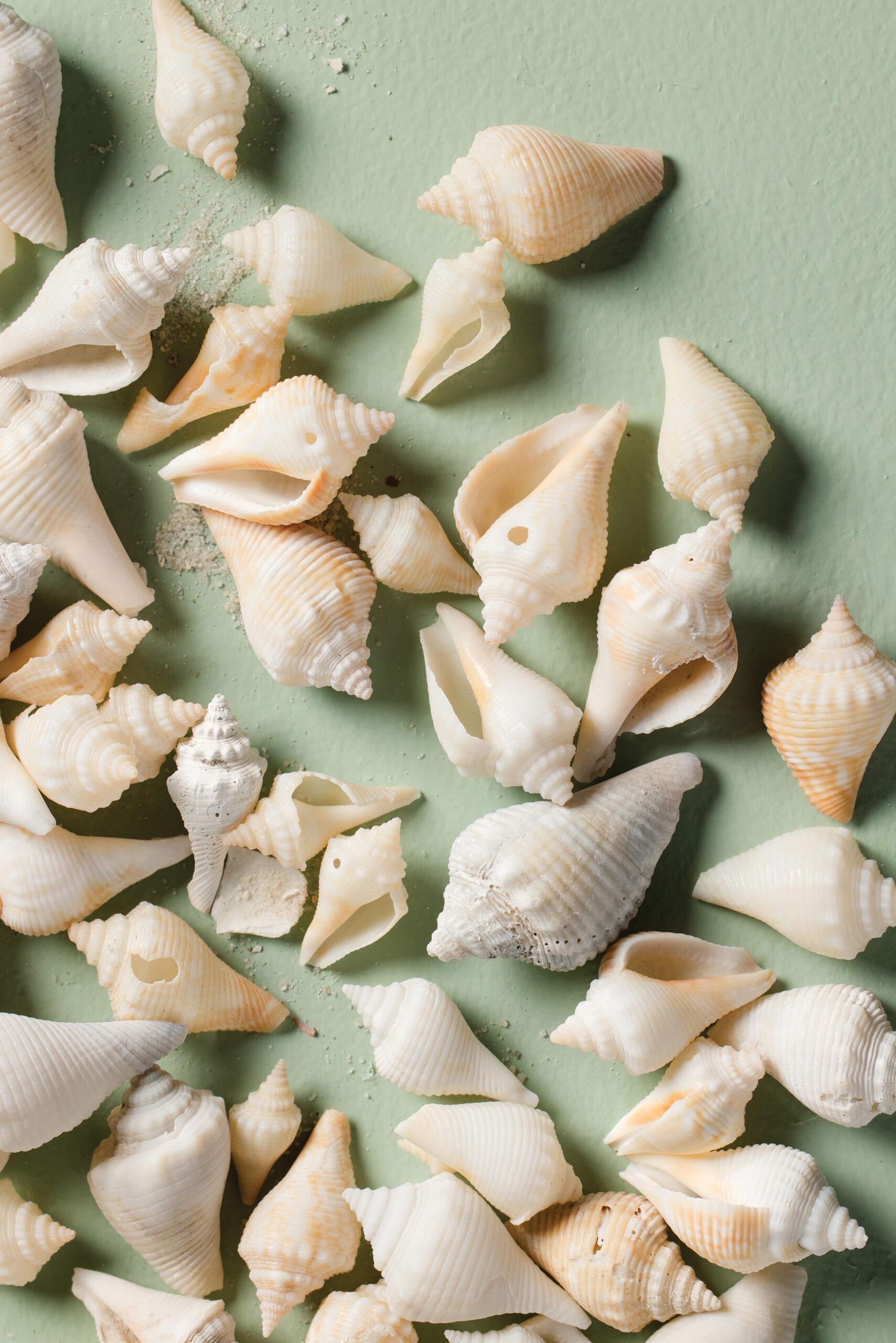
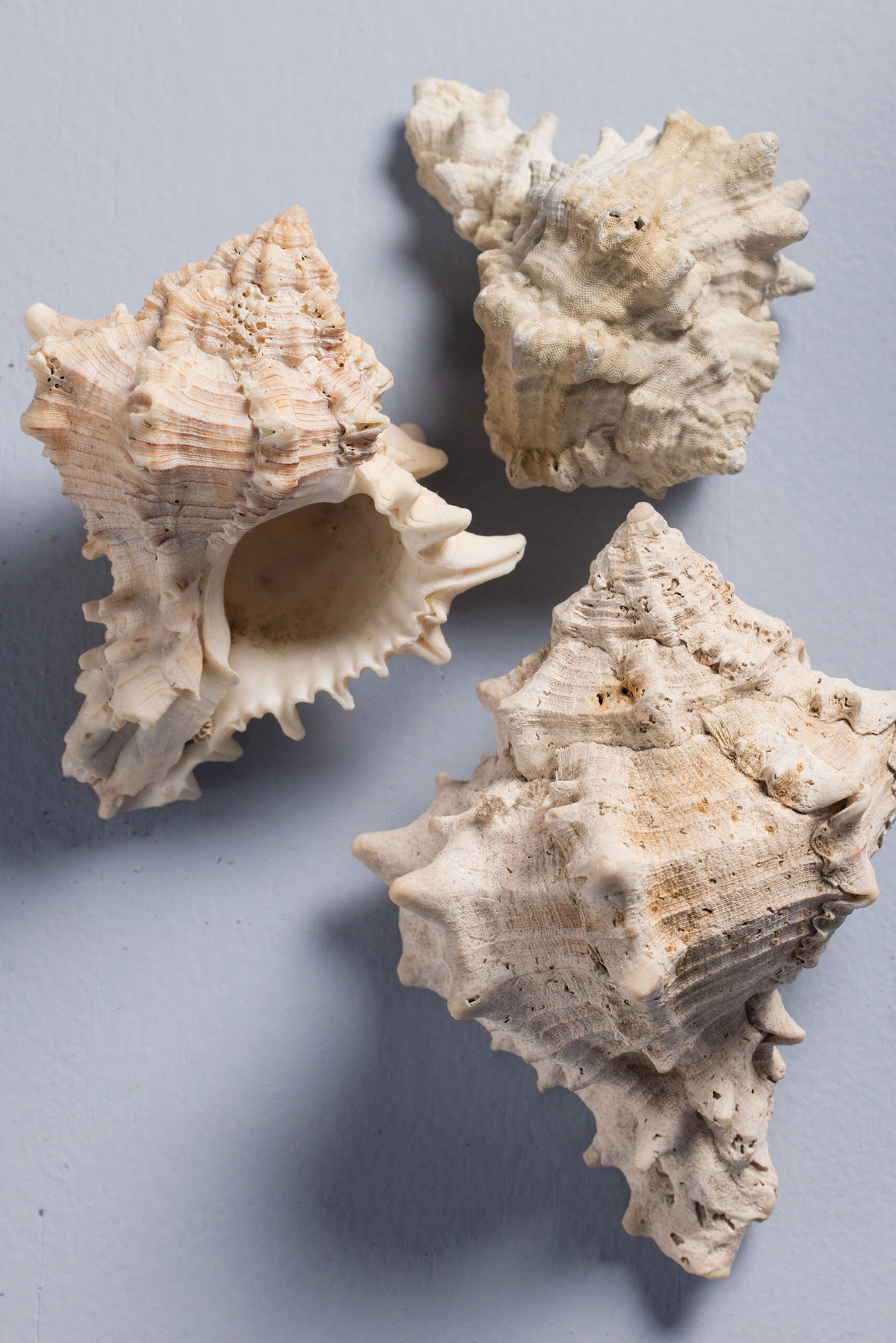
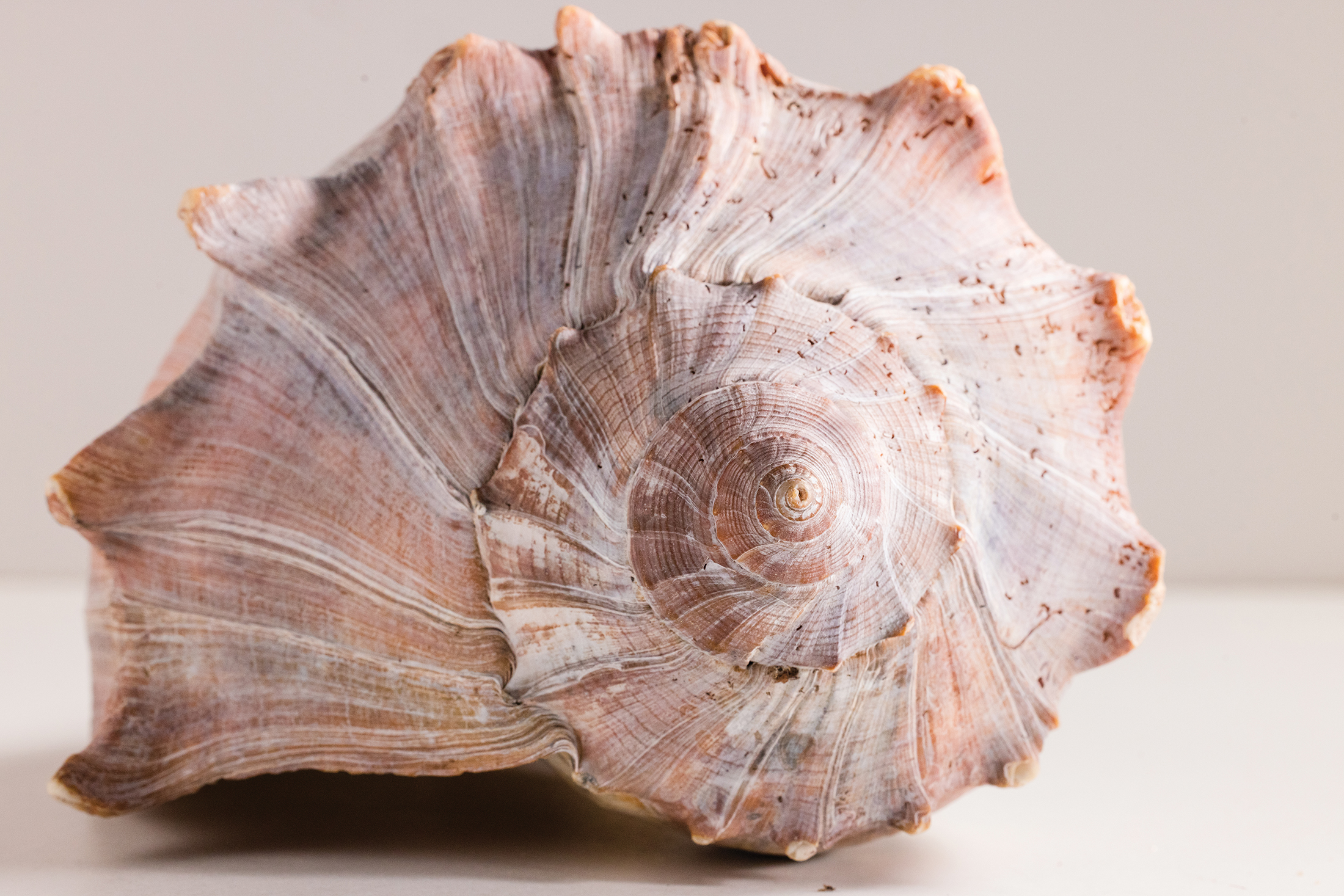
Fighting Conch (Strombus alatus)
This spiral shell keeps sea snails safe during their life span, and are a pretty and impressive find on Dauphin Island’s beaches. The shells range from brown to tan in color and can get as large as four inches.
Lightning Whelk (Sinistrofulgur perversum)
This species features a sinistral shell, meaning the shell coils counterclockwise and the opening is to the left instead of the right as most shells appear. Because of this, it is also known as a left-handed shell.
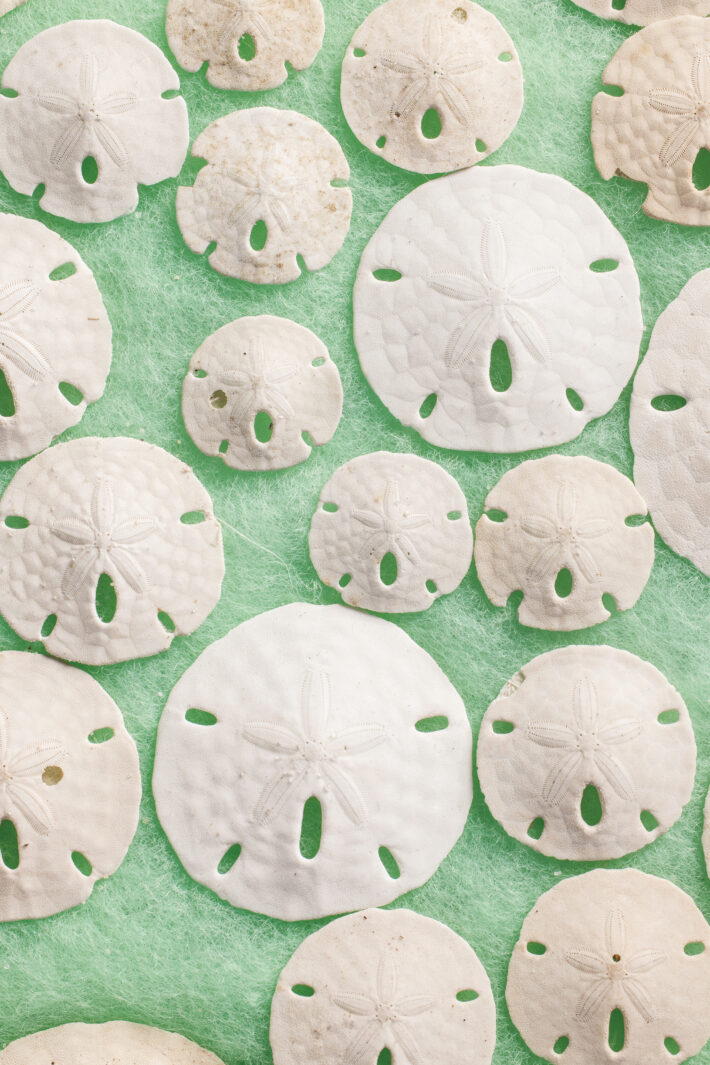
Keyhole Sand Collar (Mellita quinquiesperforata)
Named for its distinct keyhole pattern, these types of sand dollars can be found throughout Dauphin Island, with bigger ones on the west end. The east end of the island has smaller sand dollars, with some as small as a pencil eraser!