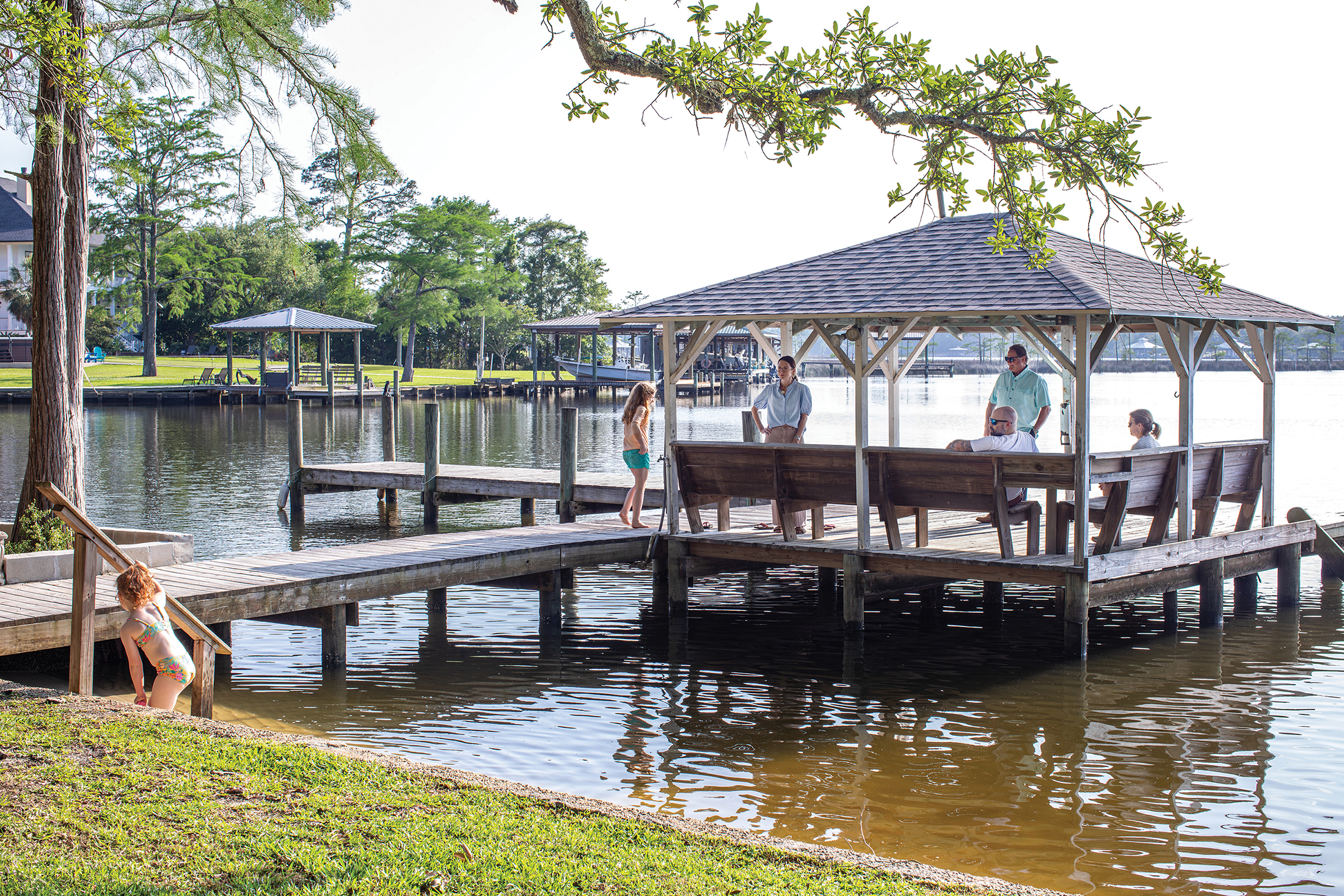
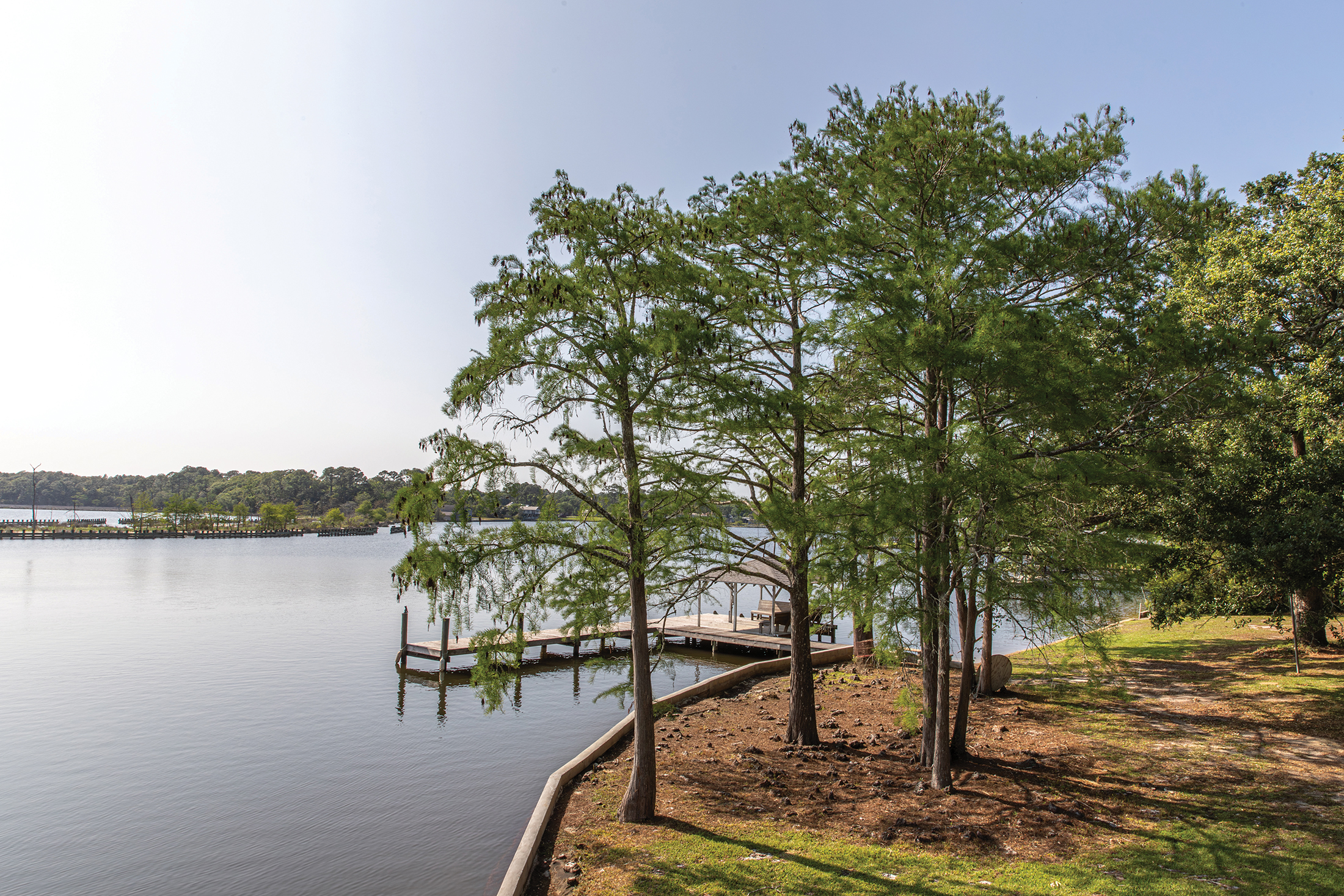
Off Dauphin Island Parkway, the streets get quieter and smaller, and the shops begin to advertise necessities like tackle and live bait. A gravel drive off Pioneer Road leads the way to Hooge Place — a cottage, boathouse and pier on Fowl River reminiscent of the slow summer days of bygone years. Here, the river teems with brim, redfish and the occasional alligator while turtles peer curiously from the water before disappearing into the depths. A gentle breeze rustles the tall cypress trees near the sea wall, and boats cruise by, pulling children as they tube and water ski. For the last 78 years, one family has preserved the original integrity of their summer house, making it a place where they can enjoy the idyllic, simple Southern summer most of us only dream about.
In April 1948, when Vera and Joseph Hooge purchased the property, it held nothing more than a cottage. Over the years, they spent the summers there with their five daughters and — after the girls married into the Mott, Mayhall, Watt, Norden and Rowell families — 27 grandchildren. Those grandchildren — including Joanne Maceluch, Belinda Pitman and David Mayhall — acknowledge how grateful they are to have grown up going to Hooge Place every summer, and how unique and special their family’s property is.
“It’s a place we’ve all known and loved. There’s a lot of things that kept us together,” Pitman says. “It’s the camaraderie of the cousins, the bond between our mothers and the bond that they gave us collectively. We always referred to the five sisters as ‘the sisterhood.’”
Hooge Place’s motto is “peace and harmony,” and the sisterhood established rules and routines to keep the property running smoothly. Each family stays for an allotted portion of the summer, and each contributes to the property’s well-being, including yardwork, repairs and general upkeep. But, while modern residences have sprung up along the river, Hooge Place has remained strictly a charming summer home and is not much different than it was in the 1940s.
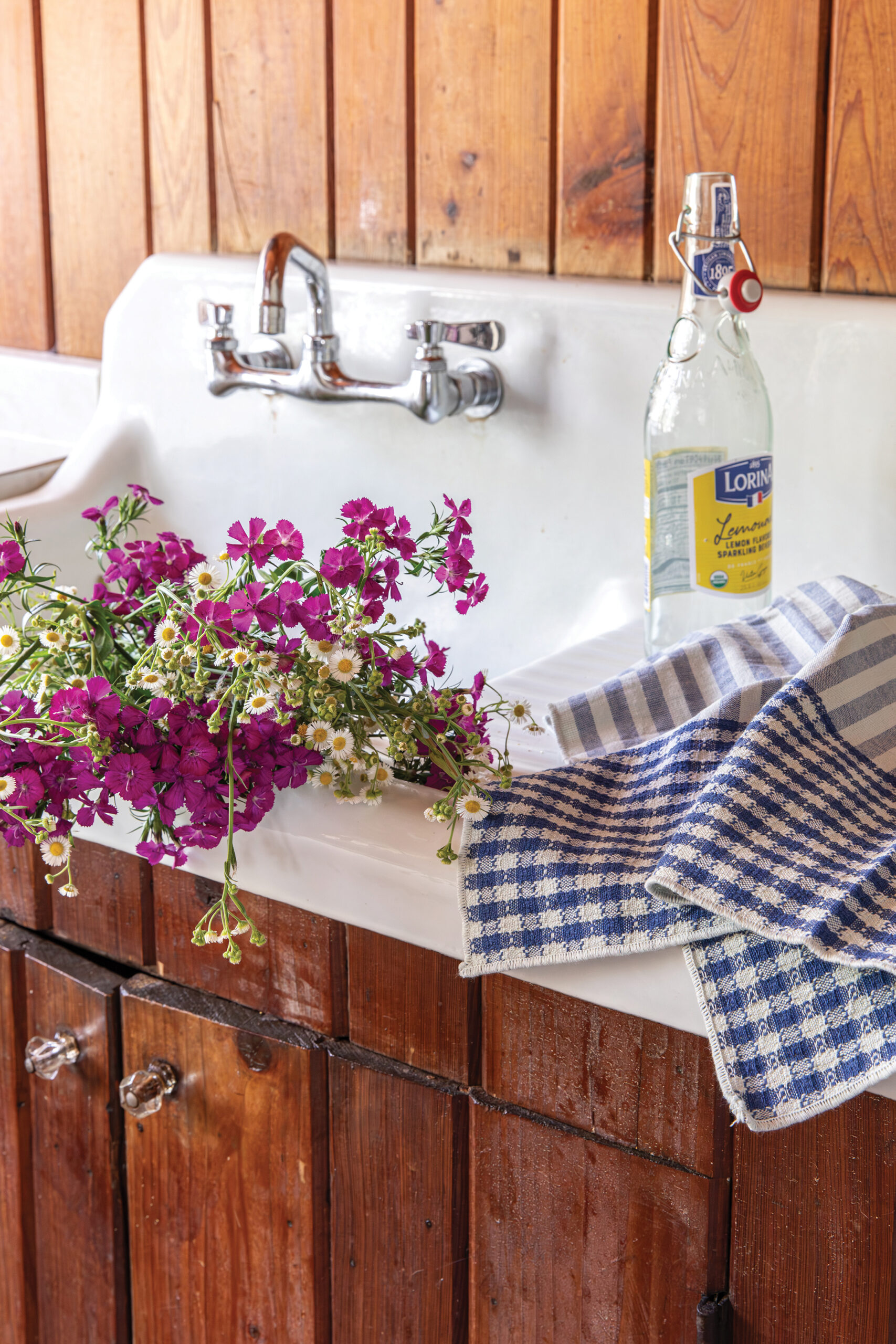
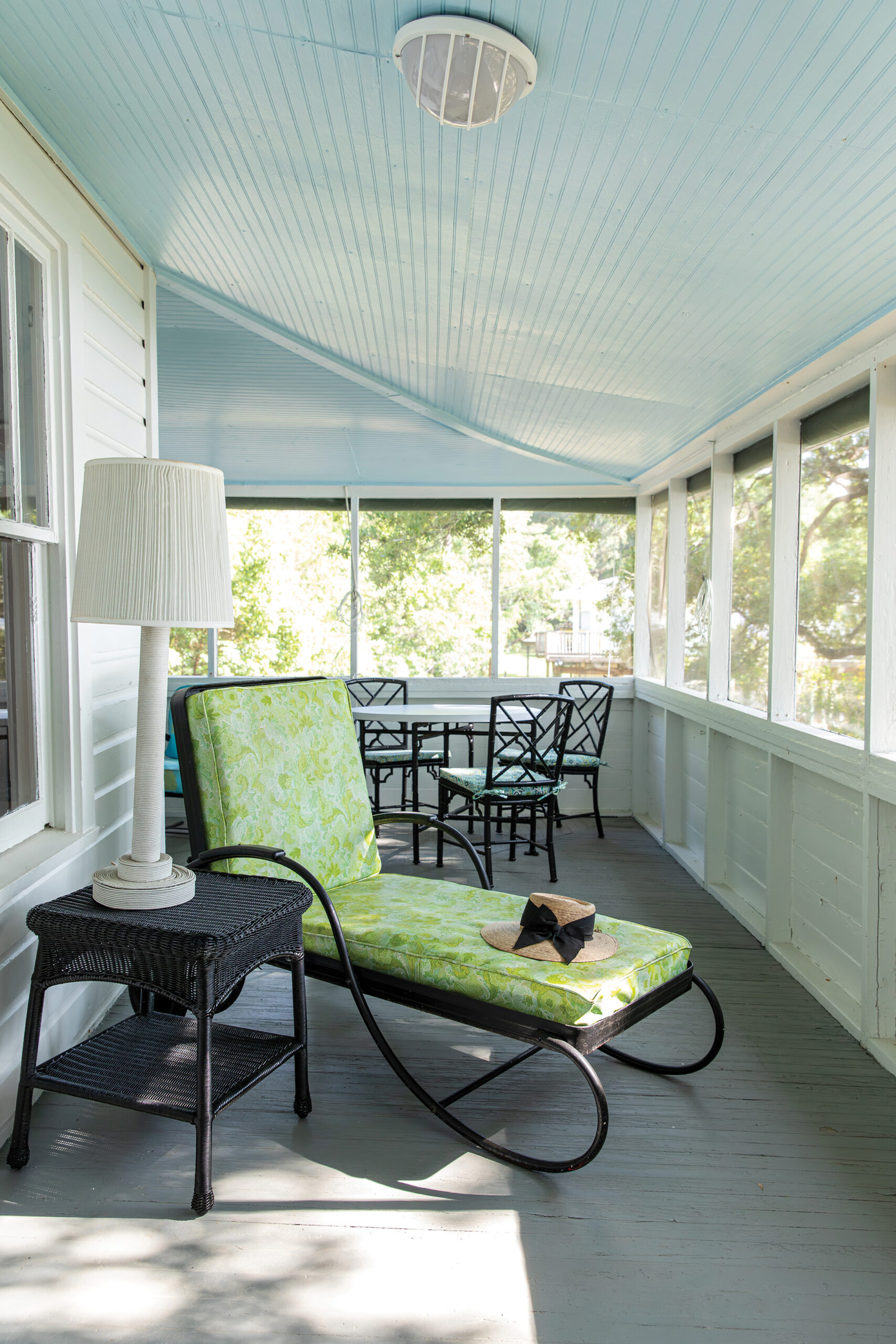
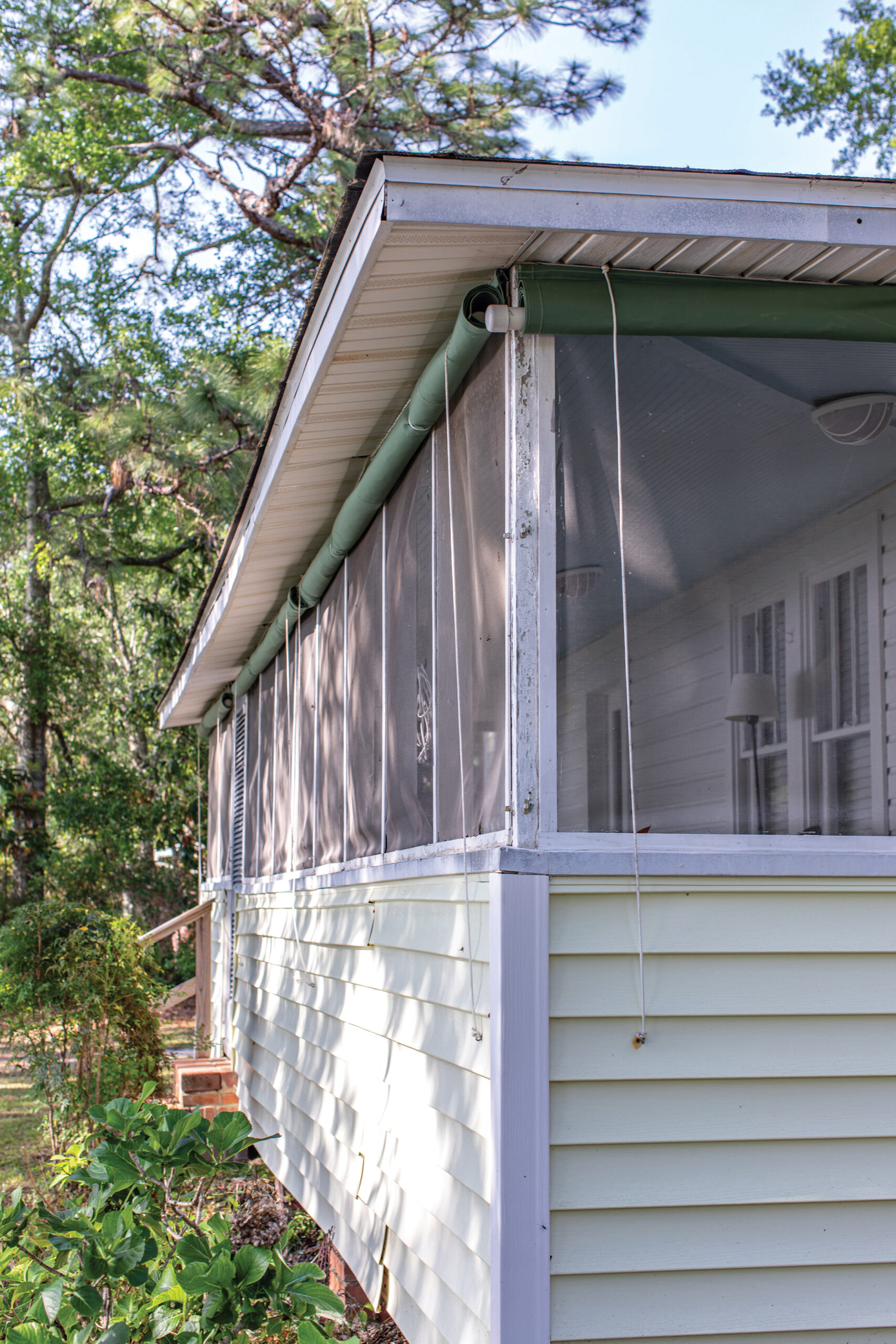
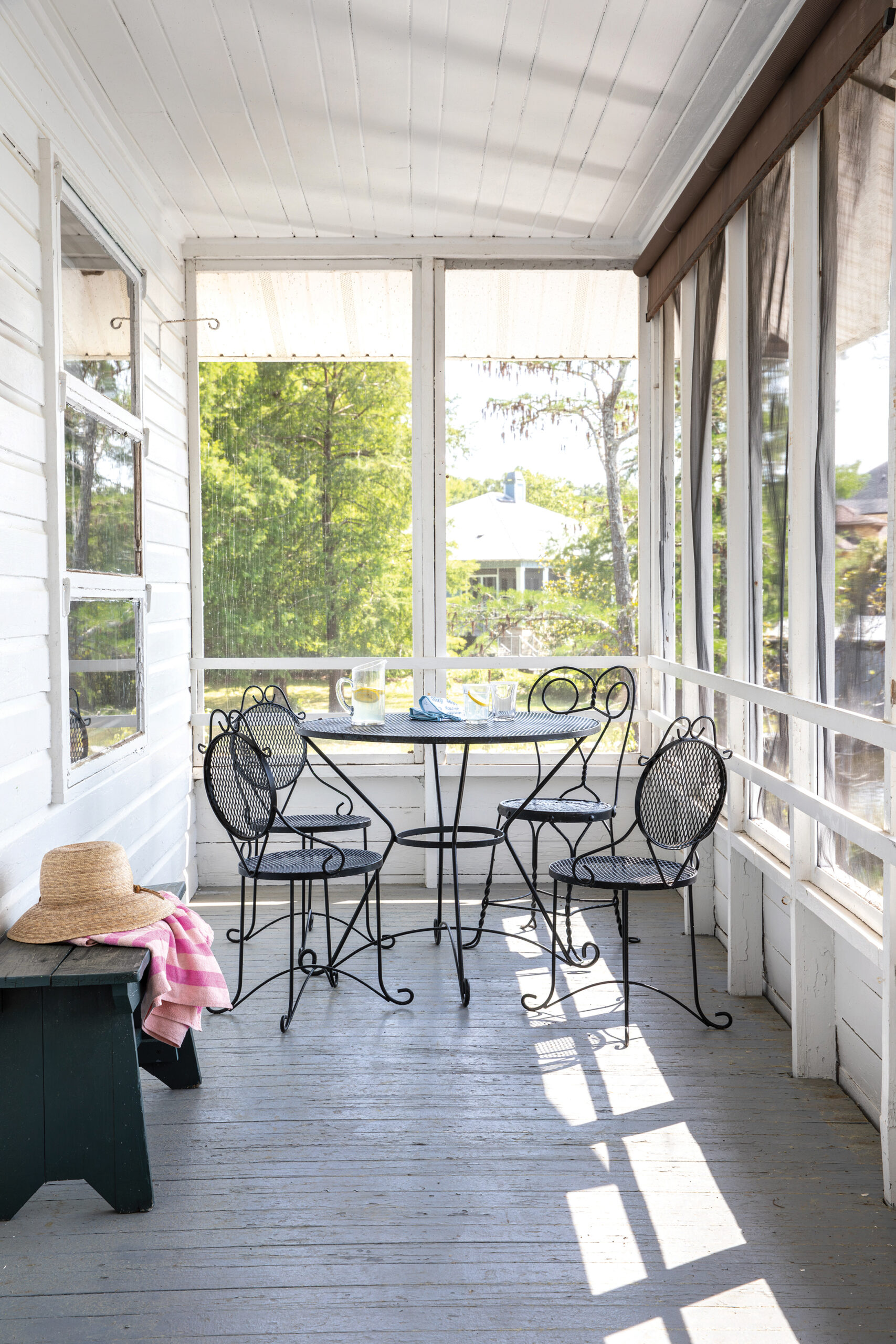
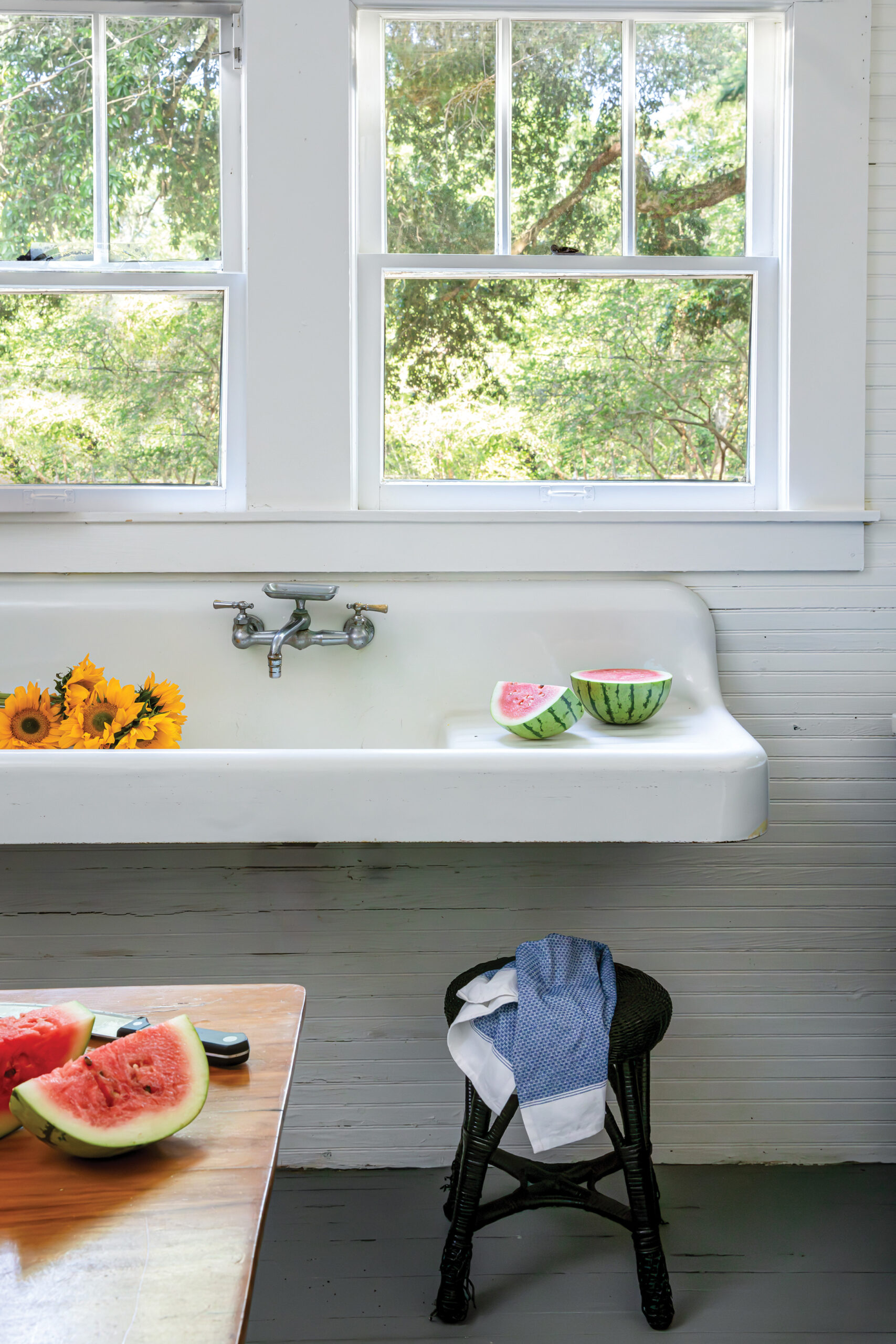
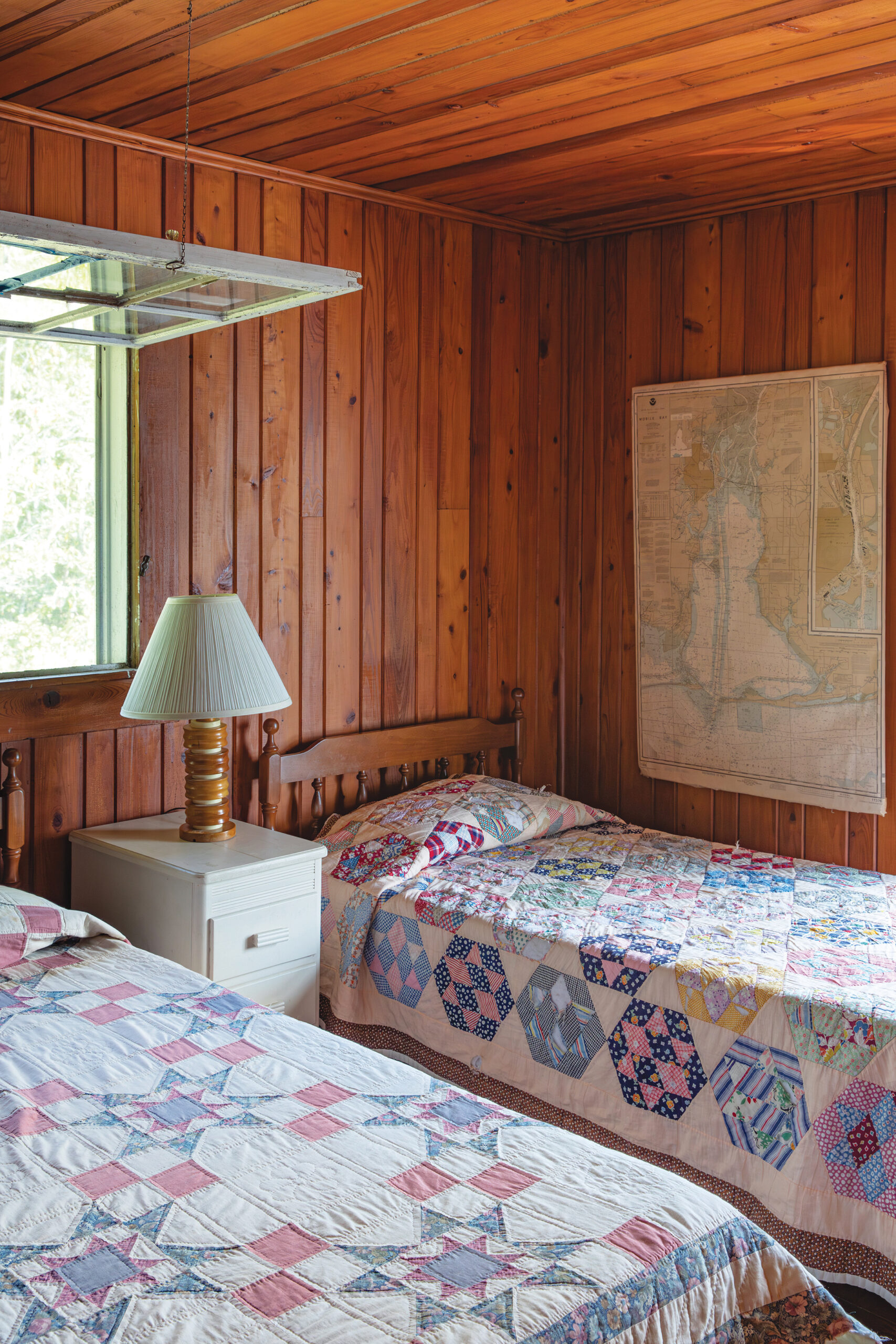
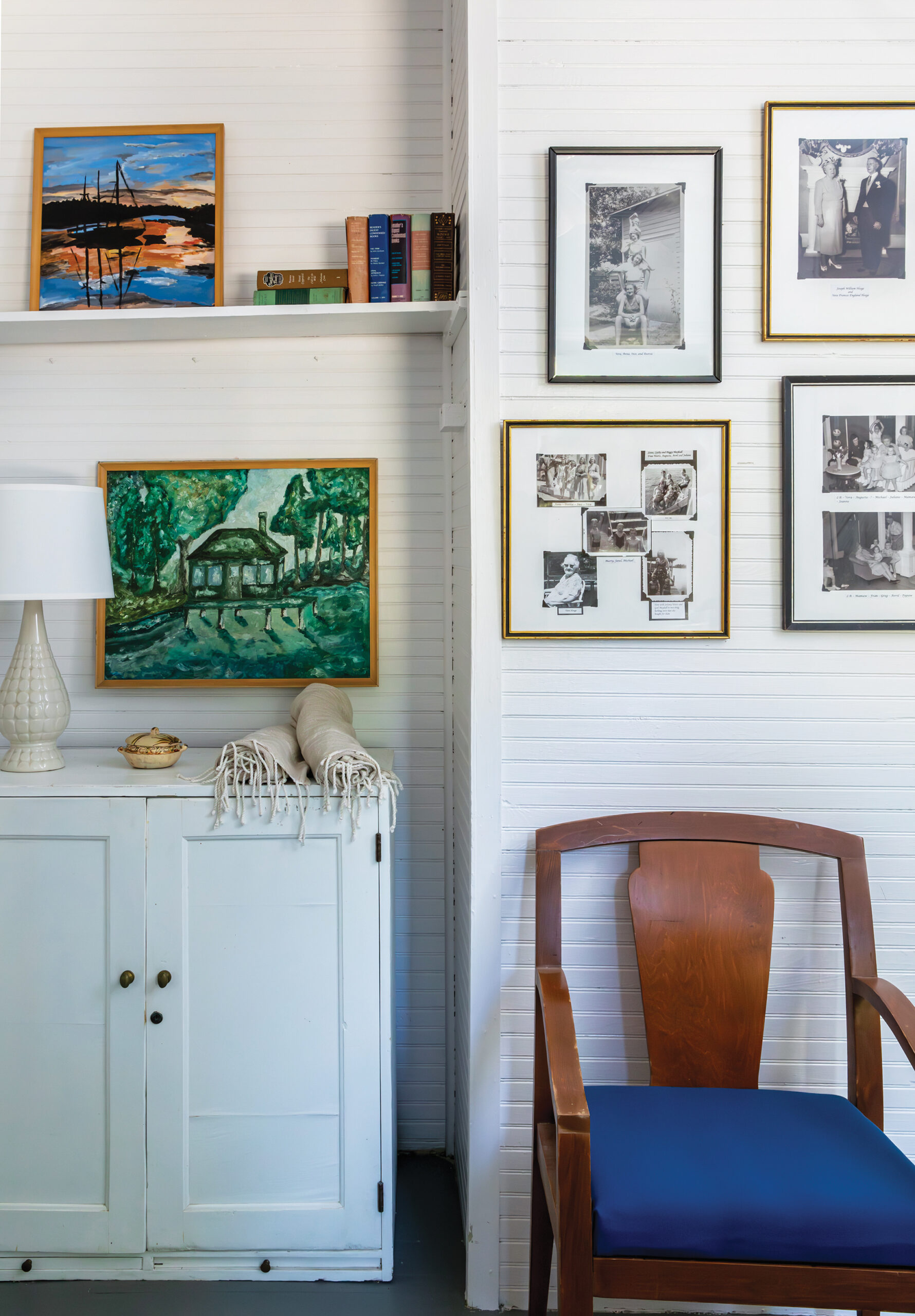
The home is simplicity at its best, and the cottage features a large porcelain sink with a drainboard, family photos from decades past, window units and a wrap-around sleeping porch. “Our grandparents stayed in the boathouse, and we stayed in the cottage,” Mayhall says when speaking of his childhood summers at the river in the ’60s and ’70s. “The porch had three sets of bunk beds, and the kids would sleep outside. Sleeping on the porch was a treat to me because it felt like you were sleeping outside. It was just neat.”
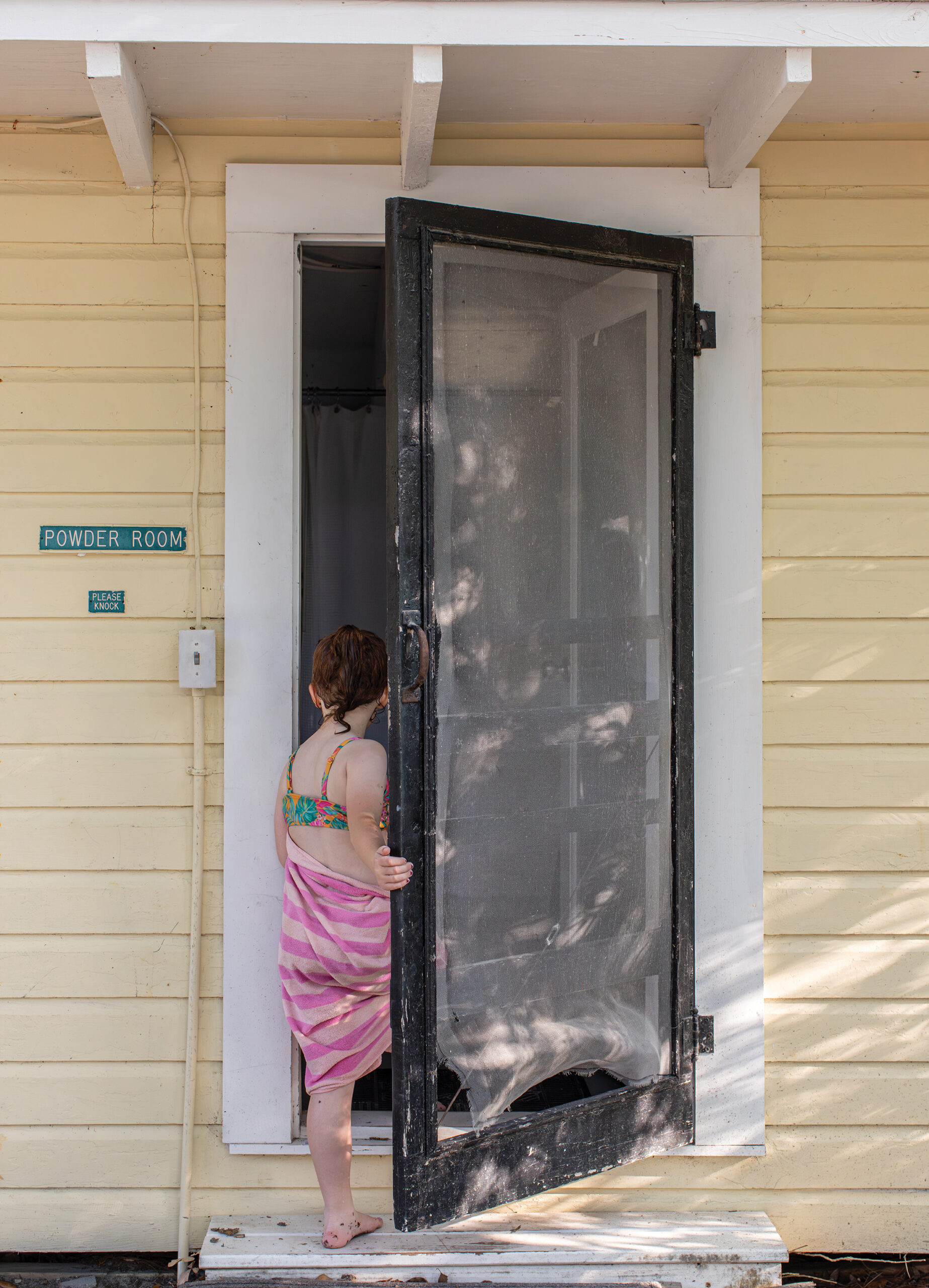
All summer, the kids exchanged shoes and regular clothes for bare feet and swimsuits. On Sundays, those without shoes simply went to Mass barefoot, whether attending services at St. Philip Neri on Dauphin Island Parkway or St. Rose of Lima on Mon Louis Island. Aside from their Sunday Mass obligation, the children were free of schedules, playing and exploring at their leisure and learning skills like fishing and swimming from the adults.
“We were a gaggle of kids,” Maceluch says with a laugh. “Belinda and David are the two youngest grandkids, and I’m the third oldest. We were taught to shoot guns down there. We went hunting and fishing. We did all sorts of things, and, of course, a big thing was water skiing.”
When it comes to water skiing, a couple of the grandchildren have a special claim to fame: Mayhall and his brother, Joe, became professional water skiers and competed in tournaments. “That just means we got paid to do it and to give autographs,” he says modestly, but his passion for the sport is apparent, even now, as he describes the days on the river with his brother after their parents bought a ski boat. “We would ski for eight hours a day, if not longer. We would experiment with different things and see if we could get up on them — a paddle, for instance. When gas was, like, 25 cents a gallon, our bill for the summer would be about $500. That’s 2,000 gallons over three months. We would burn up an engine a year.” Clearly, all that practicing paid off for the Mayhall brothers.
Being on the water was a highlight of every summer, as were large family gatherings. To keep the cousins close, the sisters hosted annual Christmas parties as well as potlucks on different holidays or when cousins who lived out of town came to visit. During these events, family members were everywhere, particularly on the wharf and in the water, and each aunt minded the children — but not just her own.
“If one of them told you to get out of the water because you’d done something wrong, you’d better do it, and you’d better sit on the sea wall and not move until that mama let you move,” Maceluch recalls. “If you misbehaved, they all had equal authority.” Each child also learned not to call out “Mama!” when everyone was gathered at Hooge Place, since every mother would turn around in response to the summons. Instead, to avoid confusion, each child addressed each sister — even the one that was the child’s mother — as “aunt” followed by her name.
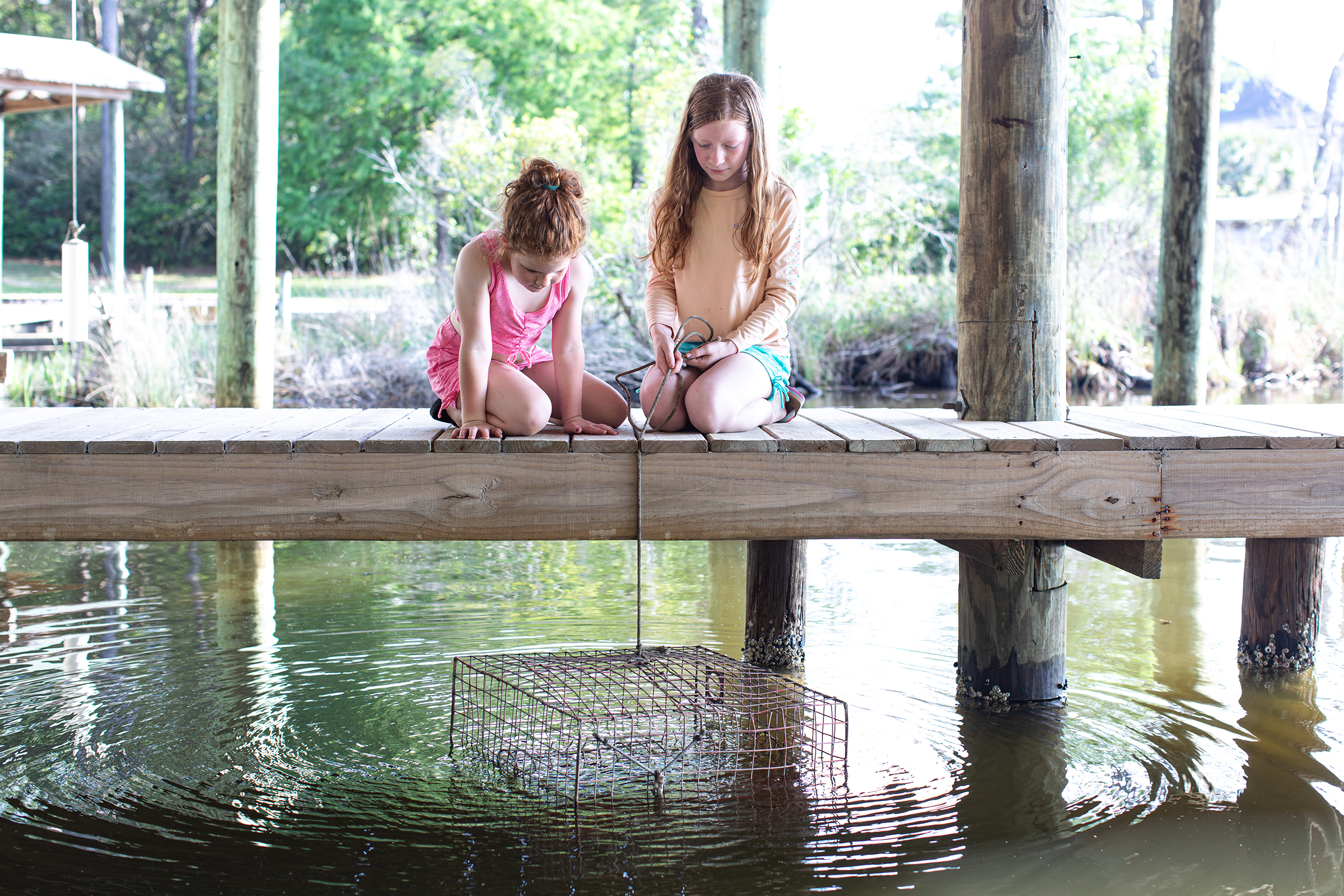
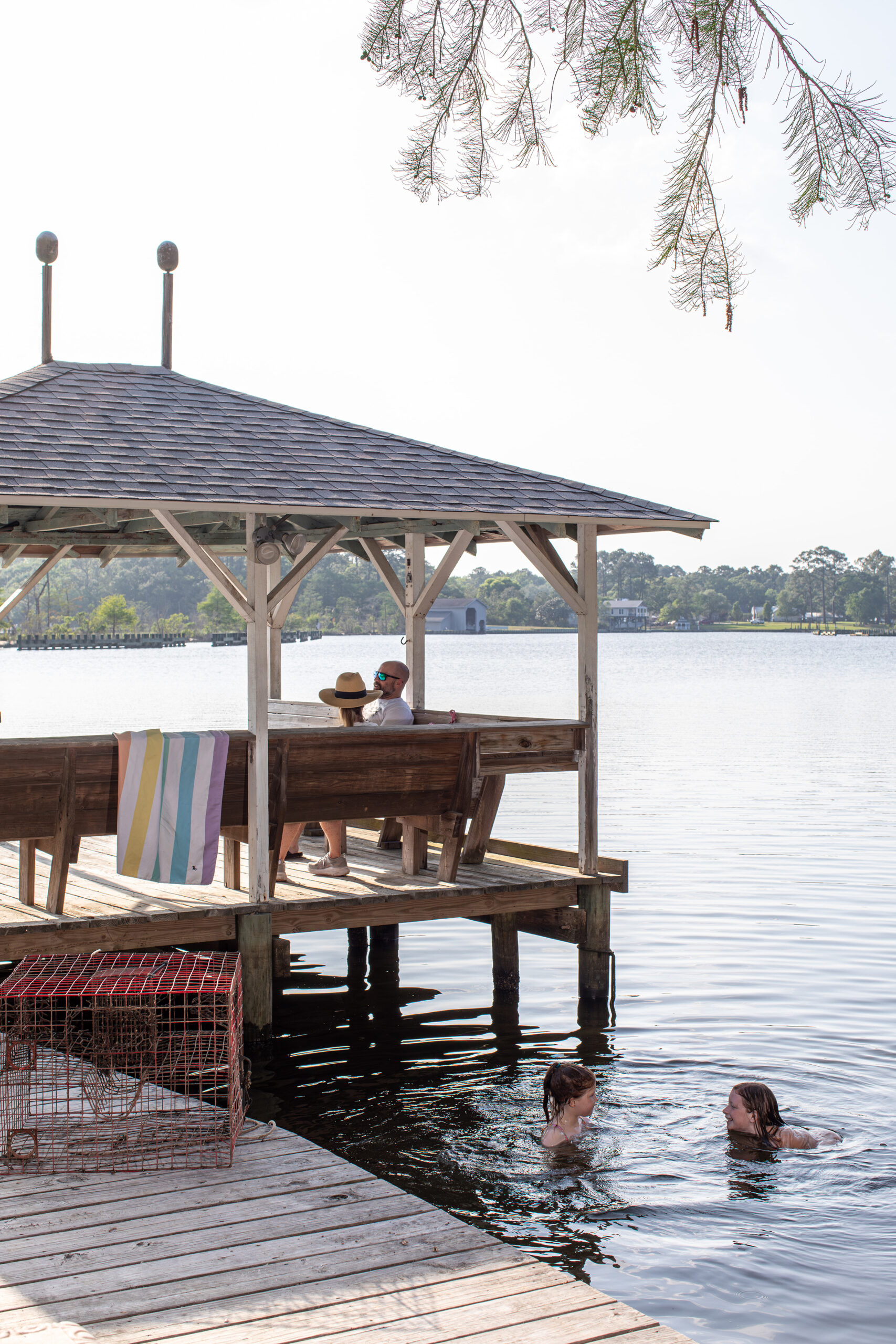
With so many children — and 17 years separating Pitman, the youngest, from Maceluch’s brother, the eldest — safety was, of course, a priority. Before being granted permission to play freely in the river, they had to pass the swim test devised by Maceluch’s mother. “My mother made us swim across the river and back,” Maceluch explains. “She was either next to you with a life jacket or in a rowboat. You swam over, got your breath, swam back. Then you were free to do whatever.” After earning their freedom, the kids could frolic in the water at their leisure. They spent hours splashing and playing and listened for the bell to ring, signaling it was time to eat. One of the most special treats was accompanying Pitman’s father when he took the boat to the marina for gas, since his passengers were always permitted to pick out bubble gum or ice cream.
“We’re all water bugs, whether it’s fishing, swimming or sitting on the wharf watching boats or skiers going by,” Mayhall says. “The ambience of the property and the river itself make it so appealing.”
Although it’s easy to spend all day swimming or boating on the river, the water is not the only form of entertainment at Hooge Place. As one of the oldest grandkids, Maceluch remembers her childhood in the 1950s before the youngest ones were born, when her grandfather built a zip line and a play yard on the property. A fence surrounded the yard to ensure the little ones didn’t wander off toward the river, and inside the yard was a boat. He cut off the bottom and filled it with sand so the children could sit on benches and dig.
Even though the play yard no longer existed by the time the youngest grandchildren came along in the later 1950s and early 1960s, Hooge Place still allows the imagination to run free. Two metal horses gallop across the yard — formerly part of their grandparents’ home in Monterey Place, now a spot where children can sit and play pretend. When it rained, the grandchildren would dart beneath the carport for shelter and perform talent shows or plays. For a time, they had a ship’s wheel from an old steam ship chained to the wharf, and a cousin could become the captain, looking across the river and sailing to unknown lands. “We were given the freedom to let our imaginations go,” Maceluch says fondly. “When you get that many kids and that many different imaginations, you don’t know what’s going to come of it. Lots of fun and creativity — and trouble!”
All teasing aside, the property has always focused primarily on family. Some people are not fortunate enough to know their first, second or third cousins very well, but Hooge Place has allowed all the siblings, aunts, uncles, cousins and relatives to prioritize spending time together. The river gives everyone a shared purpose, a common meeting place and an established reason to visit. Through emphasizing family relationships and fostering close bonds, the summer home has endured and thrived. “It’s been instilled in us, and I think that’s why our children love it as much as we do. We’re all different in every way, but there’s so much similarity, and I think the similarity is the core of family,” Pitman explains. “Everybody has love for the river and the memories and how it’s always been in our lives. It’s home. It’s our home.”
The core of family has gotten them through good times and bad, such as when the boat house suffered damage during Hurricane Katrina. The boat house was built by Hooge and a few men on Mon Louis Island, which had shipbuilding facilities, a sawmill and a magnolia grove, so magnolia wood was used in its construction. “They always said the interior walls of the boat house are what kept the structure upright during Katrina,” Pitman says. Although the hurricane shifted the house, the magnolia wood and siding held together so well that it was not destroyed. A few years of careful planning and engineering set it right again with pilings and support beams, and now it is sturdier than ever.
The grandchildren acknowledge that it is unusual to have a property remain in the same family for decades, but they don’t expect that to change any time soon. Now that they have children and descendants of their own, Hooge Place has welcomed new generations of river rats and water bugs. The grandchildren hope the traditions they established at Hooge Place will continue, and they are confident that their children will work together to maintain the property and make memories there in the years to come. Everyone shares a love for life at the summer home — waking up to go fishing first thing in the morning, playing cards on a warm night after a wonderful seafood dinner, sitting on the pier to watch the sunset over the river and, above all, being surrounded by family.
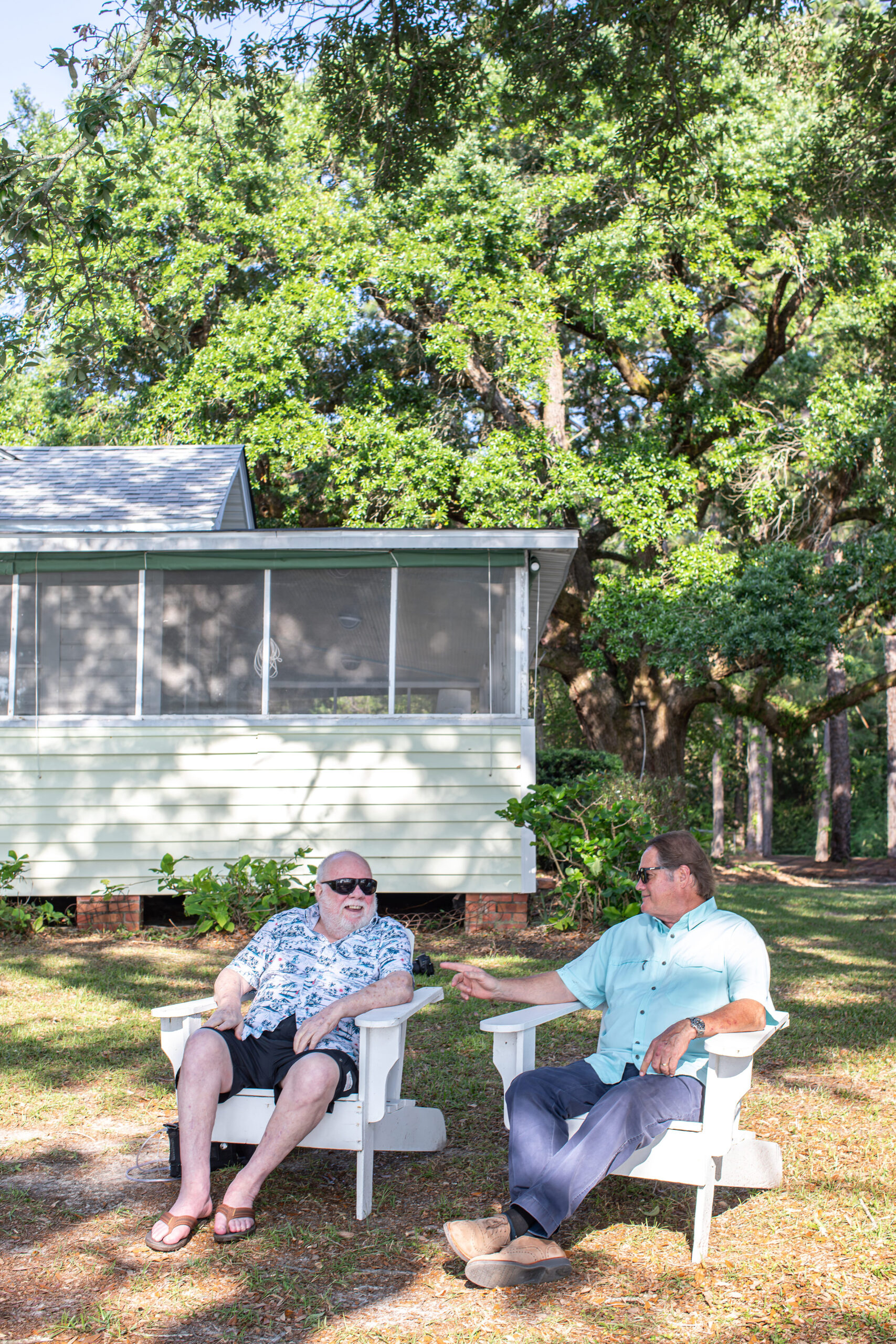
“It’s the magic when you get to the place; it’s like you’ve shed all your worries,” Maceluch says. “You’re out in the sunshine and God is right there next to you.”
When a property is as lasting, special and magical as Hooge Place, it becomes so much more than simply a summer home. “It’s a part of our being. It’s a part of our souls,” Maceluch says. So it has been for many generations, and so it will be for many generations to come. Vera and Joseph Hooge and their daughters would be proud of how well their descendants are upholding the importance of the family values they established.
On the tranquil banks of the river rests a quaint home filled with history, with memories, with traditions, with laughs, with love and, above all, with family. Here, time stands still, connecting past and future generations through the ease and simplicity of a quintessential Southern summer. Standing on the wharf at Hooge Place, entranced by the sunset over Fowl River and surrounded by loved ones, the motto established by the sisterhood rings true: peace and harmony.
RELATED READ: “The Magic of Fowl River”