Remembering Judge Roy Bean
Presented by
Budweiser-Busch Distributing Co.

Some places don’t disappear when the doors close. They settle into the people who survived them. They linger in the cultures that loved them. And here on the Gulf Coast, they live on in the stories and superstitions still spoken softly along the shore.
In Fairhope, an eight-by-eight-foot section of pine floor still occupies a stretch of beach, salvaged from the ashes of Judge Roy Bean after fire tragically claimed the storied Southern saloon in 2005. The boards are darkened from decades of spilled beer and cigarette smoke, worn smooth by boots, bare feet and the restless shuffle of Saturday nights that seemed to last forever.
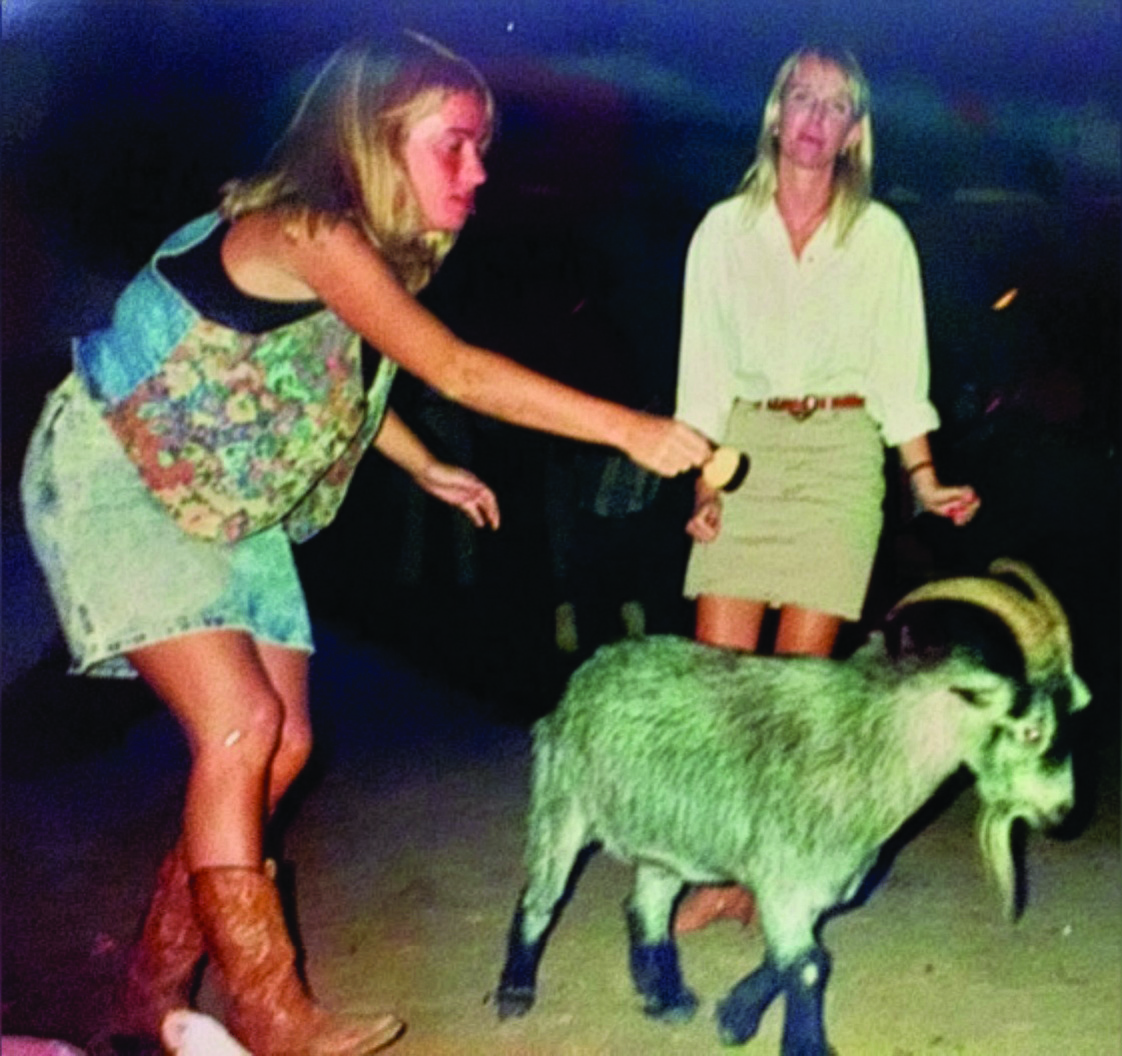
Once, they held up a bar room where a goat named Billy wandered between tables, where membership cards were passed out on Sundays to skirt blue laws and where a young Jimmy Buffett played for a locked-door crowd long before he was a household name.
Today, they hold up patio chairs and salt air. But for those who were there, the floor still hums.
The Start of Something Wild
One of the first people to ever stand behind the bar remembers what it was like before the legend took hold — when it was still just a gamble on a dark stretch of Baldwin County road.
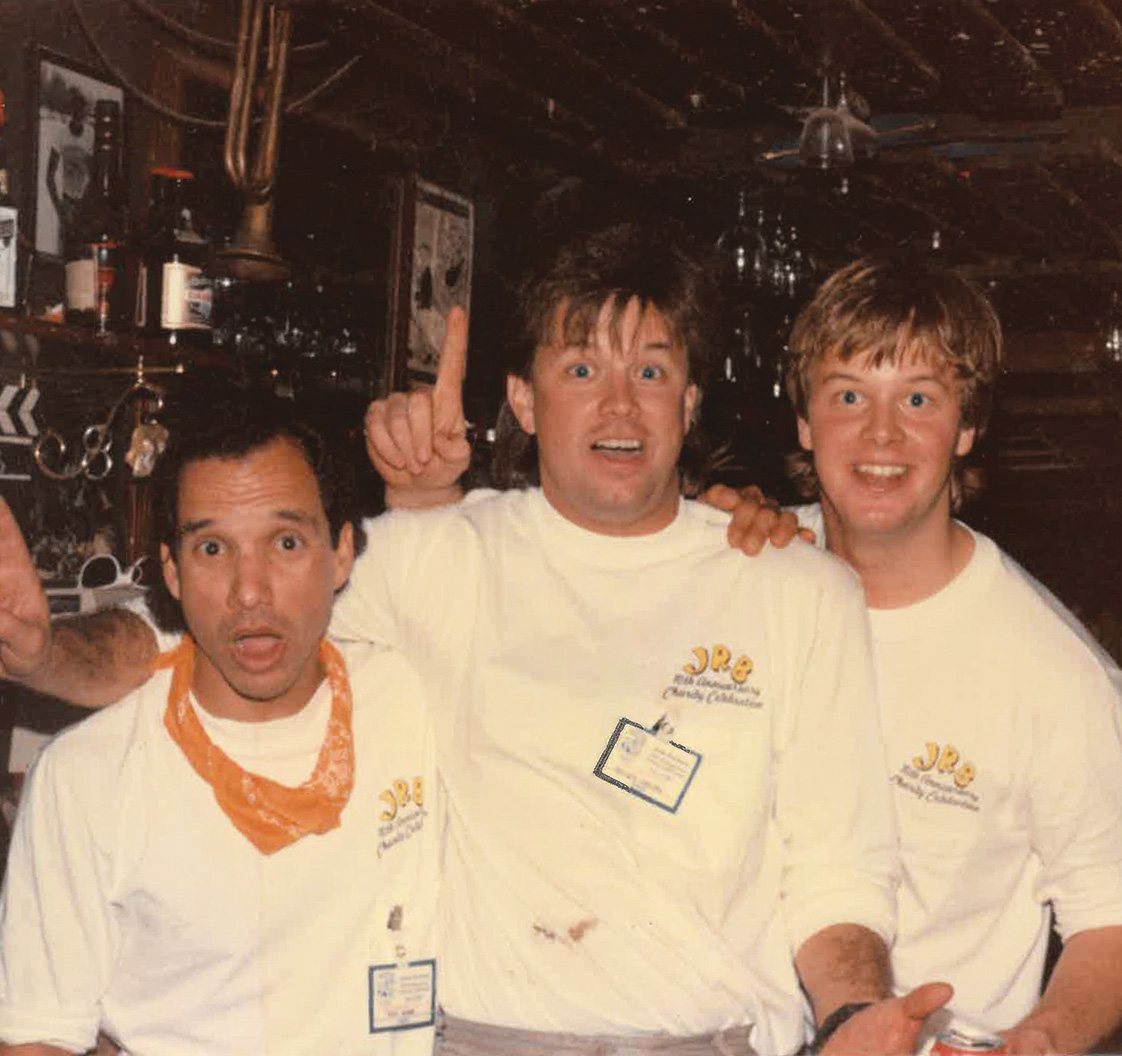
“I worked the bar opening night,” says Harry Johnson, now 75. “I was the first guy behind the bar at Judge Roy Bean’s.”
Johnson had already tried his hand at running a college bar in Mobile called Fandango Saloon in the mid-1970s. When that venture ended, he crossed Mobile Bay and found himself in a part of Baldwin County that looked nothing like the bustling corridor it would later become.
FREE DOWNLOAD
Mobile Bay readers share their favorite Judge Roy Bean memories
“This was kind of No Man’s Land back then,” he says. “Not a lot of streetlights, not a lot of stop signs or red lights.”
The man responsible for turning that quiet patch of road into one of the Gulf Coast’s most renowned gathering places was John Warren “Jack” West, the visionary owner, founder and creative maestro behind Judge Roy Bean. An avid outdoorsman who dabbled in everything from hunting to sailing, Jack was known to find immense pride and joy in teaching others to relish alfresco activities as well, particularly fly fishing.
“Jack was straight out of central casting,” Johnson would later write. “An L.L. Bean poster boy with looks, swagger, incredible personality and some mysterious and eternal font of energy. Jack took great interest in everyone he met. He had an unwavering curiosity, and he used that trait to learn from others and expand his world. His interest in others was genuine — something which led me to learn so much from him.”
Johnson met West before the bar even opened. The building had been purchased and renovated, but legal hurdles kept the doors closed for months while West fought to secure a liquor license. When the license finally came through in the fall of 1977, Johnson was there for the very first night.
“I worked for him about a year, maybe a year-and-a-half part time,” he says. “And I just watched him blow it up.”
What West created was, according to Johnson, far more than a bar.
“Jack was brilliant with marketing and personality. He was a master of decor. He could find anything and make it work. He would find stuff on the side of the road and do amazing things with it. Somebody once told me he could turn chicken**** into chicken salad. The Bean on Sundays was pulling people out of Orange Beach, Gulf Shores, West Mobile, Midtown, anywhere in Baldwin County. It was just wild. Cars parked up and down the road forever. It was just such a unique place and what Jack did with it was amazing.”
Don’t Spike the Beer. Spike the Ball
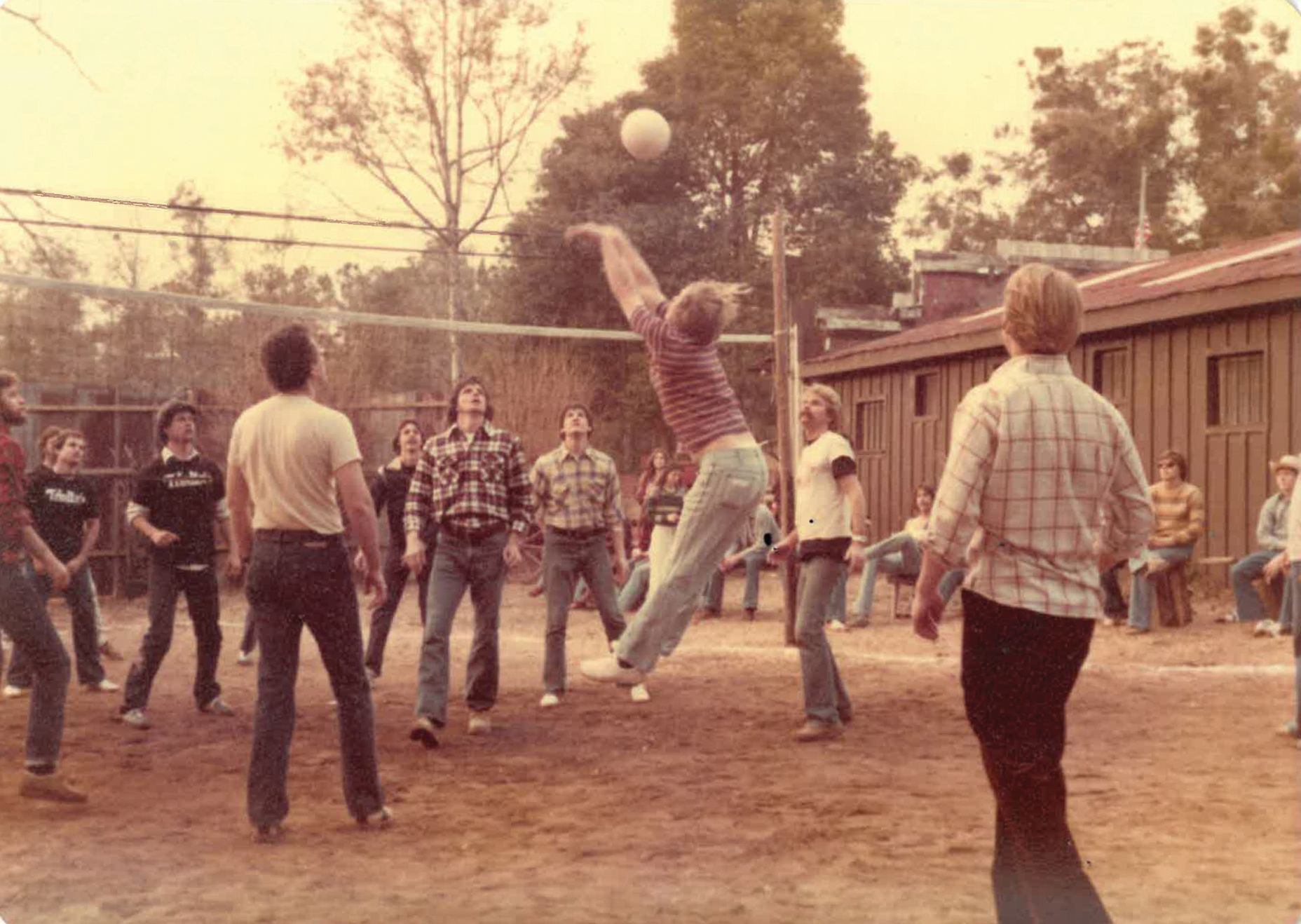
For nearly three decades, Judge Roy Bean stood just off U.S. 98 in a sleepy stretch of Daphne, long before traffic lights multiplied and subdivisions swallowed the pine. It was never meant to be a landmark. In fact, depending on who’s telling the story, it all began as little more than a solution to a volleyball problem.
In the mid-1970s, a young entrepreneurial Jack West needed a place for Sunday tournaments. The group had been gathering at a house down on the Bay, carving ruts into a neighbor’s yard with makeshift courts and coolers full of beer. When that invitation wore thin, West stumbled into the old Embassy Lounge — a former Black club that opened only when its owner could afford to stock it.
West arranged to use the courtyard for volleyball. Before long, he had purchased the place.
What rose there was not sleek or strategic by any stretch. In fact, it was more scavenged and imagined into existence than anything.
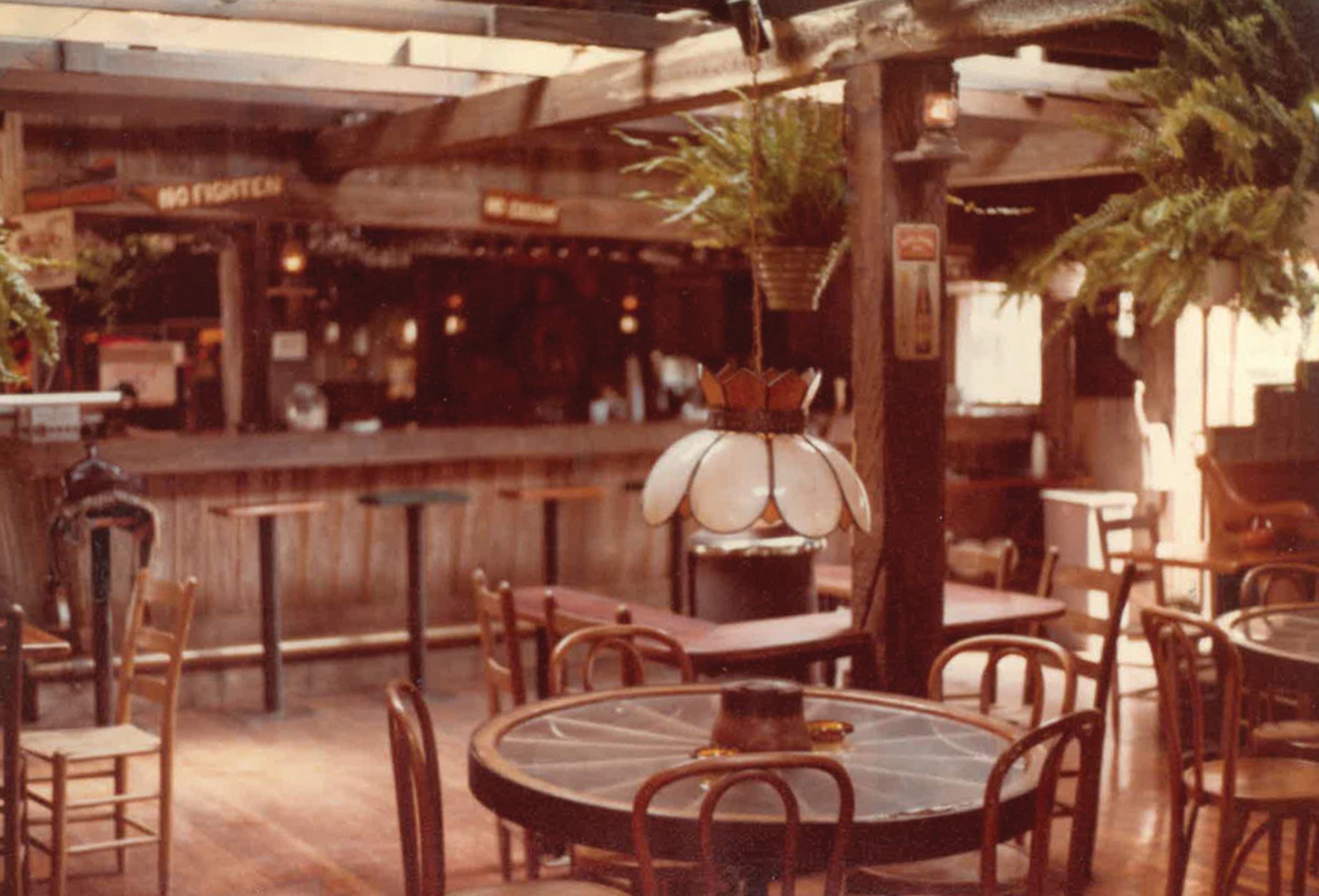
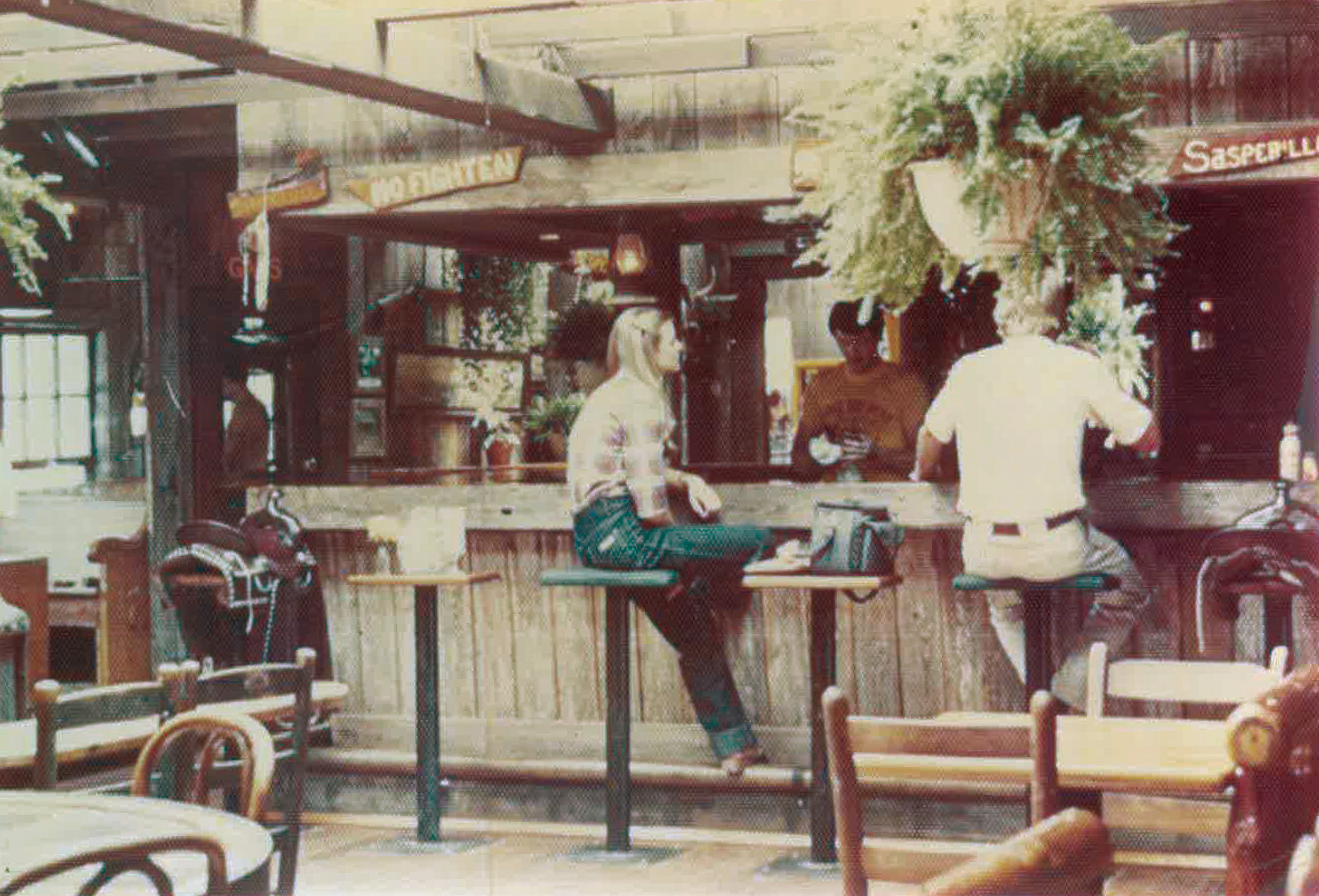
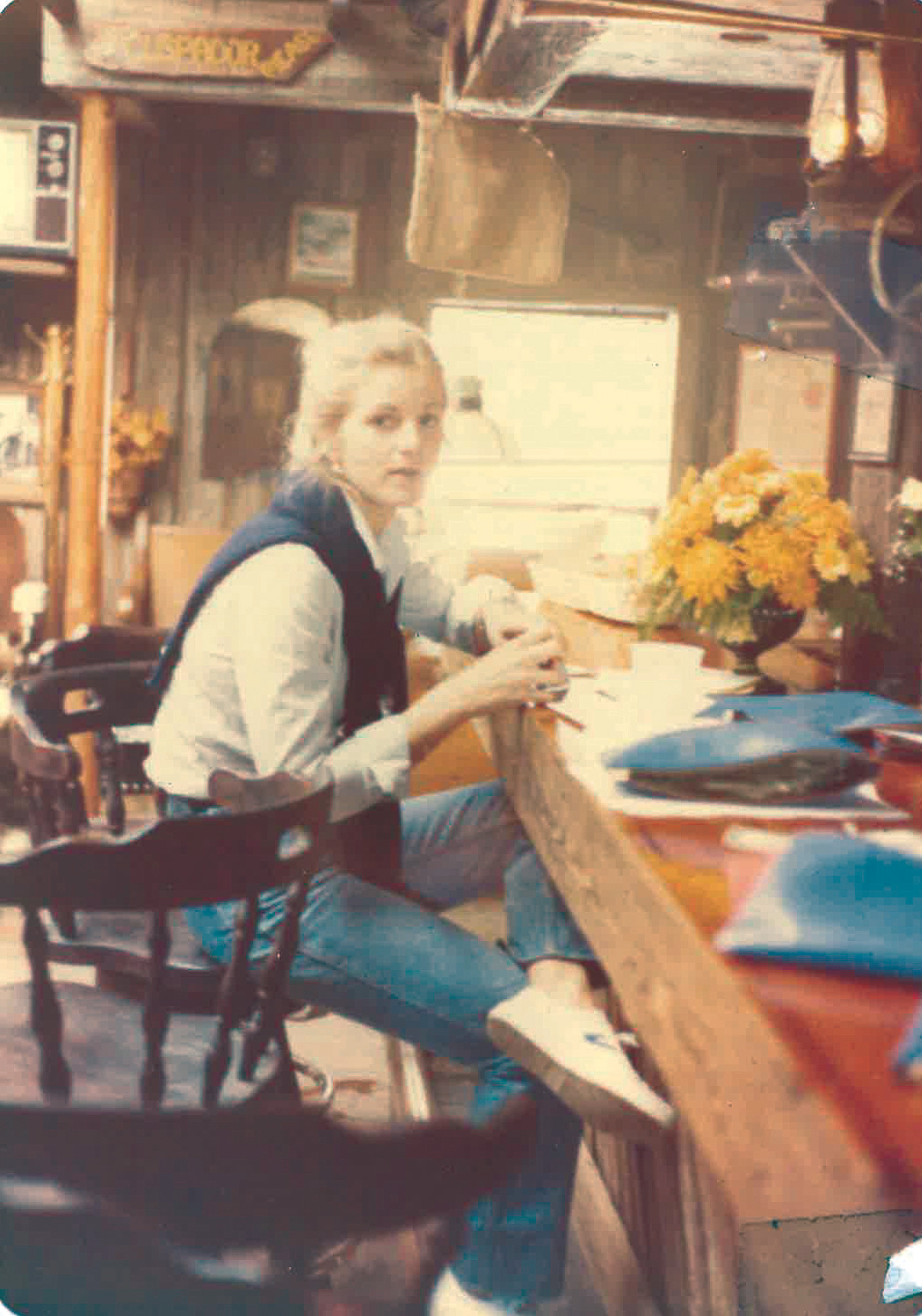
West and partner Dan Sweet, who would eventually become general manager of The Bean, built the bar from salvaged pine ripped from barns and chicken coops. Wagon wheels were fitted with Plexiglass and turned into tables. A massive stone fireplace anchored the room. A beveled mirror was erected behind a long, heart-pine bar that gleamed and glistened under fresh polyurethane.

Shop Judge Roy Bean
Don’t make Billy mad! Celebrate the 50th anniversary of Judge Roy Bean with our commemorative T-shirts. Click below to shop additional styles.
On the day it officially opened in 1977 — after a year of permitting limbo and quasi-legal Sundays — it already looked a century old.
“It looked like it had been there a hundred years,” recalls Mark Calametti, who first arrived as a 17-year-old day laborer and soon became a barback, then bartender. “The whole place was cobbled together with stuff that people donated or things that Jack found, but it was beautiful.”
For first-time visitors, the effect could be immediate.
“It was just the coolest place ever,” remembers longtime patron and doorman Randy Niemeyer. “It felt like home. I have so many thousands of memories from this place.”
Inside, the details added up to something unforgettable.
“Between the goat and the varnished pine wood and the fireplace and the bar,” Niemeyer says, “it was just a very comfortable place to be. The booths were wonderful. I even watched a friend of mine get engaged in the very front booth one night. I was there when one of my tennis buddies met his wife and they started dating. So many wonderful people.”
Jack West’s Frontier Dream
The aesthetic wasn’t accidental.
West had been captivated by the album cover of “Viva Terlingua!” by American country and folk singer-songwriter Jerry Jeff Walker — a sepia-toned Texas bar scene that captured the romance of the outlaw Wild West. According to Calametti, Jack even tracked down the real-life bar pictured on the album.
He returned to Baldwin County determined to build something that felt just as cinematic. Something just as epic. Something larger than life.
Johnson remembers that vision — powered largely by Jack himself — translating immediately to the atmosphere and guest experience.
“Jack was bouncing off the walls,” he says. “He had so much energy and was such a visionary; and he would be bouncing off the walls even when the place was closed. Once the people started piling in, though, the energy level would crank up even more. He was the greatest talker. But he was a great listener, too. He would get to listen to people’s stories, where they were from, and he would take notes. He was brilliant at finding opportunities and turning them into something incredible.”
But as the crowds grew, and the novelty of The Bean began turning into a full-fledged Gulf Coast phenomenon, West quickly realized he needed help running the increasingly chaotic operation. According to Mark Calametti, one of the people who became most essential to the bar’s identity was his older brother, Phillip, whom Jack persuaded to relocate from Mobile to Daphne to help manage the place during its formative years.
For many longtime regulars, Phillip became just as synonymous with The Bean as the fireplace, the goat or the music itself. Equal parts ringmaster and host, he helped give structure and personality to a venue that often felt delightfully on the verge of spinning out of control.
Where Everybody Knows Your Name
The timing helped.
The Western revival was in full swing. Country-rock was ascendent. And Daphne, then a quiet bedroom community, had little in the way of atmospheric gathering places.
Judge Roy Bean didn’t just fill a gap. It created its own gravity. By the late 1970s, the Sundays were legendary.
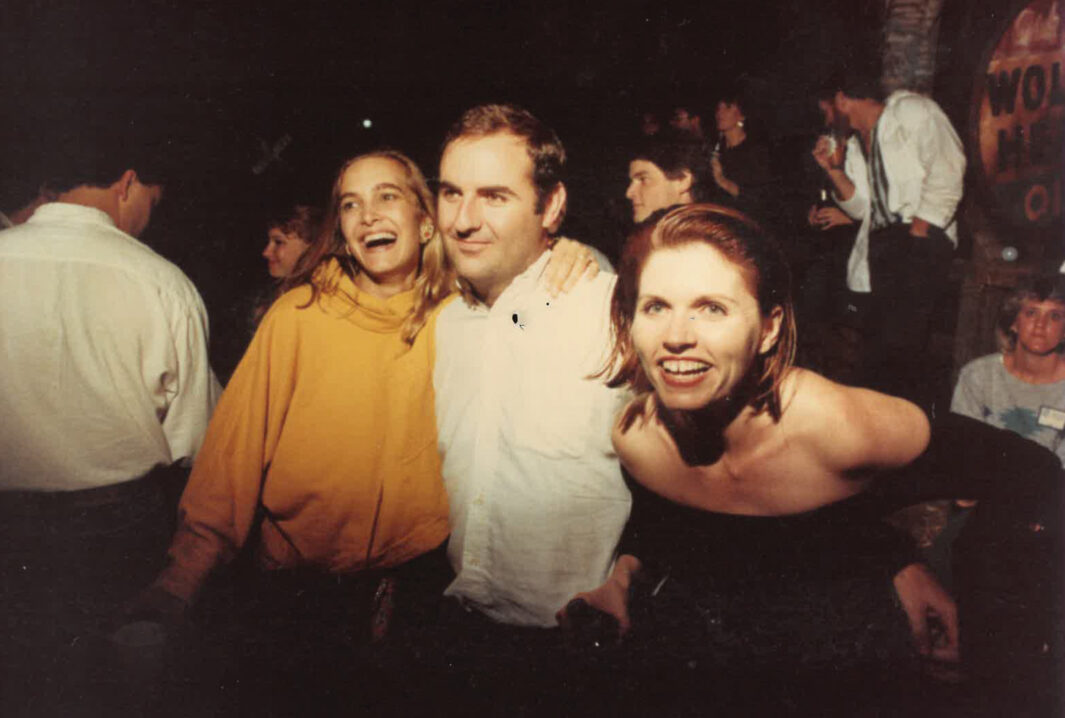
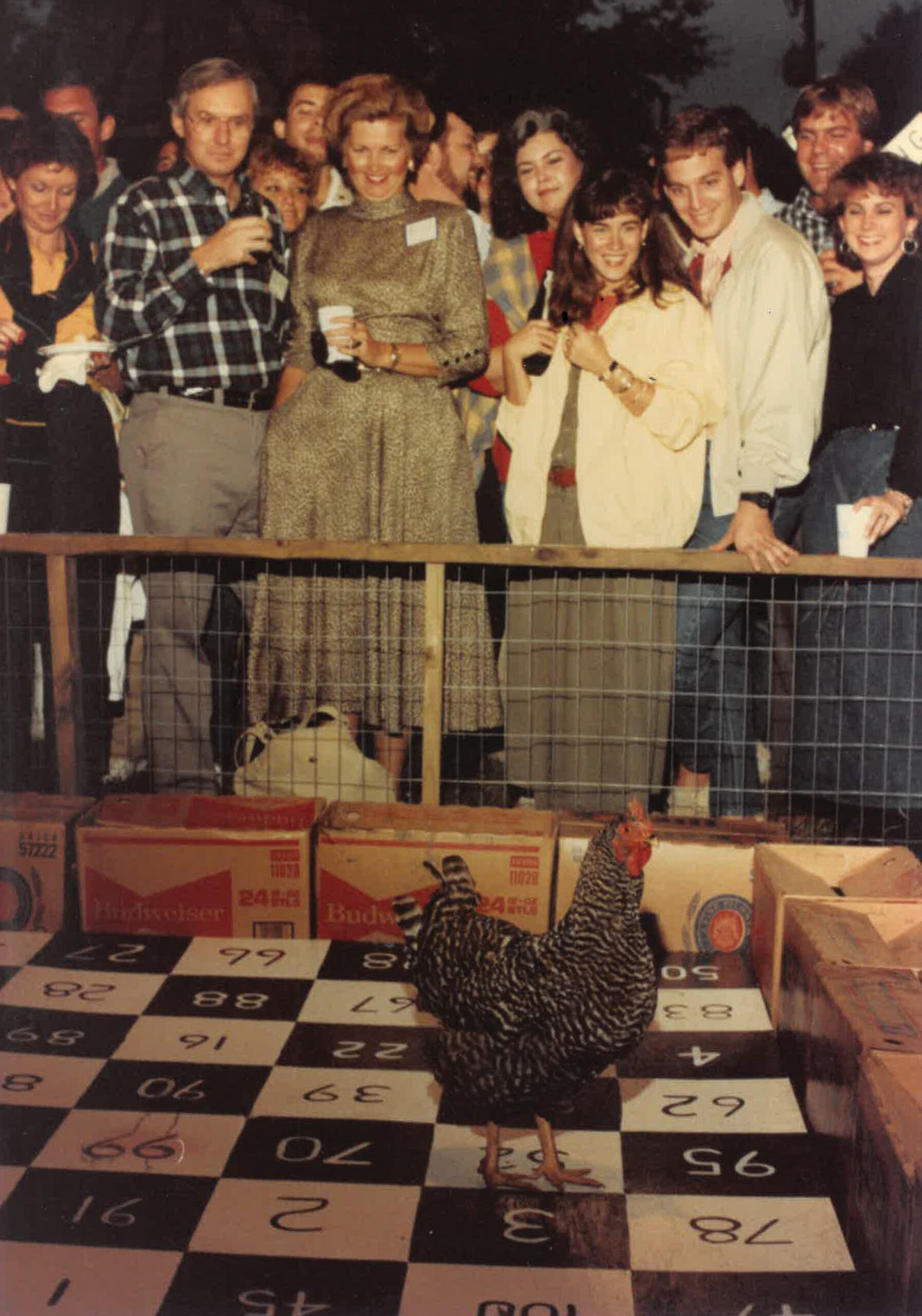
To dodge Alabama’s blue laws, the bar issued the aforementioned “membership cards.” Regulars would shoulder through the wooden doors, past the wagon-wheel tables and the now-trademark wandering goat who casually strolled from table to table, nibbling lettuce and occasionally stealing the show.
“Billy the goat was an icon there,” Niemeyer says. “He would let you pet his head, and then when you smelled your hand, you smelled like goat. But Billy was absolutely a tourist attraction. People would come from all over just to see this bar with a goat.”
Longneck bottles clattered into rectangular trash bins carried one-handed by Perrico Freeman Hunter, a wiry fixture whose quiet presence became an integral part of the lore.
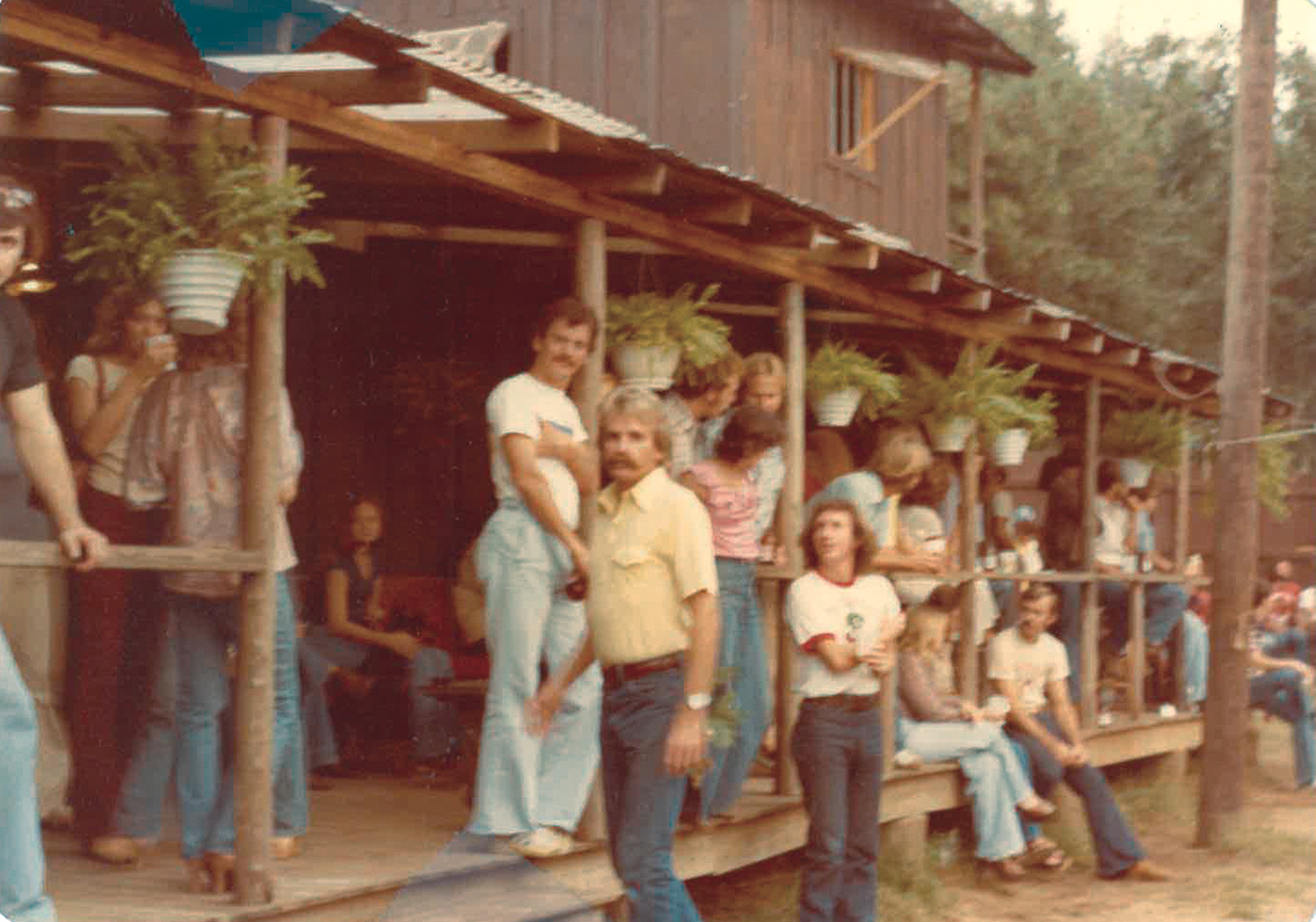
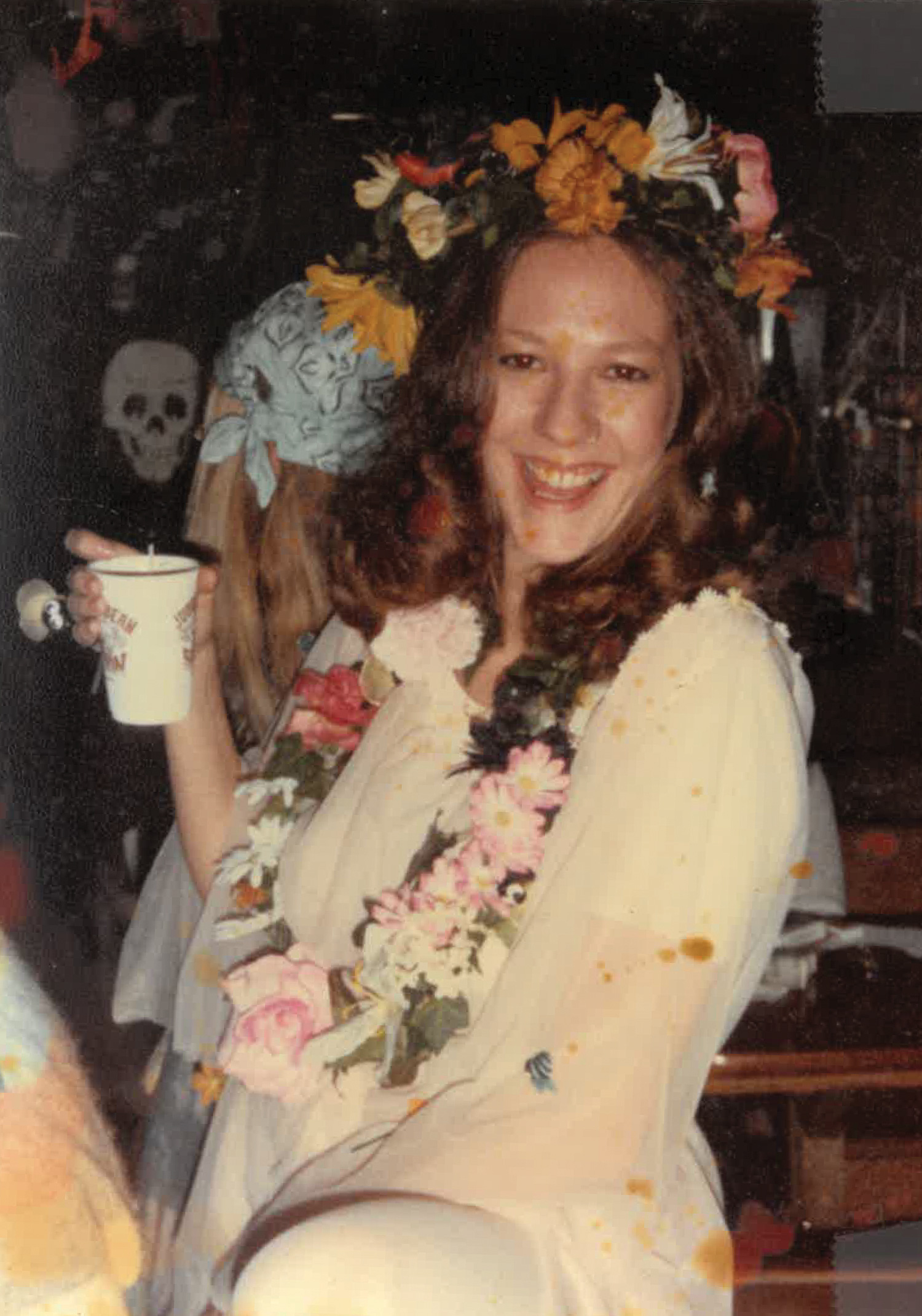
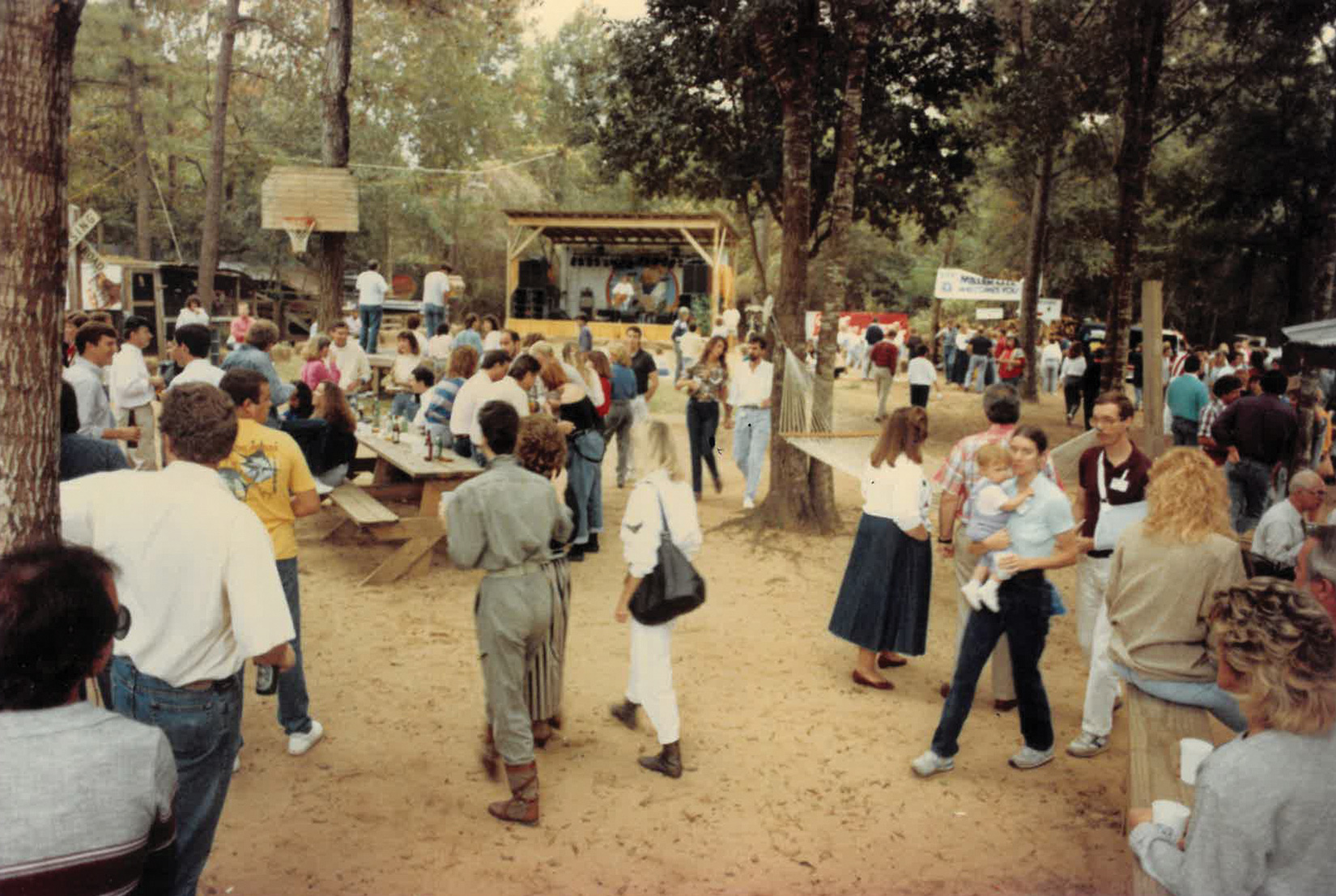
Buses from Mobile and other nearby towns brought weekend crowds — people who would laugh, dance and sometimes spill out into the parking lot as the energy inside became electric.
The mayor might be there.
So might your local mechanic.
So might a visiting celebrity fresh from a golf tournament at the Grand Hotel.
And if you were a regular, chances were, you knew most of the room.
“When I walked in there,” Niemeyer says, “I was going to know 50 to 75% of the people in the room. It was home for me. I made some great lifelong friends there.”
The Sound of The Bean
From its earliest origins, Judge Roy Bean developed a reputation as one of the most dynamic and uniquely eclectic live music venues along the Gulf Coast, thanks in no small part to Jack’s trademark vision and uncanny way with people. And the place never anchored itself to a single genre. Instead, it became a crossroads where country, rock, folk and local Gulf Coast bar tunes all collided.
“Judge Roy Bean’s always had something for everybody musically,” recalls Robert Sully, who played countless nights there, opened for nationally renowned artists and spent much of the 1980s performing with the acclaimed Locust Fork Band.
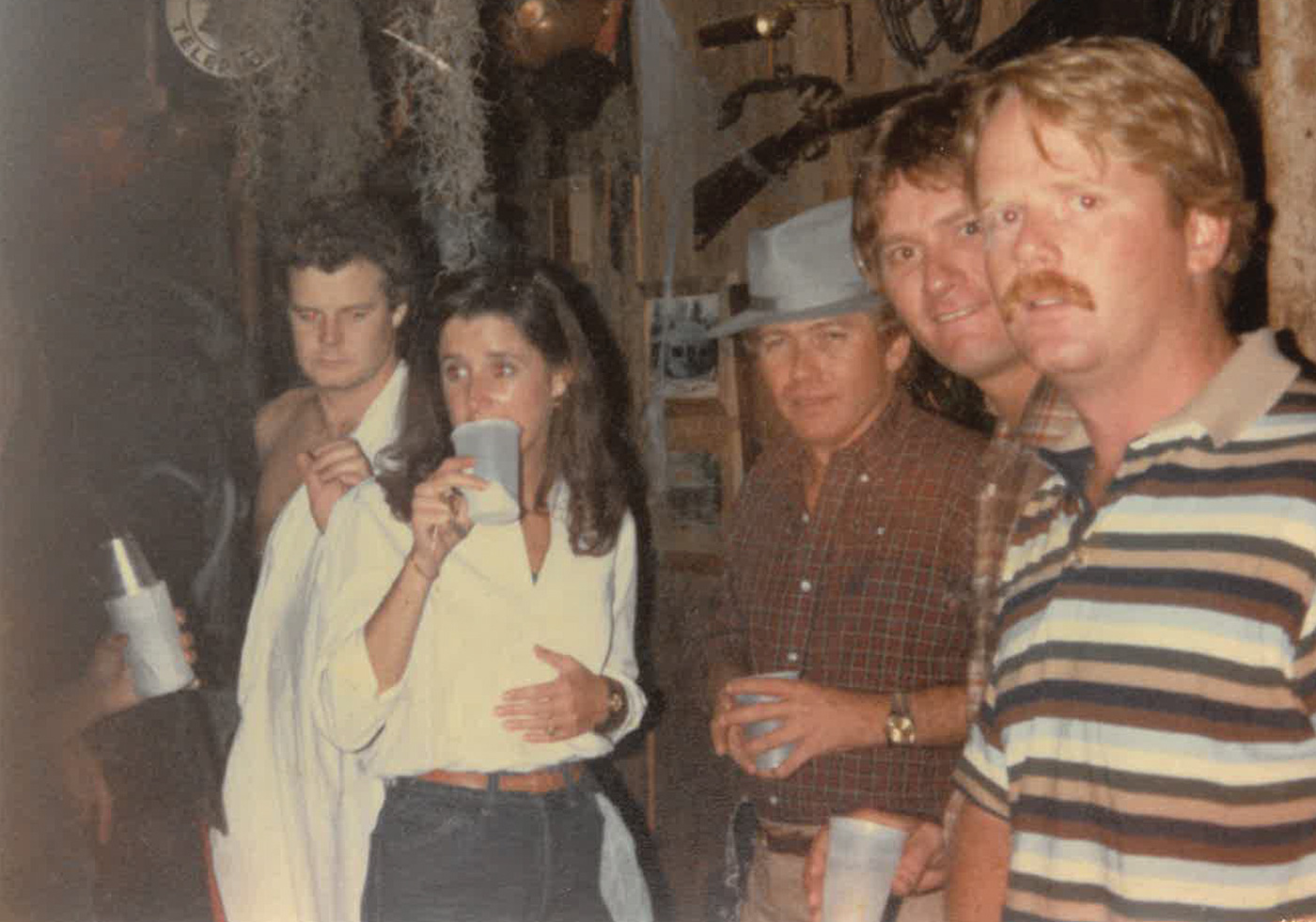
Local bands and artists often opened for or performed alongside national touring acts. One night might feel like a concert. The next night might feel like a house party. For musicians, the venue offered something rare: extended runs performing for crowds that were eager to listen — and always ready to have a good time.
“You know how much it’s worth to a musician to set up and play Thursday, Friday, Saturday and Sunday?” says Sully. “It’s priceless. I’d start at eight o’clock in the evening and not take a break until two in the morning. Forty-five or 50 songs straight through!”
And while local talent certainly helped define the nightly atmosphere and establish a musical culture all its own, the bar also attracted those nationally recognized artists, each of whom are now synonymous in their own way with the legend and lore of The Bean. Over the years, the stage welcomed a diverse hodgepodge of names and an impressive lineup that included the likes of Mac McAnally, Dr. John, John Prine, Alabama, Richie Havens, JD Souther, Poco, America, Karla Bonoff, Emmylou Harris, Jerry Jeff Walker, Willie Nelson, The Marshall Tucker Band, Leon Russel and others.
“Every one of these people, when they came to Judge Roy Bean’s, they were already famous,” says Sully.
Many were touring through the Gulf Coast area and heard about the place from fellow musicians or promoters. And word traveled fast in the music biz.
“The Bean didn’t just shape the musical identity of the Gulf Coast,” notes Sully. “But it actually impacted other states as well. I was on a plane one time going from Atlanta to D.C. to play in a show and the guys in front of me were talking about Judge Roy Bean for the whole trip. It was so original and different that if you ever went there, you took it home with you. You took it home to Colorado, to Michigan, to New Jersey. You took it home and you told stories about it.”
It was more than a bar. It was a fantasy frontier town, a music venue, a social hub, and — depending on who you ask — the wildest living room on the Gulf Coast. The only difference was that this living room just so happened to have its own soundtrack.
I Heard I Was In Town
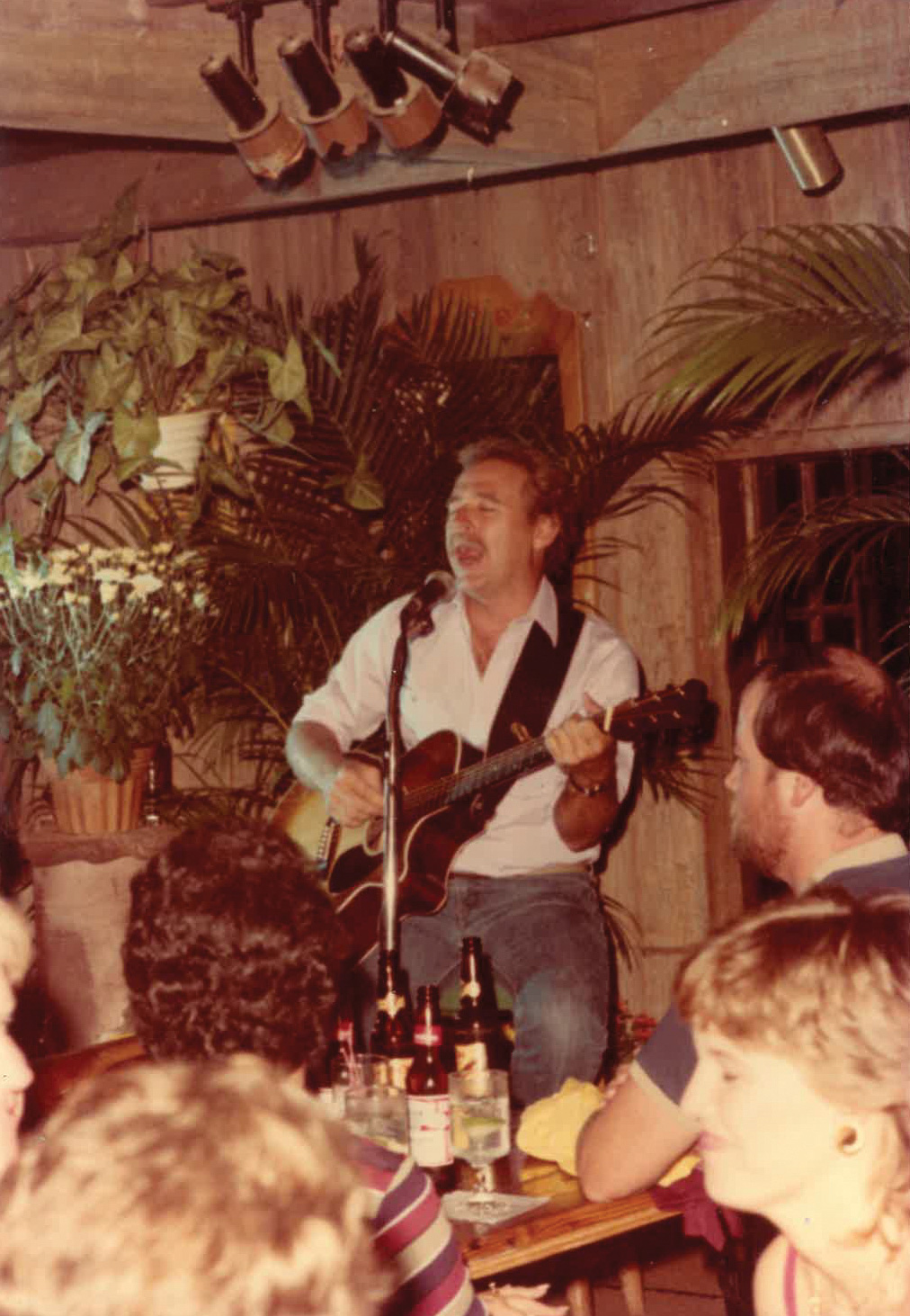
And sometimes — just sometimes — Jimmy Buffett would saunter into that room and become a part of that soundtrack.
“I remember Buffett walking in one night and I was standing at the bar,” Johnson recalls. “Jack got him up on stage, and the place just went really quiet. Hundreds of people in and around there. He played a few songs. It was incredible.”
For Niemeyer — whose role as bouncer/doorman afforded him a unique perspective and vantage points — one night stands out in particular.
“Jimmy Buffett had played a concert in Mobile and he came over,” he remembers. “We locked the doors. There wasn’t but 50 people in there. So, I had my own private Jimmy Buffett concert.”
Word would spread like wildfire: Buffett’s in town. Whether the rumor started organically or was gently nudged along by West hardly mattered. The place would swell, shoulder to shoulder, standing room only. Eventually, though, the Buffett Rumor Mill took on a hilarious life of its own thanks to Jack and was often used as a way to drum up business when things were slow.
“You know, there was this whole ‘I Heard I Was In Town’ thing,” recalls Calametti with a chuckle. “Sometimes Jack would just start a rumor that Buffett was going to be in town whether he actually knew for sure or not. Now sometimes he may have known that Buffett would be in town because, yeah, well, Jack and Jimmy were pretty tight. But he didn’t know if he was going to pop into The Bean or not. But he’d start a rumor anyway and suddenly the place was jumping. There were a lot of times [Jimmy] would pop in totally unannounced and have an impromptu concert.”
On certain nights, West locked the doors. “If you’re in, you’re in,” he’d tell the crowd. No one else would be admitted.
Inside, Buffett played for a room that understood it was witnessing something fleeting, something historic.
“You’d think to yourself, I’ve got to remember this minute. I’ve got to remember this moment,” Calametti says. “You just knew you were in a special place.”
For Mark, part of remembering those moments meant designing a t-shirt.
“I happened to be a graphic artist too. So I started doing the t-shirts…but not until after I had come back from art school,” he says. “And that was in ’86. I did a ‘I Heard I Was In Town’ shirt for one of the Buffett concerts. That was the first t-shirt I did for Jack, and it had a cartoon of Buffett in his convertible Falcon, which I later bought.”
More Than Just Music
West handpicked musicians himself, leaning on relationships and instincts to bring acts through a venue that, on paper, had no business whatsoever hosting them. Contracts were signed by names that would only grow larger with time. Charity shows filled the backyard amphitheater.
Touring artists, weary of cavernous arenas, seemed to prefer the intimacy.
“The music that went through there was phenomenal,” Niemeyer admits.
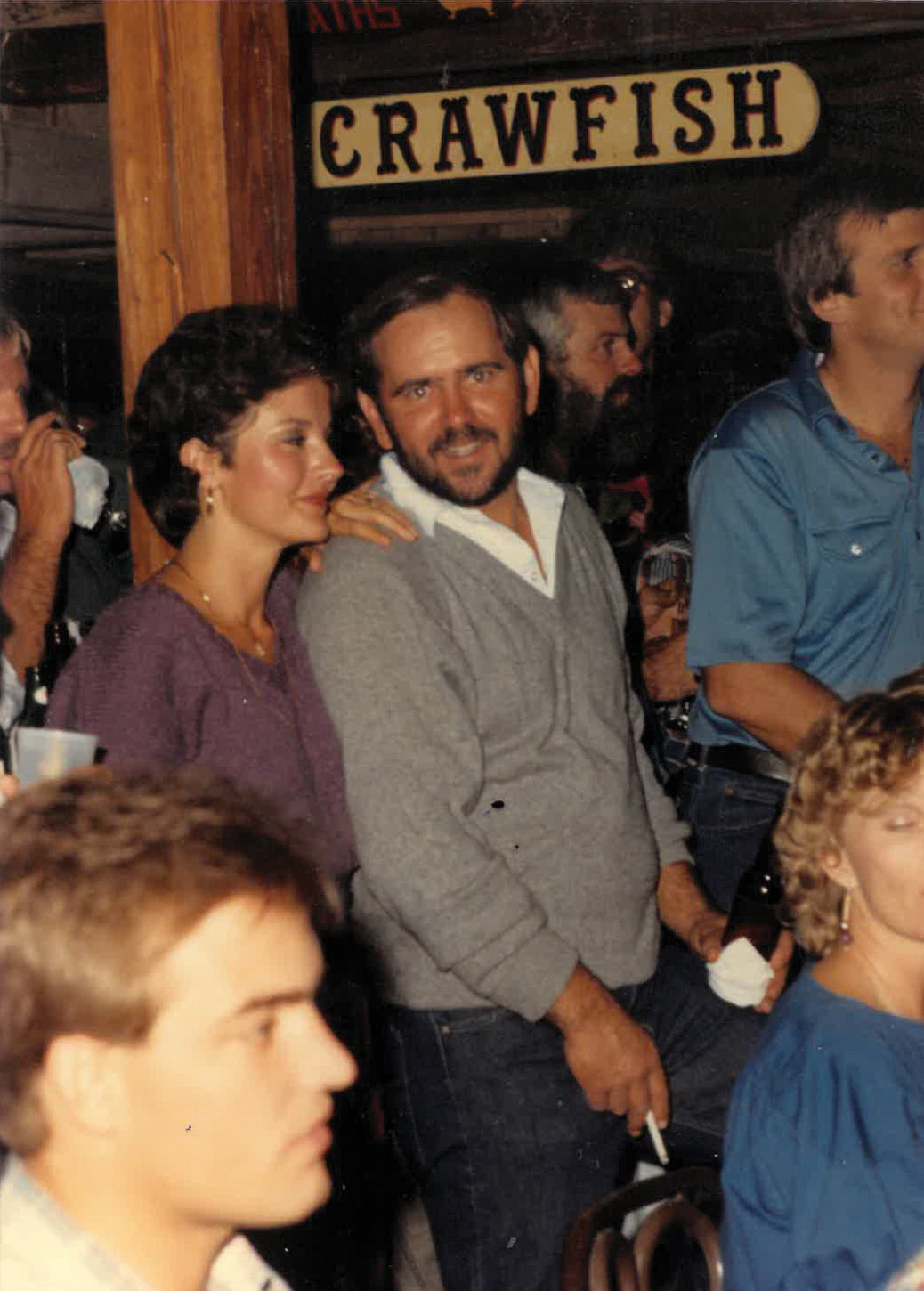
Yet even the music wasn’t the whole story. It wasn’t the only thing that made the place so special.
“My reflex answer is the music,” he adds. “But really it was the fellowship. It was the community feel that Jack fostered, the employees, the atmosphere that he set. It was just unbeatable.”
Johnson agrees.
“It became a family of people,” he says. “Some of the best people I met, who were the nicest to me, were the locals… I got to see people going through different parts of their lives too — getting married, having kids. It was quite a thing back in the day.”
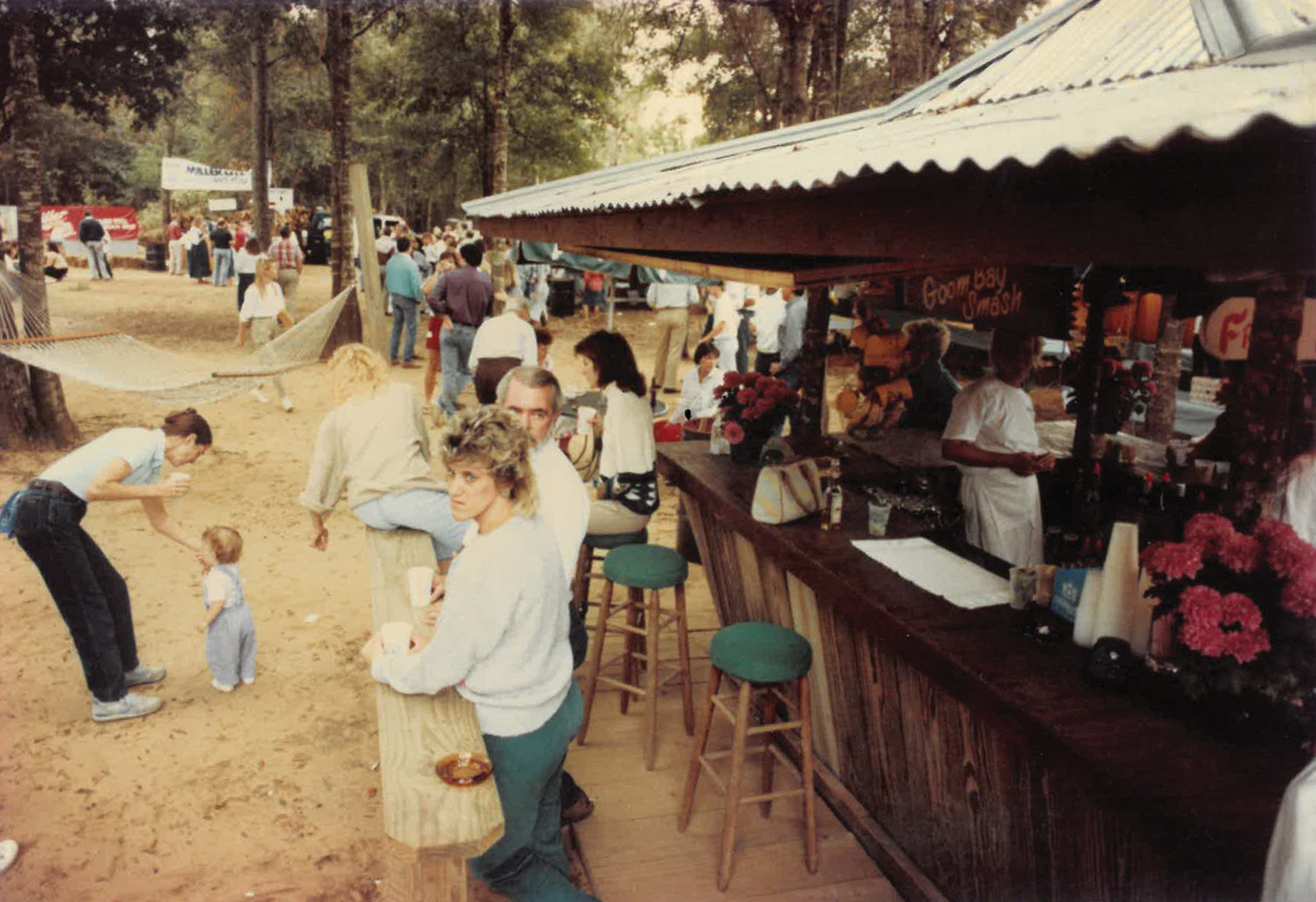
Other elements, once considered oddities, gradually became part of the magic over time: a wild goat roaming free, Perrico’s steady one-handed bottle runs, a cat named Mitty birthing kittens in the rafters above the bar, a Jack Russel Terrier affectionally known as “mamma dog” making friends with patrons, and the Mobile buses that delivered a mix of rowdy college kids and seasoned locals alike.
It was a bar where anything could happen. And often did.
For a time, it felt as though Daphne had stumbled into its own mythology.
“It was lightning in a bottle,” says Calametti.
And, just like lightning, it could not be summoned twice.
Ashes On The Eastern Shore
By the early 2000s, the man who breathed life into Judge Roy Bean had stepped away from the day-to-day operations of the bar. Jack West — whose vision, personality and creativity once filled every corner of the room — had leased the space and turned his attention, affection and energy toward outdoor passions and pursuits.
The bar he built went on without him. Then, before dawn on February 15, 2005, it was gone.
Just after 6 a.m., firefighters were dispatched to a blaze along U.S. Route 98. By the time crews arrived, flames had already consumed much of the old wooden structure that for nearly three decades anchored one of the Gulf Coast’s most beloved and legendary gathering places.
“How did it ever last so long?” writes Johnson. “Heart pine, barn wood, beaded board, pot belly stoves and a huge sandstone fireplace… basically a collection of ‘fat lighter’… how it avoided its fate for 28 years is remarkable.”
By sunrise, the bar that once hosted impromptu Buffett concerts, Sunday memberships, wandering goats, an assortment of other animals and generations of Gulf Coast storytellers had collapsed into smoking ruins.
Yet, even in the aftermath, a few pieces of the legend survived. The resident goat and the bar’s colorful macaw — both longtime mascots of The Bean — were resurrected from the blaze.
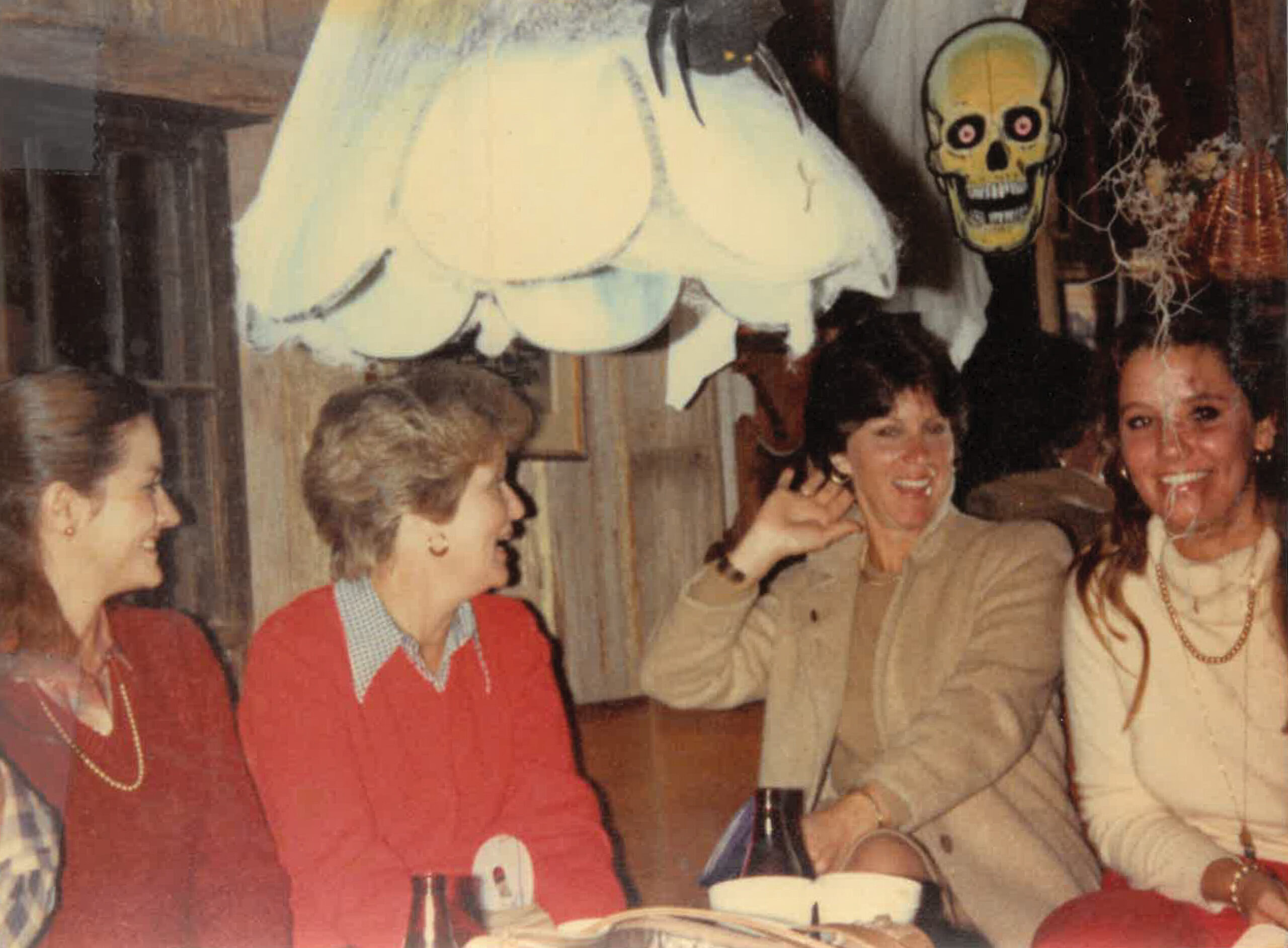
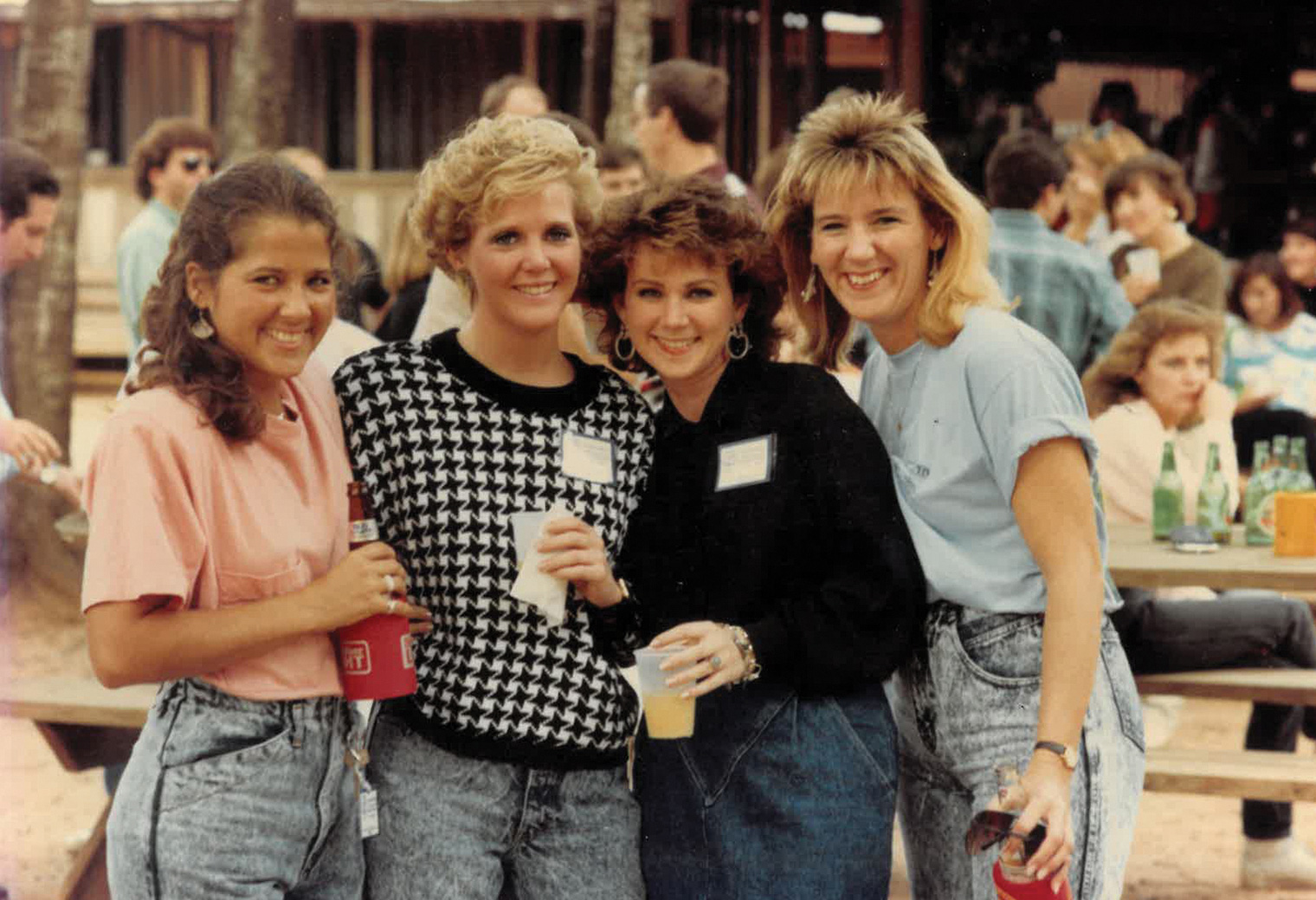
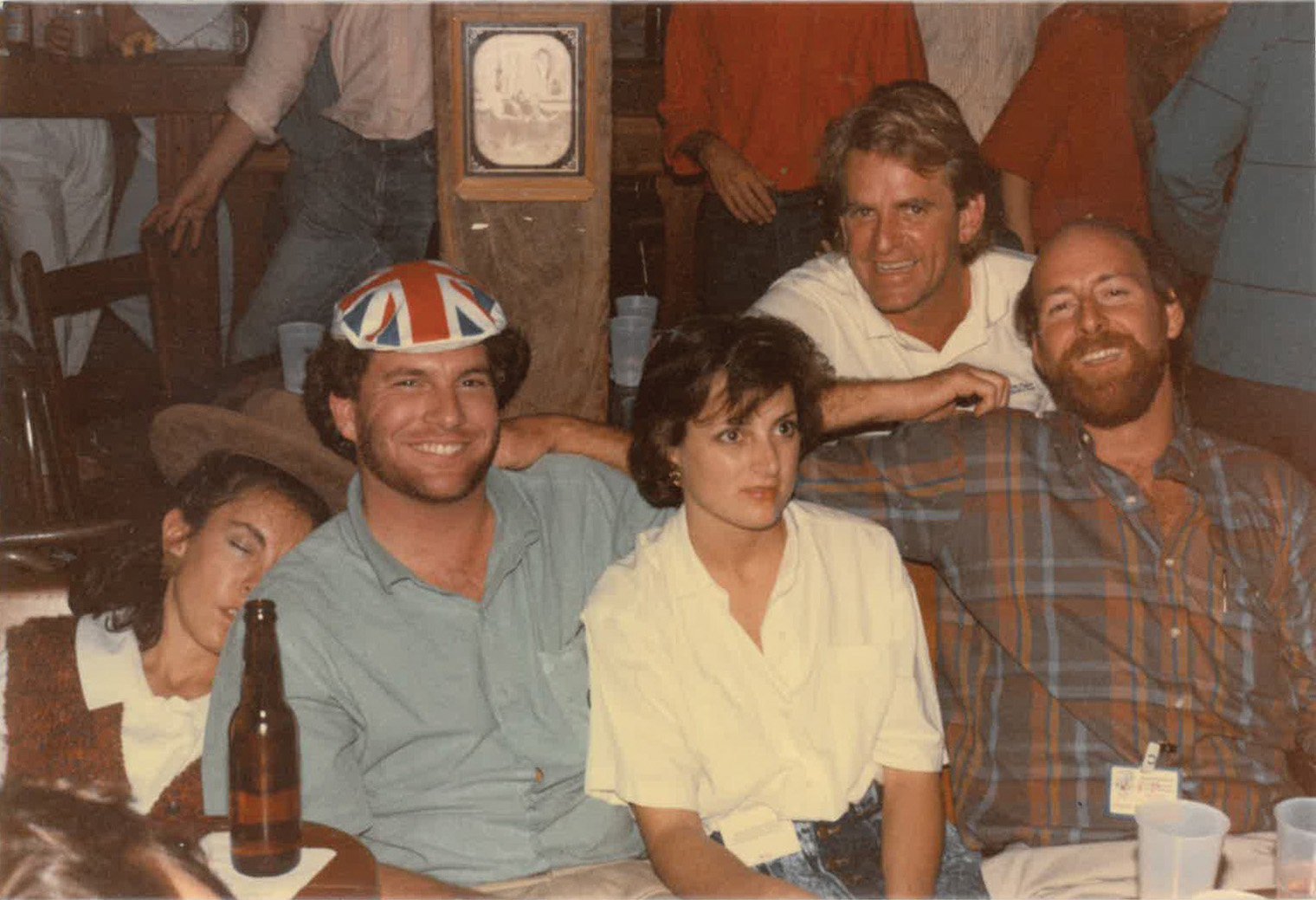
Today, Judge Roy Bean lives on in memory, in photographs, in kitchen conversation and in the artifacts that survived the fire — the pine floors, a wagon-wheel table, a faded membership card.
For those who were there, the space still resounds with the laughter, music, camaraderie and the chaos of nights that seemed to stretch forever. It’s a reminder that places are oftentimes more than wood and stone. They are the people who walk through them, the stories they tell, the rituals they invent and the moments they share. It’s a reminder that some places take on a life of their own and settle into our hearts long after they’re gone.
Judge Roy Bean was never just a bar; it was a mirror of the Gulf Coast itself; a reflection of all that we cherish — inventive, inspirational, unique, unpolished, communal and a little bit wild.
And while the doors are gone, and Jack is, too, the spirit remains.
“You can’t recreate it,” Niemeyer says. “It was truly lightning in a bottle.”