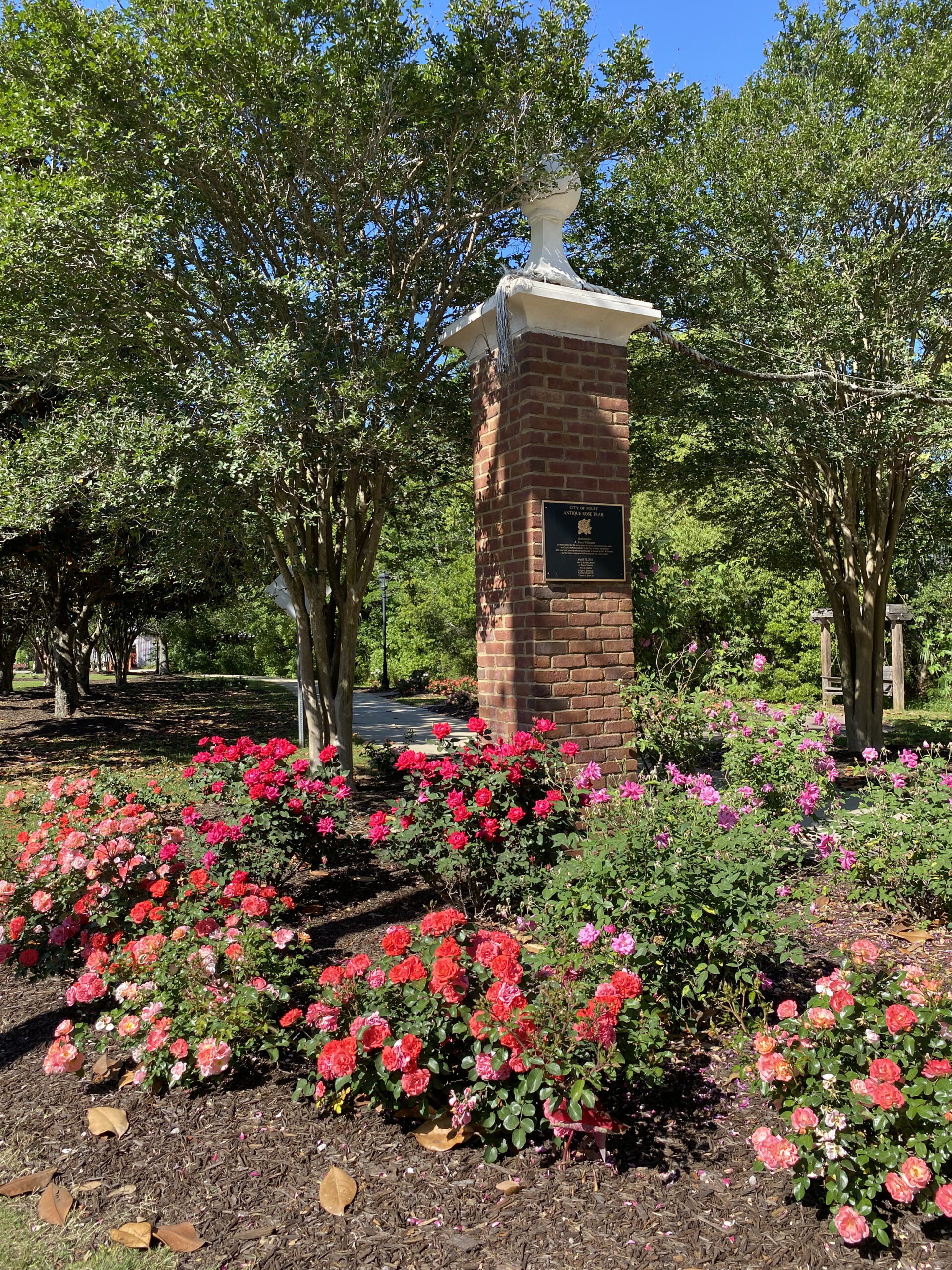
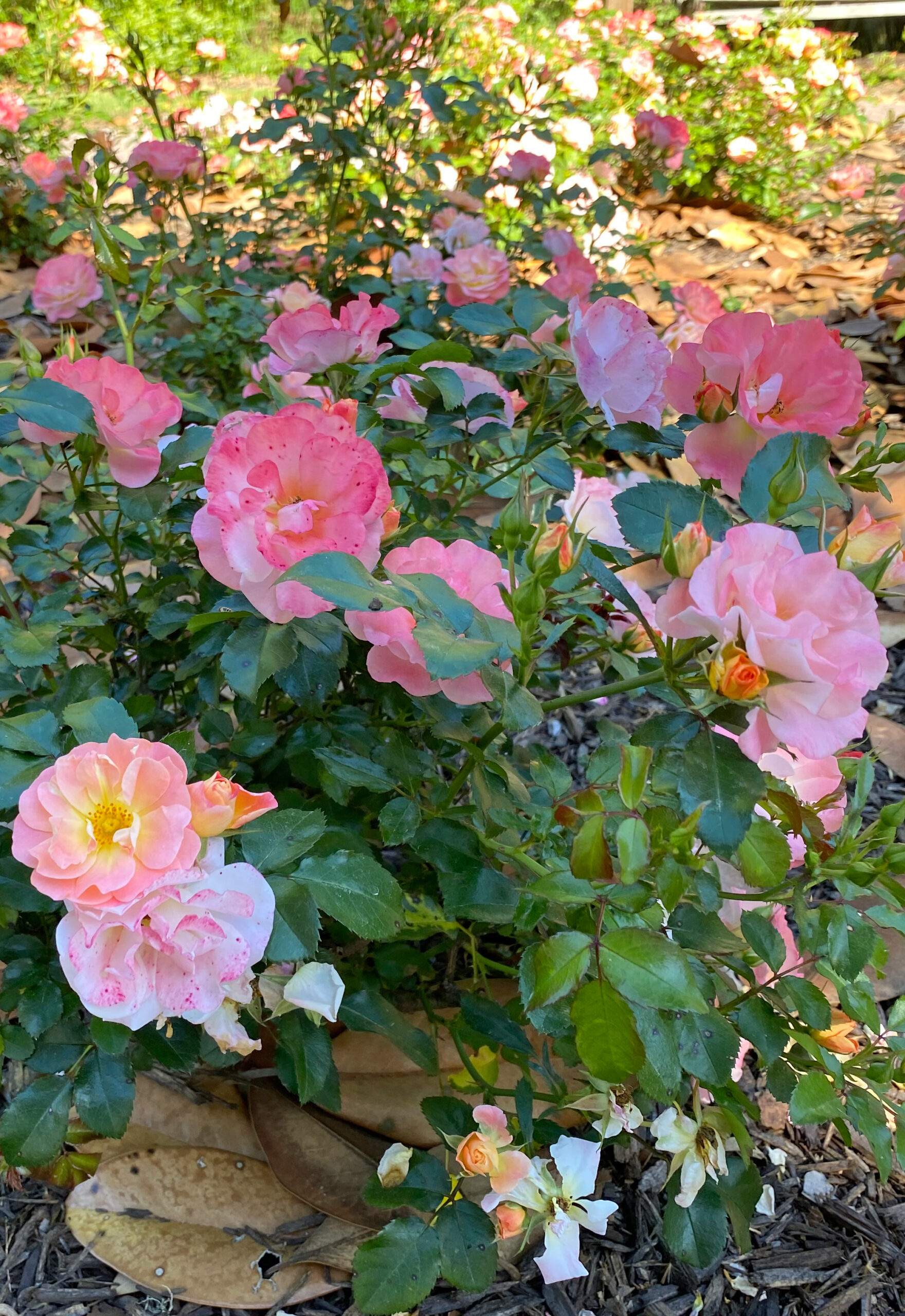
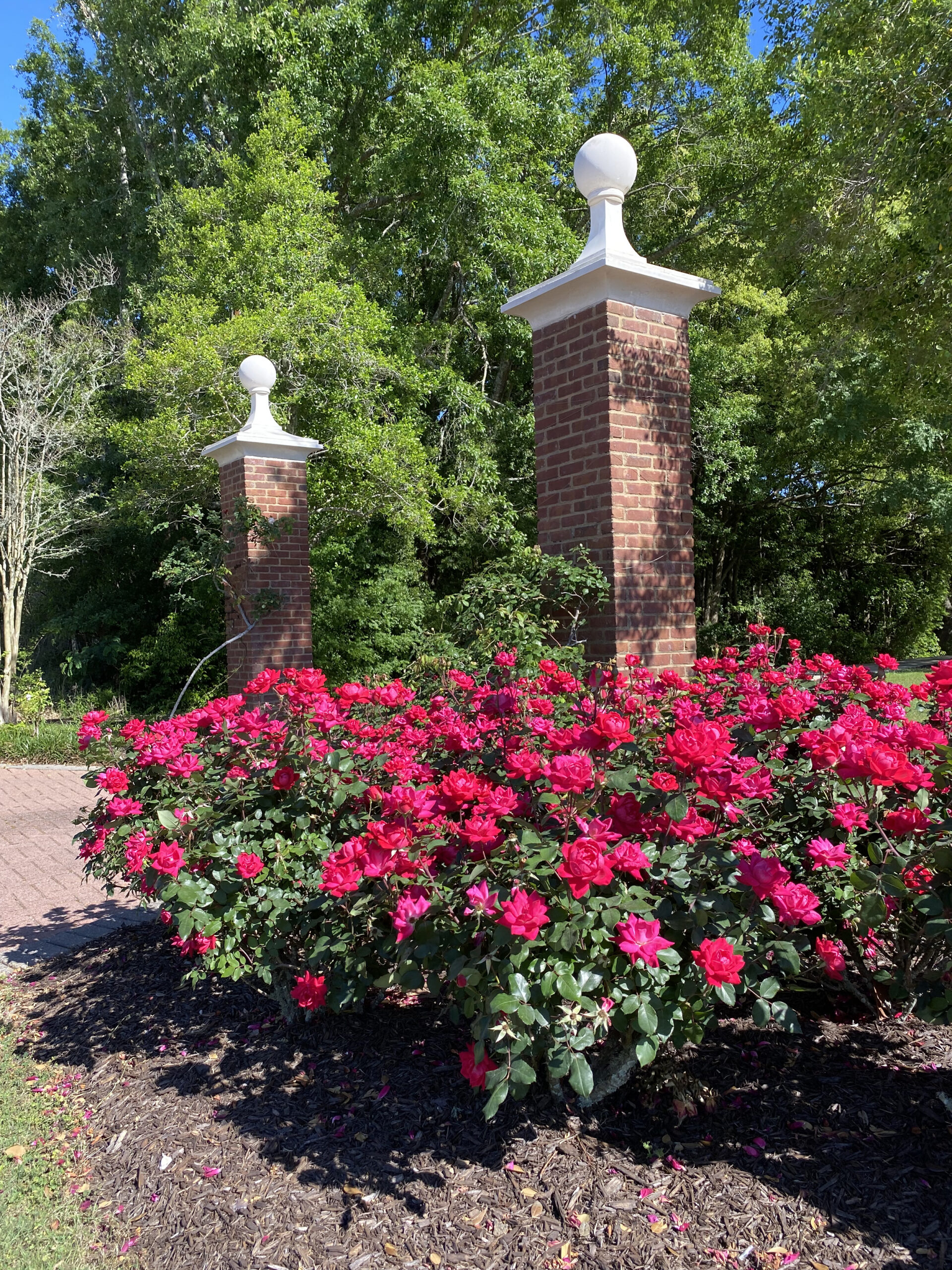
A trail of fragrance and beauty winds through Foley where couples are seen strolling hand in hand. Young parents with babies in strollers walk alongside toddlers who lean over to inhale the aroma of a blooming flower. Brick walkways are framed by swings and benches where visitors pause and rest, admiring the roses swaying gently along the Wilbourne Antique Rose Trail that runs near the Railroad Museum on East Laurel Avenue.
Along the trail, visitors can enjoy knockout roses, climbing roses and more, all in full bloom, even in early spring. There are even more varieties of roses to be found along this one-mile trail — which used to be part of the L&N rail line across from Centennial Park — all waiting for visitors to take in their colors and inhale their fragrances with pleasure.
“About 20 years ago, the idea for an antique rose trail began to take root,” explains Guy Busby, the marketing communications manager for the City of Foley. “The plan was to make a portion of the old L&N Railroad right of way a living classroom where varieties of roses that have flourished in Gulf Coast gardens and walkways for centuries could be displayed. Perry Wilbourne, then the Foley city clerk-administrator, and Bill Goodwin, a volunteer, decided to incorporate roses into the trail. It opened in 2007, and was officially dedicated as a National Recreation Trail, the A. Perry Wilbourne Antique Rose Trail, in 2011.”
The varieties of roses growing along the trail date back more than 250 years. The oldest of those, planted near the trail entrance on East Violet Avenue, is the China rose, which dates to 1752. “Other early varieties include the Louis Philippe, which dates to 1839, and the Ducher, which originated in 1869,” says Busby.
The trail preserves the antique varieties of roses that many Southerners remember growing in their own grandmothers’ gardens. “While modern species are bred for longer stems, color and appearance at the cost of scent, antique roses retain the fragrances many people remember from their childhood,” explains Busby. He added another interesting note as to why the older varieties were chosen: They are often more disease-resistant than modern plants. “Old rose bushes can sometimes be seen blooming untended for more than a century after first being planted on the sites of long-abandoned homesteads and cemeteries.”
The Wilbourne Antique Rose Trail goes along the path of the Foley to Bay Minette Railroad spur that transported passengers and freight from 1905 until the 1970s. The city then acquired the railroad right-of-way after rail services stopped. Later on, Foley acquired the city L&N Depot, which is now the Foley Railroad Museum on East Laurel Avenue.
“The rose trail was originally about one mile in length extending north from Heritage Park in Foley,” said Busby. “The walkway was later extended across the park and south of U.S. 98. The most recent addition was a one-block section that includes a wind sculpture near the Foley Post Office.”
The Rose Trail is currently under the care of John Graham, the horticulturist for the City of Foley. When he’s not tending the Rose Trail, he also offers horticultural workshops for those who wish to develop their own green thumb. “Working with Bill Goodwin on the trail was a privileged experience, not only in learning about the antique roses but also seeing the pride he had for it,” he said. Graham smiles his ever-ready smile as he talks about the trail, clearly something about which he is passionate.
Most of the plant material was purchased from Petals from the Past, a nursery in Jamison, Alabama, that specializes in antique roses. “Bill Goodwin, who has since passed away, used to speak highly of Jason Powell, the owner, and his knowledge and expertise in helping with the layout and material selection,” he continues.
Brenda Shambo with The City of Foley’s beautification committee says the trail attracts many of the tourists Foley sees heading to the Alabama beaches, but takes pride in the fact that it is an amenity for locals as well. “Locals enjoy getting their daily recreation by walking the trail, and it’s a culturally significant part of our town and its history.”
Deborah Mixon, beautification committee chair, agrees that the Antique Rose Trail is a beautiful way to get your steps in. “It has been a great addition to the City of Foley. As you walk, you will enjoy the shade of many large oak trees, benches, a Daughters of the American Revolution memorial and any number of visitors and locals with their dogs along the way. It’s a great way to meet and talk with people.”
Foley’s Wilbourne Antique Rose Trail is the perfect opportunity to not only smell the roses, but to view them, walk among them and appreciate the rich botanical history this trail has to offer.
Wilbourne Antique Rose Trail • 125 East Laurel Avenue, Foley
Antique Roses for Gulf Coast Gardens
Get to know several varieties of antique roses that thrive here along the Gulf Coast and would make the perfect addition to your garden.
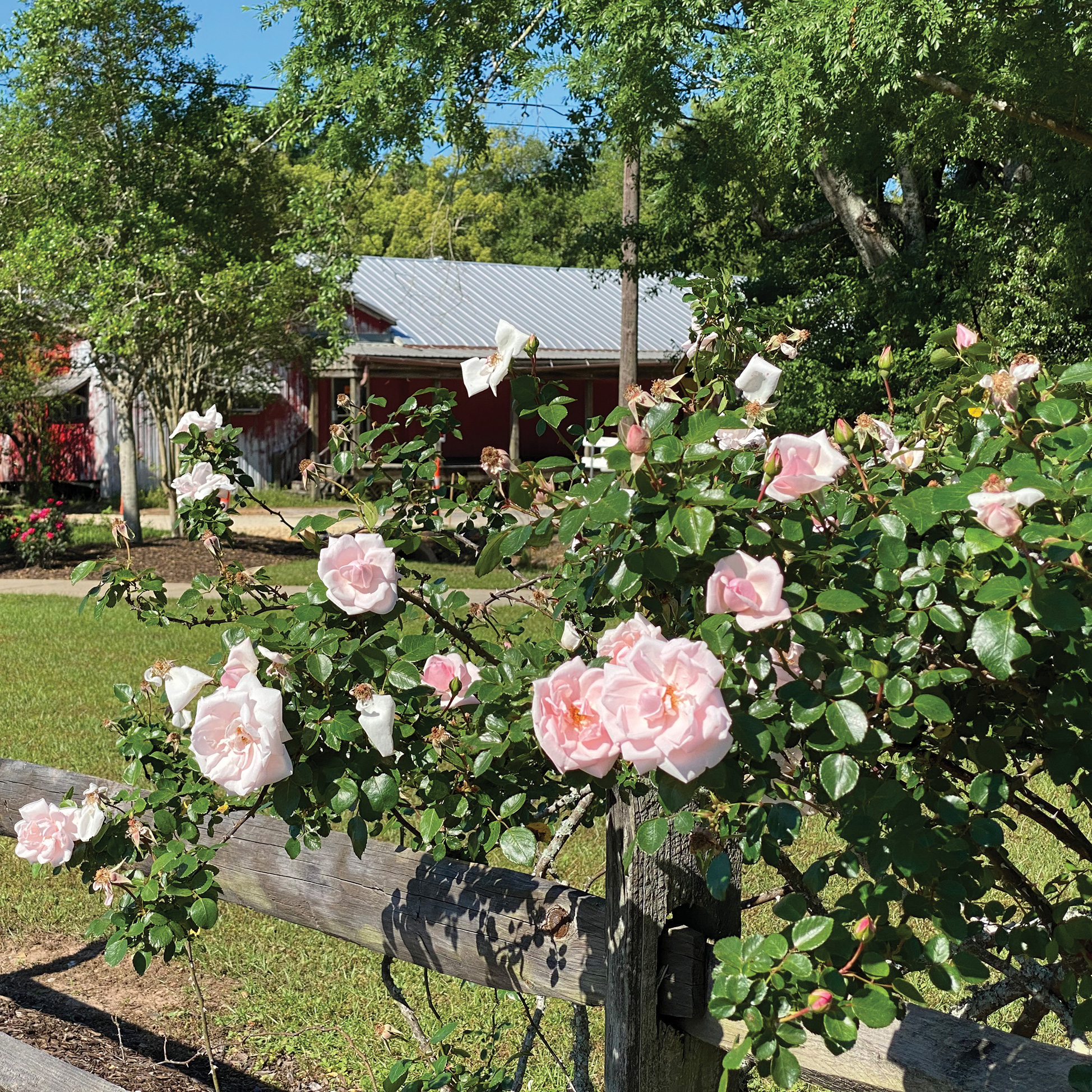
Old Blush
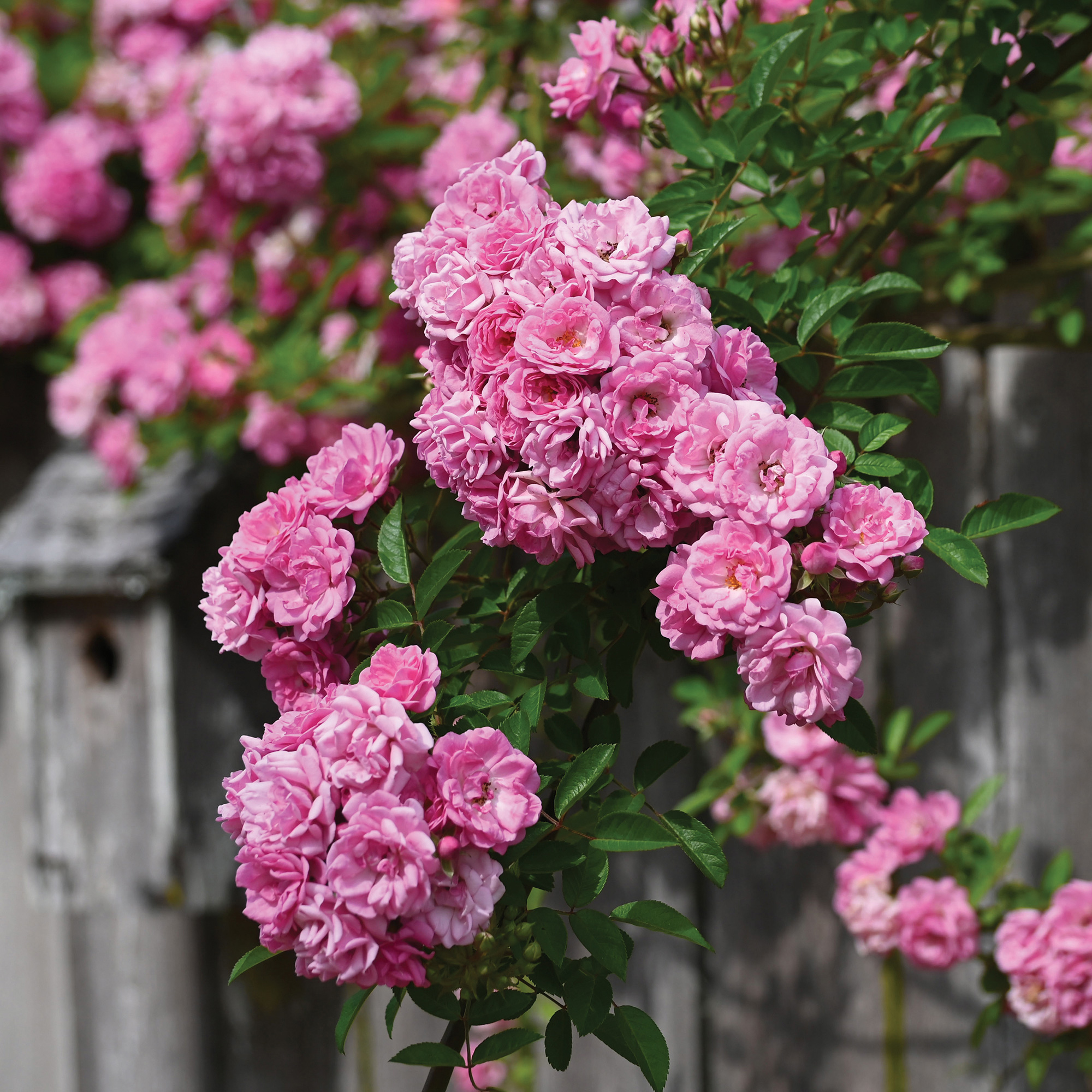
Also known as Common Monthly, Common Blush China, Old Pink Daily, Old Pink Monthly and Parsons Pink China, the myriad of names of this semi-double hybrid of R. chinensis attest to the friendly familiarity with which it has been grown for over 200 years. One of the most common of old roses, it is also one of the most valuable, for it has passed on its incredible blooming prowess to countless cultivars during the history of hybridization in the West. Old Blush has medium, semi-double, lilac pink flowers in loose clusters. They flush darker pink in the sun and are followed by large orange hips. It blooms so steadily that it is not a very good cut flower: the blossoms drop quickly to make room for their successors. The bush is full and upright in habit, growing slowly to over 5 feet, with neat, healthy foliage. Perfume is soft, but fruity and pleasant. Whether used in a hedge (which can be spectacular), as a specimen, or in a border, Old Blush should be treated simply as a flowering shrub and not fussed over. Also comes in a climbing variety.
Hermosa
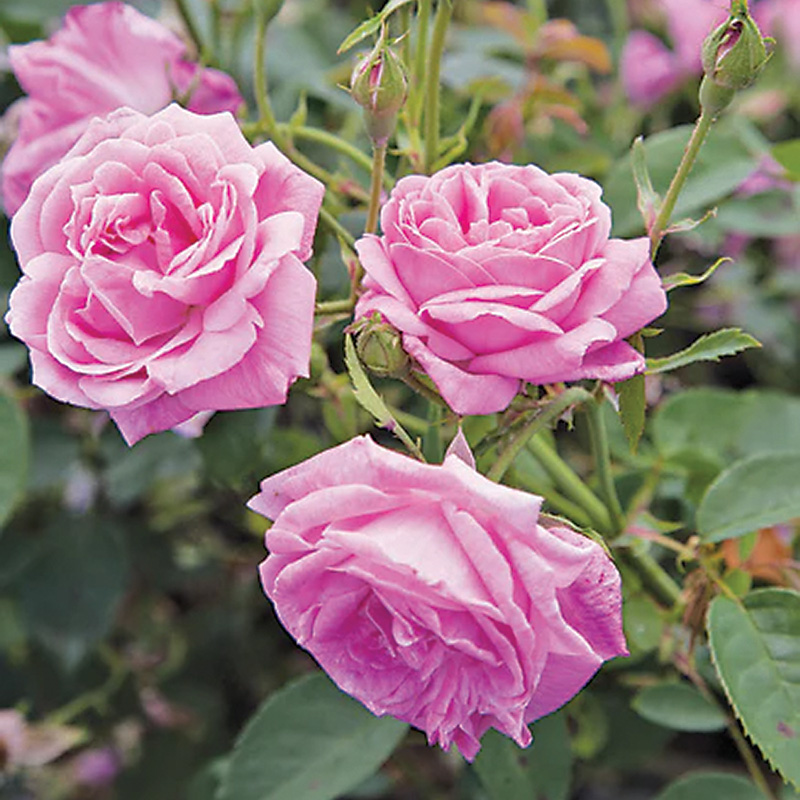
This lavender-pink, fragrant Hermosa rose is double-cupped and beautifully shaped; many rosarians suspect Bourbon influence in its breeding. It was long popular as a container plant for European window gardens and its low, compact form is well suited for any small garden or for a massed effect in a larger border.
Peggy Martin*
Also known as the “Hurricane Katrina rose,” this is a vigorous spring-blooming climbing rose that can easily reach 15 feet or larger. Promoted as thornless, we find this rose has prickles on the leaves’ backs, while the canes are free of thorns. Its vigorous growth habit, ease of care, and breathtaking spring display makes Peggy Martin a rose even a novice grower can grow and enjoy.
* Peggy Martin’s legacy in the garden was shaped long before Hurricane Katrina came ashore. For years, she tended hundreds of antique roses on her Louisiana property in Plaquemines Parish, including a thornless climber she had planted from a friend’s cutting in the late 1980s.
After Katrina swept through in 2005, floodwaters erased nearly everything she had cultivated. Against all odds, that single rose endured weeks beneath saltwater and emerged alive. Its survival came to represent more than botanical toughness; it mirrored Peggy’s own perseverance. When the rose was later named in her honor — an exceptional recognition in the world of horticulture — it marked not just what the plant had survived, but the enduring bond between a gardener and the one living reminder of what was lost, and what could be again.
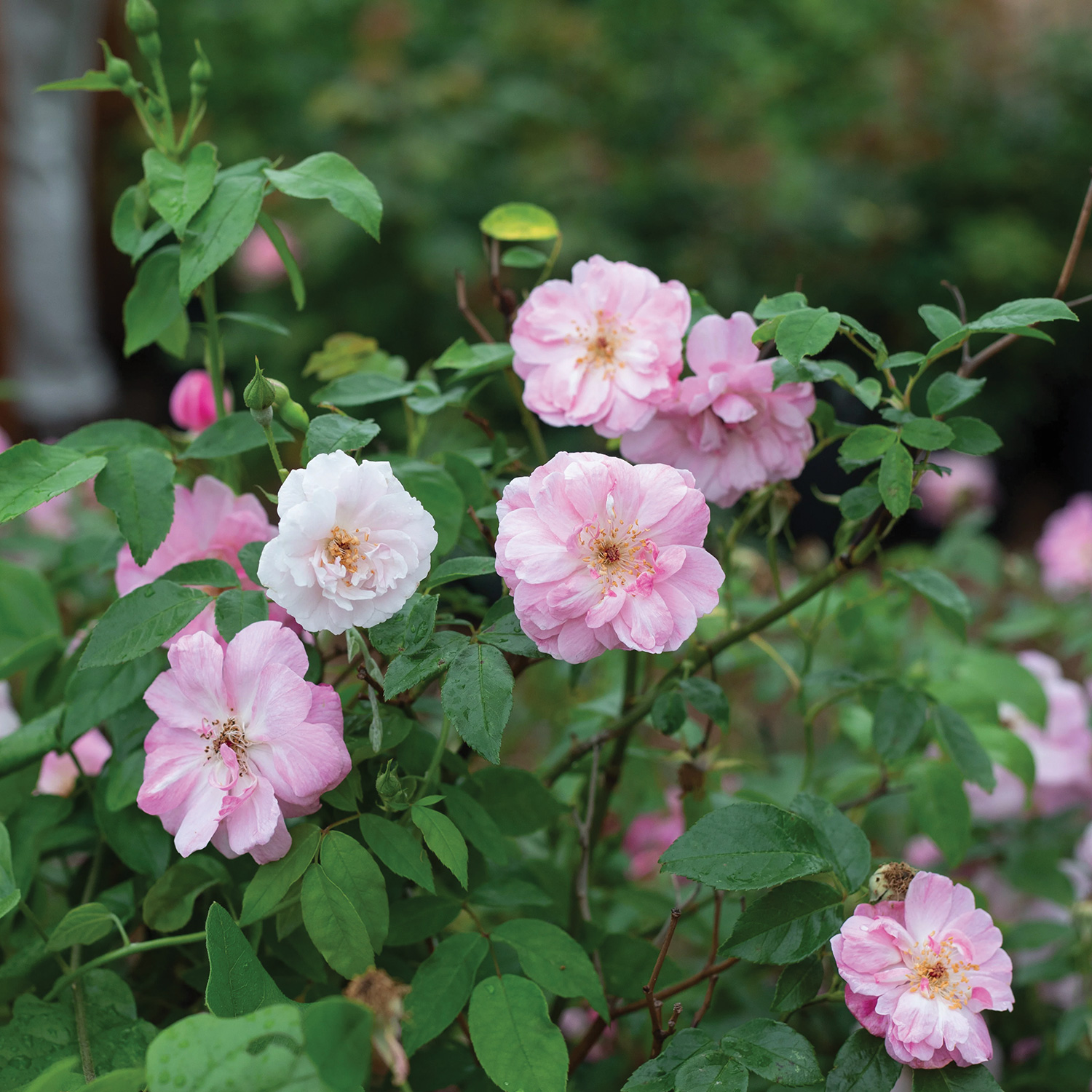
Ducher
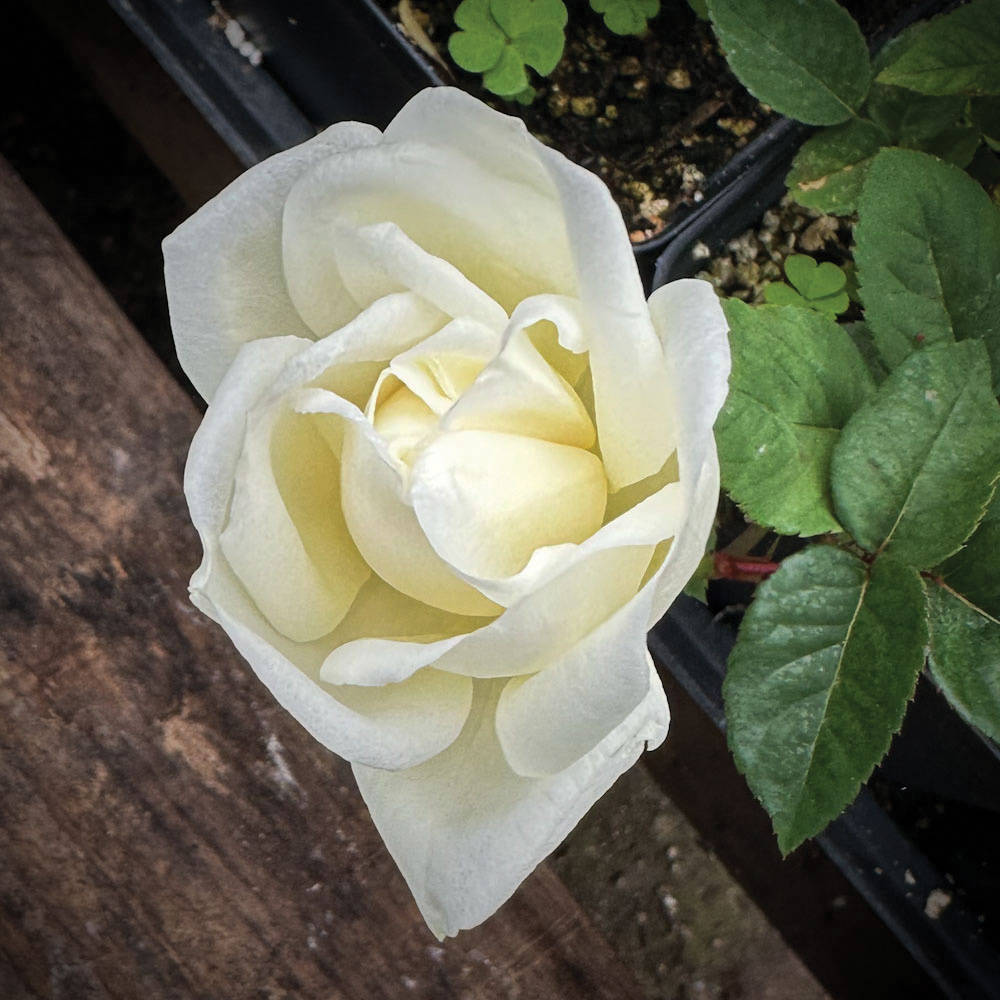
Regarded as the only white China rose, ‘Ducher’ blooms a soft ivory-white. The buds are very round and sometimes have a hint of pink on the outer petals opening to a delicate swirl of fragrant ivory petals. Smaller than many Chinas, this is a good candidate for a container. Although it exhibits the typical bronzy new growth, the foliage of ‘Ducher’ is uncharacteristically light green.
Louis Philippe
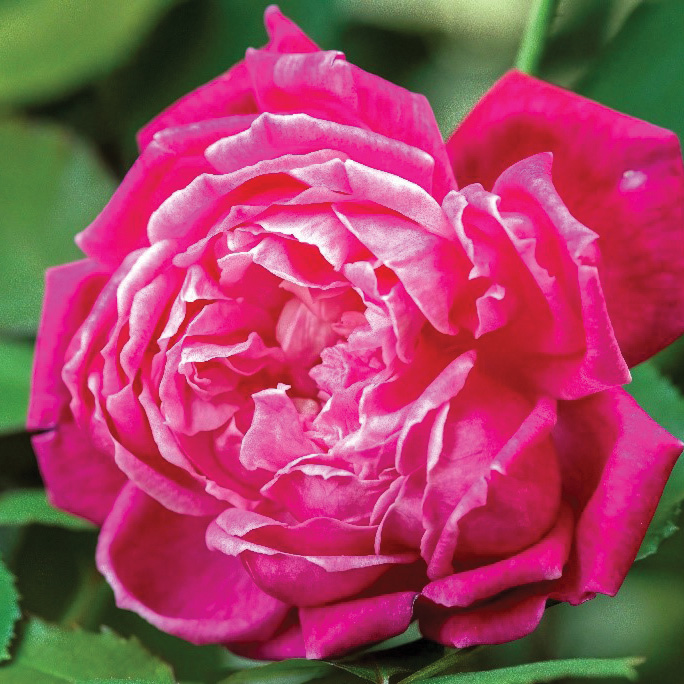
The flowers are double, deep crimson with a touch of blush at the center and like all old Chinas exhibits an occasional white streak through the petals. Emily de Zavala, wife of Lorenzo de Zavala, Mexican minister to France, (1834-35), loved the roses at King Louis Philippe’s court. The de Zavalas came to Texas in 1835 to support the Texas Revolution. On their land across from the San Jacinto Battleground, Mrs. de Zavala grew roses including ‘Louis Philippe,’ which became known as the “Zavala rose.”
Madame Laurette Messimy
Bred by Pierre Guillot and Jean-Baptiste André Guillot, this rose was dedicated to Madame Laurette Marie Anne Messimy in 1887, a rose enthusiast who lived at the Château de Messimy in Charnoz-sur-Ain, France. It has clusters of rounded buds that open to soft, salmon-pink, semi-double flowers with a touch of yellow at the base of the petals. Gifted with a true rose fragrance, this rose is ideal for growing in a pot where it can be easily appreciated. Strong sun burns off the fragrant oils, so make sure to “stop and smell the roses” during the morning hours.
Information about these varieties was shared by the experts at the Antique Rose Emporium. You can get advice and purchase plants at antiqueroseemporium.com. Enter promo code “MBMAG26” at checkout to receive $5 off orders of $45 or more.