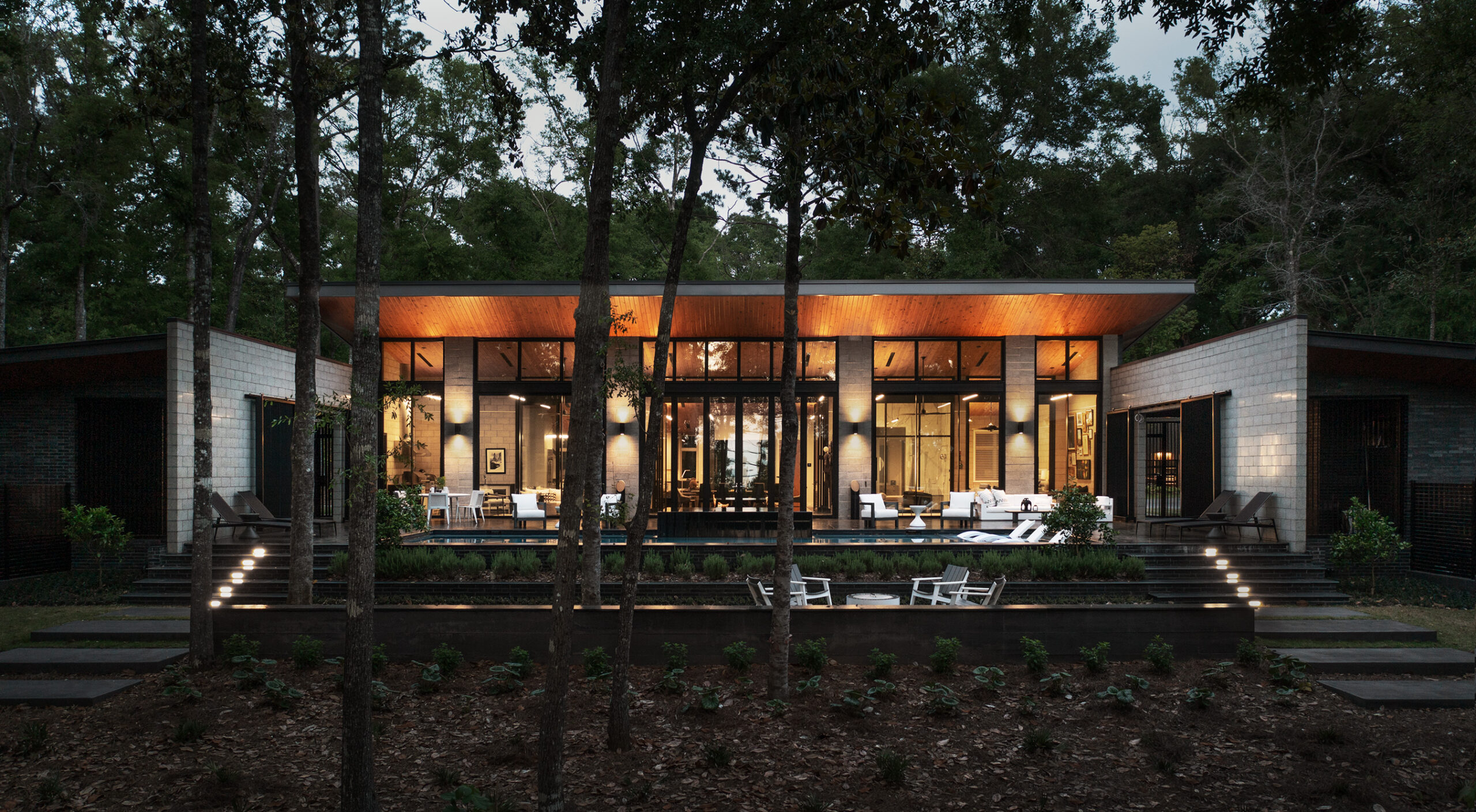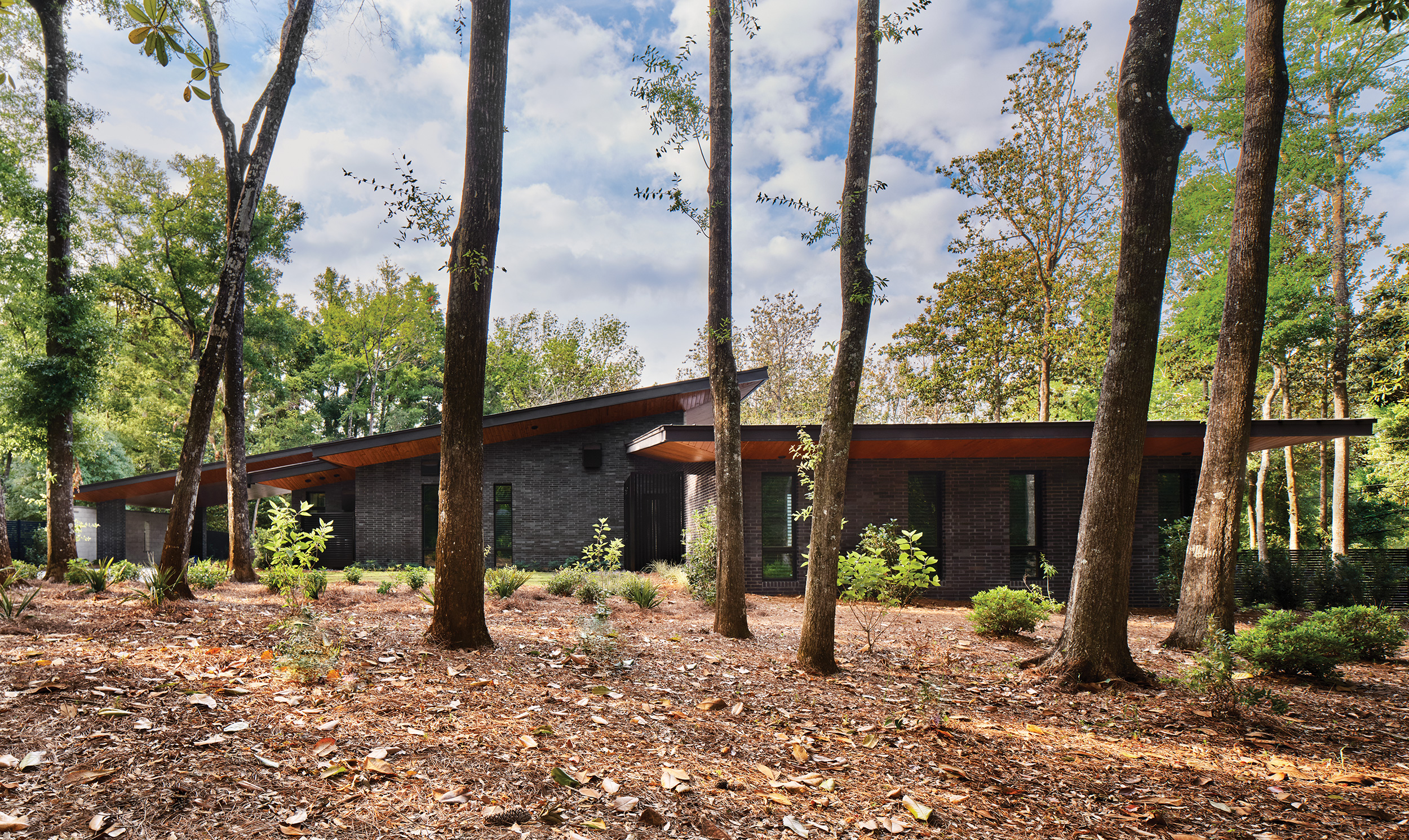
Rumors swirled in Fairhope as an unusual new building took shape along Scenic Highway 98. Even hidden behind the trees, its angular silhouette — so different from the traditional homes in the Montrose historic district — sparked questions. Some saw its sloping roofline and thought someone was building an amphitheater. Others heard that a big-time L.A. record producer was behind the mystery project.
The second guess wasn’t entirely wrong.
“We do have a little record label. And we do live in L.A.,” acknowledged Suzanne Zimmer. The record label is Baldwin County Public Records, more passion project than big business, and “L.A.” is Lower Alabama — not Los Angeles, but still. Partial credit to the rumor mill.
The curious site in Montrose was destined to be not an amphitheater but a home, a meticulously engineered labor of love that took a year and a half to design and three years to build.
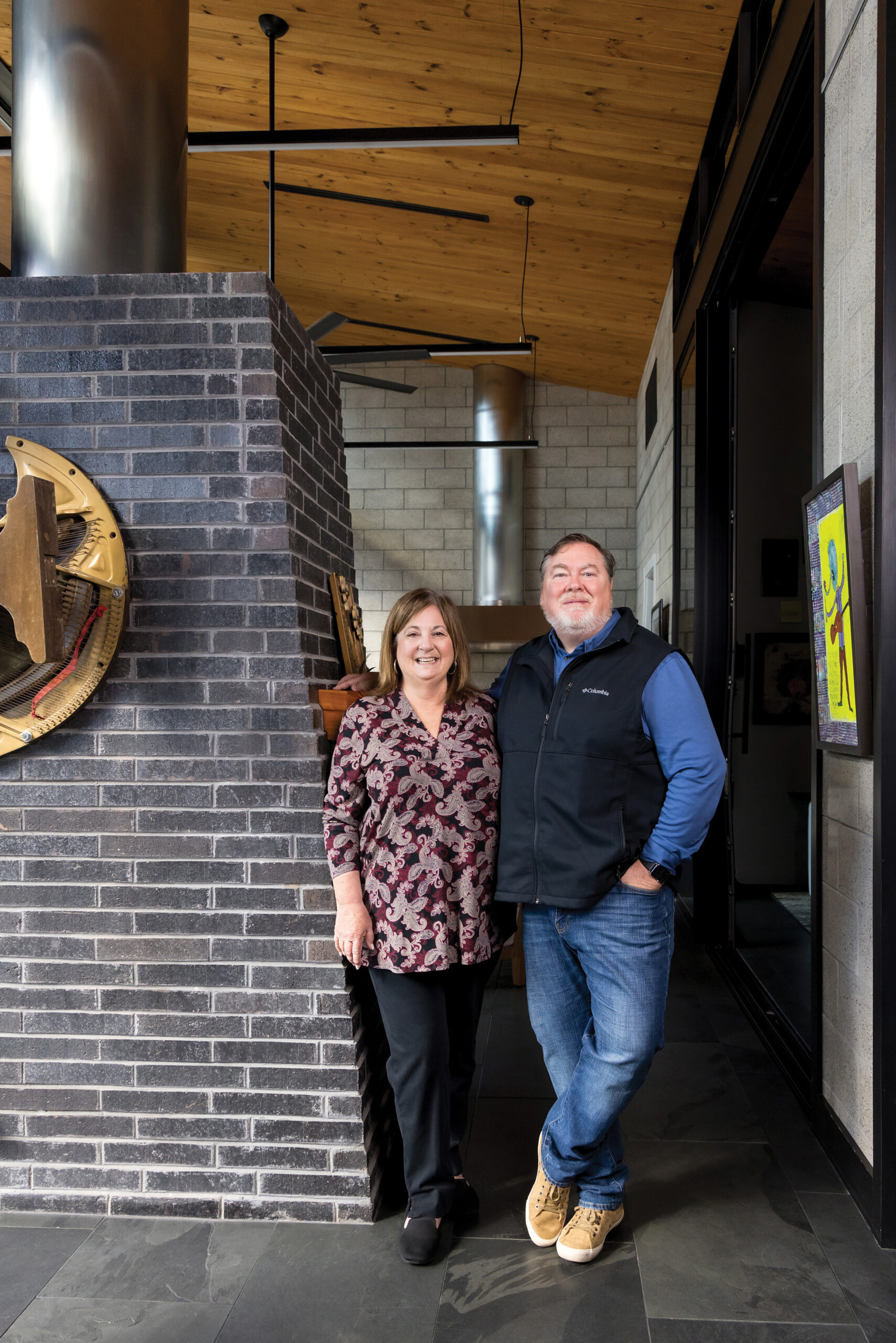
Suzanne and Jeffrey Zimmer had built two houses before this: one in South Carolina, the other less than a mile up the road, on the Bay. But those projects were entirely different animals, both featuring traditional architecture. “This is the first one that I’ve actually felt is a piece of art,” said Jeffrey. It has gained national media attention, as the featured project of Walcott Adams Verneuille on Forbes’ list of America’s Top 200 Residential Architects.
The Zimmers’ old bay house was a Creole-style cottage, an idyllic spot to raise their two sons. They’d loved that home, but once the boys grew up and moved out, it didn’t feel like the right fit anymore. It had stairs, which they knew they wouldn’t be able to navigate forever. And every time hurricane season spun up, they lived with anxiety, dreading the aftermath of a big storm.
But they loved the Bay and didn’t want to go far, so they kept the parts they treasured and bade farewell to the rest. They bought two empty lots perched on higher ground a little farther from the water’s edge and prepared to build their forever home.
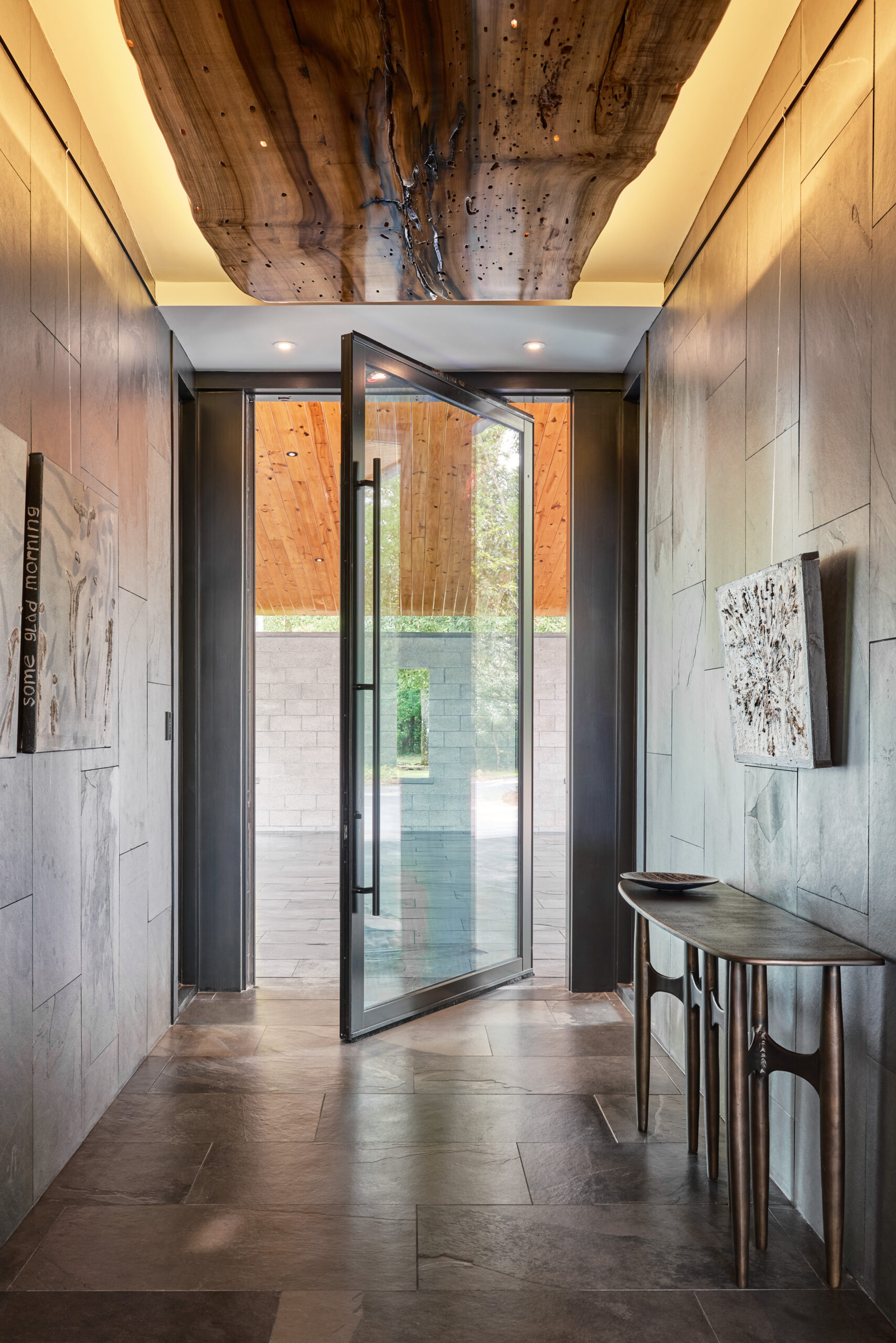
Although their new house is a block away from the Bay, a view of the water still sparkles through a narrow gap in the trees. Visitors who arrive at the front door can look right through the house’s broad glass expanse and see the Bay. And if the Zimmers want to venture down to the water, a nearby public access makes it easy. “This is kind of perfect,” said Suzanne. “If we flood here, the world’s ending.”
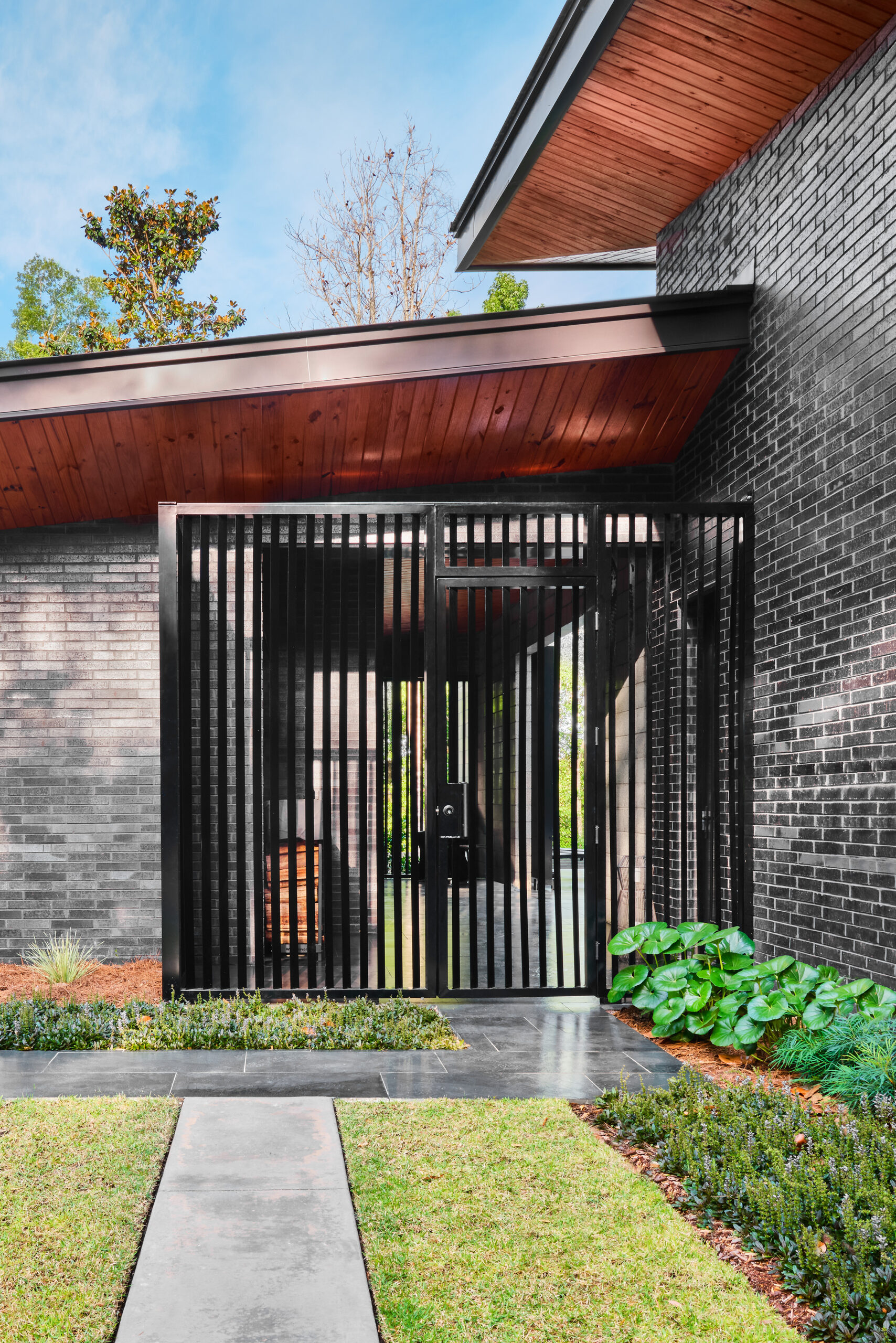
Flow and Function
When Jeffrey first pitched the idea of a modern house to Suzanne, she turned it down flat. She didn’t want to live in a lifeless contemporary house, cold and stark.
Though she eventually came around, she had one condition: She wanted the house to feel warm.
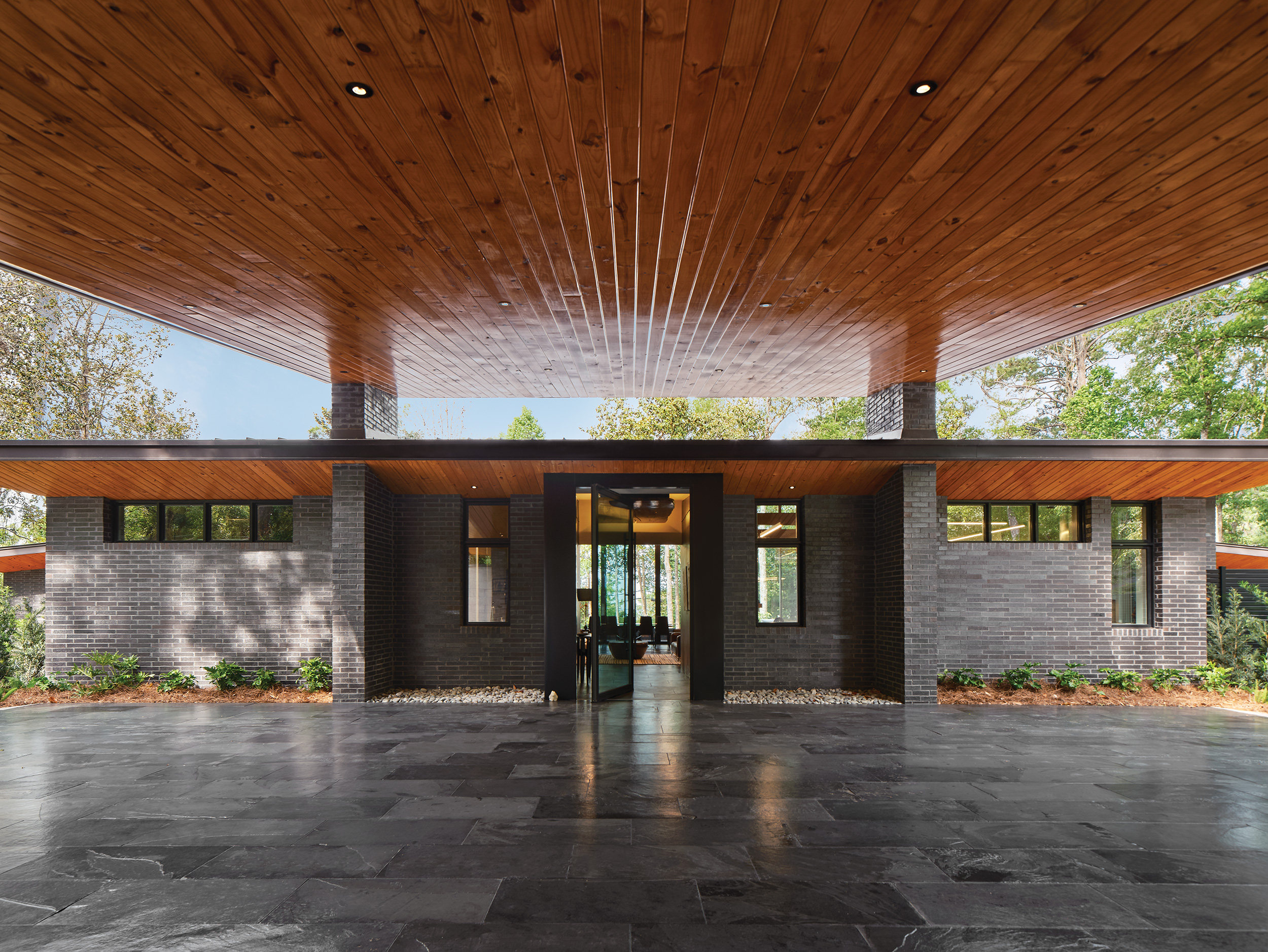
Working with Walcott Adams Verneuille on the architecture and interiors and Tom Bierster on construction, they carefully layered in elements that breathed life into the clean, minimalist design. First and foremost, they erased the line between indoors and out, incorporating glass doors and walls that draw in views of the surrounding trees. Then they grounded the space with organic finishes. A tongue-and-groove pine ceiling plane stretches from the porte-cochere through the open-concept living area, drawing the eye up and outward toward the water. The home’s slate floors also extend from the entry all the way through to the pool deck, unifying the space.
Since the couple hopes to stay here for the rest of their lives, they engineered the house to avoid steps and bumps that might one day get in the way of a wheelchair. “You can roll a marble from the front door to the outside and not hit a threshold,” said Suzanne.
Jeffrey, attentive to every detail of the project, would challenge the design team in a good way. “It was fun, because they’re not at all intimidated by design language,” said architect Mac Walcott.
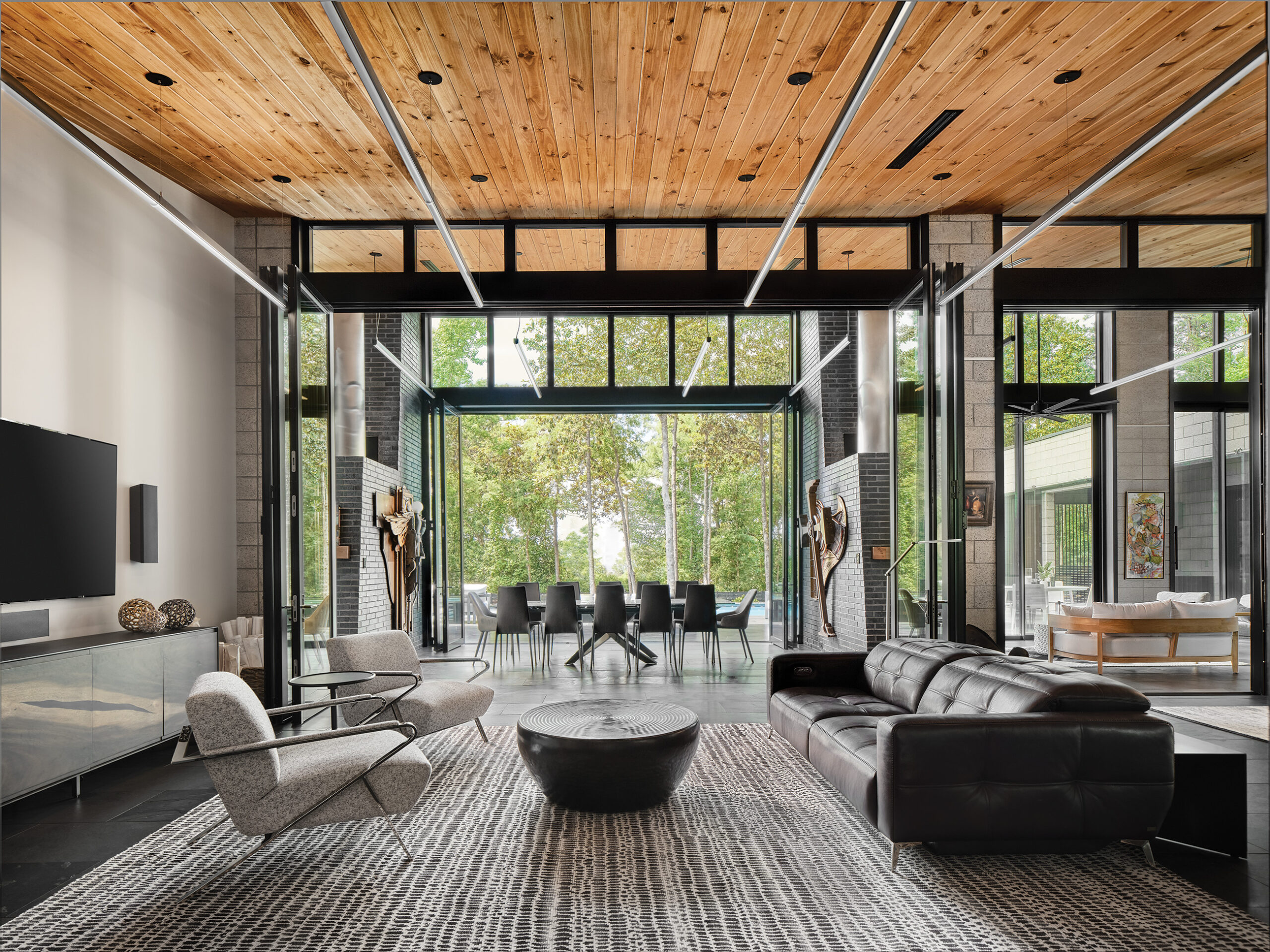
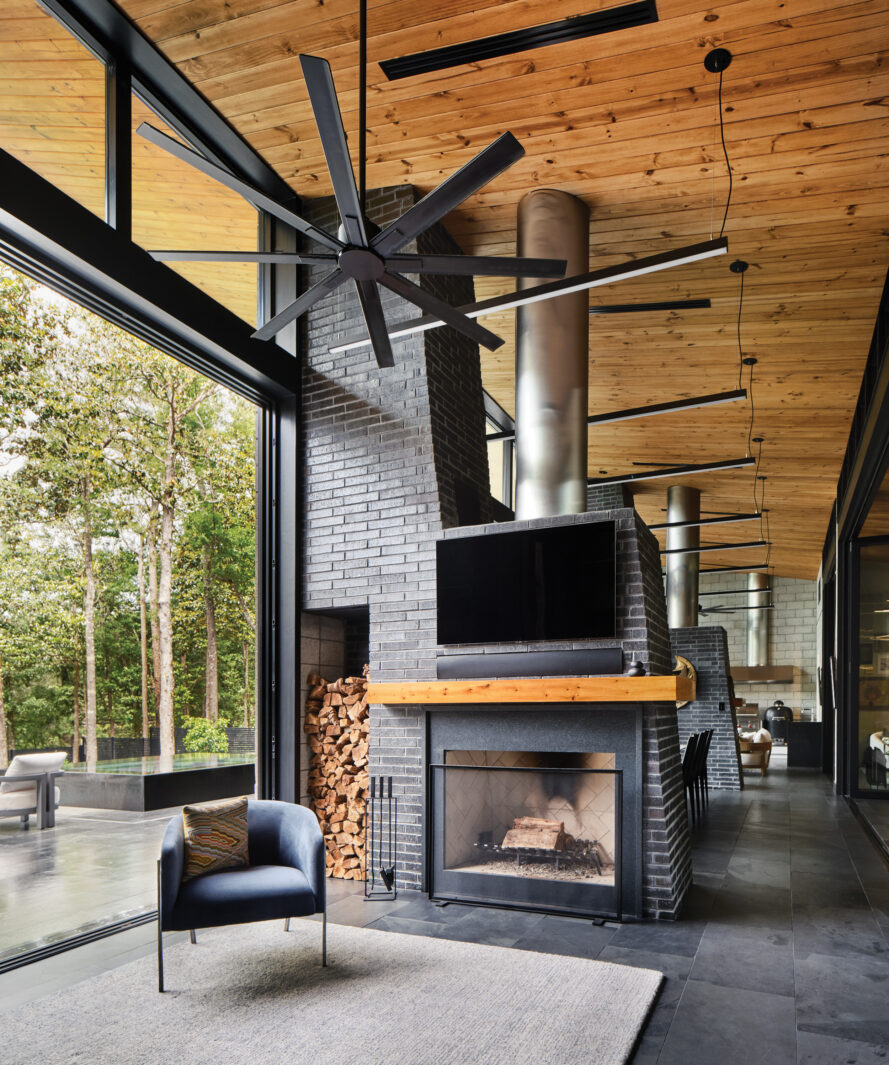
One of the home’s most innovative features is its broad enclosed porch, a sizable room divided into thirds by two wood-burning fireplaces. The porch spaces flow into one another but serve separate functions: a den, the dining room and an outdoor kitchen.
“We’ve had screen porches or open porches forever,” said Suzanne. “I don’t clean them, because they’re gross. Then they’re full of pollen and dead bugs and lizards, and then you have all that real estate you don’t use.” She figured that if she didn’t clean the porch when she was younger, she sure wasn’t going to do it when she was older.
Instead, the couple incorporated the porch into their living space and flanked it with a series of elegant folding glass doors. While the porch typically remains open to the main home, when the weather is lovely, they can close it off from the interior and open it up to the terraced pool deck, taking in the views of the landscaped rosemary, saw palmettos, blueberry bushes, and fig and loquat trees. The porch is heated and cooled separately from the rest of the house, so they’re not forced to air-condition the outdoors when the exterior doors are open.
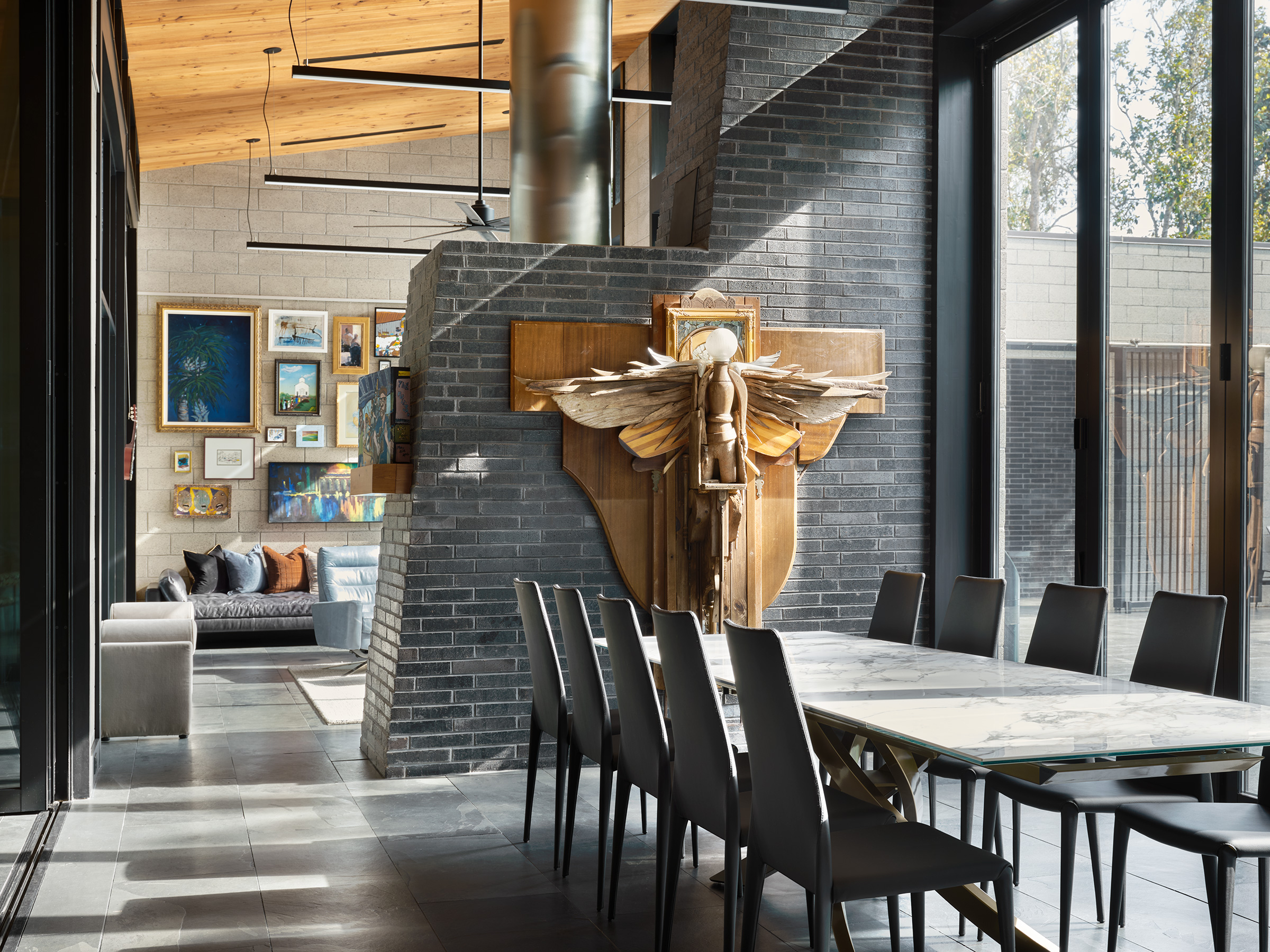
The sturdy brick fireplaces are softened by two large sculptures, which artist Bruce Larsen designed to face into the dining room. Larsen incorporated pieces of an old, sun-faded piano that once belonged to Suzanne’s grandfather, layering in parts of his own grandmother’s piano, boat oars, mannequin hands and his daughter’s hula-hoop.
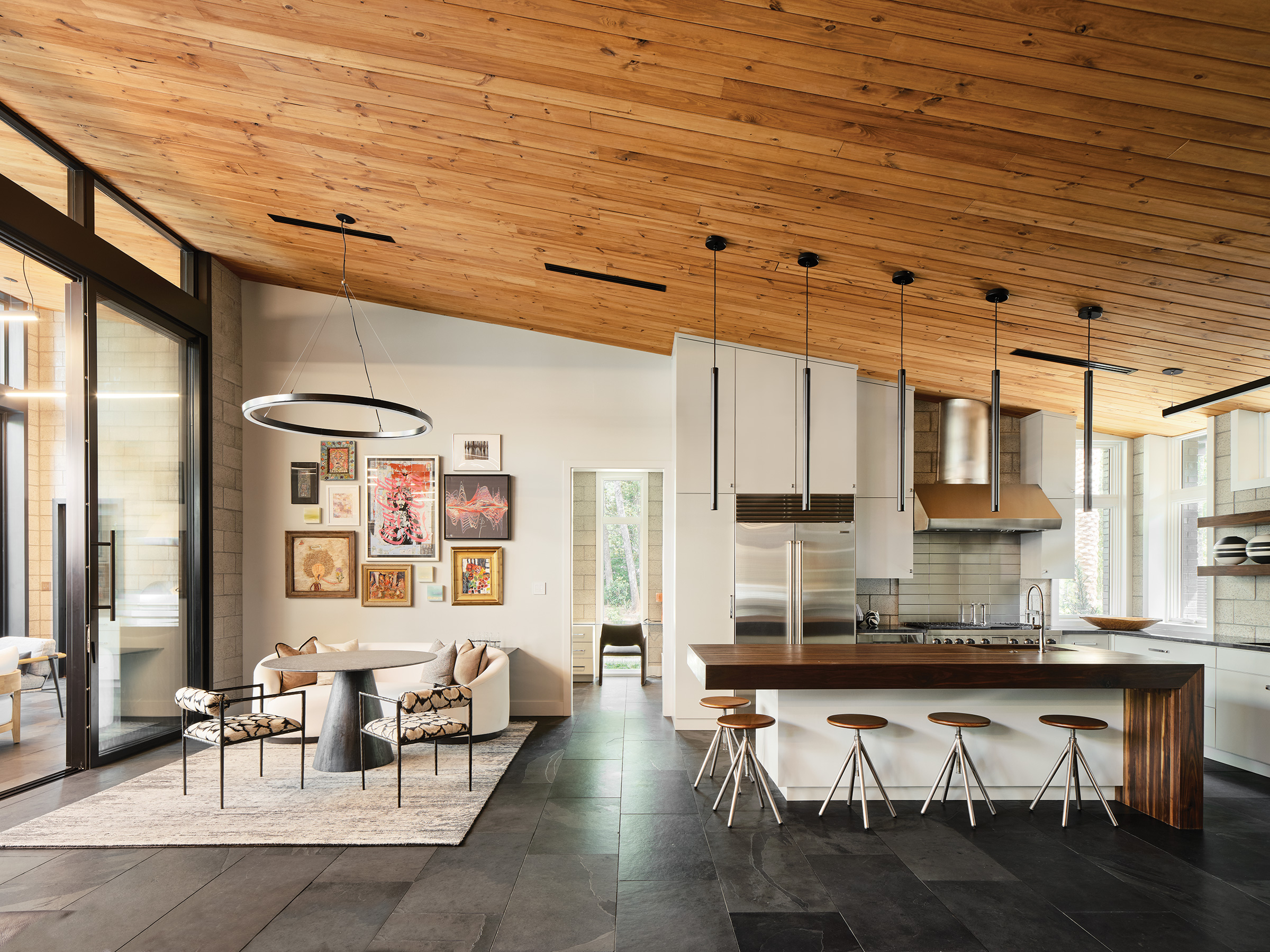
Twin gallery walls — one in the breakfast room, the other in the den — display the couple’s collection of folk art, adding dimension and bright pops of color to the central living space.
“From the beginning, we knew they were artsy, they were musical,” said architect and interior designer Abby Davis. “We were keeping that in mind the whole time.” Interior designer Sam McGinnis and project architect Melissa Nolte rounded out the WAV team.
The Pod Squad
The home’s ample living space is put to good use when the Zimmers entertain. The couple belongs to a community that hosts house shows for singer-songwriters. A handful of times a year, they open their home to invited guests for a night of live music. “Singer-songwriters don’t want to play noisy bars where nobody’s listening,” said Suzanne. By tapping into the national network of concert hosts, musicians can book a whole tour without ever having to set foot in a bar.
The Zimmers designed their long driveway to flow traffic in one direction, so guests don’t have to jostle for position when it’s time to leave. They also asked their landscaping team at Father Nature to install grass pavers, creating ample parking space for concert nights.
The couple devoted so much square footage to entertaining, they left only a small rectangle of the floor plan for a single bedroom. The small footprint suits them, though. “We don’t need to live in our bedroom anymore, because we don’t have a house full of boys running around. I didn’t need a refuge,” said Suzanne. Their only regular housemate nowadays is their rescued doodle, Max, who has his own bespoke space built into the laundry room.
When guests come to stay — the songwriters they host, for example, or the Zimmers’ sons — they have their own space, in one of two detached guest pods that bookend the pool deck. Each pod includes a small living area, two bedrooms and two bathrooms. “We purposely didn’t put kitchens out there, because when the boys come to visit, they have to come inside to get some food,” said Suzanne.
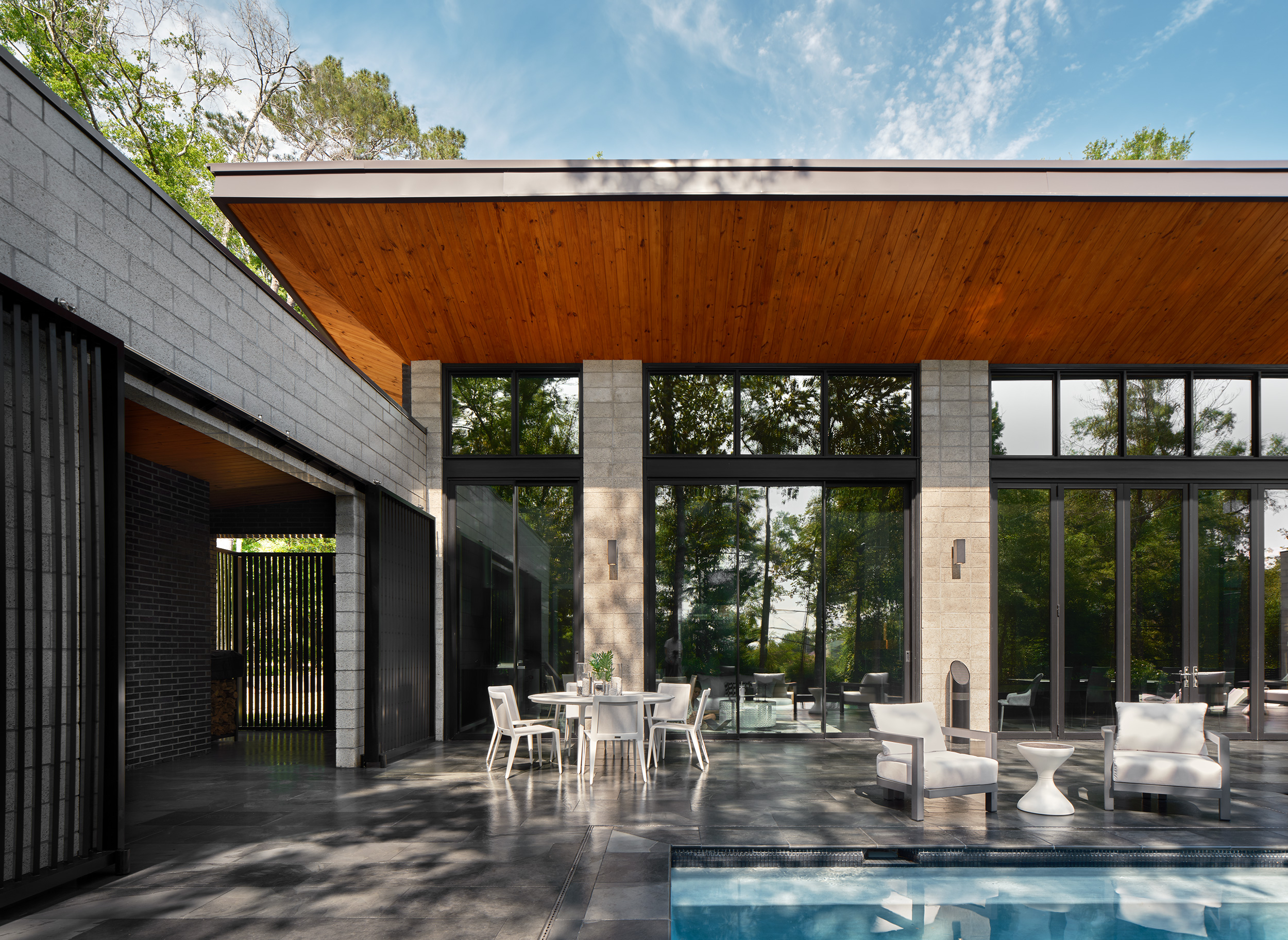
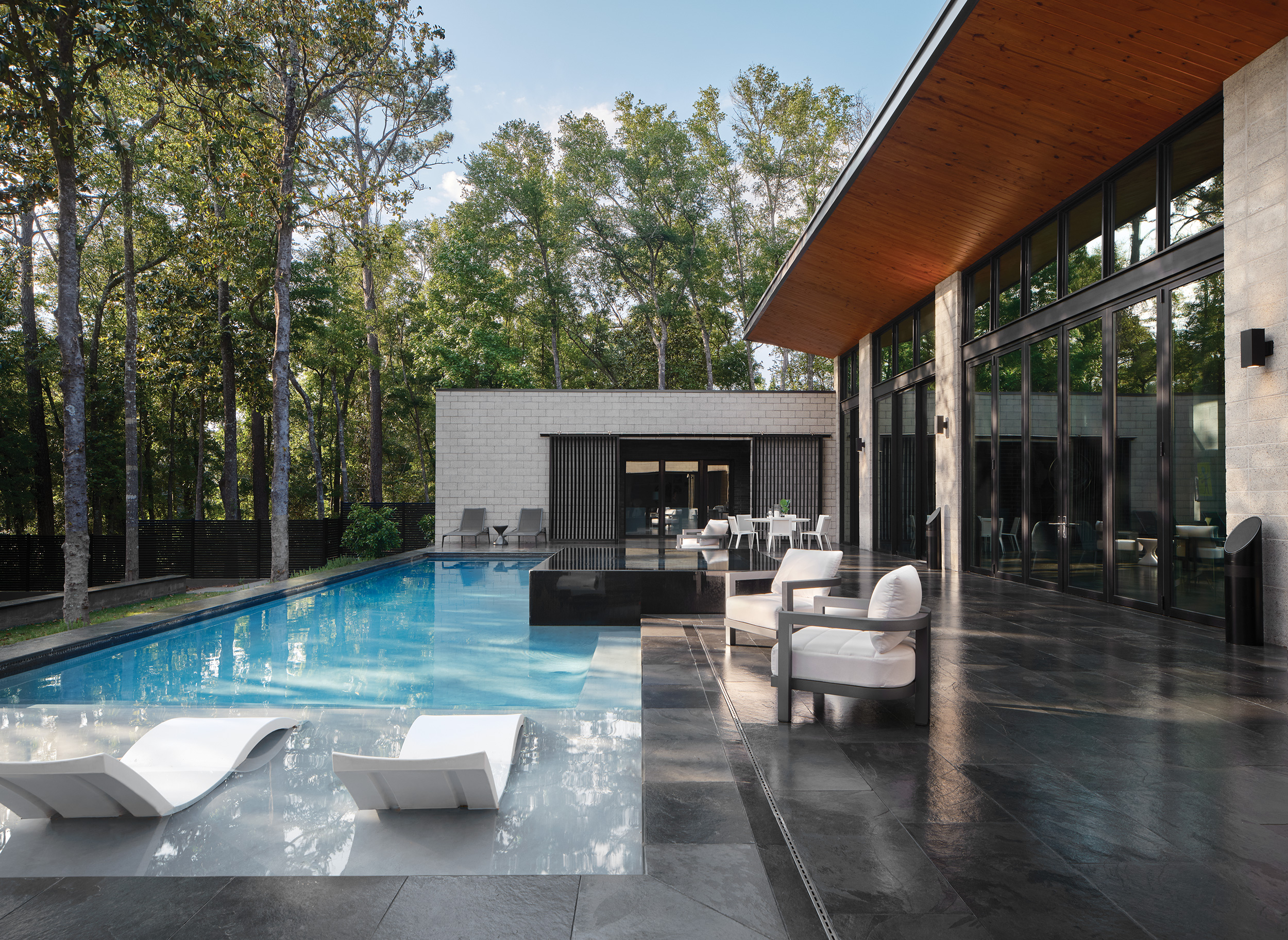
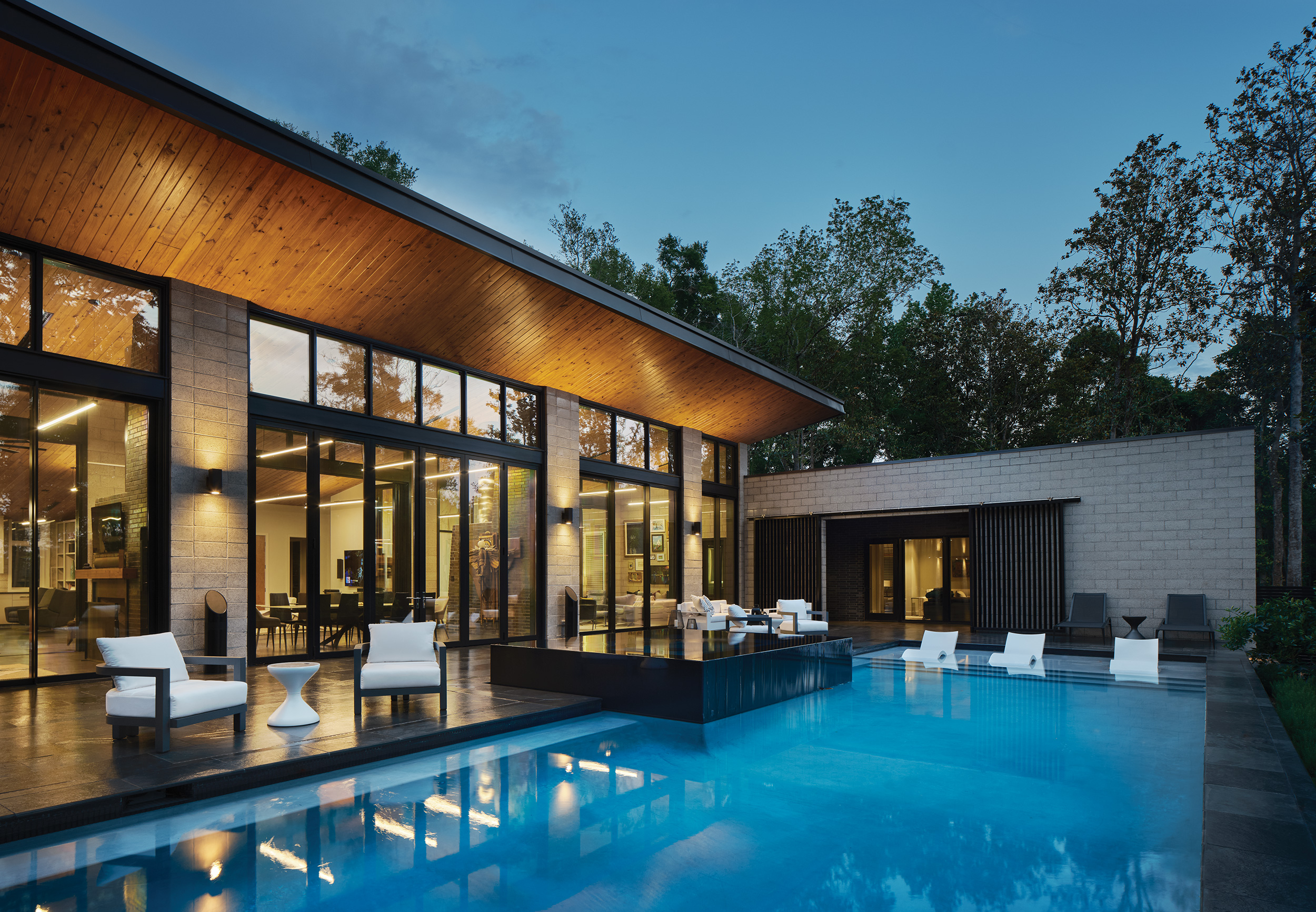
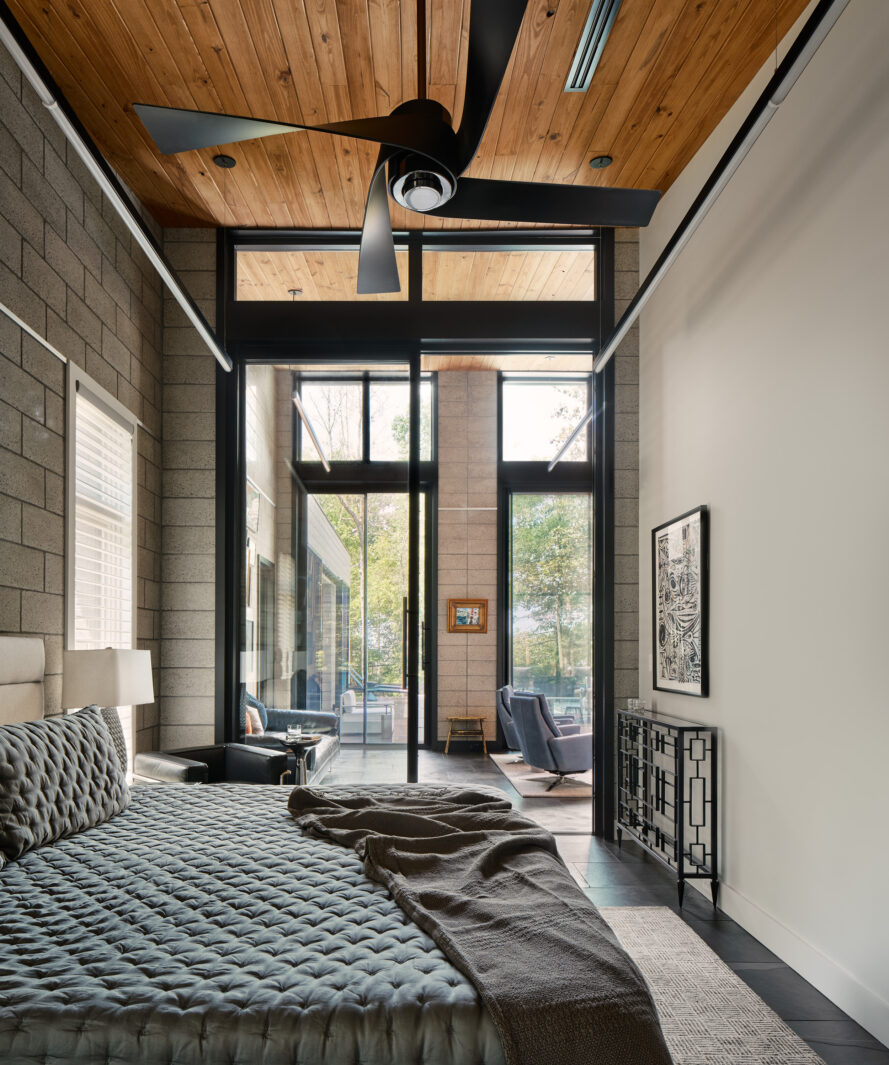
The pods mirror each other in layout and interior design, partly because the couple found themselves battling decision fatigue, partly because Jeffrey loves symmetry. The guest bedrooms are cocoon-like, with low-profile king-size beds and low ceilings. “Everyone who has stayed here really likes the feel,” said Jeffrey. Guests usually end up sleeping longer than they plan to.
Louvered powder-coated steel panels fence in the guest areas, including sliding doors that can sequester each pod from the pool deck when guests want an extra layer of privacy. When a hurricane approaches, the Zimmers can store the deck furniture in the space behind the panels to keep it from tumbling in the wind.
Jeffrey “just never stops designing,” said WAV’s Davis. “That’s how a lot of architects are. As things are getting built, you’re not trying to add time and cost, but you’re also thinking, ‘Is this the best it can be with what we have?’ And he was constantly improving it.”
That’s not to say that Suzanne wasn’t involved; she absolutely was. “It was just a passion project for Jeff, and he took it on full-time,” she said. “When the choices were thousands, he would bring me five, and I could pick.”
Not Just a Garage
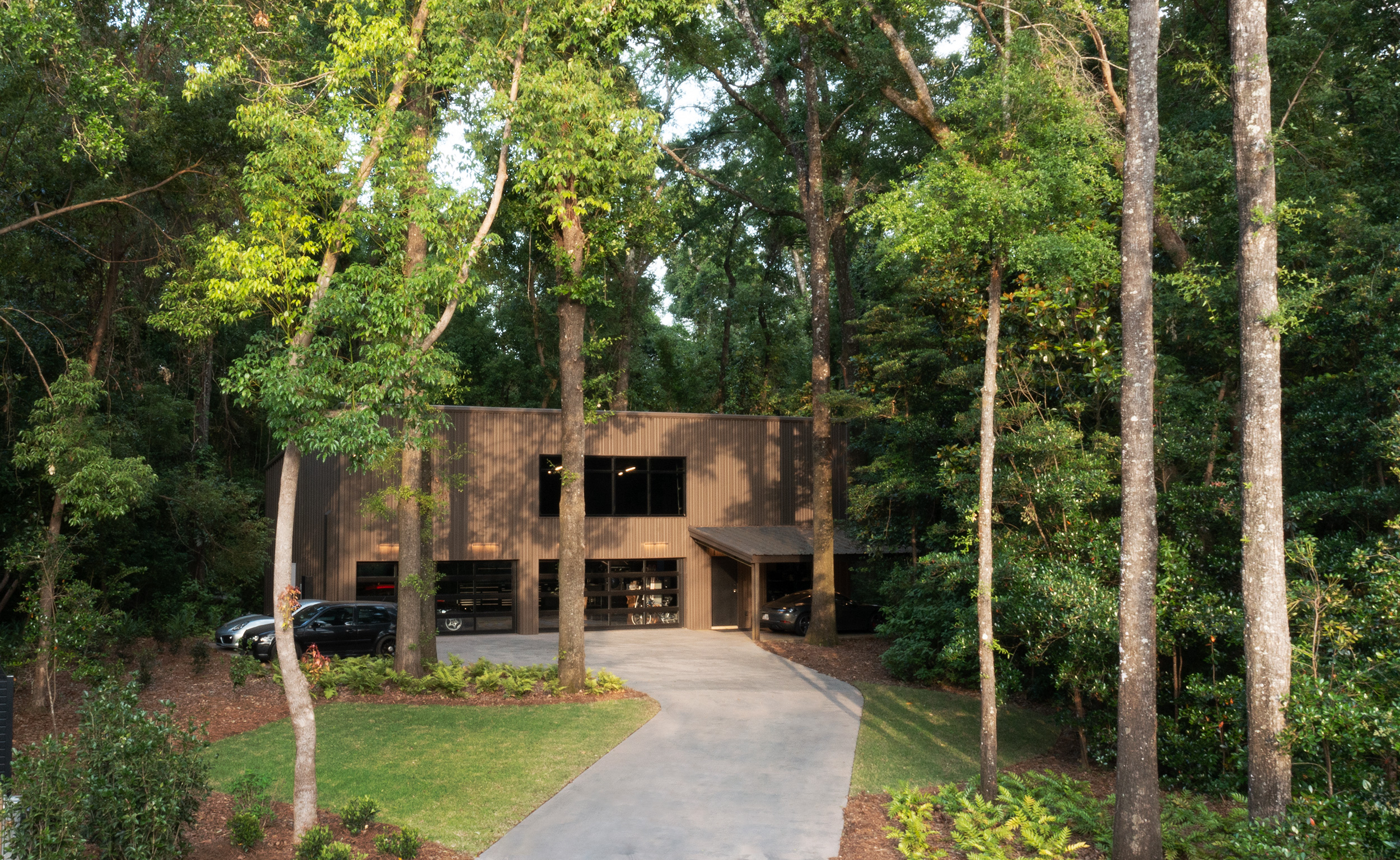
The Zimmers hid their garage in the back corner of the property, painting it brown so that it would blend in.
“Usually, with those outbuildings … you’re tired and your budget’s stressed,” said WAV’s Walcott. But when the team turned their attention to the garage, Jeffrey found a second wind.
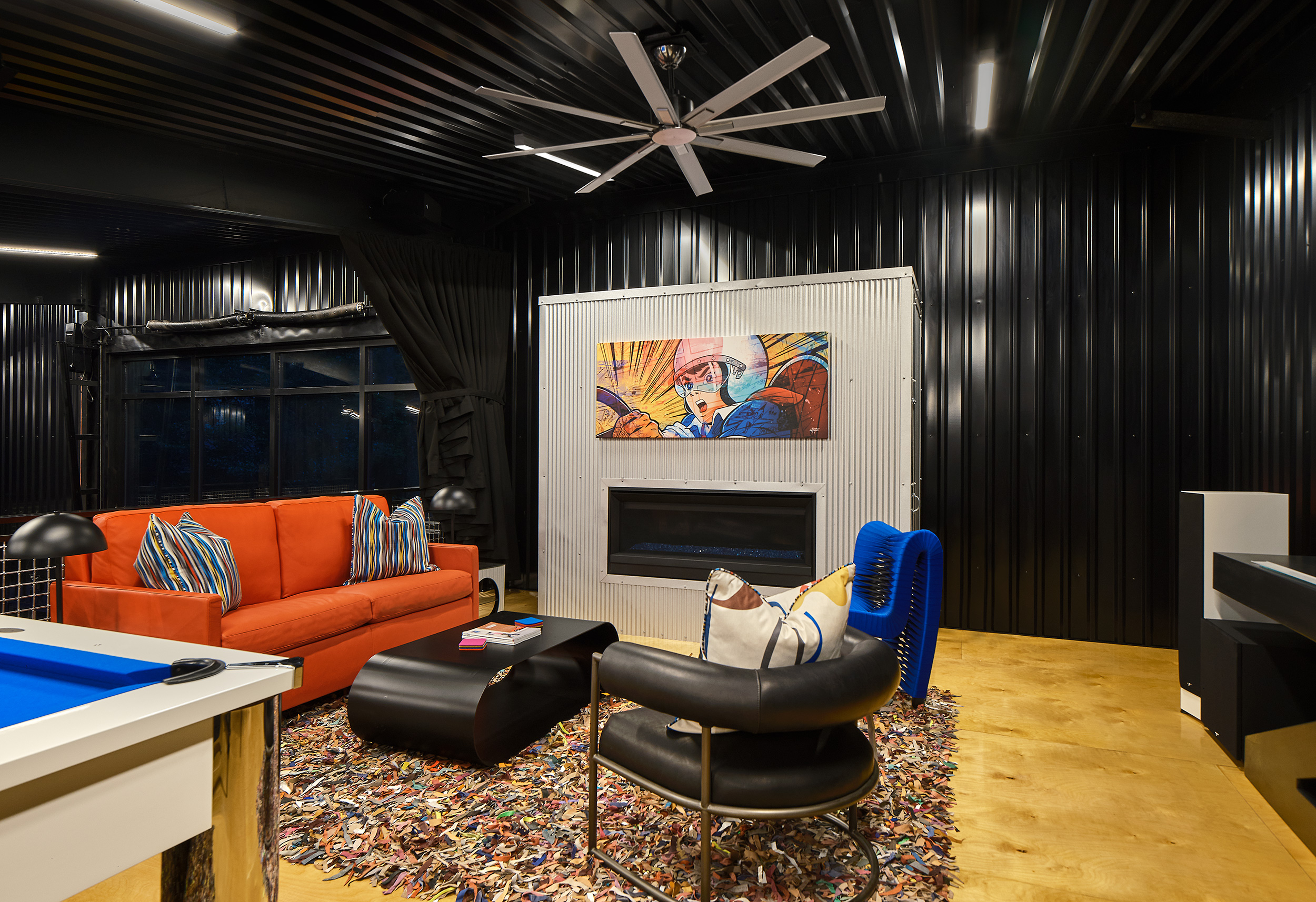
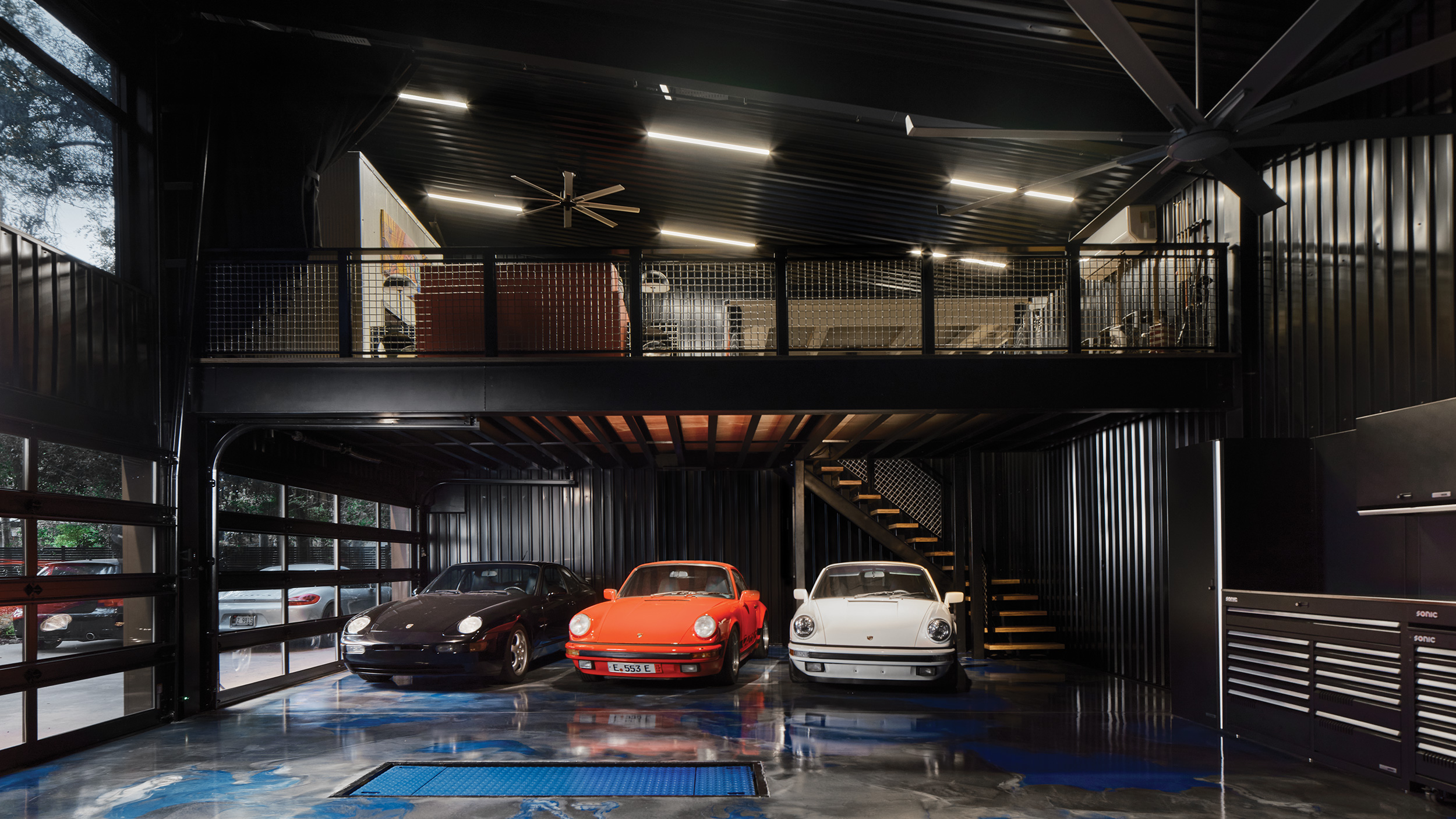
The interior is a proud showcase for Jeffrey’s Porsche collection and a functioning garage for automotive work. On top of that, the space is just plain fun, from its black metal-clad walls down to its polished blue floors. “I told the floor guy, ‘I want the swirliest blue bowling ball you’ve ever seen.’ He delivered,” said Jeffrey.
The garage includes an upstairs rec room, as well as Jeffrey’s home office and a mini kitchen. Even out here, where high design gives way to playfulness, the space is carefully engineered. The office (a concrete fortress) doubles as a hurricane shelter. “This would be our headquarters,” said Suzanne. “If we had a lot of damage and we wanted to be able to have a bathroom or a kitchen, the generator could run.”
“I would say that project, more than a lot of the ones I’ve done, has really given me courage to think big,” said WAV’s Davis. “Because sometimes we’re like, ‘That’s just a garage.’ But what can you make it if a client is willing to go there?”