Green Tableware Styling Tips from Stylist Julialake Graham
Green is one of the easiest colors to work with on a table – it has the ability to naturally tie everything together, from the linens to the florals to even the surrounding landscape. Layering different shades of green, much the same way that nature does, creates the most beautiful combinations.
A pop of citrine or chartreuse against an earthier olive green is visually interesting while still balanced. And green never feels out of place on the table. It is just as lovely on a spring day as it is at Christmas lunch. If I had one piece of advice for someone looking to add a bit of color to their tableware, I would say – go green!
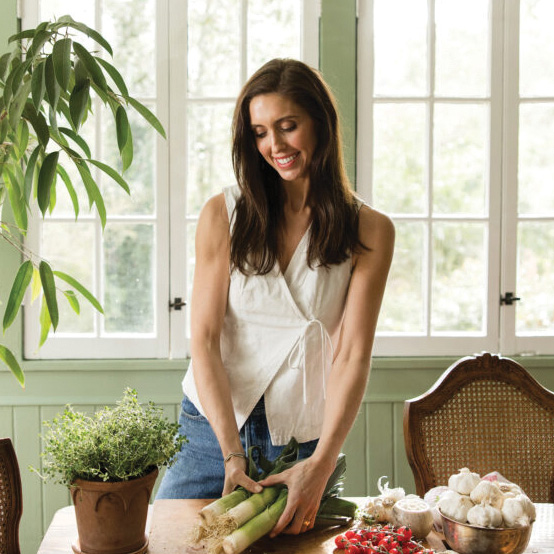
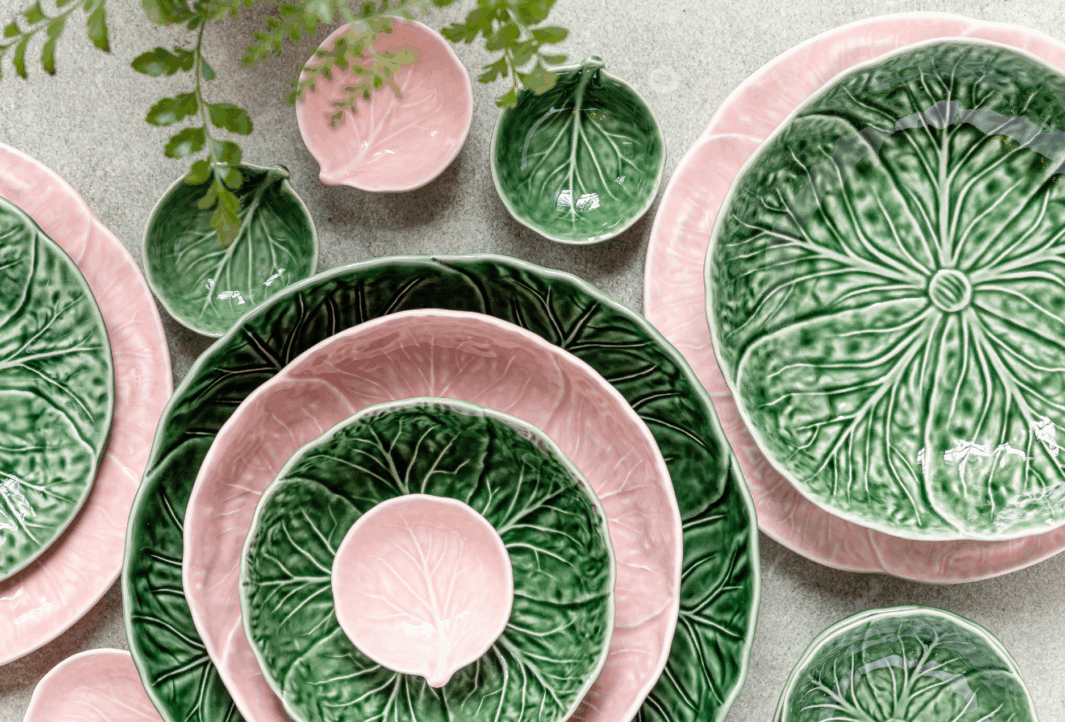
“Pieces like classic cabbageware are especially charming to me because of the way they take something as ordinary as a garden vegetable and elevate it – truly farm-to-table in a whole new sense.”
– Julialake Graham
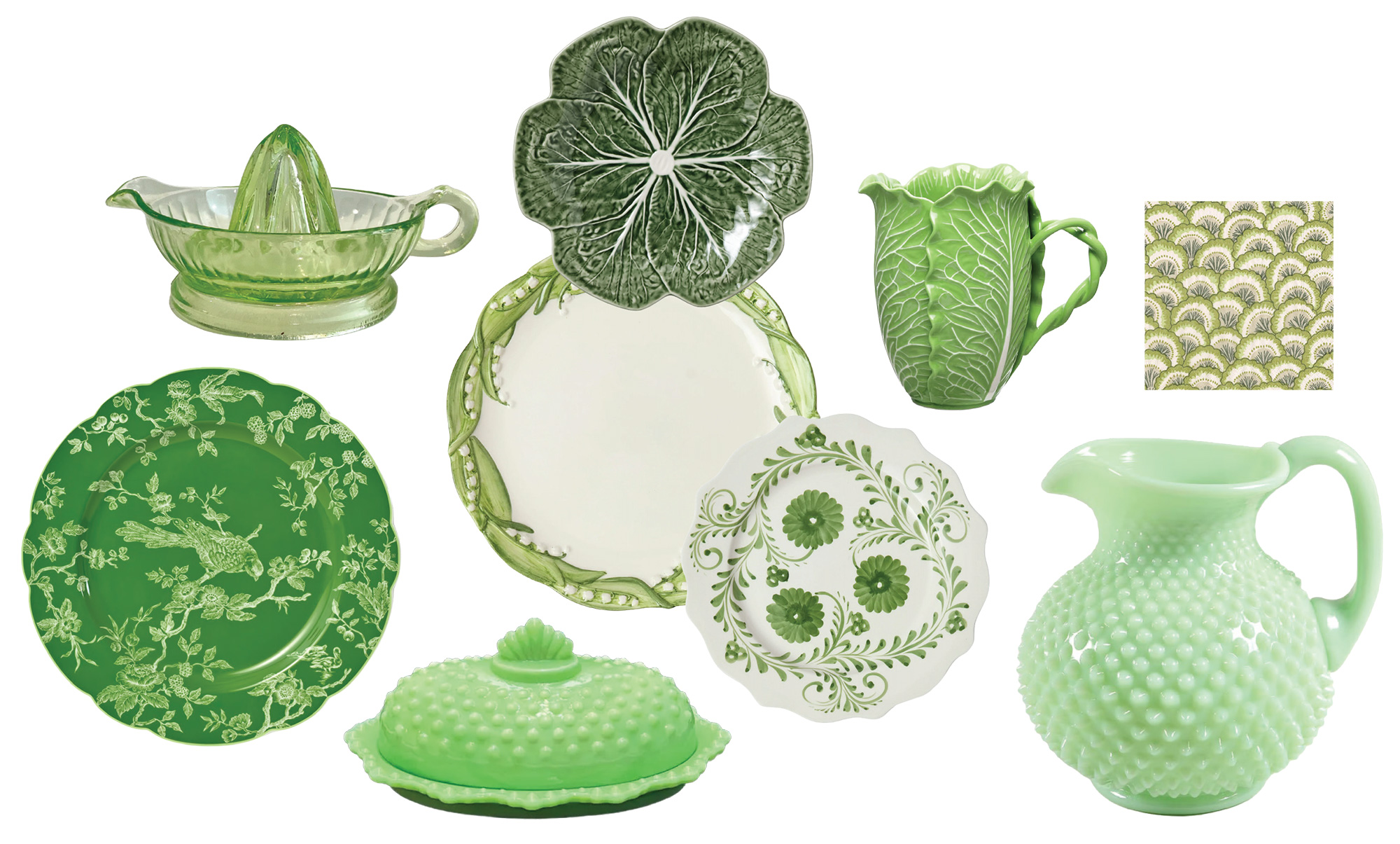
Know Your Green Tableware
Lettuceware / Cabbageware
While tableware in the shape of lettuce leaves or heads of cabbage was created in 18th century Europe, it was widely produced by Portuguese brand Bordallo Pinheiro beginning in 1884. The style became popularized in the US in the 1960s thanks to Palm Beach ceramicist Dodie Thayer, whose handmade pieces graced the tables of Jackie Kennedy, C.Z. Guest and the Duchess of Windsor. While her original pieces are highly valuable and collectible, many brands are producing similar products these days at approachable price points.
Jadeite
Similar to milk glass, this opaque green glass is designed to mimic expensive carved jade stone at a fraction of the cost. Popularized during the Depression and used through the 1960s, today jadeite is highly collectible for its vintage charm. Early pieces from several manufacturers contain uranium, causing them to glow under UV light.
Depression Glass
Transparent glassware made during the Depression was manufactured quickly and affordably, giving each piece small flaws that add to its character. The most common colors of glass were green and pink, though more colors exist.
Transferware
Developed in 18th-century England as an alternative to expensive, hand-painted China, the design is transferred via copper plate to a piece of tissue, and then to the ceramic. Blue was the most common color, as found in Blue Willow china, and so the less common green versions are highly collectible.
Fiestaware
Another set of dishes popularized during the Depression, this ceramic dinnerware comes in bold, solid colors with slight concentric rings molded into the pottery. Though discontinued in 1973, immense nostalgia for the brand caused The Fiesta Tableware Company to reintroduce it in the 1980s.