Some football games end. Iron Bowls linger. They live on in old newspaper clippings and grainy photographs. In framed jerseys, battered helmets and boxes of yellowing headlines. In barbershops and boardrooms, church foyers and tire shops, where a stranger can still recognize a player 20 or 40 years after the final whistle and tell him exactly where he was when that play happened.
And they live in the arguments, too. Especially the arguments.
Antonio Coleman has been away from Auburn for years now, but folks around Mobile still recognize the former Williamson High School star. Sometimes the recognition comes with a story. Sometimes a favor. Sometimes it’s simply with the understanding that Coleman once represented their corner of Alabama on one of college football’s largest stages.
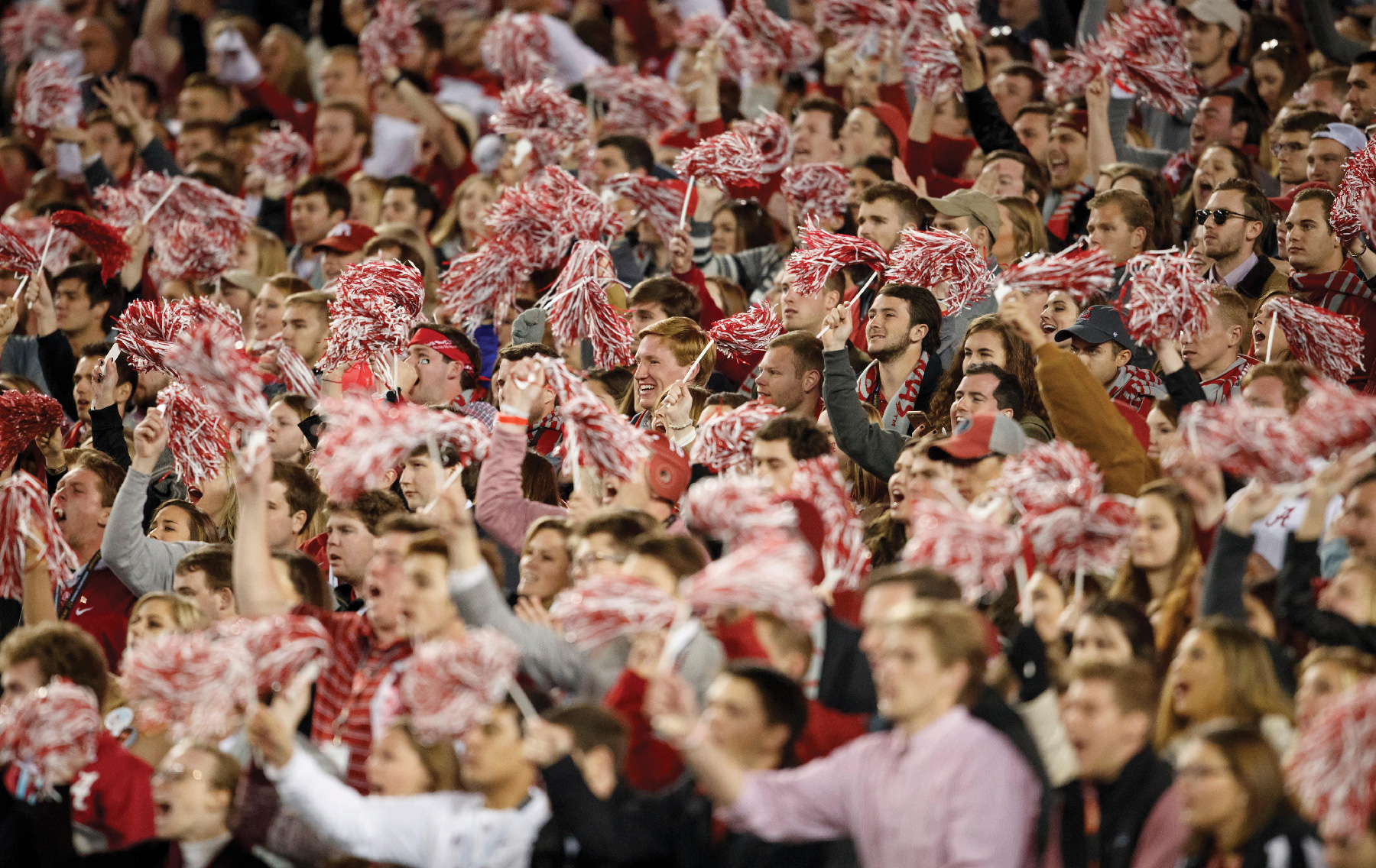
Alabama Crimson Tide fans cheer on their team during the 2017 College Football Playoff National Championship game // Photo by Matt May, courtesy Alamy
“Down here in Mobile, you’re either Alabama or you’re Auburn,” he says. Across the Bay, Russ Wood has turned part of his home into something rapidly approaching a Crimson Tide time capsule. There are old shoes and jerseys. A helmet from the final game of Bear Bryant’s career. Scrapbooks packed with decades-old newspaper coverage. Photographs. Plaques. A 1979 National Championship football.
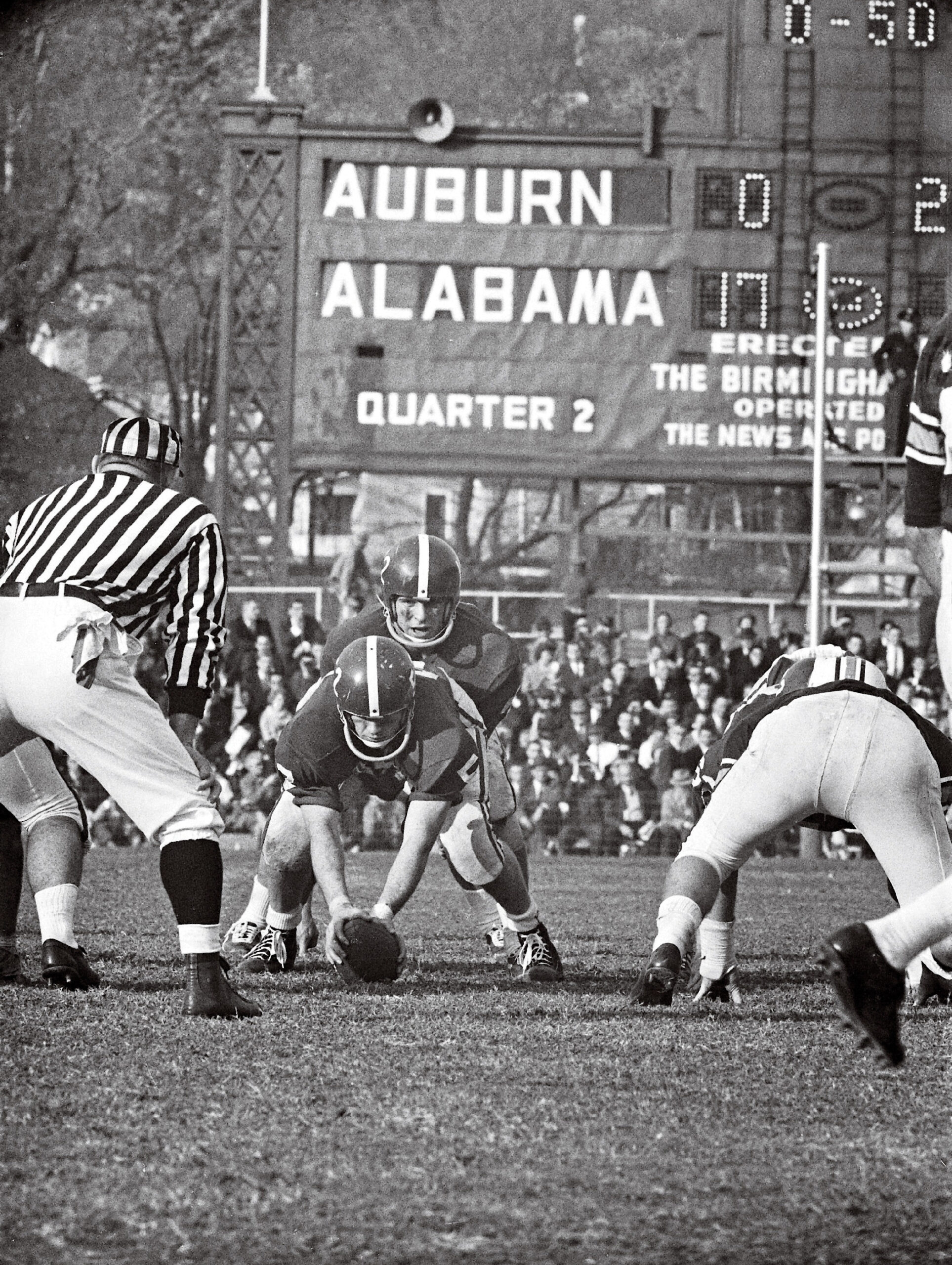
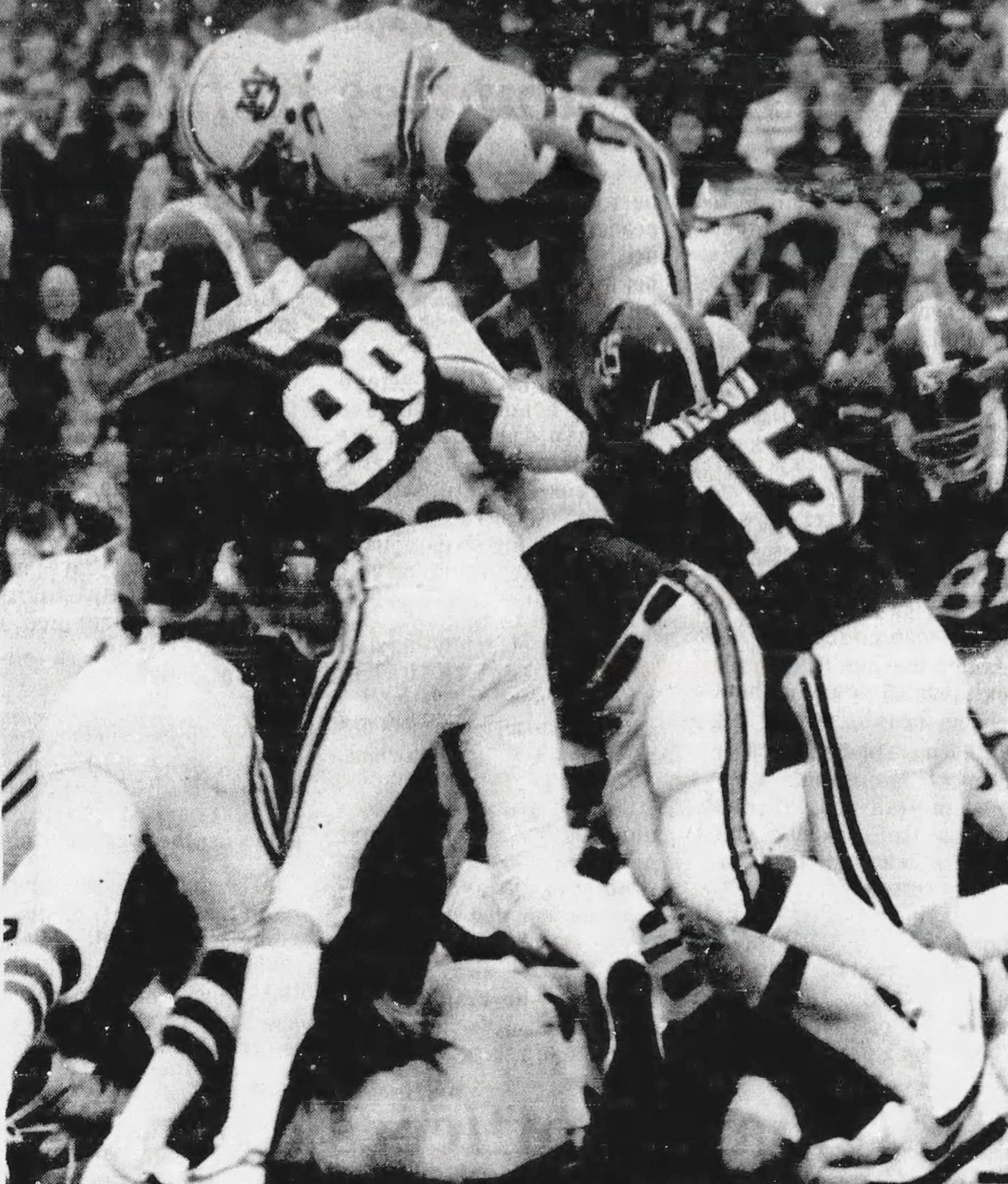
And buried somewhere in the collection is a photograph Wood especially enjoys showing people. Bo Jackson has the football. Russ Wood has Bo Jackson’s pants. Or, perhaps more accurately, whatever part of them he could grab.
“That’s me pulling Bo down by his jockstrap,” Wood says with a hearty laugh.
That may be the Iron Bowl distilled to a single picture. History on one side. Desperation on the other. Hold onto anything you can.
For more than three quarters of a century, the Alabama-Auburn rivalry has collected moments like these; some famous enough to acquire names of their own, others hidden a play or two beneath the mythology. And from Foley to Vigor, Williamson to LeFlore, Prichard to St. Paul’s, players from the Mobile Bay area have repeatedly found themselves standing in the middle of them.
Sometimes they made the play everybody remembers. Sometimes they made the play that made the famous play possible. And sometimes, decades later, they are still wondering what might have happened if the football had bounced another way.
1964: Paul Crane, Vigor High School
THE MAN IN THE MIDDLE
Before football specialized everything, Paul Crane specialized in almost nothing. He simply played. Center on offense. Linebacker on defense. Snap the football, then go find whoever was carrying it.
The former Vigor High School standout was part of Bear Bryant’s two-way “Red” unit at Alabama, the kind of football arrangement that now feels less like another era than another species of the sport altogether. Crane became an All-SEC linebacker in 1964 and would earn All-America honors at center a year later. Alabama’s own records list him as the starting center on a 1964 team stocked with names like Joe Namath, Ray Perkins and Steve Bowman.
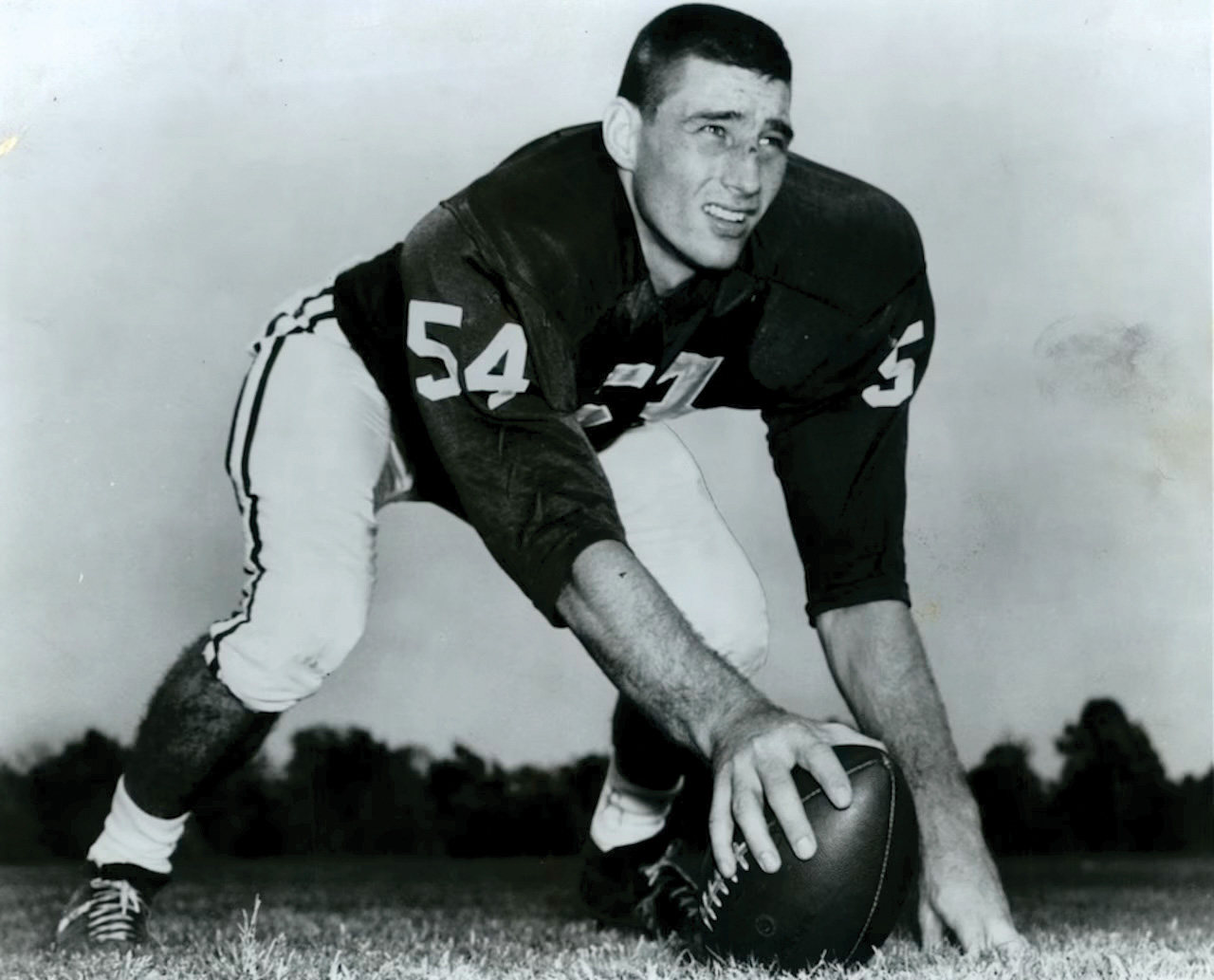
The Iron Bowl that season offered another name worth circling: Tucker Frederickson.
Auburn’s All-American back was one of the best players in the country and would become the No. 1 selection in the 1965 NFL Draft. Alabama entered the rivalry unbeaten and ranked No. 2. Auburn had enough talent to make sure none of that mattered once the ball was kicked.
The Tigers led 7-6 at halftime after Frederickson scored from three yards out. Alabama reclaimed control when Ray Ogden returned the second-half kickoff for a touchdown, then eventually stretched the lead on a Namath-to-Perkins scoring pass. Alabama survived 21-14, completing an undefeated regular season and securing the championship that pollsters awarded before the bowl games in those days.
And in the middle of the collisions was Crane, the Vigor product asked to block Auburn on one possession and tackle it on the next.
1967: Kenny Stabler, Foley High School
THE SNAKE IN THE STORM
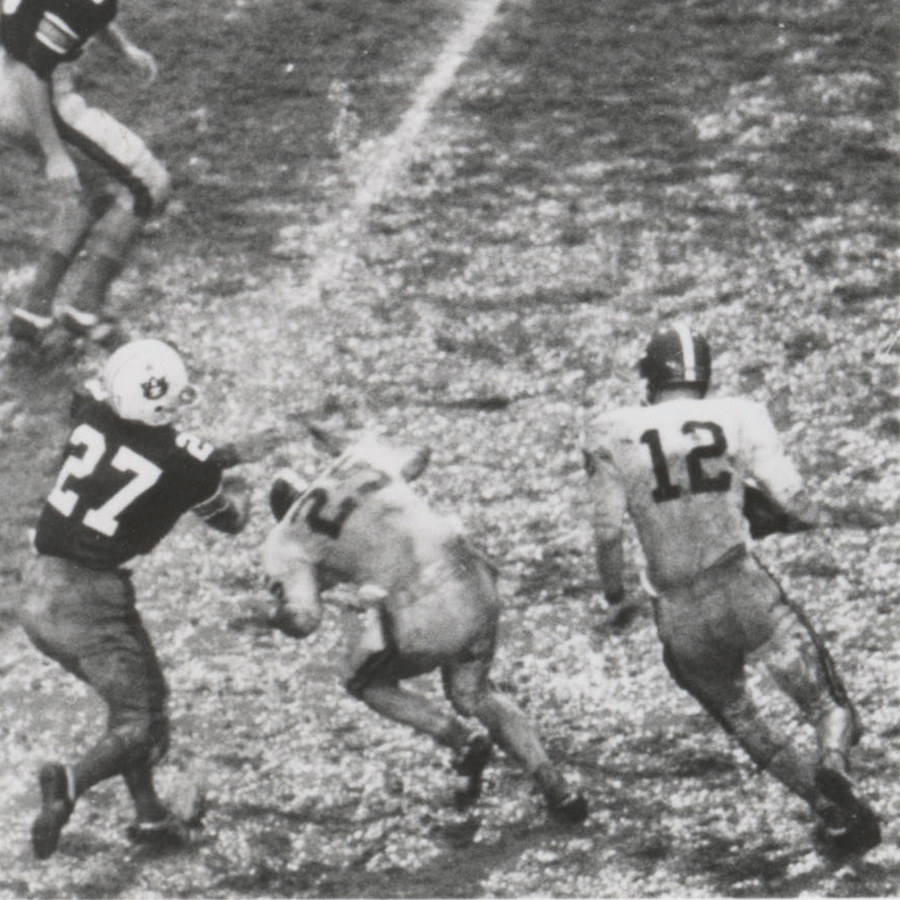
By the fourth quarter, Legion Field had almost ceased to be a football field. It was water and weather. Mud and misery. Rain hammered Birmingham until the field became a brown-green soup, and the game became less about running an offense than surviving one. Umbrellas filled the stands. Water pooled on the field. Auburn managed a field goal. And for most of the afternoon, that seemed to be enough.
Auburn 3. Alabama 0. Then Kenny Stabler started running.
The Foley High School quarterback took the football and disappeared into the downpour, cutting through the muck on a fourth-quarter touchdown that became one of the defining images of his Alabama career. Accounts differ on the precise yardage. Some list 47, others 53. But they agree on everything that mattered: Stabler escaped. Alabama won 7-3. “The Run in the Mud” was born.
Years later, there would be Oakland and the Raiders. An NFL Most Valuable Player Award. A Super Bowl. Canton, Ohio, and a posthumous induction into the Pro Football Hall of Fame. There would be plenty of opportunities for Kenny Stabler to become the snake. But on that rain-soaked afternoon at Legion Field, Foley’s quarterback already seemed perfectly cast for the nickname.
A straight line would not have gotten him there.
So, he slithered.
1982: Russ Wood, Elba High School
BO OVER THE TOP (FROM UNDERNEATH IT)
The photograph is almost too perfect. Bo Jackson has the football. Russ Wood has Jackson’s pants. Woods laughs when he shows it off.
“That’s me pulling Bo down by his jockstrap.” There are more dignified ways to describe defense. But there may not be more honest ones.
Wood had arrived at Alabama in 1979 as an undersized linebacker from Elba, unsure whether he truly belonged among the giants gathering in Tuscaloosa. Four seasons later, he was playing his final Iron Bowl for Bear Bryant.
Auburn had not beaten Alabama since 1972. Nine straight losses. Then came Bo.
Jackson was only a freshman in 1982, but there was already something different about him, something that made ordinary football geometry feel insufficient. Late in the fourth quarter, Auburn trailed Alabama 22-17 and faced fourth-and-goal from the one.
The ball went to Jackson. He went up. The rest went into Iron Bowl mythology. “Bo Over The Top.” Auburn 23, Alabama 22. That’s where the highlight reel usually ends. Wood wishes it wouldn’t.
“Why don’t y’all show the whole game?” he remembers asking broadcast overlords years later. “We had the ball; Alabama had the ball twice after Bo went over the top. We lost the game, but that didn’t win the game.”
He has a point. Alabama received another possession and threw an interception. Auburn then tried to drain the remaining clock. Jackson went over the top again. And this time, the football came out.
Alabama recovered and got one final chance to steal the afternoon back. Historical accounts confirm the late Jackson fumble and Alabama’s final possession; Wood remembers himself as the defender who scooped up the football and immediately saw open field. Under the rules then in place, he could not turn the recovery into the return he still imagines. Alabama never reached winning field-goal range.
Auburn held on. The nine-game streak was gone. Bryant had lost his final Iron Bowl. For Auburn fans, the afternoon forever freezes with Bo in the air. Wood’s memory keeps the film rolling.
There’s the collision with Auburn tight end Ed West. The fumble. The frantic final possessions. The desperate knowledge that this was Bryant’s last rivalry game and Alabama was hoping to send him out with one more victory.
“I remember that last series,” Wood says, “like it was yesterday.”
It’s been more than four decades. That’s the trick of the Iron Bowl. Sometimes yesterday lasts forever.
1985: Greg Richardson, Williamson High School
SIX SECONDS
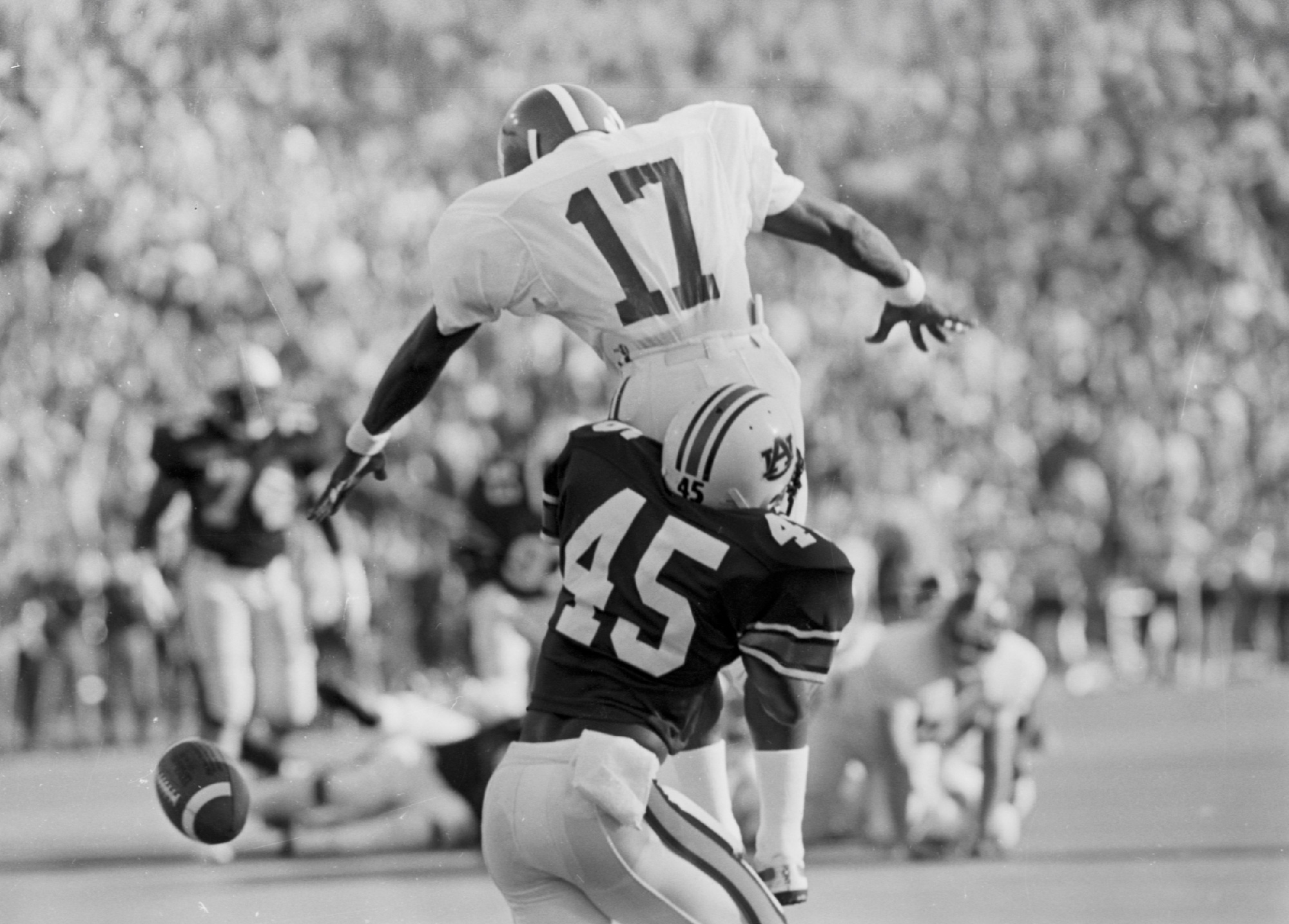
Everybody remembers the kick. Of course they do. Van Tiffin. Fifty-two yards. No time left. Alabama 25, Auburn 23. “The Kick” is the kind of nickname sports history reserves for moments that no longer require explanation. But six seconds before Tiffin became immortal, Greg Richardson had to get out of bounds. The Williamson High School receiver had already made himself felt that afternoon, including a long punt return that helped set up an Alabama field goal. But late in the fourth quarter, none of that mattered.
Auburn led 23-22. Alabama had less than a minute. No timeouts. Mike Shula had already taken a sack. The Tide had survived a desperate fourth down on a reverse to Al Bell. Time was disappearing one heartbeat at a time. Then Shula found Richardson crossing the middle. Richardson caught the ball and fought for the sideline. An Auburn defender had hold of him, but Richardson kept churning anyway, dragging the player toward the boundary until he finally spilled out near the Auburn 35.
The clock stopped. Six seconds. Tiffin’s field goal unit raced onto the field. The snap came back. The hold went down. And the football sailed into forever. It’s perfectly understandable that history remembers the thing that happened last. Kicks make for good football folklore. One swing of the leg. One flight of the ball. One scoreboard changing as the clock becomes zeroes.
Richardson’s contribution was messier. Catch. Fight. Drag. Boundary. Breathe.
And without it, there may be no kick to name. Sometimes the most important play in history is the one immediately before history.
1986: Lawyer Tillman, LeFlore High School
THE WRONG MAN FOR THE RIGHT MOMENT
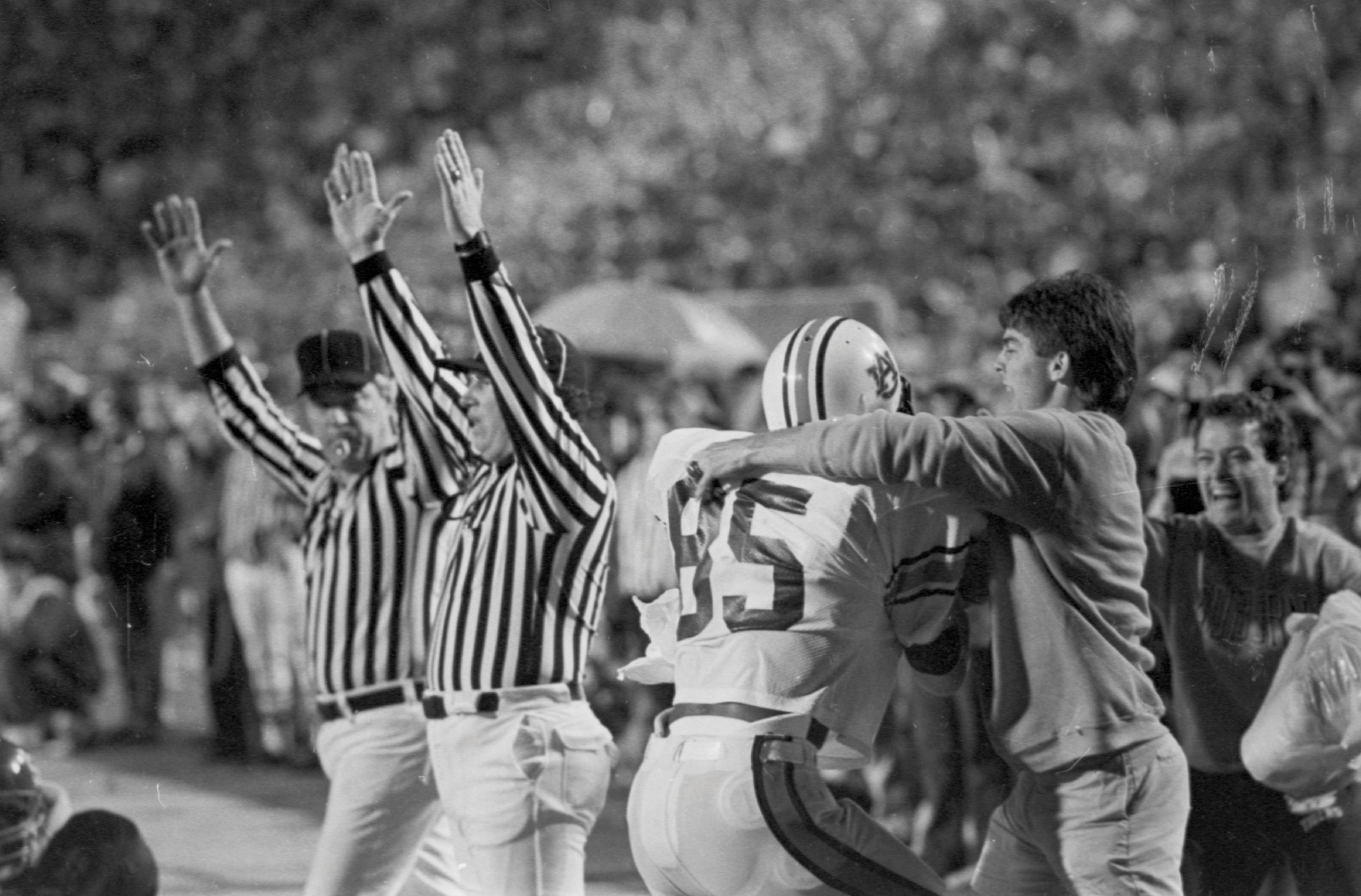
Lawyer Tillman wasn’t supposed to get the football. That seems a useful place to begin. Auburn trailed Alabama 17-14 with 32 seconds remaining. The Tigers were inside the 10. Pat Dye wanted a reverse to a wide receiver.
There was just one problem. In the chaos of the moment, Dye could not remember the intended receiver’s name. According to the AP, he just kept asking for his “receiver.” Sophomore Lawyer Tillman, the LeFlore product, wound up on the field instead.
Tillman understood enough of what was happening to try to call timeout.
Too late. The ball was snapped. Tim Jessie started one direction. Tillman came the other. Jessie handed him the football. Now there was nothing left to misunderstand. Run.
Tillman took the reverse around the edge and reached the end zone with 32 seconds remaining. Auburn won 21-17. The carry was, according to the AP, the first rushing attempt of Tillman’s college career.
First carry. Iron Bowl. Winning touchdown. Some players spend their entire careers waiting for the perfect play call. Lawyer Tillman became a part of Auburn history because, for a few frantic seconds, almost nobody seemed completely certain the correct player was even running it. Then Tillman took care of the rest.
1989: Darrell “Lectron” Williams, Vigor High School
THE FIRST TIME EVER
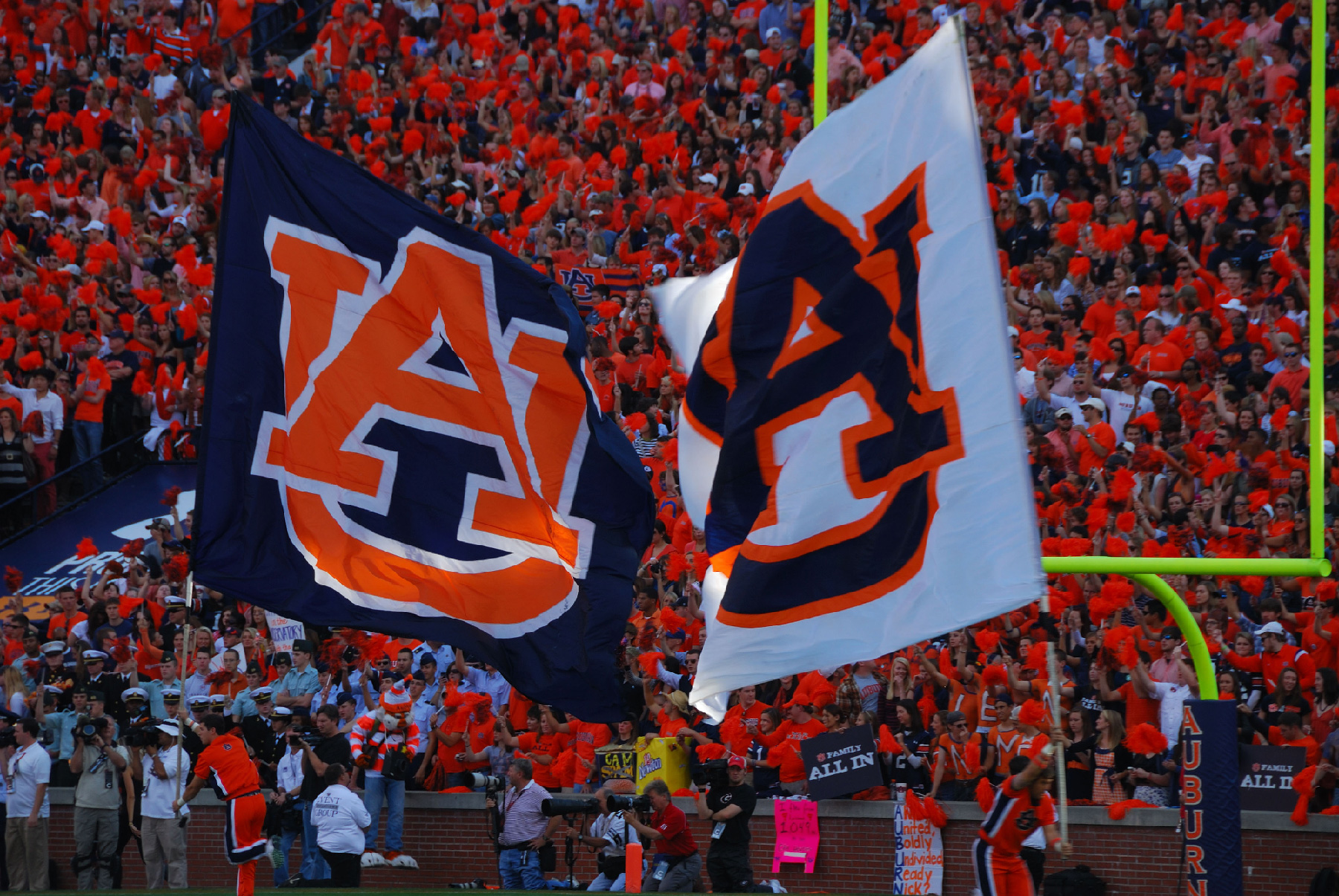
Before the touchdown came the waiting. Years of it. For decades, Alabama and Auburn met in Birmingham. Auburn had a stadium. Alabama had stadiums. The rivalry had tradition. But it didn’t have home fields.
Then came 1989. For the first time, Alabama boarded the buses and came to Auburn to play the Iron Bowl at Jordan-Hare Stadium. The Crimson Tide arrived undefeated, 10-0 and ranked No. 2, carrying national title possibilities.
Auburn carried something else: A grudge with an address.
The buildup consumed the Plains. Fans arrived early. RVs arrived earlier. The atmosphere swelled until kickoff felt less like the beginning of a football game and more like the release of pressure that had been accumulating for decades.
Alabama led 10-7 at halftime. Auburn took control after that. By the fourth quarter, the Tigers led 17-10 and began grinding away at Alabama with a 13-play, 80-yard drive. Then the football found Darrell “Lectron” Williams.
The Vigor High School freshman hit the defense, broke tackles, and finished a 12-yard touchdown run that pushed Auburn ahead 24-10. The Tigers eventually won 20-30. A freshman from Mobile had helped put the exclamation point on the first Iron Bowl Auburn ever hosted.
Yet another Mobile player spent the afternoon desperately trying to erase it. Murphy High School’s Keith McCants was everywhere for Alabama with 18 tackles, an interception and a forced fumble in one of the greatest individual defensive performances in the rivalry.
Two Mobile stars. Two sides. One afternoon when the geography of the rivalry changed forever. Alabama had finally come to Auburn. Lectron Williams ensured that they remembered the trip.
1994: Sherman Williams, Blount High School
TWENTY-SEVEN CARRIES
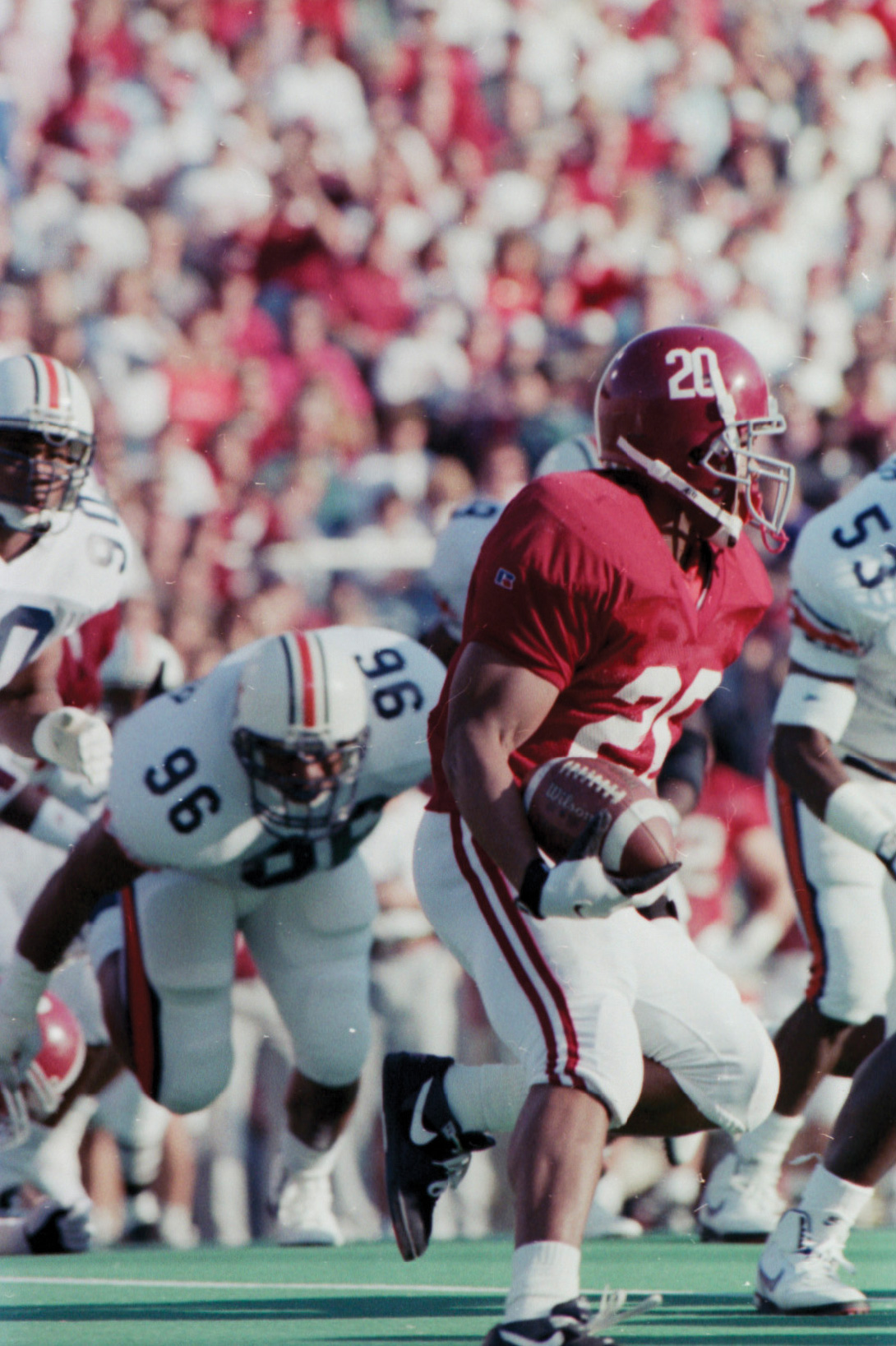
Not every Iron Bowl moment happens in a moment. Some take 27 carries. Alabama and Auburn arrived at Legion Field in 1994 without a loss between them. Auburn had not lost a game under Terry Bowden. Alabama had spent the season finding ways to survive under Gene Stallings.
Something had to give. Sherman Williams kept taking the football. The Blount High School running back opened the scoring with a 13-yard touchdown, breaking tackles on his way into the end zone. Alabama built a 21-0 halftime lead.
Then Auburn started a comeback. Twenty-one to seven. Twenty-one to 14. The comfortable afternoon started tightening like a knot. Williams kept taking the football. When it was all finished, he had carried 27 times for 164 yards.
There’s no single photograph to explain the performance. No one leap. No kick. No reverse. No six seconds. And that’s precisely what makes it different. It was attrition. A yard here. Five there. Another first down. Another collision. Again. Again. Again.
Auburn eventually got one last opportunity, driving toward midfield with the game in doubt. The Tigers’ final fourth-down attempt came down to a measurement so close that photographs of the chains became part of the aftermath.
Short. Barely. Alabama 21. Auburn 14. The Tigers’ unbeaten run was over. Williams had spent the afternoon carrying the ball as though he intended to carry the outcome with it. Twenty-seven times was enough.
2009: Antonio Coleman, Mark Barron and Julio Jones
Williamson, St. Paul’s and Foley High Schools
GET THE BALL OUT
“Get the ball out!” Antonio Coleman has said those words to himself more than once. Probably more than 100 times. Ok, maybe more than 1,000. The former Williamson High School star was one of Auburn’s best defensive players when unbeaten, No. 2 Alabama came to Jordan-Hare Stadium in 2009 with an SEC Championship Game ahead and a national championship somewhere beyond it.
Auburn was 7-4. On paper, that mattered. For a few hours, though, paper was useless. The Tigers punched Alabama in the mouth immediately. Terrell Zachery took a reverse 67 yards for a touchdown. Auburn recovered an onside kick and scored again. Suddenly the Tigers led 14–0, the largest deficit Alabama had faced all season.
Inside Auburn’s program, Coleman remembers something more urgent than spoiler talk. Gene Chizik was in his first season. Players were proving themselves to a new staff.
“We were fighting for our lives and fighting for our jobs,” Coleman says.
Alabama steadied itself. Trent Richardson scored. Greg McElroy found Colin Peek. Fourteen-all at halftime. Then Auburn struck again. Chris Todd found Darvin Adams for a 72-yard touchdown early in the third quarter. Auburn, 21. Alabama, 14. The next Mobile-area player to change the game wore crimson.
Mark Barron, the St. Paul’s Episcopal star who had grown up in Mobile and become one of the best safeties in the SEC, intercepted Todd with 4:48 remaining in the third quarter. It was Barron’s seventh interception of the season. Alabama converted the turnover into a field goal. The lead shrank to one. Twenty-one to 20. And there it stayed until Alabama took possession one final time with a little more than eight minutes remaining. Seventy-nine yards stood between the Crimson Tide and the lead.
For Auburn’s defense, the assignment needed no poetry.
“A turnover kills it,” Coleman remembers. “Three-and-out, man, we got to get a stop.”
Alabama started moving. Then Coleman made the play that he can still feel in his bones. McElroy turned on play action. Coleman came around the edge. He got to the quarterback from the blind side and put him on the ground.
A sack. The sort of play a defensive end spends all afternoon hunting. And still, 17 years later, Coleman remembers what was missing.
“Get the ball out, man,” he says. “That’s what you got to do.”
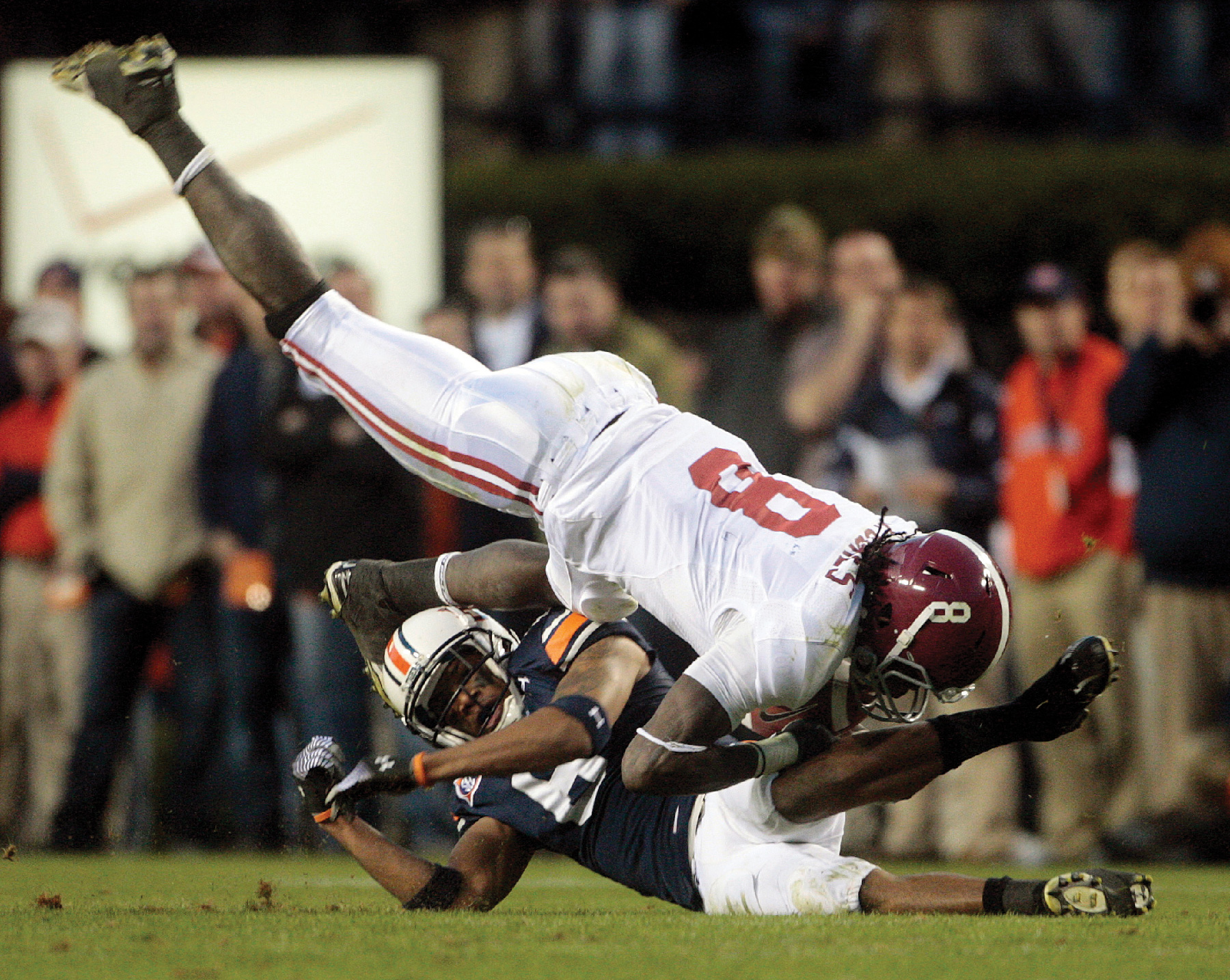
The ball stayed with Alabama. So did the drive. That’s where Julio Jones entered the story over and over again. The Foley High School receiver became McElroy’s answer whenever Auburn seemed ready to shut the door.
“Julio was a different animal, man,” Coleman says. “He was an uber athlete.”
Jones caught four passes for 33 yards on the final possession. Three of those catches converted third downs.
Third down. Julio. Move the chains. Third down. Julio. Move them again.
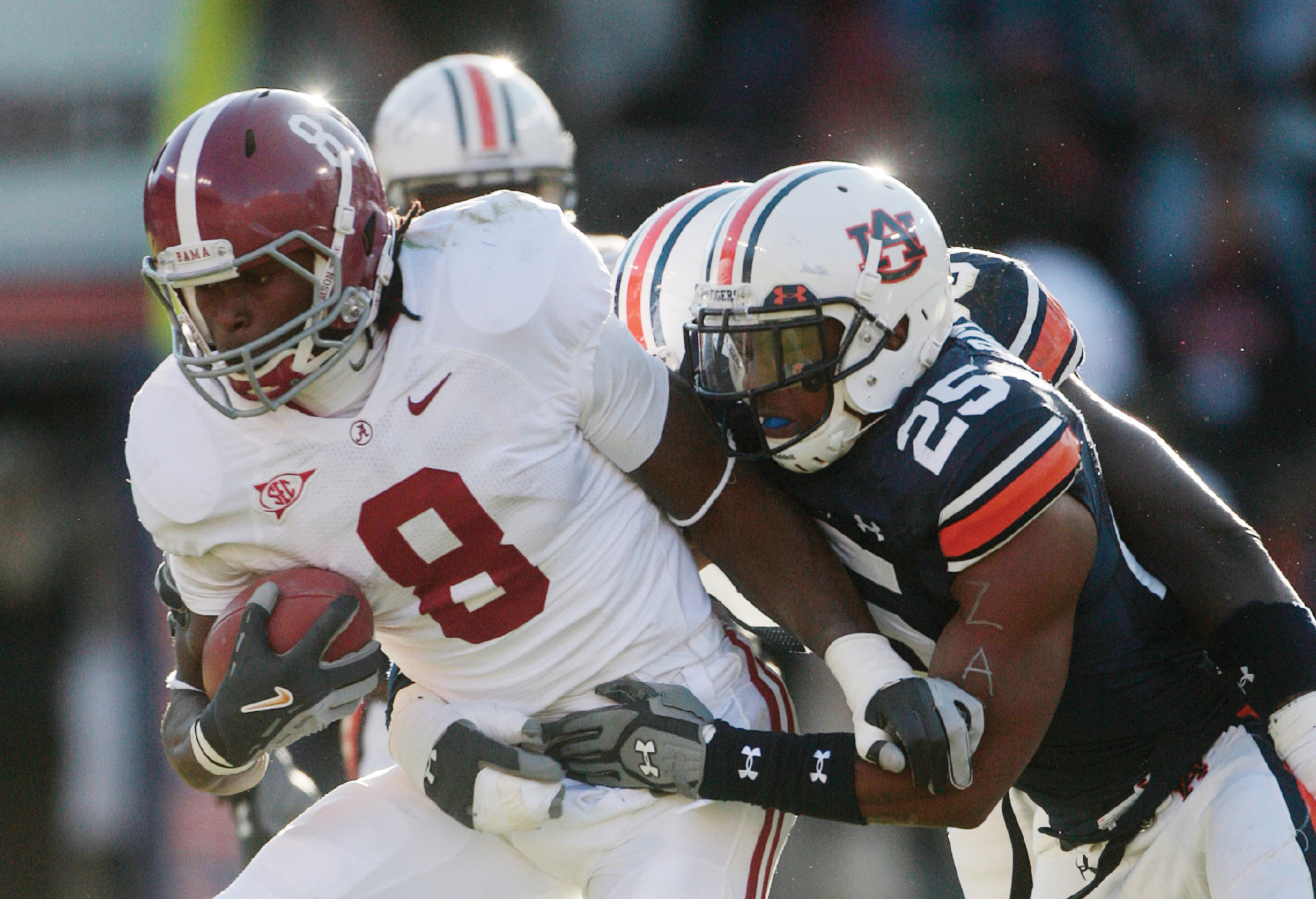
Alabama eventually reached the Auburn 4. With 1:24 remaining, McElroy found Roy Upchurch for Upchurch’s first career touchdown reception. Alabama finally led. Twenty-six to 21. Auburn had one final possession and pushed into Alabama territory before the final pass fell incomplete. The Tide survived. Then it kept going. Florida fell in Atlanta. Texas fell in Pasadena. Alabama finished 14–0 and won the National Championship.
History remembers the final drive as an early cornerstone of Nick Saban’s dynasty. Coleman remembers the football that didn’t come loose. That’s the difference between history and memory. History knows what happened. Memory knows what almost happened.
For MBM, there’s another layer. Barron, from St. Paul’s, made the interception that helped pull Alabama within a point. Jones, from Foley, kept the final drive alive. Coleman, from Williamson, came within one loose football of killing it. Three players from the same corner of the state stood on opposite sides of a national-championship season and found themselves tangled inside the same final minutes. That part does not surprise Coleman.
“Being from Mobile, having a lot of guys that went up to Auburn with me and playing against a lot of Mobile guys, man, it meant the world to me,” he says. “I really feel like it’s something that cemented a legacy that I’d never forget.”
Years soften some things. Not rivalries. Coleman now coaches at Williamson, back where his own football story began. Many of the old opponents are no longer opponents. They see each other. Laugh. Talk football. Then somebody brings up Alabama and Auburn. Of course they do.
“You get bragging rights for 365 days,” Coleman says. “I don’t care if you win one in 10. You win the Iron Bowl. Nobody cares about the 10 you lost.”
A year is a long time. Seventeen years can be longer. Get the ball out.
2010: Nick Fairley, Williamson High School
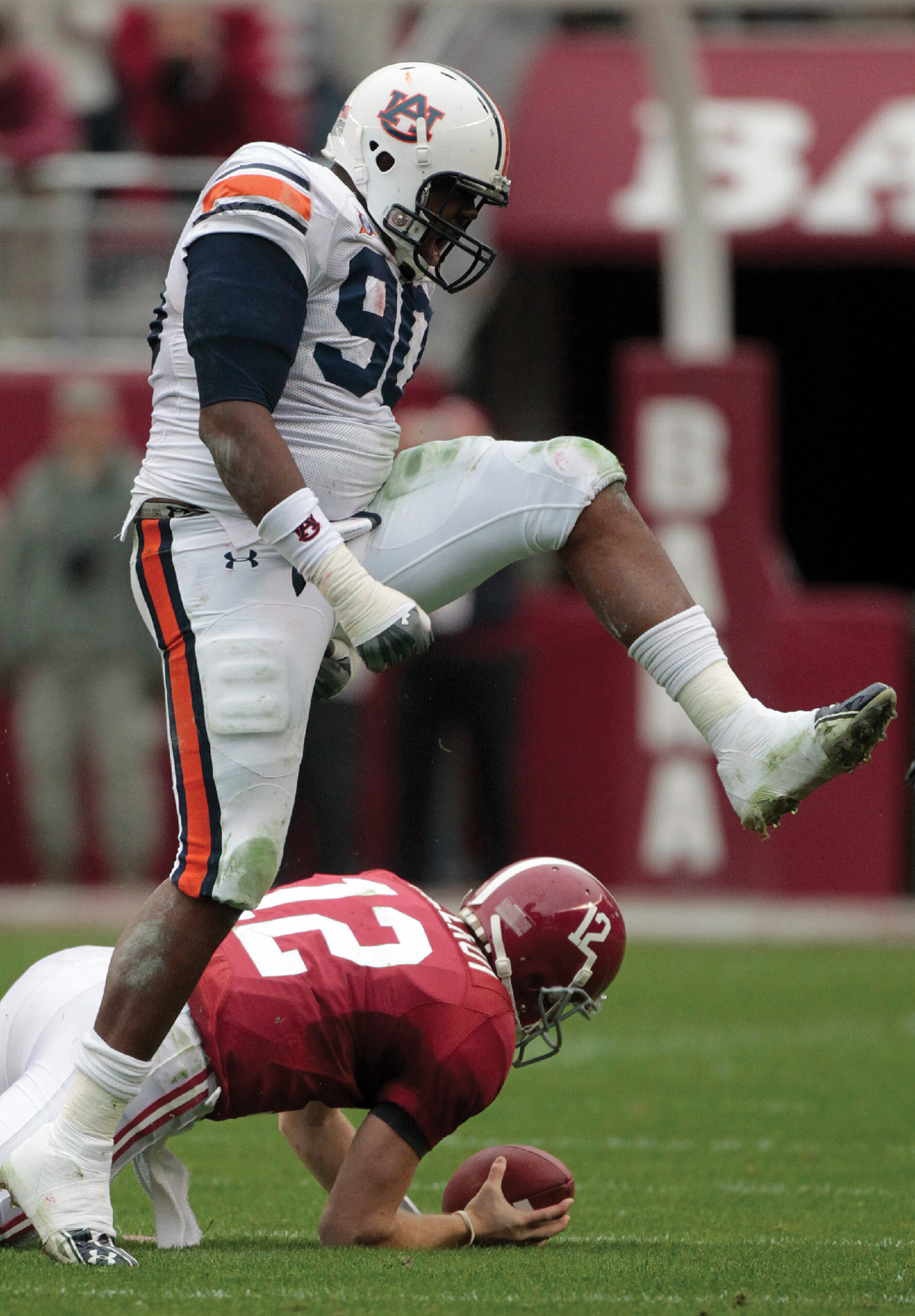
BEFORE A COMEBACK CAN BEGIN
At 24-0, Auburn didn’t need a comeback. It needed oxygen. Alabama had spent the first half of the 2010 Iron Bowl threatening to bury its rival under Bryant-Denny Stadium.
Touchdown. Touchdown. Touchdown. Field goal. Twenty-four unanswered points. Auburn had arrived undefeated, ranked No. 2 and riding Cam Newton toward a possible national championship. For most of the first half, none of that seemed relevant.
Alabama was simply overwhelming it. Auburn finally scored to make it 24-7.
Then Alabama came again. Late in the half, McElroy moved the Crimson Tide inside the Auburn 10. Another touchdown might have pushed the afternoon from difficult to impossible.
Nick Fairley changed the arithmetic. The Williamson High School standout burst through Alabama’s protection on second-and-goal and hammered McElroy. This time, the ball came out. Fairley had already learned one lesson that afternoon about celebrating too soon. After an earlier sack, he had been penalized for unsportsmanlike conduct.
Now he saw the football on the ground. No whistle. No celebration. Just possession. Fairley jumped on it. Alabama went to halftime leading 24-7. That sounds comfortable. It could have been much worse.
Then Auburn started to climb. Cam Newton to Terrell Zachary. Touchdown. Newton kept it himself from a yard out. Touchdown. The lead was down to three. Alabama answered with a field goal, pushing the margin back to six. But by the fourth quarter, a game that had looked dead was alive and screaming. Then Newton found Phillip Lutzenkirchen from seven yards out. Touchdown. For the first time all afternoon, Auburn had the lead. 28-27. This time, Alabama had no answer. The Tigers completed what became the largest comeback in Iron Bowl history at the time and preserved the undefeated season that would end with a national championship.
Comebacks are remembered for what happens at the end. The winning score. The final stop. The celebration. But before a team can come back, somebody usually has to stop the game from getting any worse. In 2010, that somebody was Nick Fairley.
The Stories after the Scoreboard
Russ Wood played in four Iron Bowls. Decades later, he can still walk through the final minutes of one of them as though someone left the stadium lights on. Antonio Coleman can still feel a sack that should be a happy memory and hear the correction that followed him home: Get the ball out. That may be why the Iron Bowl survives so powerfully in Alabama’s collective memory. The scoreboard eventually turns off. Memory does not.
At Wood’s house, the past hangs on walls and sleeps inside scrapbooks. He can yank out a photograph of himself pulling at Bo Jackson and laugh at what the absurdity of desperation can sometimes look like.
At Williamson, Coleman now teaches another generation how to play the game that once carried him onto the biggest stages in the SEC. People still recognize him. People still bring up Auburn. People still remember.
Somewhere around Mobile, someone can tell you about Stabler in the rain. Someone else remembers Richardson reaching the sideline. Someone can give you a detailed lecture on Tillman’s reverse. Lectron’s run. Sherman’s 27 carries. Barron’s interception. Julio moving the chains. Fairley finding the football.
The details change depending on which side of the state line running through Alabama’s living rooms you happen to occupy. The argument is part of the inheritance. That’s what Coleman means by 365 days.
You do not merely win the Iron Bowl. You get to carry it around for a year. And when the year is over, they play again.
Some football games end. Iron Bowls linger. And long after the clock hits zero, the moments and memories, and the men who made them, remain etched in iron.