On October 8, 1763, three British transports escorted by the 32-gun frigate HMS Stag hove to off Mobile Point. The ships carried several hundred regulars of the 22nd and 34th Regiments of Foot led by Major Robert Farmar, 46, an American-born veteran with service in Europe and Cuba under his belt. Despite appearances, Farmar and his men were not part of an invasion but rather a reshuffling of political boundaries.
The Seven Years War had recently concluded with Britain as the victor. By the Treaty of Paris signed in February as well as other, secret negotiations, France ceded the city of New Orleans and Louisiana west of the Mississippi River to Spain as reward for its support during the war and the colony’s eastern half, which included Mobile, to the British. Spain gave Britain Florida in return for Havana, which the redcoats had won by siege in 1762. Britain established two new colonies out of this territorial bonanza, East and West Florida, the latter bounded by the Apalachicola River on the east and the Mississippi River on the west (excluding New Orleans). Pensacola served as the new colony’s capital, and Mobile as an important garrison and trading hub for the region’s vast indigenous population. Farmar’s charge was to accept Mobile’s transfer from its French garrison.
But just getting to town proved a challenge. One of the transports ran aground attempting to cross the bar and sailors had to lighten her to work her free. Once in the Bay, the ships drew too much water to reach Mobile. While the troops, confined between decks since departing Jamaica three months earlier, chafed to go ashore, Farmar and several officers took a smaller vessel up the Bay to meet Captain Pierre-Annibal de Ville, the French lieutenant governor, and arrange the formal transfer at Fort Conde.
Farmar reported that they “were civilly received except that no lodgings or billets were assigned us.” As if that wasn’t indignity enough, de Ville then requested that Farmar keep his regulars on board the ship until the French could conclude an important Indian congress — a period of days if not weeks. Farmar refused and ordered the French troops out in two days. He subsequently fired off an angry letter to the French governor in New Orleans informing him that “no subject of his Most Christian Majesty, has any right to give orders to the inhabitants of this government, it being now in the possession of His Britannick Majesty, and under my command.” Chastised and not a little wounded, the governor pronounced Farmar “tough and difficult to deal with.”
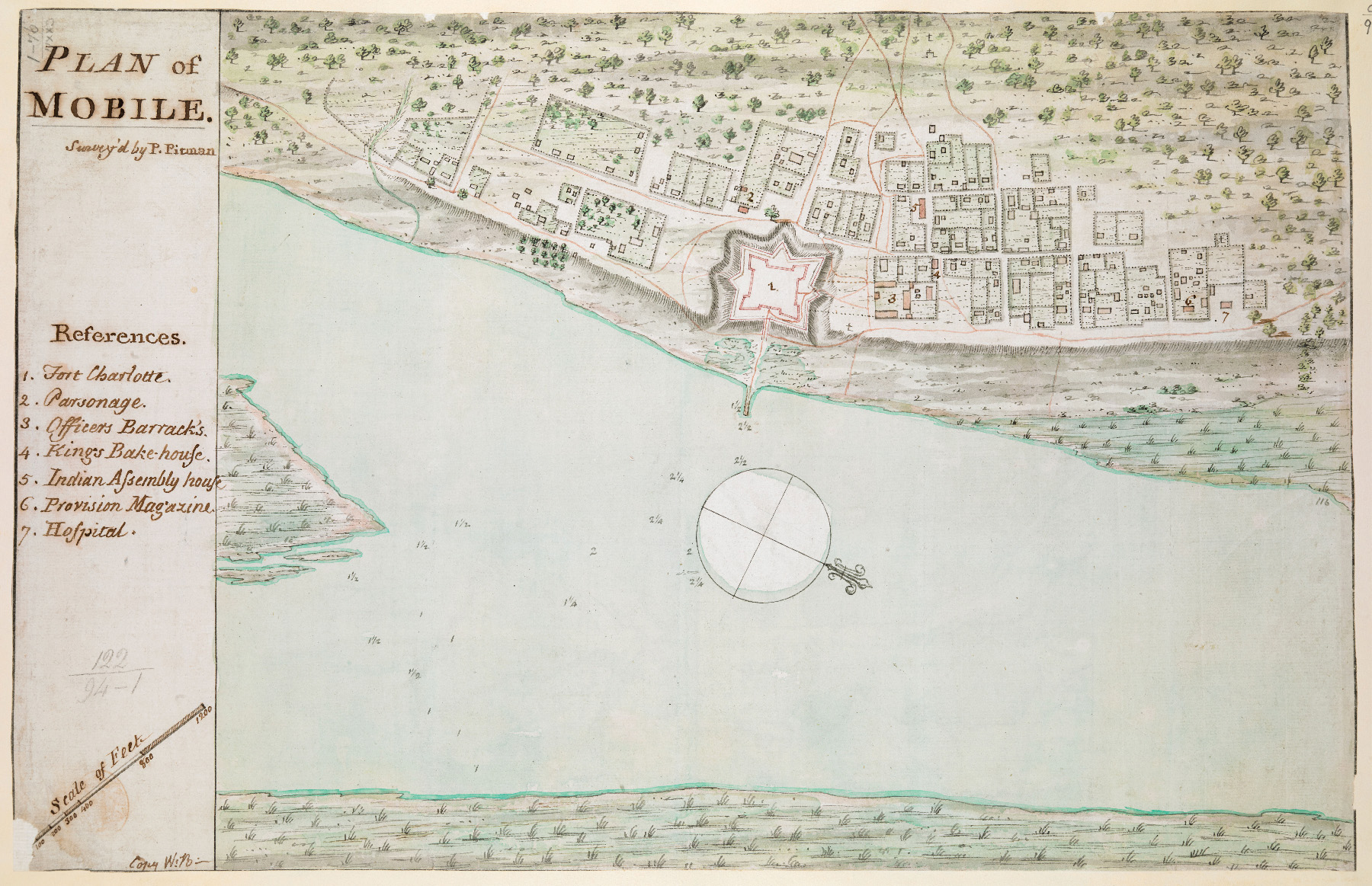
Finally on October 20 after all the vexing delays, British troops marched into Fort Conde, newly rechristened Fort Charlotte in honor of their queen. Farmar was by no means pleased by what he found. To begin with, several thousand Choctaw Indians, who had arrived for the congress with their French allies, surrounded the fort. “French manners are in vogue,” Farmar wrote in distaste. “A chief bows like a dancing master, kisses both your cheeks and makes you a French compliment.” The Choctaws expressed unhappiness at not being consulted about the change of government. But now that the British were in charge, the chiefs expected them to dole out rum, expensive presents and food for the children. Braves openly insulted the soldiers and took the occasional potshot at them.
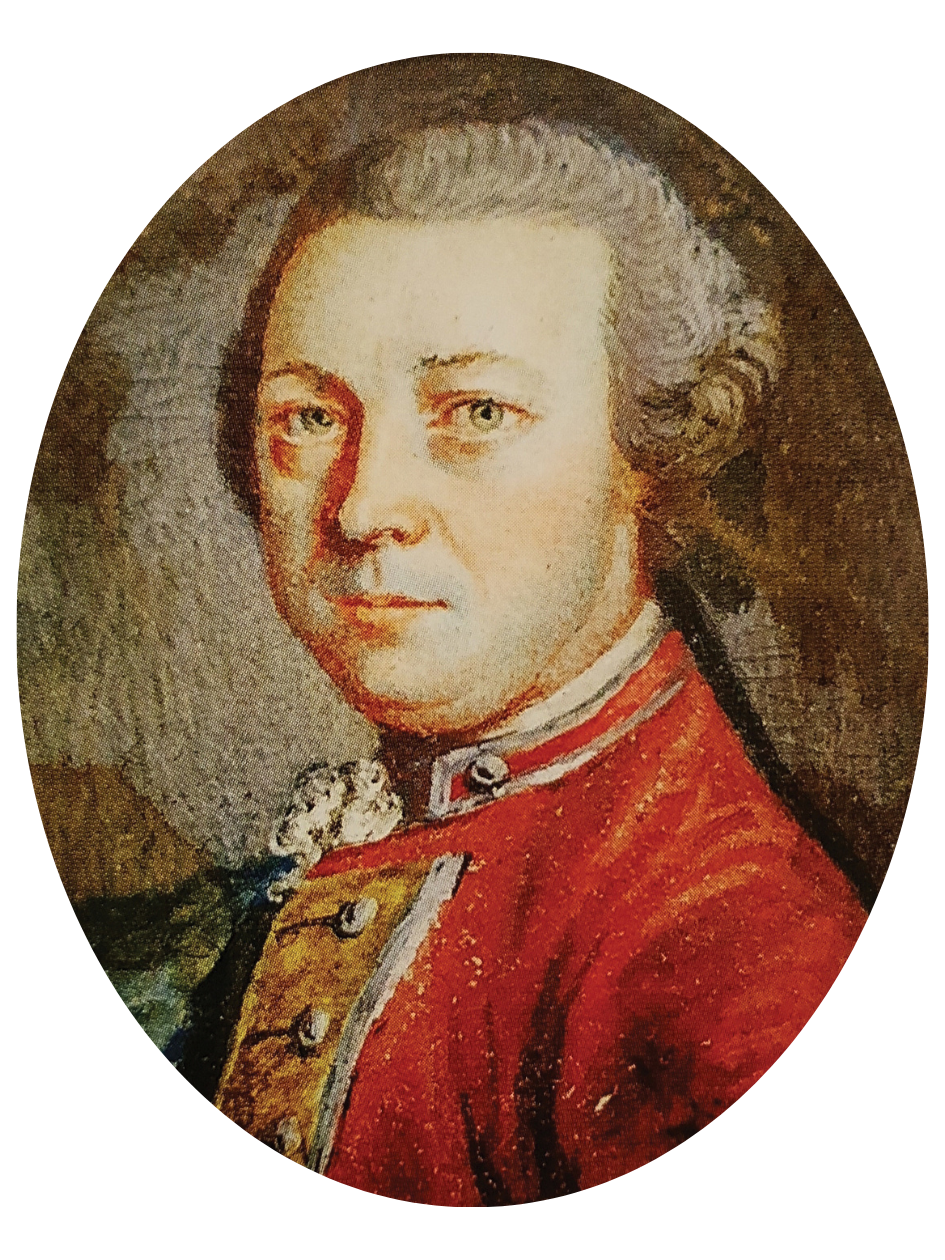
Miniature of Major Robert Farmar in uniform circa 1765. Image courtesy the Alabama Department of Archives and History
If there was to be trouble, the fort offered poor protection. “I am in no small dilemma at present,” Farmar confessed. A brief walk-about revealed that the glacis (earthen outer work) had been so neglected that it was “all covered with long grass and shrubs that lodged in the rain,” the brick walls and parapets were “very much wasted,” the gun platforms “rotten,” the barracks in “very bad repair” with rotted floors and broken windows, the bake house “entirely useless” and, to top it all off, the gates were “entirely unhinged.” More worrisome, the French had removed all the fort’s artillery, save for six guns “with their trunnions knocked off,” and had burned several gun carriages to deny them to their erstwhile enemy. Overall, Farmar fumed, the fort “was not tenable with the few men these two regiments consisted of, against any considerable body with small arms.”
As for the bastion’s “effects and utensils,” they were considerably worse for wear. They included dozens of bedsteads, 20 of them busted and 10 in “indifferent” condition; mosquito canopy bars; worn sheets and blankets; lumpy Spanish moss mattresses; heavy cypress cupboards; battered mess tables and benches; a much-used card table; old chairs; stained curtains; kneading troughs; blacksmith tools; bellows; fire dogs; tongs; shovels; hatchets; several iron buckets; a tin jug and a dented copper kettle. The French provided a list of all these items and more with their estimated value, so that the new government could reimburse His Most Christian Majesty. Farmar accepted the list, but he huffed that “every article” the French itemized “is valued at more than the things could be purchased at when new.”
Mobile itself was a gaggle of several dozen mostly one-story half-timbered clay houses and shops strung along a few unpaved streets hard by the riverbank. The population consisted of 350 people, a mix of French families, Indians and enslaved Black people. Farmar trod carefully. He issued a manifesto in French and had it prominently posted. “The Inhabitants by these presents may rest assured of being protected in their rights and properties,” it read in part, “and not at all bothered or inconvenienced in any manner, without grounds, by the Troops.” The document also suspended land transfers until titles were verified. It required residents to take an oath of allegiance to the British crown within three months or depart, and it ordered all who remained not to incite the native peoples or engage in any rebellious activity.
Given the tensions, apprehensions and misgivings, the power transfer went remarkably smoothly. By the following summer a decidedly more relaxed Farmar could report to the Secretary of War, “The Indians are all quiet here, and the French are daily coming to take the oath of allegiance; which has all the appearance of its being shortly a flourishing colony.” Only time would tell whether that would be the case, but Maj. Robert Farmar had certainly done his part to ensure a stable beginning for British rule.
John S. Sledge is maritime historian-in-residence at the National Maritime Museum of the Gulf.