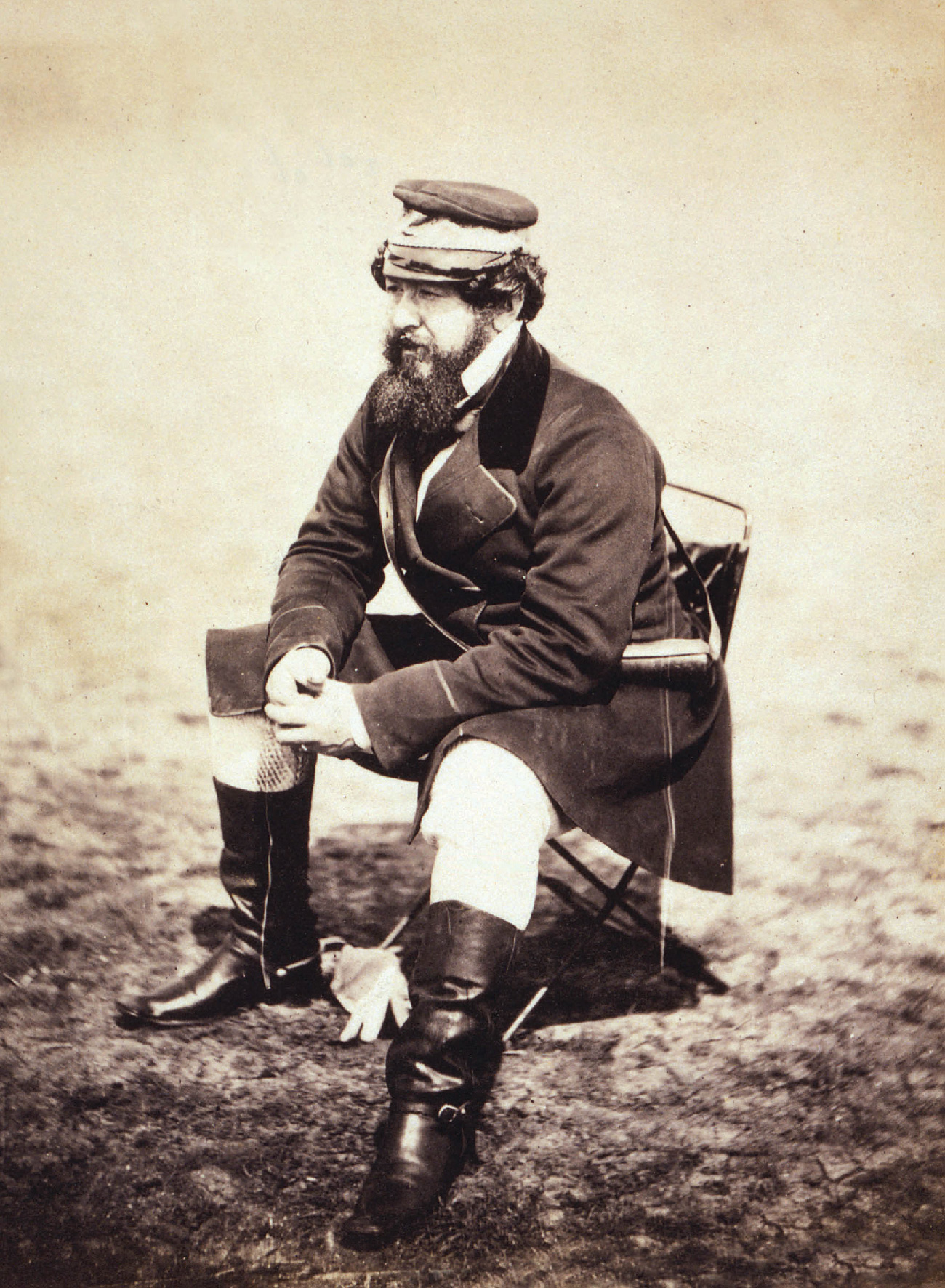
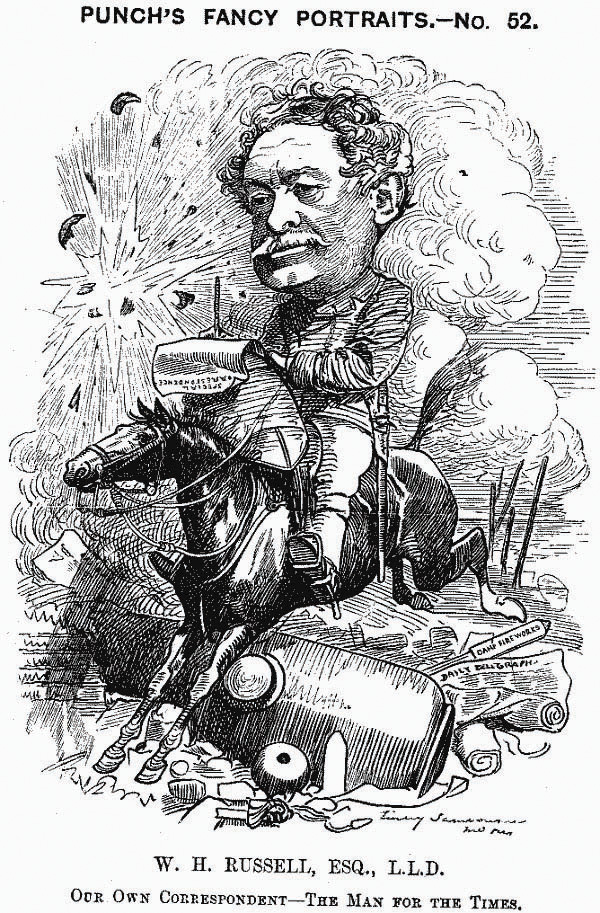
William Howard Russell’s diary stands as an exceptional portrait of 19th-century America, which was written while traveling through the North and South during the Civil War era. Mobile was among many places he toured during his visit to the United States. As a correspondent for the Times of London, Russell was influential in shaping the opinions and sympathies of the British people in their understanding of the impending struggle between the States. His dispatches home were also important for Americans: for seceding Southerners desperately seeking foreign support and for Unionists in their attempt to halt Britain from recognizing and aiding the Confederacy. Russell tried maintaining a neutral attitude with each American he met, but stood critically objective in penning his views. Refusing to mitigate his opinions, he often insulted important people on both sides of the issue. However, his recollections of Mobile, while historically objective, were also cordial and amiable.
Russell arrived on the shores of America in early March of 1861. After spending time in New York, he went to Washington seeking an audience with the newly elected President Lincoln, who welcomed him as a renowned reporter of the London Times, lauding his paper as “one of the greatest powers in the world,” but humorously added, “in fact, I don’t know anything which has as much power — except perhaps the Mississippi.” At this time, Russell was 41 years old and described by one historian as “a spectacled, lively, rotund Englishman whose sparkling reports from the Crimean War had made him a celebrity in London.” While in Washington, Russell met many government officials and their families. He also met John Forsyth, then mayor of Mobile and owner and editor of the Mobile Register. Forsyth was there with other members of the Southern commission, trying futilely to work out a peaceful separation between the Union and Confederacy.
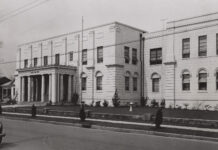
The Englishman began touring the South in mid-April. By early May, he reached the Gulf States. Leaving Montgomery, he traveled on the river boat Southern Republic down the Alabama River to Mobile, where it arrived at the dock on May 11 by the steamed whistle of a calliope, playing “Dixie.” Looking out over the city, the journalist saw “a fringe of warehouses and shops . . . over which were displayed names indicating Scotch, Irish, English, many Spanish, German, Italian and French owners.” Surprised by this, he declared Mobile to be “the most foreign looking city I have yet seen in the States.” Actually, he felt the city somewhat resembled Malaga, in southern Spain. Together with some other passengers, Russell made his way to the Battle House Hotel, which he described as “a fine building of the American stamp.” After signing the register, the guests’ names were examined by a group of gentlemen who represented themselves as the “Vigilance Committee.” Apparently, a suspicion prevailed that the visitors may have been Lincoln’s abolitionists, whom they were required to deport. Russell soon discovered the city was immersed in preparations for war with the North, observing citizens “drilling, marching and drum-beating, [while] the Confederate flag flew from every spire and steeple.”
Soon after arriving in Mobile, Russell was greeted by his former acquaintance, Mayor Forsyth, who, along with other prominent citizens, welcomed the Englishman to Mobile. They invited him to dinners and arranged for tours of the city and excursions down Mobile Bay. Mobile, being such a cosmopolitan city, was not considered a center of Southern radicalism. Nevertheless, his first meetings with only a few “Mobilites” as he called them, convinced him they were all a fiery people of the “most secessionist doctrines.” The most avid were Dr. Josiah Nott, George R. Glidden and John Forsyth. Russell judged these and others to be influential, well-educated, professional men, but “not one of them had a word but of hate and execration for the North.” After listening to them encouraging a war, he believed his new friends “will perish ere they submit to the Yankees.” The plantation owners were equally pugnacious, and although he admired their genteel character, he abhorred slavery and made no secret of it in their presence.
Accompanied by the British Consul, James McGee and Dr. Nott, Russell made his first excursion through the Port City. He observed a city teeming with “oyster saloons, drinking houses, lager beer and wine shops and gambling and dancing places.” Visiting the market, he noted the foreignness and multiracial makeup of Mobile, seeing it crowded with “Negroes, mulattoes, quadroons and mestizos of all sort.” Throughout the marketplace, Russell overheard “Spanish, Italian and French, speaking their own tongues . . . and dressed in very striking and pretty costumes.” Ending their stroll by visiting one of the oyster houses, they enjoyed the delicacies prepared in most every fashion, “plus raw,” declared Russell. He noticed how Mobilians devoured them, joking “as though oysters were a specific for political indigestions and civil wars.” Returning to his room in the Battle House, there remained a worldly ambience. “My private room,” he described as “well-lighted with gas and exceedingly well furnished in the German fashion, with French pendula and mirrors.” His room was expensive, but he conceded that “Exclusiveness is an aristocratic taste which must be paid for.”
Although Russell seemed fascinated when describing the culture, ideals and values of Mobile’s people, in truth he came to the United States as a war-correspondent anticipating what most Americans felt was an irrepressible conflict. Mindful of this, the following day Mayor Forsyth invited the journalist for a steamboat cruise down Mobile Bay to inspect the forts, which Russell noted were “built by Uncle Sam and his French engineers” to defend against the British, but now confiscated by the Confederacy to defend against “the hated stars and stripes.” Among the party on board was William Hardee, who at this time was in command of Mobile’s defenses and would later command the South’s second-largest army. After making a slow cruise against the tide, the party landed at Fort Gaines. There they found only a small body of “bored” men on guard in the fort, which was then unfinished, with “only a few cannons of moderate caliber mounted on sand hills of the beach.”
Leaving Gaines, the steamer crossed Mobile Bay to Fort Morgan, the most important bastion of defense in the Bay. Entering the fort, Russell found it crammed with between 700 and 800 volunteers, dressed in homespun grey suits, “and sturdy a lot of fellows as ever shouldered a musket.” Although he found the work formidable with a strong “sea face,” he also believed it would “suffer exceedingly from a heavy bombardment.” He judged it weak in armaments on its east side, which an enemy could approach by land. An inordinate number of officers were present, all of whom were introduced to the visitors. In command at this time was the flamboyant Harry Maury, who impressed Russell as “an ingenious and clever officer.” However, he considered Maury only an “average commander.” But according to General Bragg, commanding the Gulf Coast states, his opinion of Maury was not even average, believing him incompetent due to his fondness for the bottle. Thus Bragg replaced Maury shortly after the war began.
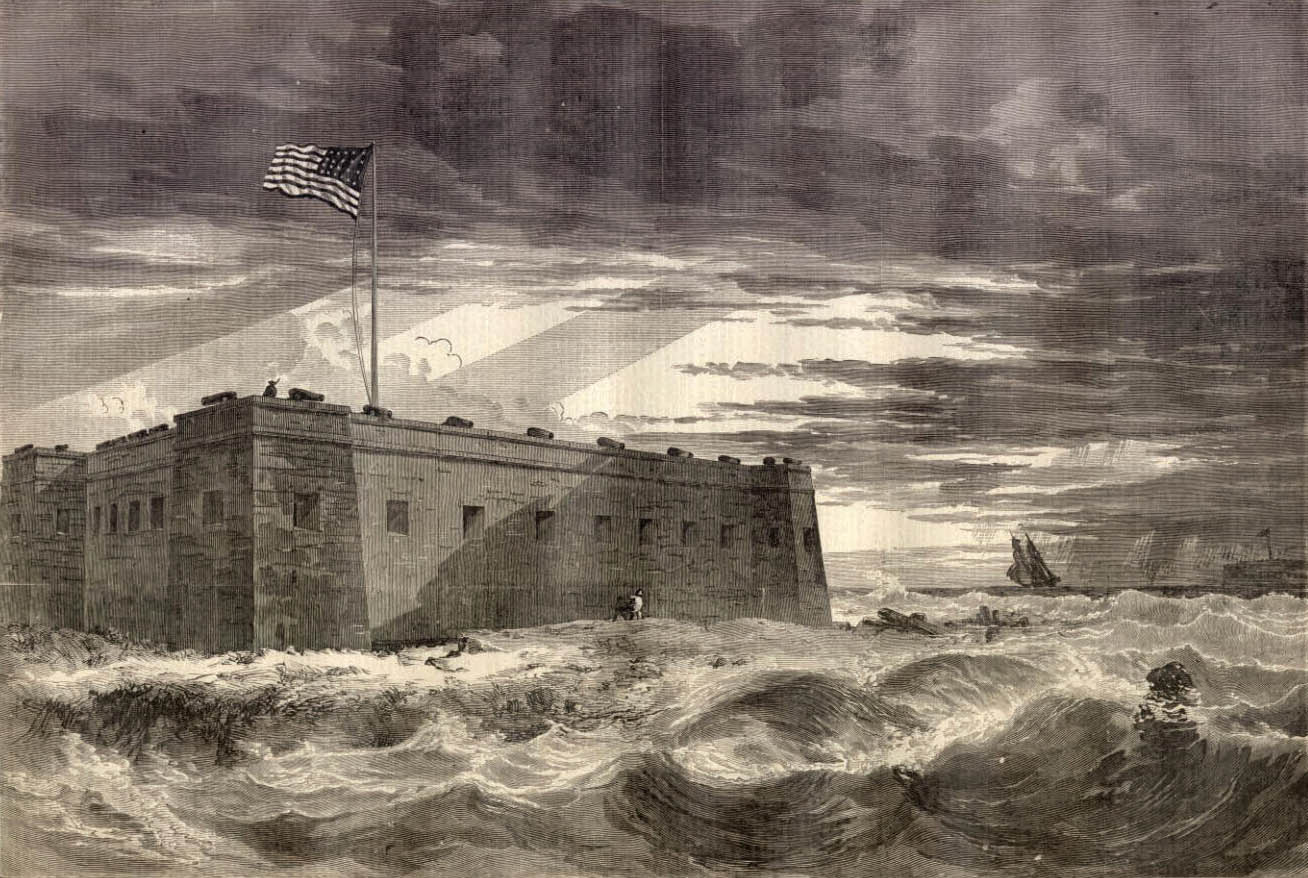
Having finished his inspection of Mobile’s defenses, Russell made arrangements to visit Pensacola and inspect Fort Pickens. Forsyth and two others asked if they could join him in the trip, supposedly to see their friends in Pensacola. But he suspected their true intention was to assess the strength of Fort Pickens, still under Union control. Russell, of course, objected to their company, telling them he, “could not assent to any persons coming with me who were not neutrals.” Relenting, however, he finally agreed to their joining the voyage since they were not officially agents of the Confederate government. Yet he admonished them that “they were to accept all the consequences of being citizens of Mobile.” As expected, when the party prepared to visit Fort Pickens, a Union officer examined their papers and questioned their reason for entering the fort. “About myself,” wrote Russell, “there was no difficulty;” yet “he did not think it would be right to let the gentlemen from Mobile to examine Fort Pickens.” Leaving his Mobile friends behind in Pensacola, Russell, under the scrutiny of Union officers, inspected the fort and found it soundly fortified.
Russell and his friends departed Pensacola on the 17th of May aboard the schooner Diana and returned to the wharf in Mobile that evening. They dined that night with Dr. Nott and Judge John Campbell, who had recently resigned his position on the United States Supreme Court. Thus, the dinner party heard the “whole history of the Dred Scott case.” The ladies present were relentless in voicing an “unmistakable sincerity” of their hatred of the North. Obviously, they were disappointed with Russell for refusing to sympathize with their vehemence. All of the ladies, he later learned, belonged to the Yankee Emancipation Society, “spending their days sewing cartridges and preparing bandages. I’m not quite sure,” he joked, “that they don’t fill shells and fuses as well.”
Russell bid goodbye to his Mobile friends and departed the city on May 20, for New Orleans. As an outsider, he had seen Mobilians as they could not see themselves. Because he loathed the institution of slavery, Russell found it impossible to approve of their cause. But after leaving his friends, he remembered their kindness and hospitality, confessing, “I shall retain many pleasant memories.”