Certain names mean something entirely different to those from the Bay area — names like Ivan, Katrina and Frederic. These are the names of some of the most notorious hurricanes that brought devastation and destruction upon our community. Yet, while the memories of flooding, downed trees and lost power are certainly prominent in the minds and hearts of those who lived through these catastrophic events, what left an even greater impact is the way citizens came together to help one another.
Grilling on Government
Hurricane Frederic
“When I say I’ve never been that scared… It’s still a frightening nightmare to think about it,” Peggi Hanrahan says of Hurricane Frederic, a Category 4 storm. In 1979, she was living in a house on Old Government Street near the cannon, and she was on the phone one September evening when the line went dead. That was the moment she knew the storm was upon them. She and her then-husband had closed the shutters and prepared as best they could, so they took shelter in the foyer with blankets and their Yorkshire Terrier. They sat there all night, listening to the trees slamming against the house and what sounded like tornadoes threatening to tear off the roof. Upstairs, a pair of French doors led to a balcony, and the doors heaved inward, allowing the howling winds and rain to sweep into the upstairs foyer. The couple sheltered until the weather finally let up in the early morning.
“The yard was a disaster, and everything upstairs was a mess,” Hanrahan recalls. “We had no power, no telephone, no nothing.” A tree had fallen over their power line, which came from Hunter Avenue — a small street, not a main road, and therefore not a priority to repair, since the power companies focused on fixing the downed lines that served more people first. “The storm hit on September 9. We got our power back on Halloween day,” says Hanrahan.
Although it was certainly not easy or comfortable to be out of power for that long, Hanrahan and her then-husband were reluctant to leave the house vacant, so they continued living there while they awaited restoration. She credits her family and friends for helping them through those long, hot days. Her brother and his friends came over with chainsaws to cut up the fallen tree, and her mother drove to Mobile from Florida every other day to bring ice. Her best friend, Sue Hawkins, owned several local Holiday Inns and often had the couple over for dinner. But some of the most clever and unexpected sources of survival came in the form of a gas grill, a nearby apartment complex and a friendly neighbor.
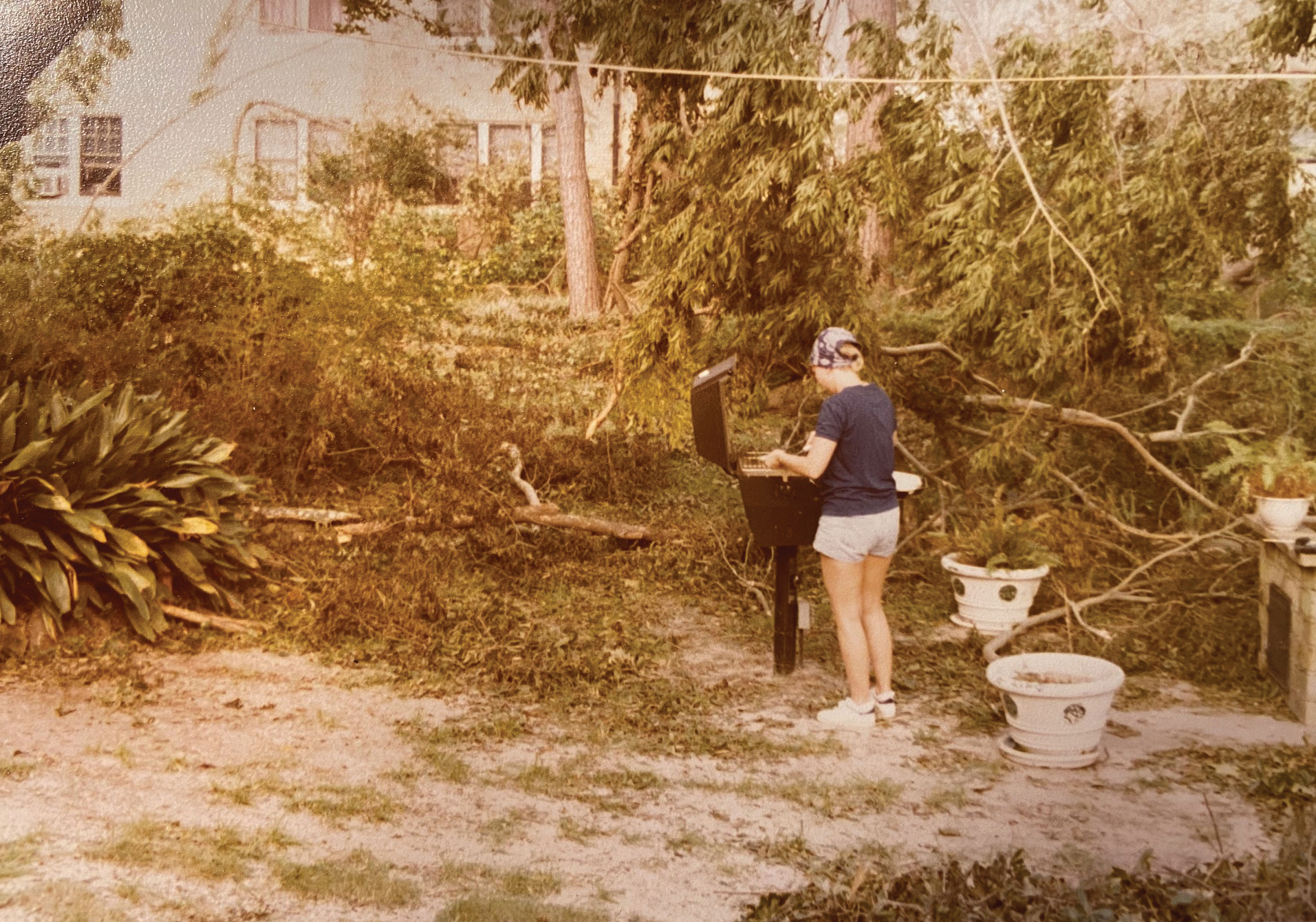
“We had put a gas grill out in our yard, and it was not powered by a gas tank. We had run a gas line to it. That is how we cooked,” Hanrahan says. She used a frying pan to cook eggs and bacon for breakfast and learned to grill vegetables. Her husband at the time snapped a photo to capture the experience — a fallen tree, a patio, a gas grill and Hanrahan standing over it, with her curly hair tucked into a scarf to combat the heat. The tree that fell in the backyard damaged their car but, fortunately, did not hit the grill or the gas line, which could have led to fires and even more damage. The grill allowed them to make hot meals and recapture a slight sense of normalcy, and the residents of the nearby Azalea Trail apartment complex came to the couple’s aid, too. “One of the elderly women used to sit at her window and watch us work in the yard, and she let us run extension cords through her window to our house, because they got their power from the corner,” Hanrahan says. “That powered a fan in our bedroom and our living room.”
Although the night is still frightening for her to recall, a difficult time was made easier by the compassion of friends, neighbors and family. Most importantly, as Hanrahan notes: “I’m alive to talk about it. That’s one good thing.”
A Drive-in Movie — Sort of
Hurricane Ivan
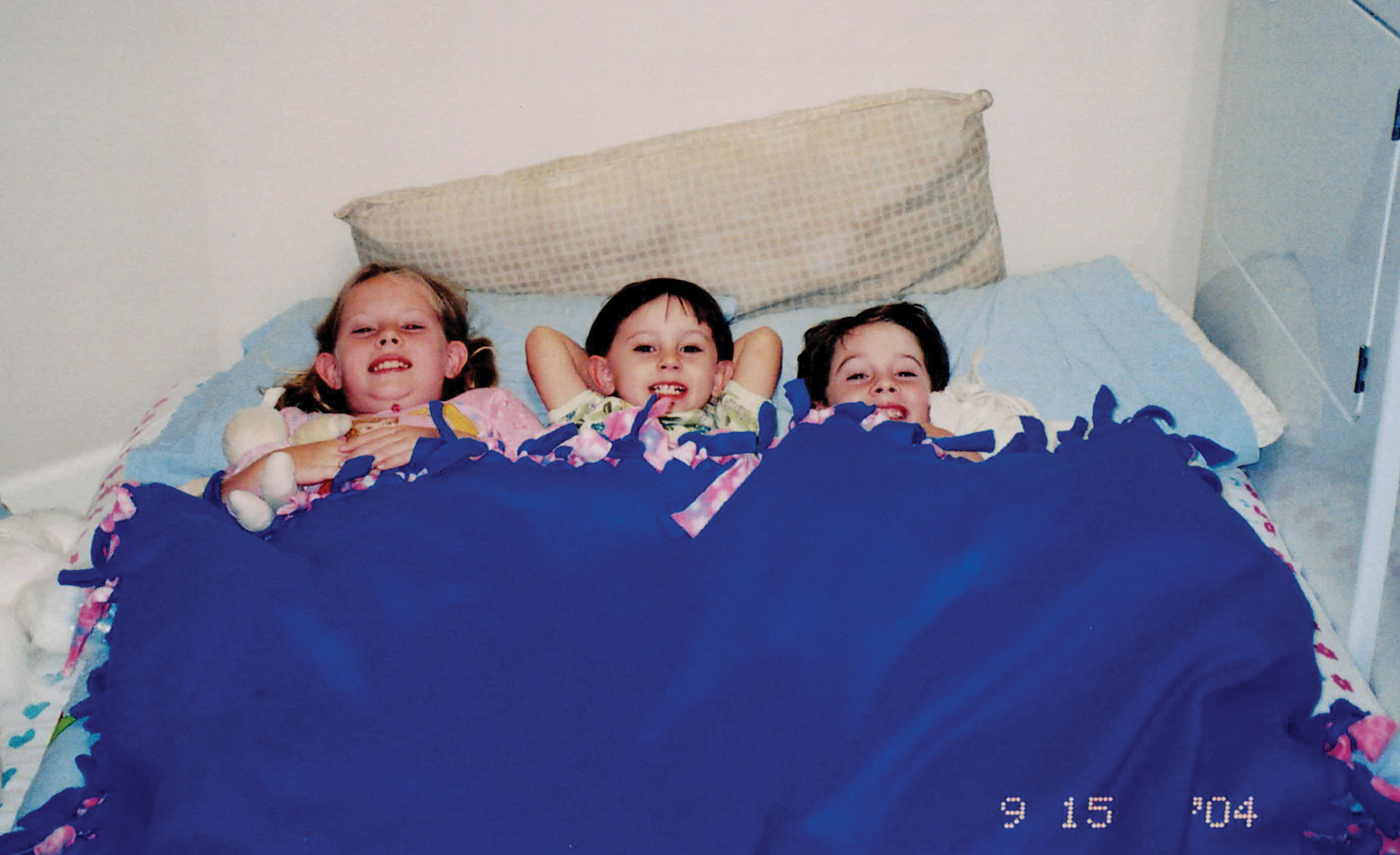
When Hurricane Ivan hit in September 2004, Kat Barber was a little girl living in West Mobile. As a result of the Category 3 storm, her family lost power for several days, and Barber’s parents found an innovative way to entertain their daughter. “A friend of mine lived down the street, and my parents invited her over to watch a movie with me in our minivan,” she recalls. “It was the first AC I’d felt in days!” Nothing compares to that first wave of air conditioning on a hot summer day, especially when the luxury has been absent for so long.
Even though the activity was one that took place in the aftermath of a hurricane, watching a movie together in the car was a fun experience for the two little girls. For a short while, they were treated to the comfort of air conditioning, and they were able to spend time together as friends, laughing and enjoying their movie. “I think our parents probably used the time to clean fallen trees out of their yards, but it was so cool!” Barber says. Now she has a lasting, positive memory from a time marked by difficulty. While the adults came together to help one another, they made sure their children helped one another, too, through the comfort of companionship and the simple joys of childhood.
Family, Furniture and Friendship
Hurricane Frederic
In 1979, Brenda Atchison Wallace was a senior at Davidson High School, and when Hurricane Frederic struck, she and her family were living off Schillinger Road. She recalls the front door blowing open in the middle of the night, the strong winds and her father’s declaration once the storm had passed: He needed to check on his store.
Her father loaded the pickup truck with chainsaws, shovels and rakes before making the drive to Leon Atchison Furniture off Highway 90 in Theodore. Due to the fallen trees and debris, it took the family over two hours to get there. But every time they encountered a blocked road, a man was already there with his chainsaw, working to clear it. “Everyone helped everybody,” Wallace recalls. “We were a community pulling together to help our neighbors.”
When they reached the store, the devastation was gut-wrenching, so much so that it was the first and only time Wallace remembers seeing her father cry. The plate-glass windows had shattered, and the mattresses her father had placed in an effort to soak up water had been swept away. The electricity was out, gas lines were everywhere and the front of the store had been destroyed. The main priority was securing the store before nightfall, so while her father started thinking of what to do, Wallace and her mother went to the Tillman’s Corner Food World to buy bread, lunch meat, chips and drinks. They were hopeful that the community would come out to help, and they wanted to provide lunch for any volunteers. “Nothing prepared us for what we saw when we got back to the store,” Wallace recalls. “Word had gotten out that Leon Atchison’s was destroyed and we needed help. An entire community of bricklayers, cement guys and Bayou La Batre shrimpers showed up. They worked together, and the bricklayers helped us get the store bricked up where the windows had been and got it secure. All of a sudden, my sister, Diane, my mother and I are feeding 75 people.”
As for why so many offered assistance, Wallace credits the mutual respect everyone felt for one another. Many of the volunteers were Black men who had shopped at the store and respected her father, and many had stories of ways he had helped them. Now that the Atchison family business was in need, they were more than willing to help in return. “What’s beautiful is that the whole community pulled together,” she says. “Black and white worked together. It sticks in my mind, and that’s the beauty of community.”
Caipirinhas and Community
Hurricane Ivan
In 2004, Courtney “Coco” Matthews had a close friend in town for a wedding, but what they did not anticipate was Hurricane Ivan. The wedding was canceled, and her friend was unable to travel home, so they did the next best thing: They shared meals with the neighbors and made cocktails.
At the time, Matthews was living in the Municipal Park area, and the streets were filled with friends gathering and children playing. Her house was in a central location, so they made a circle of chairs and tables in the front yard, and everyone could easily walk over to join them. Neighbors fired up the grills and took turns cooking to feed whoever was hungry. Her friend had packed bottles of Cachaca, a Brazilian rum made from sugar cane, originally planning to share it with the wedding guests; instead, he taught Matthews how to make a cocktail called a Caipirinha. By candlelight, they muddled sugar and lime in a rocks glass, filled it with ice — a luxury they enjoyed the first night, before the ice melted due to their lack of power — and topped it with Cachaca. The drink is enjoyed through a short straw, allowing the flavors to meld together perfectly in every sip.
“There was something about the ritual of making those exotic, citrusy, refreshing and stout cocktails by candlelight,” she says. “I swear it made them taste like heaven at a time when we were all hot and tired and worn slap out. That’s why I never forgot them. They tasted like friendship and adoration and unknowingness, with a hint of hope and steadfastness. Every single time I have one now, I think of that time.”
First on the Ground
Hurricane Frederic
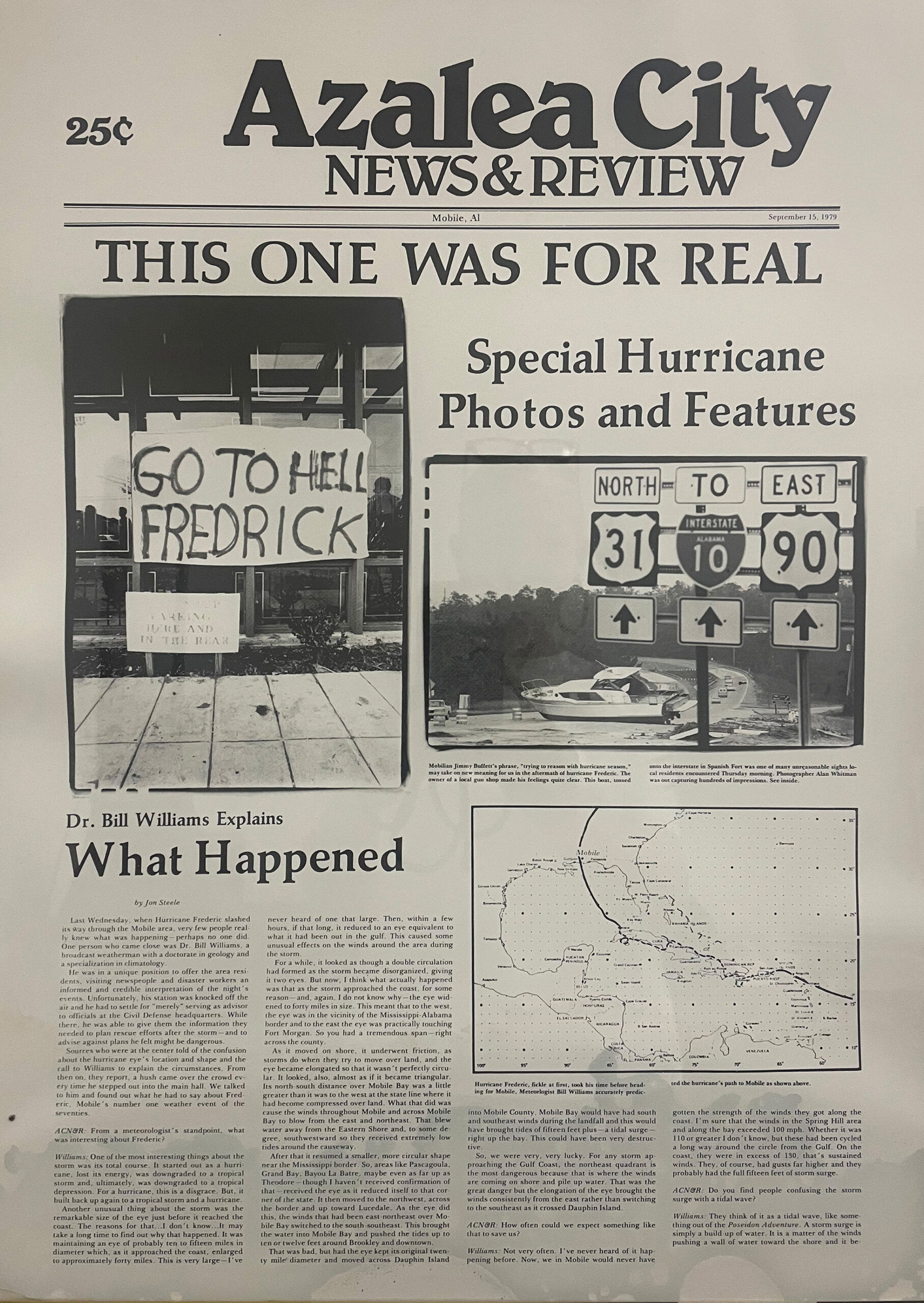
At the time of Hurricane Frederic, Jocko Potts was the owner and publisher of Azalea City News & Review. While his wife and two young sons evacuated, he stayed to ride out the storm. All night, he listened to winds that sounded as loud as oncoming trains, watched slate as it was torn from the roof and strewn about the yard, and sheltered downstairs while the house rocked and swayed. “It was something else,” he recalls. “I can’t over-emphasize how scary it actually turned out. To this day, it’s still, by far, the worst one I’ve ever been through.”
After the storm passed, buildings had been torn apart and oak trees had been stripped of Spanish moss, while some lay across the road, exposing massive root balls. Potts and his photographer, Alan Whitman, were eager to share Frederic’s impact with readers. They took Whitman’s car, a Volkswagen Beetle, which was small and ideal for navigating streets littered with debris, fallen trees and power lines. “We could get around stuff that a regular car couldn’t get around, and we got on streets that other people couldn’t get down to take pictures,” Potts explains. With Potts behind the wheel and Whitman clutching his camera, they explored the area and were the first to release local print coverage regarding Frederic’s impact. The team carried their typesetting equipment to the city auditorium, where they borrowed a room with power, thanks to staffer Dom Soto and auditorium manager George Juzang. From there, they worked to typeset and lay out the paper. Their first print run sold out completely and led to a second print run. National Geographic even bought some of Whitman’s photography for their own story. “It was a big deal in the life of the paper,” Potts recalls. “Before that, we were tabloid sized, and that was the first issue we went to broadsheet so we could run those pictures. We had such great pictures.”
While Potts and his team provided the public with information, he notes the many ways in which citizens helped one another. “In the afternoons, everybody in the neighborhood would get out and cook out in the front yard. All the meat would spoil if you didn’t. I remember standing in a long line at the old ice house to try to buy ice. Griffith Shell saved some ice for their customers, and we were lucky since we were customers, they gave us some.” He remembers men with chainsaws who worked to clear the roads and younger people who cared for older people, checking on them and removing trees and limbs from their homes. “It was kind of cool in that way,” he says. “There was just a whole lot of cooperation and togetherness after the storm.”
Sheltering at School
Hurricane Frederic
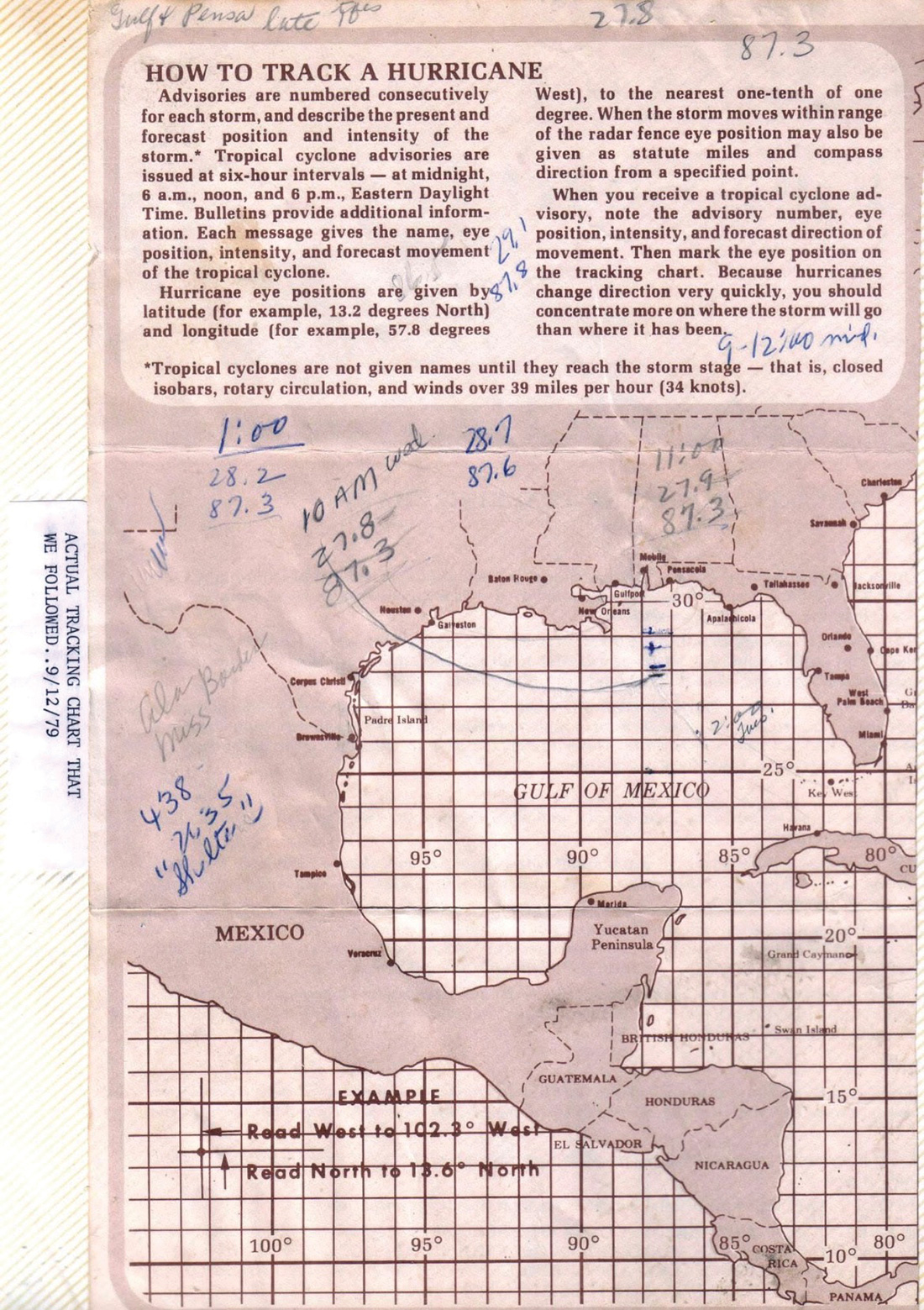
In 1979, Kitsy Powers Bridges was in her 20s and riding out the storm with her brother in his apartment. When the weather worsened and made them nervous, the two drove to their parents’ home on Cottage Hill. From there, the family went to the University of South Alabama’s Mitchell College of Business for shelter. Bridges’ mother, Gertrude Powers, worked there, so the family settled in her office. “She packed three beers, two miniatures, the transistor radio, cards… Not the things you’d think about during the hurricane!” Bridges recalls with a laugh.
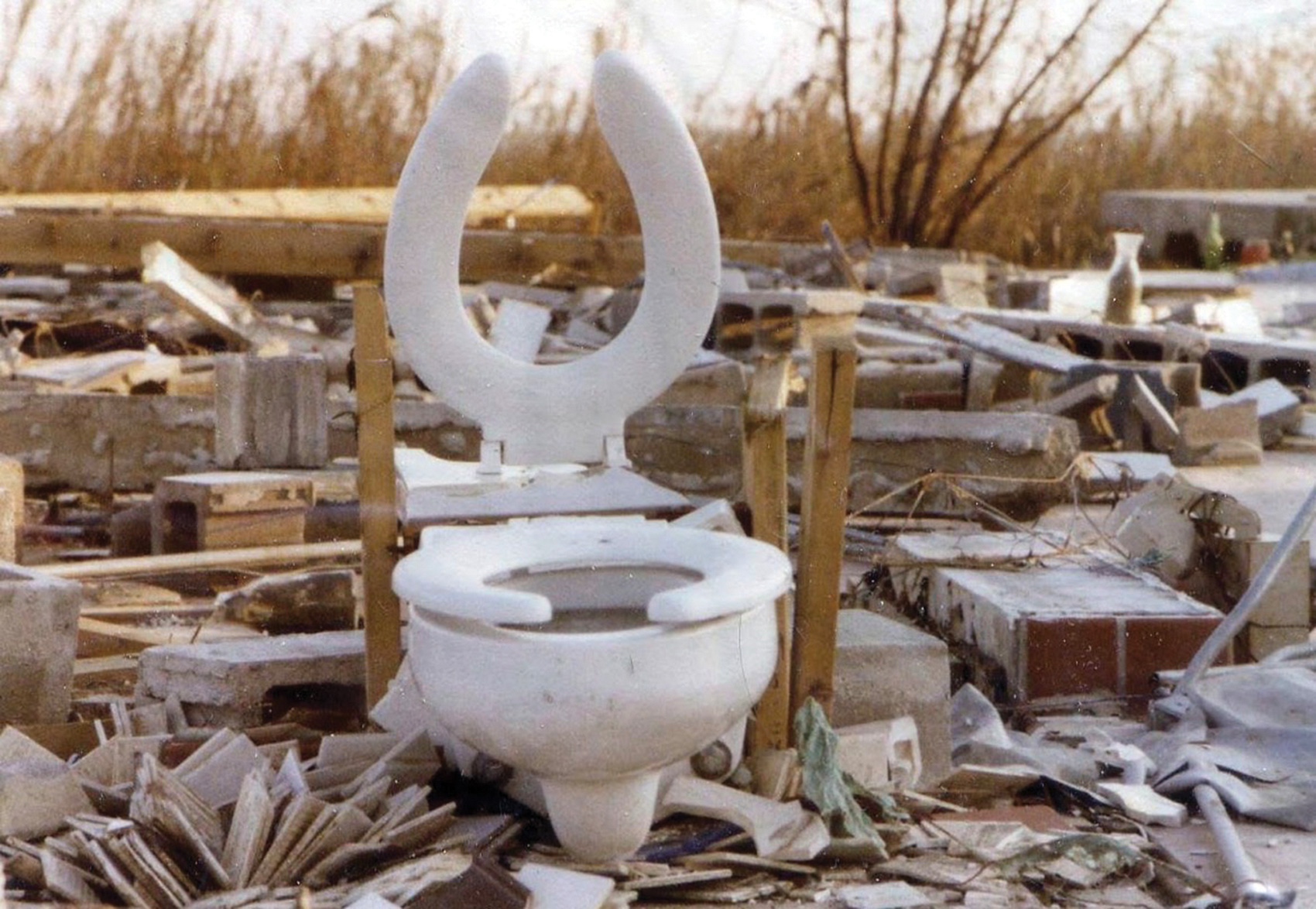
The family stayed there until two plate-glass windows blew in, forcing them to flee to the men’s restroom. There, they joined others who were sheltering at the university until the storm passed. The next day, they went to check on their family property at the Alabama Port. “The storm took away half the bluff that was in front of the house and demolished it,” Bridges explains. The devastation was overwhelming, leaving the family uncertain about the future of the property. At the time, Bridges had another brother working in Alaska, and he spent a week wondering if his family had survived, since he had no way to contact them due to the phone lines being down.
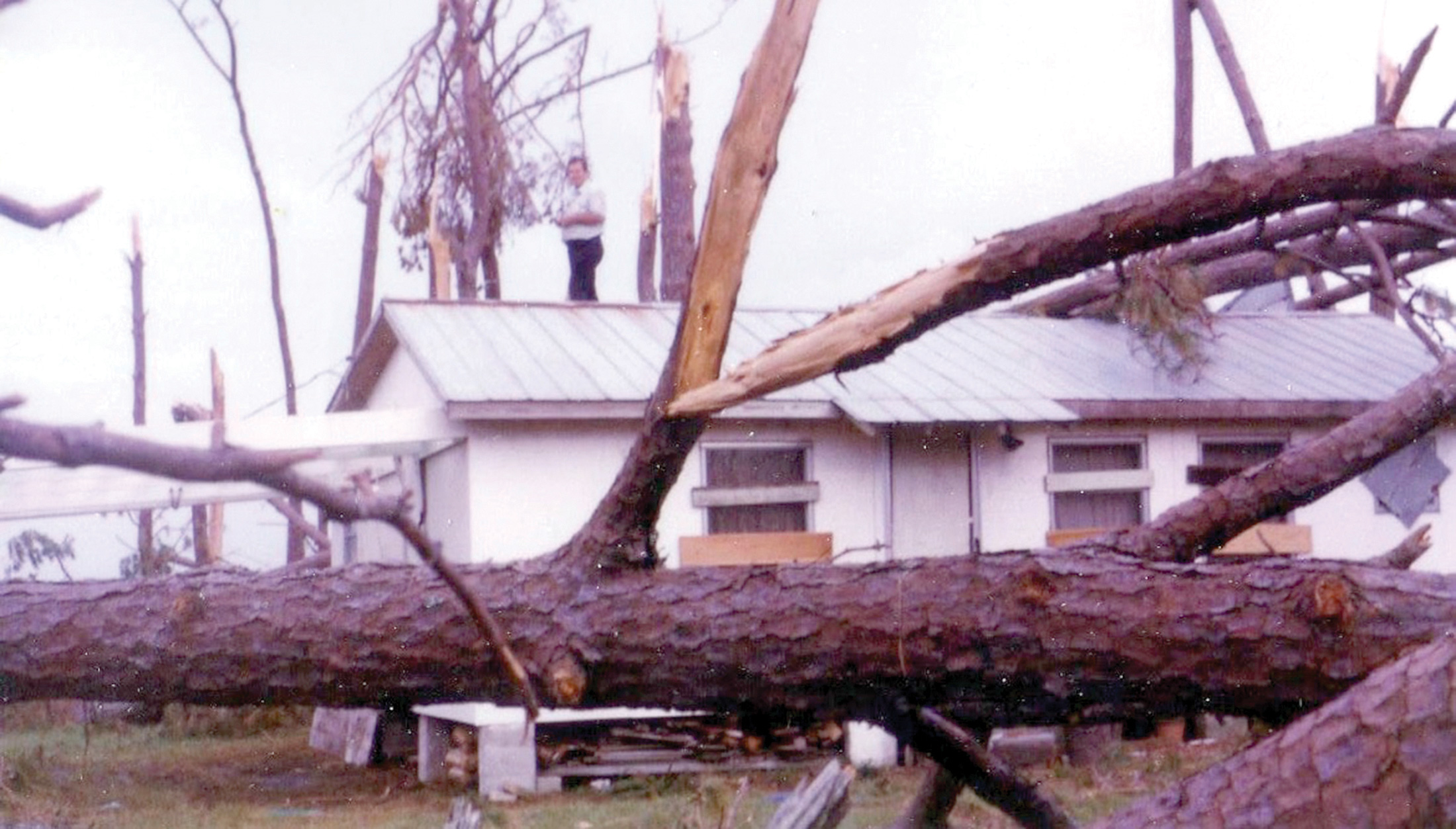
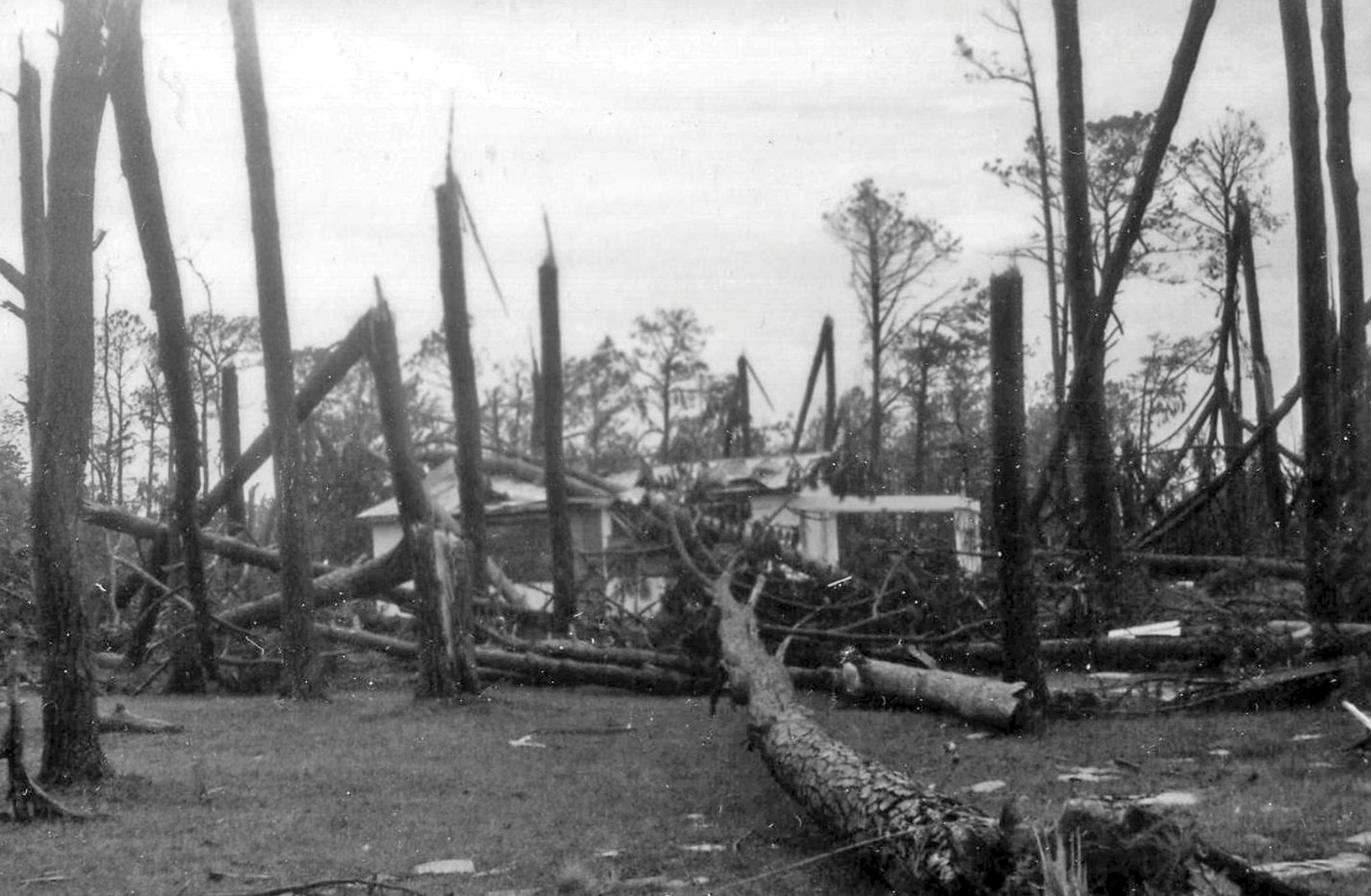
Fortunately, the Cottage Hill house survived, although it was, of course, out of power. While they awaited restoration, Bridges stayed with her brother in his apartment, and the residents rallied together to help one another. “All the people in the apartment started pulling everything out of their freezers, and we cooked on charcoal grills,” she recalls. “We had no access to fresh water or ice, so you’re dying for something cold to drink, and in came an 18-wheeler truck full of nothing but gallons of milk. We stood in line to get a gallon of milk, and we passed it around. And when everybody’s lights started coming back on, the joy in that… You could hear it throughout the apartment complex and throughout the neighborhoods.”
Most everyone from the Gulf Coast has stories like these of people emerging from the terror and devastation of a hurricane, then coming together to rebuild. These stories showcase the resilience and heart of the people who lived through them, creating beautiful memories even amid the difficult ones. Whether it’s cooking food from the freezer before it spoils and sharing with the neighborhood, helping one another clear debris from the yard, spending time together or simply offering a kind word or deed, the support found in the local community is what captures the spirit of humanity when it’s hurricane season.