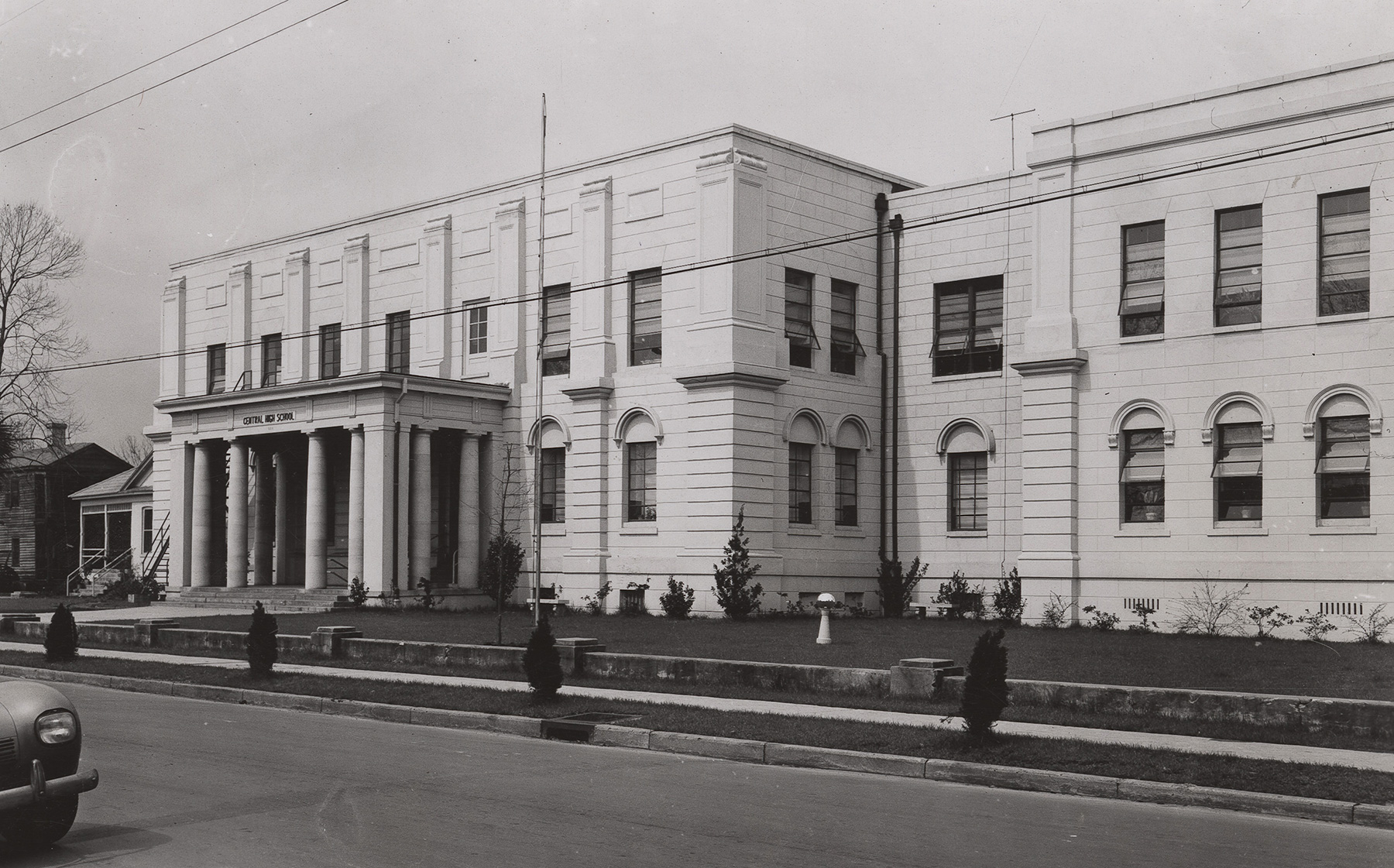
An important thread connects many of the Port City’s distinguished post-World War II Black residents: Albert Thomas, M.D.; artist and educator Dr. Joaquin Holloway Jr.; vocalist “Mother Julius” Spencer; educator Dr. Yvonne Kennedy; lawman Harold Johnson; former mayor and current state representative Sam Jones; longtime city chief of staff Al Stokes. These and many more were students of Central High School during its brief two-decade existence.
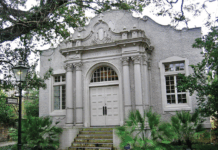
Central opened in 1947 to accommodate the Port City’s growing Black population. The new school was housed in the stately old Mobile Medical College on the corner of St. Anthony and Lawrence streets. Commissioners chose Mobile County Training School’s Dr. Benjamin Baker as principal. Born in Mobile in 1901, he held degrees from Tuskegee Institute and Atlanta University and a doctorate from Paine College. Rev. Clinton Johnson, a Central graduate, remembered Baker as “a phenomenal principal. He had control over the institution.”
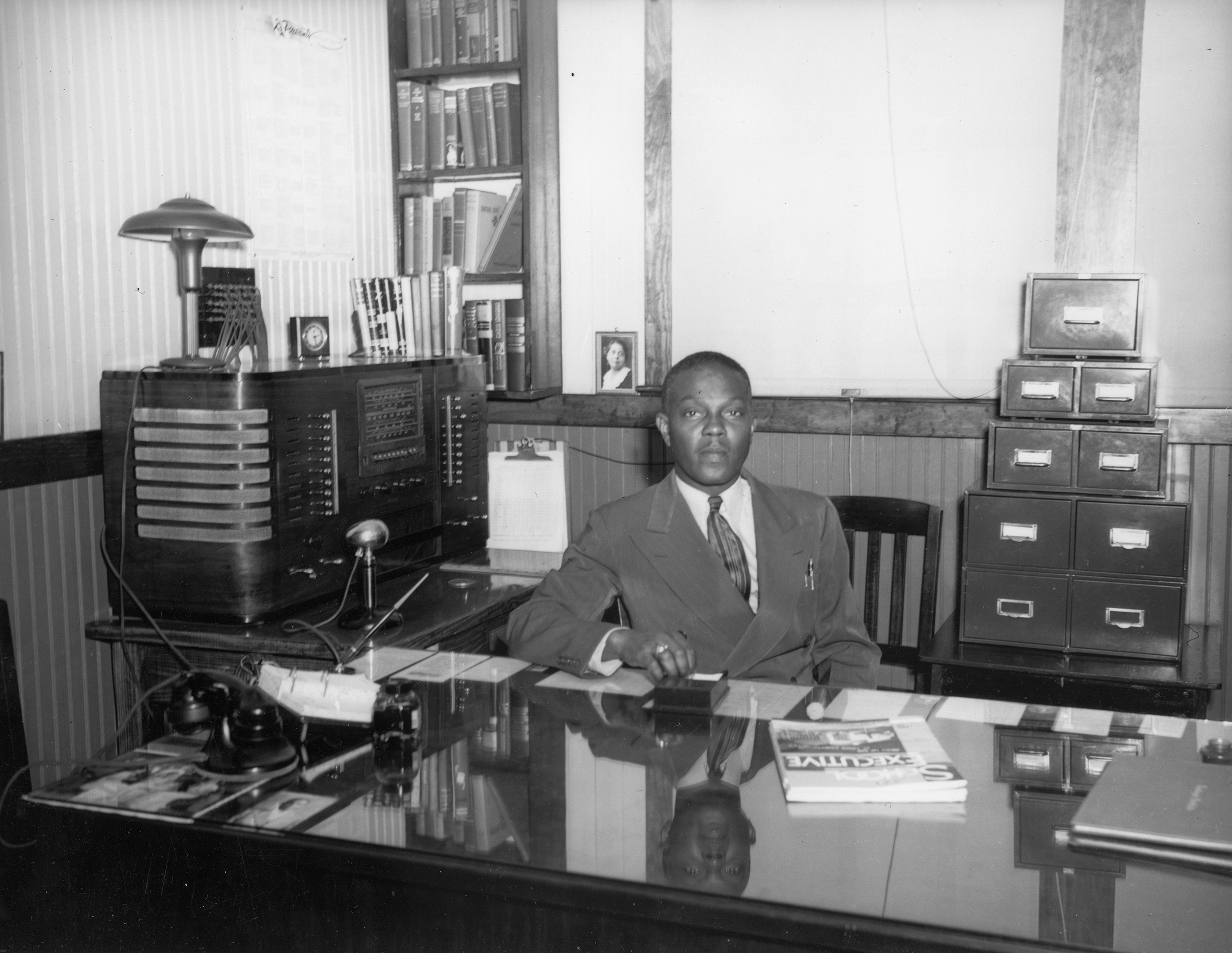
The principal’s exacting standards applied to all aspects of the school, at a time when Black schools were poorly funded and often given used or substandard materials. When workmen arrived with a load of cast-aside and mismatched chairs for the new school, he instructed the men to put the items back on the truck and leave. Central would have only the best.
To greet its first class of more than 800 students, the school boasted a modern science lab and a well-stocked library. Band students received new instruments and debuted their uniforms during the 1948 Carnival season. Opportunities abounded. The chorus performed weekly on WALA radio. The sociology class toured the offices of the Mobile Press Register. Little wonder, then, that Central set a system-wide attendance record.
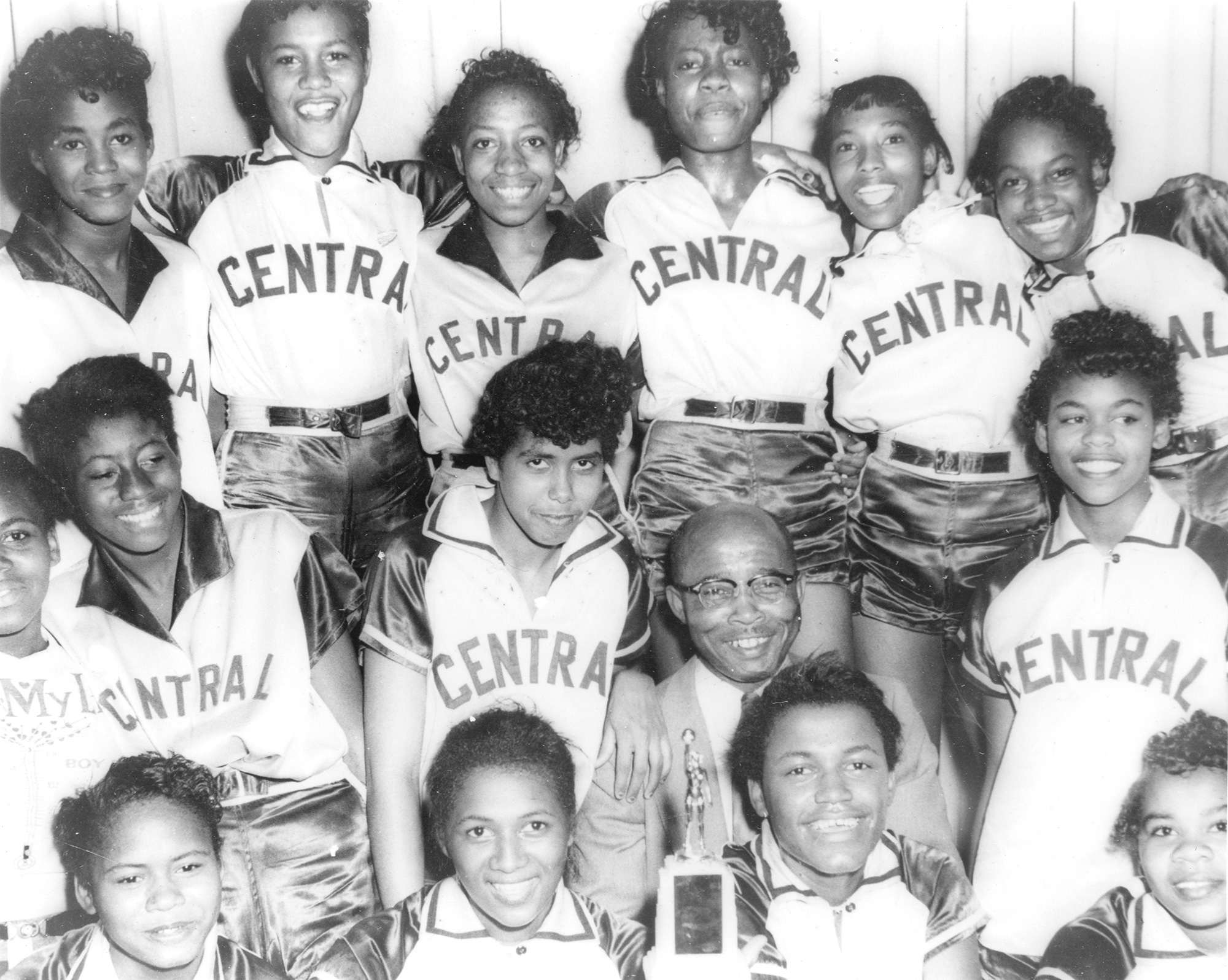
An expansion came just two years later, in the form of a multi-use auditorium and gymnasium. None could question the need for more space. That year, Central’s senior class accounted for more than half of the city’s African American graduates across public, private and parochial schools. Built at a cost of $162,000, the new structure created an impressive home court for basketball and volleyball teams, developed under the direction of Jean Lowe, a former track-and-field standout at Tuskegee Institute. An impressive performance stage, framed by thick velvet curtains, occupied one end of the building, opening the possibility for expanded arts programs, with an on-floor seating capacity of 1,600. Baker praised the investment in the school, saying, “We will make better citizens at Central High because of this building.”
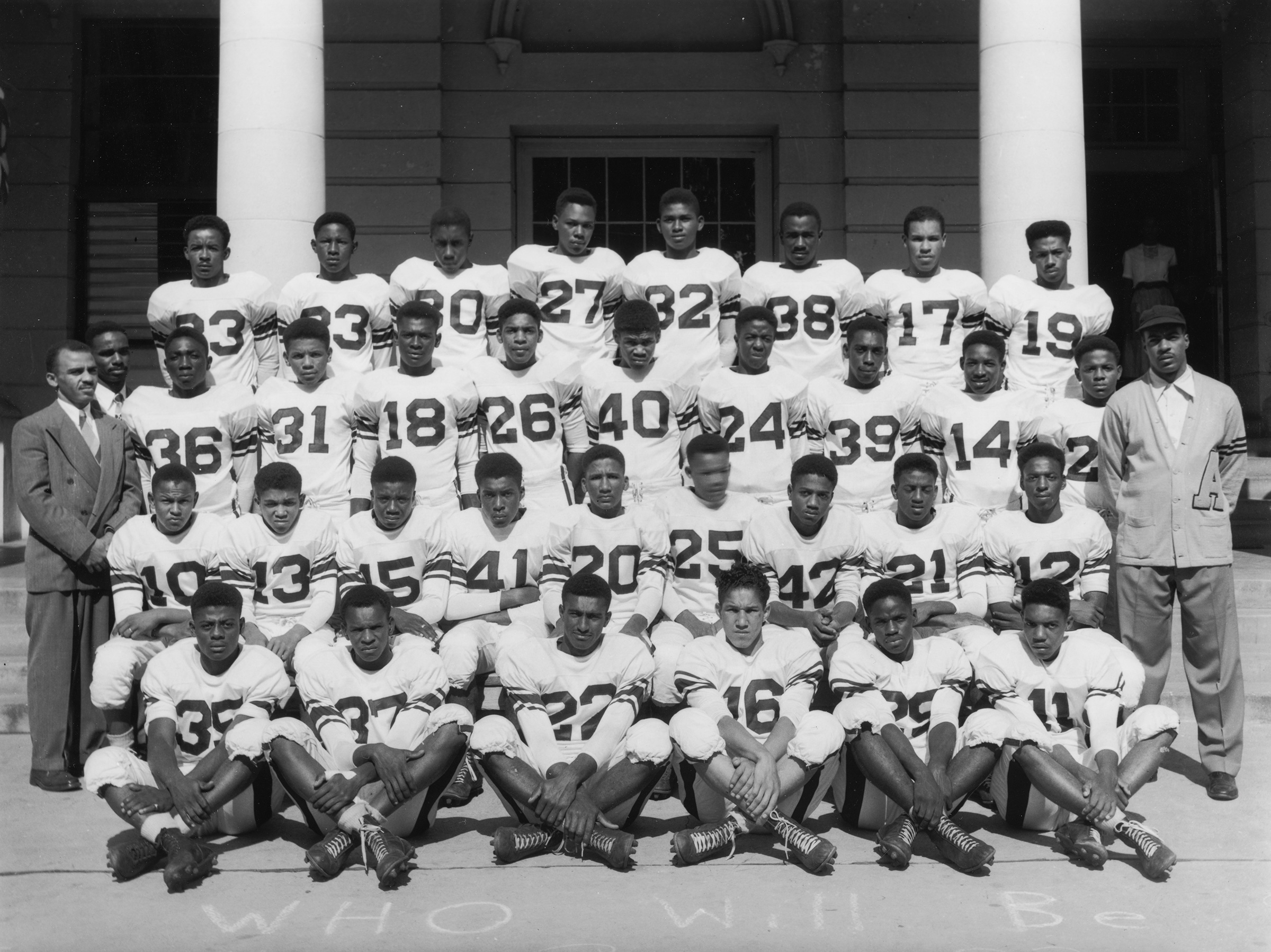
RIGHT Central High School men’s football team photographed on October 26, 1950. Courtesy Erik Overbey Collection, The Doy Leale McCall Rare Book and Manuscript Library, University of South Alabama
Still more students came. Like water poured from a jar, Central seemed to fill the surrounding spaces, moving its band room, other music classes and study hall into a recently shuttered church nearby. In 1953, the school board announced that Central would swap facilities with Paul Lawrence Dunbar Junior High’s sprawling campus located along Davis Avenue, the heart of Mobile’s Black Business District.
With the retirement of Dr. Baker that same year, the school board named Whistler native J. T. Gaines as Central’s new principal. Though short in stature, Gaines, like his predecessor, was a commanding presence in the halls of Central High during his 18 years of service. “He was just a little old something,” one graduate recalled. “But when he spoke, everybody listened.”
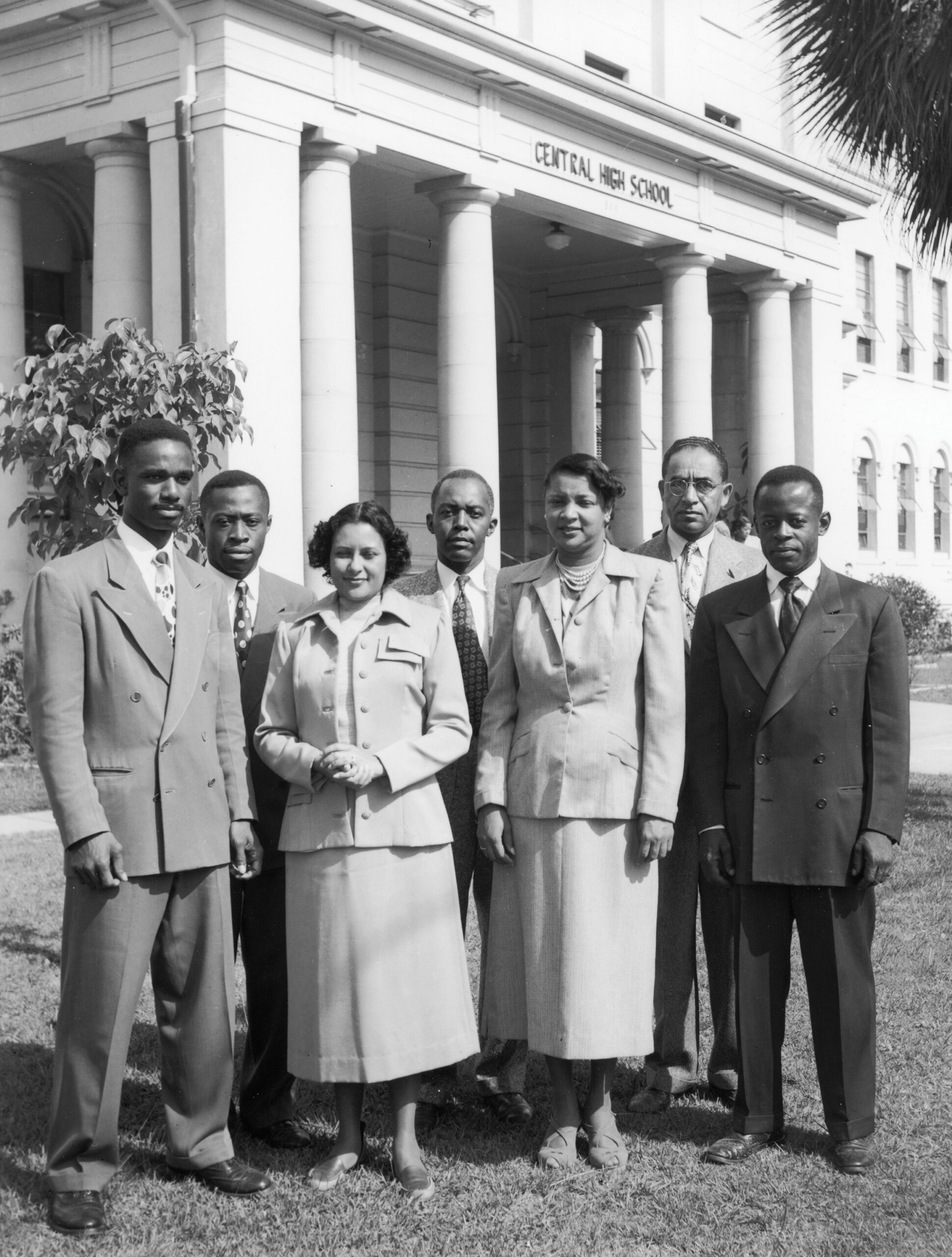
Through the relocation and change in administration, teachers kept their focus on the students. Thinking back on his time at Central in a 2022 interview, Rev. Clinton Johnson recalled, “I remember having been exposed to caring teachers who, for some reason, had a desire to see you go, grow and achieve. I can still quote ‘Macbeth’ from what Ms. Pickney taught me in Central in her English class and do a lot of those kinds of things. I remember them well.”
A rigid color line separated Mobile County’s students when Central first opened its doors. As one of the South’s largest school systems, the unfolding fight to break that line beginning in the mid-1950s was complex, indirect and messy. Nothing since wartime industrialization was more disruptive. In September 1963, two Black students entered the previously all-white Murphy High School, the start of a new era.
In a sweeping order in 1970 — seven years into the long legal battle — U.S. District Judge Daniel Thomas eliminated a “freedom of choice” plan for nine area schools and, in their place, established strict attendance zones. Thomas also issued an order to permanently close Central High School. The order placed thousands of African American students in previously all-white schools, and closed Central to avoid sending white students to a campus on Davis Avenue. State and county officials petitioned the court unsuccessfully to reconsider — not for Central’s sake, but for Murphy’s and the “chaotic situation” they argued might ensue there. For Central staff and alumni, it was the bitterest of pills. “They say it was progress and we have to accept that,” graduate Lula Mickles recalled. “It just seems so unfair that we had to lose our high school, and some folks didn’t have to lose anything.” As integration debates and related social change continued on, the halls that once hummed with activity fell silent.
An indecorous fate often awaits large vacant buildings. As paint peels, rooflines sag and weeds grow tall, members of the public cease to see the place as something with intrinsic worth to the community. Instead, they often see more value in removal. Less than a decade after its closure, it seemed such a fate would befall Central High before a group of graduates and architects convinced the Mobile City Commission to call off plans to raze the structurally sound building.
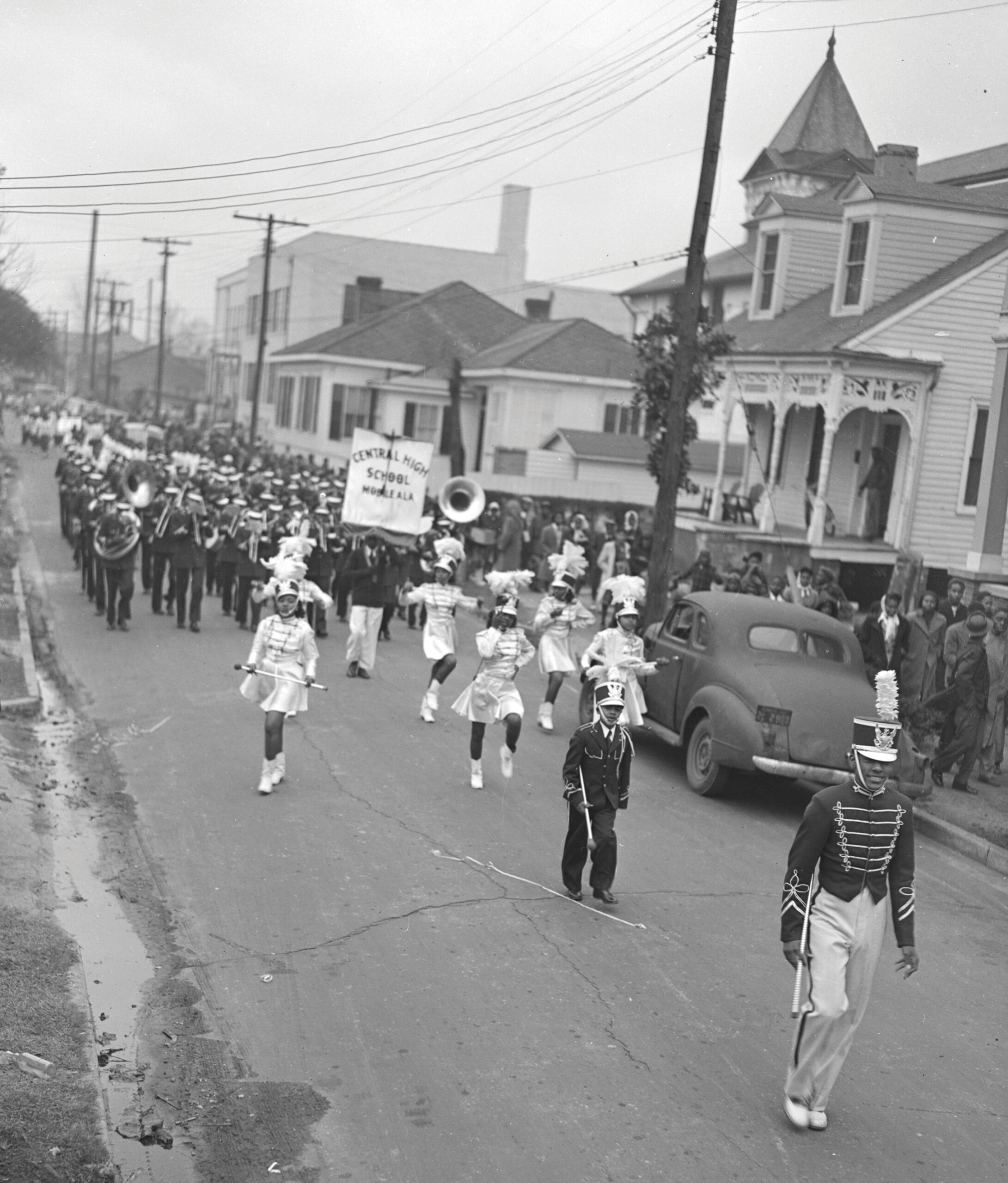
Despite the victory, a second life for the campus took more than 15 years to develop. In April 1993, surrounded by fellow Central alumni, Bishop State Community College President Yvonne Kennedy — a 1962 Central graduate — announced the college’s purchase of the property and an investment of $7.5 million. The renovated Baker-Gaines campus, named in honor of Central’s two principals, would house Bishop’s nursing and allied health programs. “This represents a new hope and rebirth of the spirit this school once had,” one attendee told reporters.
At a gathering of former teachers, Kennedy offered a glimpse into Central’s lasting legacy. “Look around the city, the county and the state,” she said, “and you will see that the people you taught are not just participating in the parade. They are the drum majors and the drum majorettes.” Kennedy’s words echoed a famous 1968 speech by Dr. Martin Luther King Jr. in which he urged Americans to use their talents to work for the greater good, to be drum majors for justice, peace and righteousness.
A school is more than bricks and mortar. As graduate Irma Coleman told a reporter in the late 1990s, “We still have that old Central Spirit.” Nearly six decades after its closure, that Central Spirit is visible in its alumni and their legacies as public servants, educators and men and women of business and industry. Through the myriad ways they give back to their communities, near or far, they honor that spirit and live out the final lines of their old school song:
Fervently thy guide us right
Onward to our future bright
Alma Mater Central Dear
Whether we are far or near
We love thee with all our might
Thy Maroon & White
Writer and historian Scotty E. Kirkland is the author of a forthcoming book on politics and race in twentieth-century Mobile and is a regular contributor to Business Alabama Magazine.