Text by Emily Blejwas: Adapted from “The Story of Alabama in Fourteen Foods”
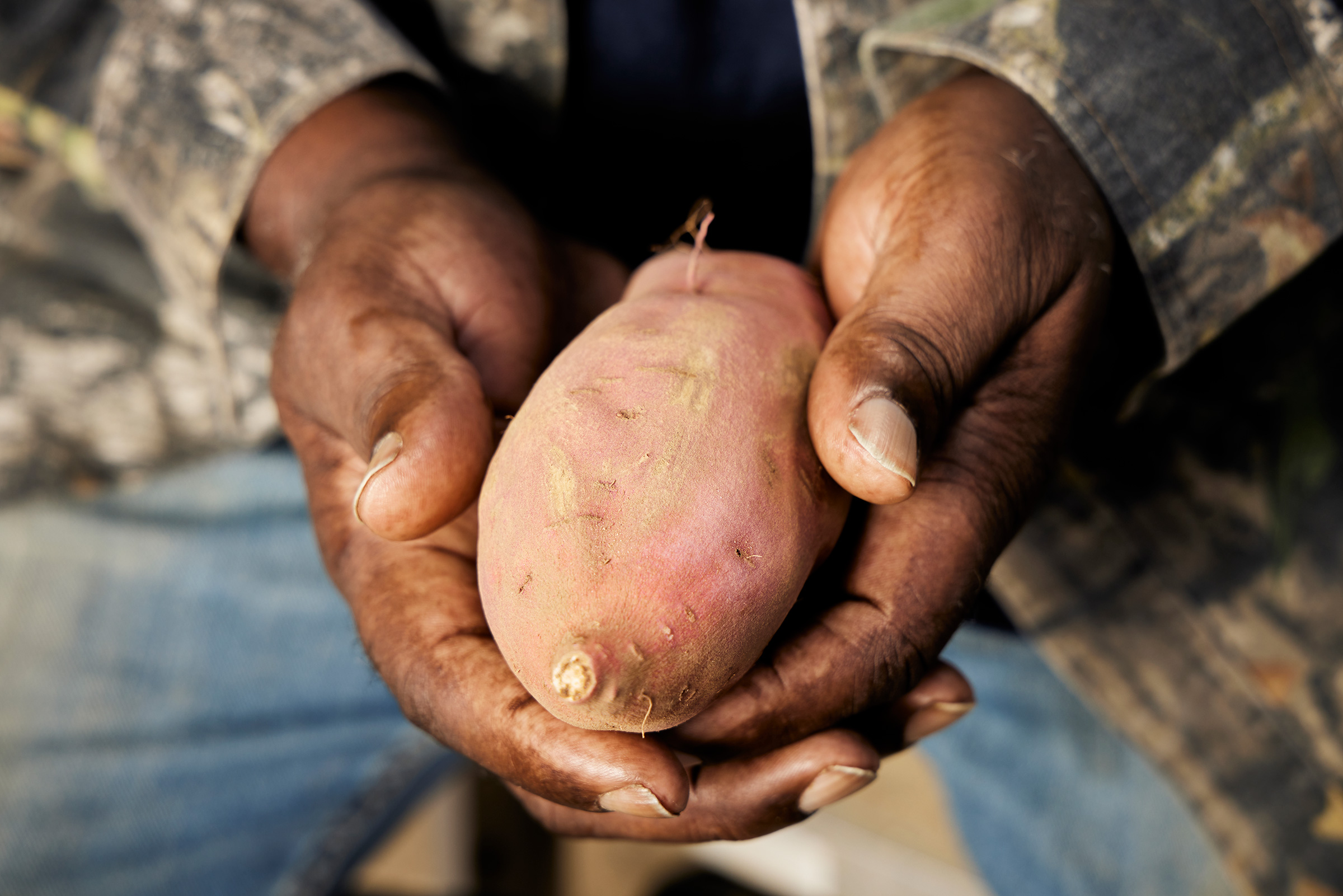
In a world where carbs are increasingly shunned, people might think that the sweet potato would be particularly unhealthy. After all, the words “sweet” and “potato” hardly sound like markers of health. However, this assumption couldn’t be further from the truth. The sweet potato is only distantly related to russet potatoes and is a part of the morning glory family (they share a similar root structure). Orange sweet potatoes are high in the antioxidant beta carotene, which increases vitamin A levels in the blood. They are packed with B vitamins, potassium and vitamin C. Sweet potatoes are known to be high in fiber and have a low glycemic index, which results in a less immediate impact on blood glucose levels than a typical potato or starchy side dish.
Given the fact that sweet potatoes are healthy and easy to grow, they have been a source of sustenance in the United States for hundreds of years. Natives cultivated sweet potatoes in the Southern United States and Christopher Columbus brought them back with him on his return trip to Spain. Enslaved Africans also played a role in the proliferation of sweet potatoes in the U.S.
A Little Sweet Potato History
Sweet potatoes are native to Central and South America and were first brought to Europe by Christopher Columbus in the 15th Century. They were cultivated by Native Americans prior to European arrival and bear a close resemblance to the African yam. A longtime staple of the West African diet, yams were easy to grow and naturally pest resistant, provided high yields and essential nutrients, and were consumed in a multitude of ways, including fresh, boiled, baked, cooked in ashes, dried and powdered.
Critical to survival for many, the yam is still revered at harvest festivals, called Yam feast days, throughout West Africa. A symbol of rebirth and renewal, yams are at the center of extensive mythology and often accompany ceremonies relating to birth, marriage, recovery from sickness or injury, and death.
When West Africans arrived as enslaved people in America, they applied their knowledge and experience cooking with yams to the American sweet potato, which quickly became a cornerstone of the Southern diet for all classes. Resembling the yam’s role in West Africa, sweet potatoes shielded Southerners against hunger during lean times and were especially vital for poor populations as they grow easily, produce abundantly (often with little human help), can be preserved through the winter in a mound of dirt and, when paired with greens, provide nearly all essential nutrients.
The centrality of sweet potatoes in the Southern diet made sweet potato pie a core Southern tradition beginning in colonial days, when pies both stretched ingredients and turned humble meals elegant. Europeans, who had consumed pies since the Roman era, made pies in America using apples, lemons, plums and sweet potatoes by the late 1600s. Enslaved people from West Africa, who did the cooking in many colonial households, shaped sweet potato pie by experimenting with spices, techniques and various ingredients, adding cinnamon, nutmeg, vanilla, cloves, ginger, molasses, orange zest and coconut to the basic pie filling. Because pigs were abundant in the South, cooks used lard instead of butter in their pie crusts, giving them “a distinct, flaky quality.”
In the early decades of the twentieth century, George Washington Carver helped secure the longevity of sweet potato pie in Alabama. As the head of the agricultural department at Tuskegee Institute, Carver encouraged farmers to plant crops that would replenish the parched Alabama soil, including sweet potatoes. To spread his message, he produced scores of farming bulletins that were practical, free and comprehensible. Between 1898 and 1943, Carver issued nearly 50 bulletins on sweet potatoes alone, featuring the 118 products he invented from the sweet potato (including molasses, vinegar and shoe blacking) as well as various sweet potato recipes. His recipe for sweet potato pie, published in 1936, is a prototype of modern versions.
In the 20th century, sweet potato pie became elemental to soul food. In reality, the dishes that comprise soul food are Southern dishes, consumed by Black and white alike for centuries. As culinary historian Frederick Douglass Opie notes, whether Black or white, “every poor person struggling to survive [in the South] ate soul food on a regular basis.”
But though the actual dishes may be identical, soul food separates itself from Southern food by underscoring its African American qualities. Black cooks were largely the ones to fuse African, Native and European traditions to create Southern food. Soul encompasses the ability of these cooks to transform ordinary ingredients, use whatever was at hand, follow the seasons and spice to perfection. Soul emphasizes the African cooking techniques, food pairings and seasonings that define Southern food. “It was simple food,” writes Opie, but “complex in its preparation.” And at the end of the meal, that last dish manages to roll all of those conflicting characteristics of soul – sweet, savory, complicated, straightforward, tenacious, joyful, sustaining, luxurious – into one: sweet potato pie.
6 Recipes for National Sweet Potato Month
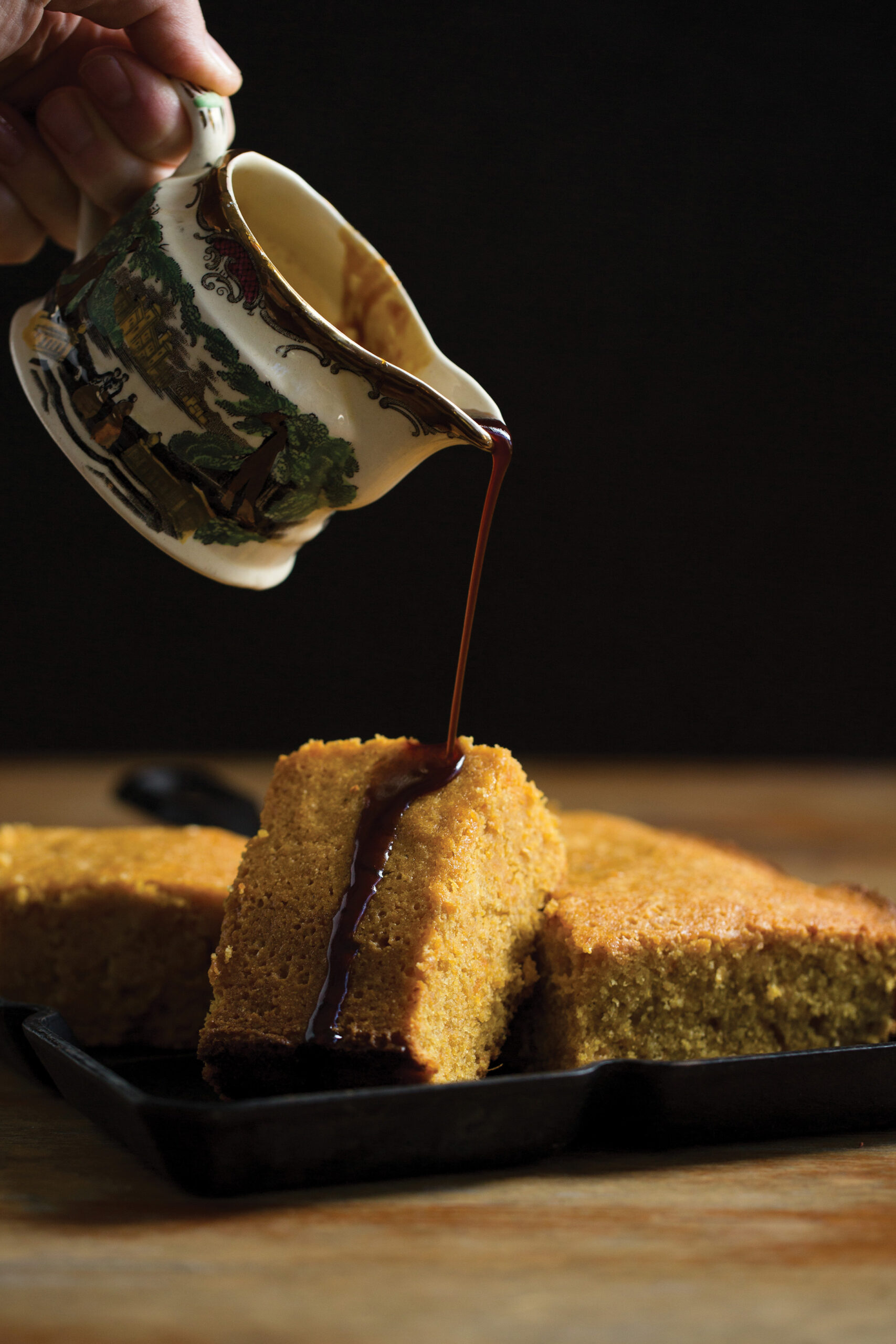
Sweet Potato Cornbread
SERVES 8
Ingredients
1/4 pound sweet potatoes
1 stick unsalted butter, room temperature
2 cups brown sugar
4 eggs, room temperature
1/2 cup whole milk
2 cups cornmeal
Sorghum Butter Sauce (recipe below)
Directions
1. Peel and chop the sweet potatoes. Boil in an inch of water, covered, until fork tender. Drain the water and mash with a fork. Allow to cool.
2. Preheat oven to 350 degrees.
3. Add the butter and sugar to the bowl of an electric mixer and beat with the paddle attachment until mixture is light and creamy.
4. Remove the bowl from the mixer and stir in the sweet potatoes.
5. Gently whisk the eggs in a small bowl and then add eggs to the sugar-butter mixture.
6. Add the milk and then the cornmeal and stir to combine. Pour into a greased casserole or cast-iron skillet and bake for 50 – 60 minutes, until set and light golden brown on top. Serve warm from the oven with warm Sorghum Butter Sauce drizzled over top.
Sorghum Butter Sauce
Ingredients
3 tablespoons sorghum molasses
3 tablespoons unsalted butter
1 teaspoon apple cider vinegar
1/2 teaspoon kosher salt
Directions
Combine ingredients in a small saucepan over medium heat. Stir constantly until butter melts, then stir occasionally until syrup comes to a gentle boil. Allow to simmer 10 minutes, until thickened. Turn off heat and pour into a heat-proof pitcher.
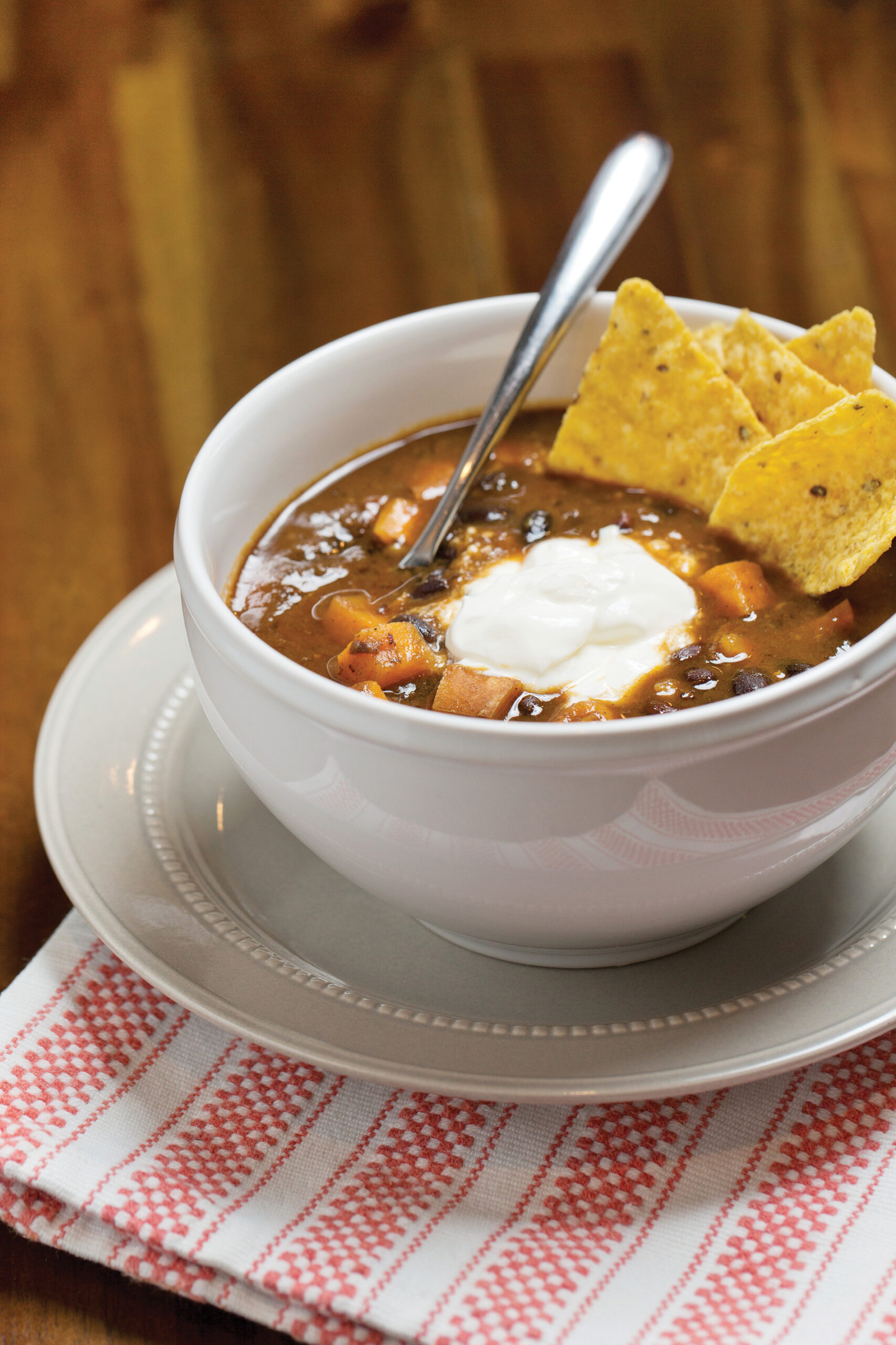
Green Chili Black Bean and Sweet Potato Soup
Recipe courtesy of Chef Arwen Rice, Red or White
SERVES APPROXIMATELY 8 – 10
Ingredients
5 pieces bacon, diced
1 large onion, diced
4 garlic cloves, minced
2 tablespoons chili powder
1 tablespoon cumin
2 bay leaves
1 pound black beans, soaked overnight
1/2 teaspoon black pepper
3 – 4 teaspoons salt
3 (4-ounce) cans diced green chilis (Arwen uses Hatch brand from New Mexico.)
6 cups chicken or vegetable stock
2 medium sweet potatoes, diced small
sour cream and corn chips, for garnish
Directions
1. Heat a large soup pot and add the diced bacon.
2. Once the bacon has browned a bit, add the onion and garlic. Sauté for 5 – 7 minutes then add the chili powder, cumin and bay leaves. Sauté for another 2 minutes, then add the black beans and remaining ingredients except for the sweet potatoes and sour cream.
3. Bring to a simmer and cook for 1 1/2 hours over medium-low heat. Stir frequently.
4. Test a bean after an hour and if it is soft, add the sweet potatoes. Simmer another 20 minutes or until sweet potatoes are soft.
5. Remove 3 cups of the soup out of the pot and mash with a potato masher then add back to the soup and stir. Portion into bowls and top with a dollop of sour cream and chips.
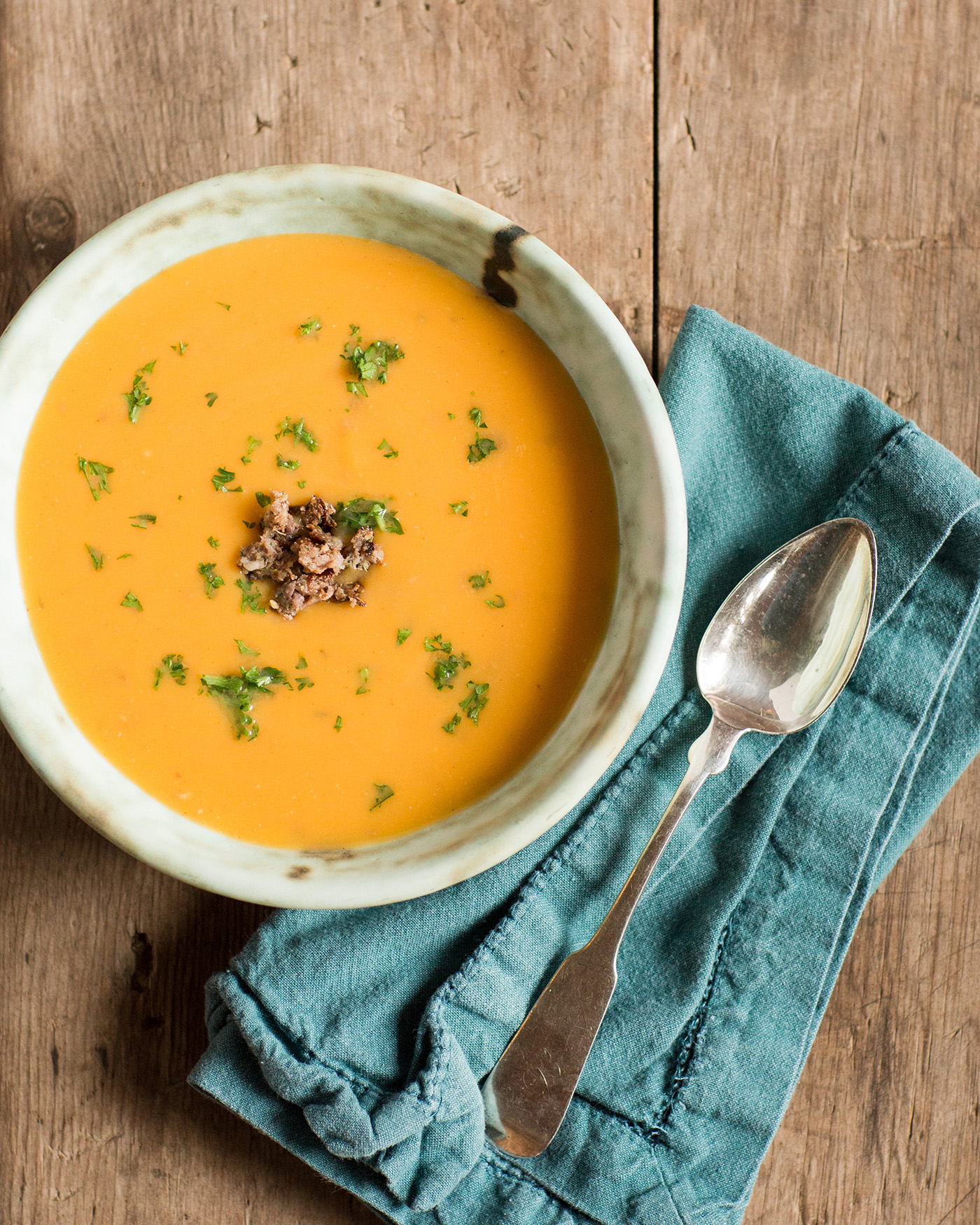
Butternut Squash & Sweet Potato Soup with Breakfast Sausage
SERVES 8 – 10
Ingredients
1 butternut squash
olive oil
kosher salt and white pepper, to taste
2 sweet potatoes
2 tablespoons butter
1/2 onion, diced
1 teaspoon minced garlic
6 cups chicken or vegetable stock
1/8 teaspoon dried thyme leaves
1/8 teaspoon pumpkin pie spice
1/2 pound bulk breakfast sausage
1/2 lemon, juiced and seeded
1/4 cup heavy cream (optional)
Directions
1. Preheat oven to 350 degrees.
2. Cut squash in half and scoop out the guts and seeds of each half. Lightly rub each side with olive oil and season with a pinch of salt and pepper. Lay the squash flesh side up on a baking sheet.
3. Place whole sweet potatoes on a separate cooking sheet and place both pans in the oven for about 40 minutes to an hour or until vegetables are soft. Remove from the oven and let cool. Remove the flesh from the squash and potatoes and set aside.
4. Melt butter in a 2-quart saucepan. Add onion and cook until translucent and soft. Add garlic and cook for another minute.
5. Remove the pot from the heat and add the flesh of the squash and potatoes. Add the stock, thyme and pumpkin spice. Return to heat and slowly simmer for 15 minutes.
6. While the soup is simmering, brown the sausage in a skillet and set aside.
7. Puree the soup with an immersion blender until smooth. Stir in the cooked sausage and lemon juice, and season to taste with kosher salt and white pepper. If desired, finish the soup with cream to add richness.
Roasted Beet and Sweet Potato Salad
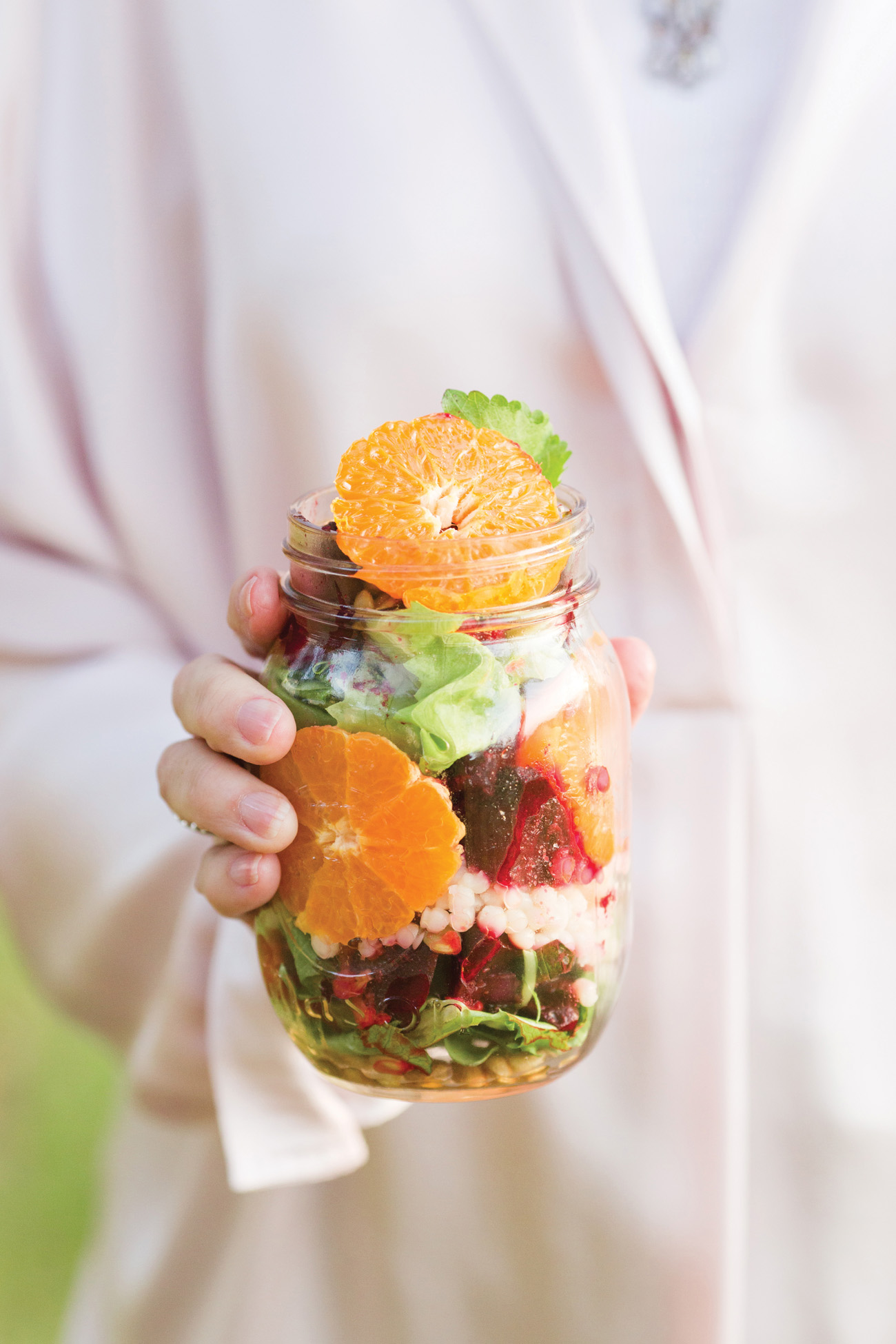
Recipe courtesy of Kristin Alpine
SERVES 12 AS A SNACK, 6 AS A SIDE DISH
Ingredients
3 medium beets
2 small sweet potatoes
3 tablespoons olive oil
1 sprig fresh thyme or 1/4 teaspoon dried
salt and pepper, to taste
1/4 cup pepita seeds
3 oranges, peeled and sliced crossways
1 cup cooked Israeli couscous or grain of your choice
microgreens or other greens of your choice
Directions
1. Preheat oven to 420 degrees. Add first five ingredients to a large bowl and stir to coat. Place on a large, rimmed baking sheet and roast for 20 minutes. Toss for even cooking, then roast another 20 minutes.
2. Toss roasted vegetables with half the Orange Vinaigrette (below) while they are warm from the oven to better absorb flavors. Layer roasted vegetables, pepita seeds and couscous in small mason jars for an appetizer or large mason jars for a meal. Drizzle with remaining vinaigrette, top with a few microgreens and serve.
Orange Vinaigrette
Ingredients
zest and juice of 1 orange
1 tablespoon olive oil
1/4 teaspoon honey
1/4 teaspoon cumin
salt and pepper, to taste
Directions
Combine ingredients and whisk. Makes 1/2 cup.
Conecuh, Sweet Potato & Brussels Sprouts Hash
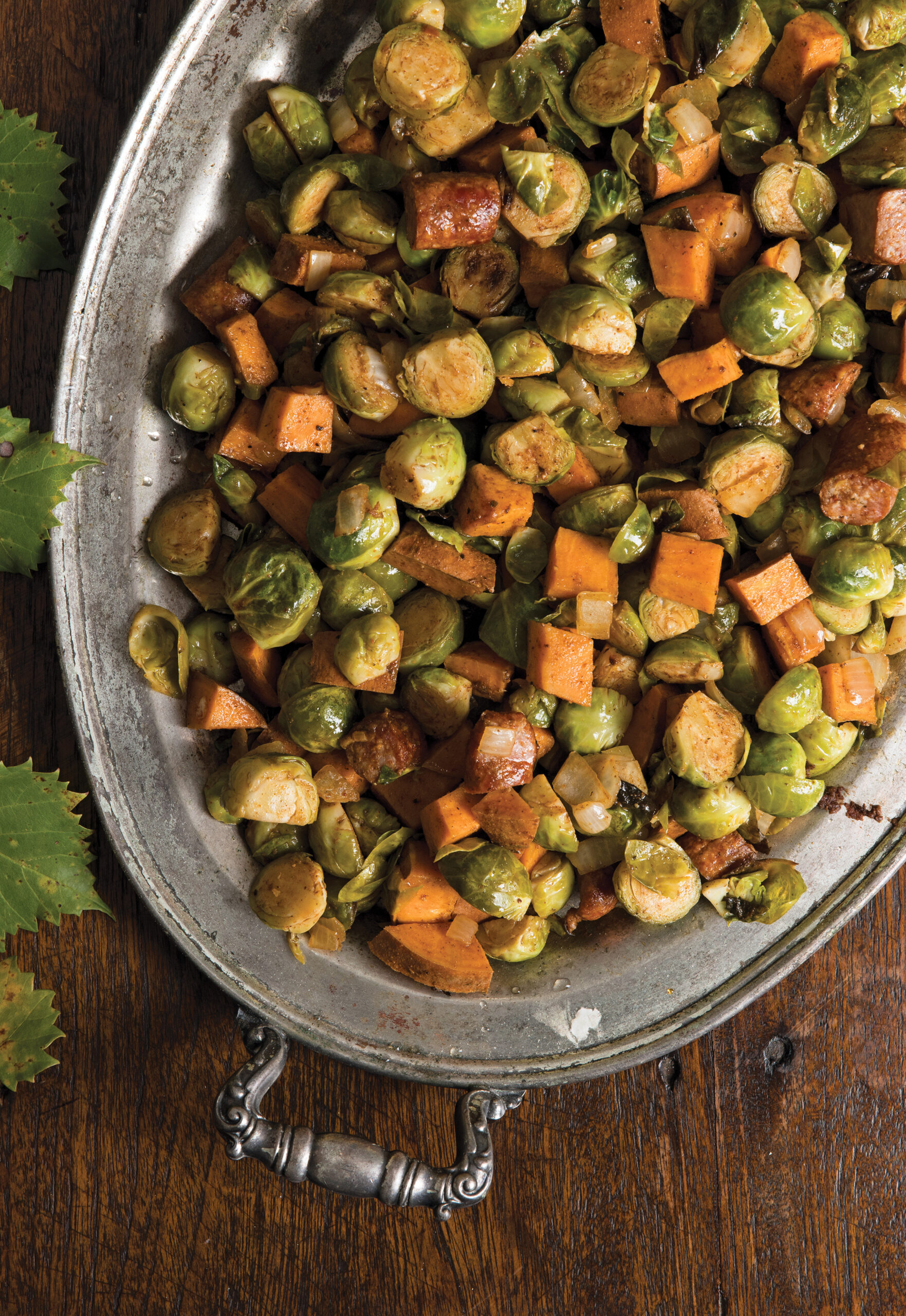
Recipe courtesy of Chef Will Hughes of Provision Fairhope
SERVES 6 – 8
Ingredients
12 ounces Conecuh sausage, cut into 1-inch chunks
1 pound large Brussels sprouts, quartered or halved
1 medium-sized sweet potato, cut into 1⁄2-inch cubes
1 large yellow onion, cut into 8 wedges
3 tablespoons olive oil
salt and freshly ground black pepper, to taste
1 teaspoon dried Italian seasoning
1⁄2 teaspoon dried thyme
1⁄2 teaspoon dried oregano
1⁄2 teaspoon garlic powder
1⁄2 teaspoon onion powder
Directions
Preheat oven to 400 degrees. Spray a large-rimmed baking sheet with cooking oil. Add cut sausages, Brussels sprouts, sweet potatoes and onions to the sheet pan. Drizzle with olive oil and season with all seasonings. Stir until everything is well combined.
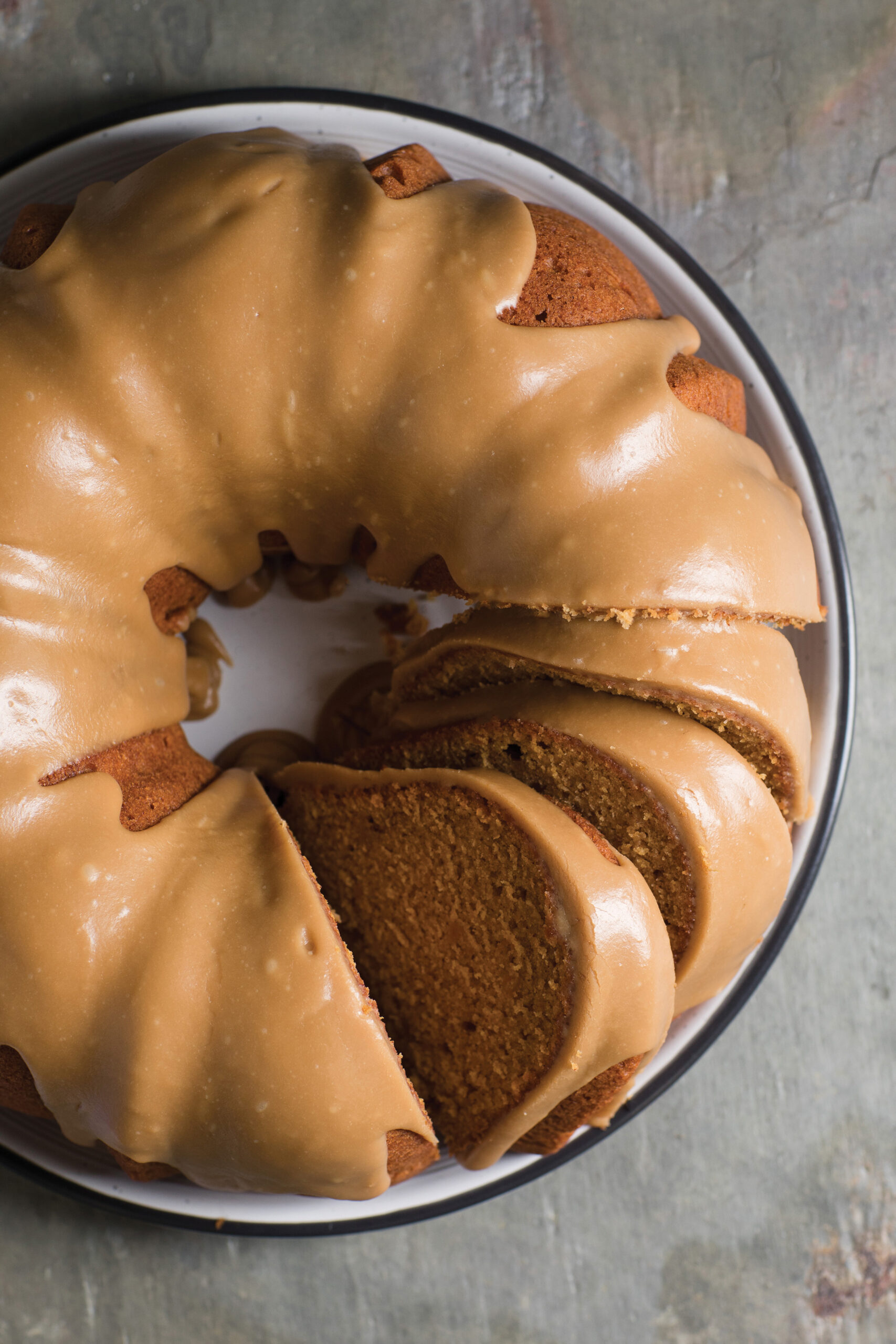
Sweet Potato Cake with Caramel Icing
SERVES 12 – 16
Ingredients
4 (8-ounce) sweet potatoes
2 3/4 cups all purpose flour
2 teaspoons ground cinnamon
1 1/4 teaspoons ground ginger
1 teaspoon baking powder
1 teaspoon baking soda
1/2 teaspoon salt
2 cups sugar
1 cup vegetable oil
4 eggs
1 teaspoon vanilla
Directions
1. Cook sweet potatoes in the microwave, for 16 minutes, turning once at 8 minutes. Cool, peel and mash.
2. Preheat oven to 325 degrees. Spray Bundt pan with nonstick cooking spray.
3. Sift all dry ingredients (except sugar). Measure out 2 cups of sweet potatoes, combine with sugar and oil and beat until smooth.
4. Add eggs, 2 at a time. Add sifted ingredients and beat until blended. Stir in vanilla and pour into Bundt pan.
5. Bake for 1 hour and 5 minutes. Cool in pan on a rack. When completely cool, turn out and drizzle generously with caramel icing.
Caramel Icing
1 cup powdered sugar
3/4 cup packed dark brown sugar
1/2 cup whipping cream
1/4 cup butter
1/4 teaspoon vanilla
Sift powdered sugar into a large bowl. Stir brown sugar, whipping cream and butter over medium low heat until melted. Turn up the heat and bring to a boil for 3 minutes, stirring occasionally. Remove from heat and add vanilla. Pour over powdered sugar and whisk for one minute. Let cool, stirring every once and a while for 15 minutes. Spoon lavishly over cake.