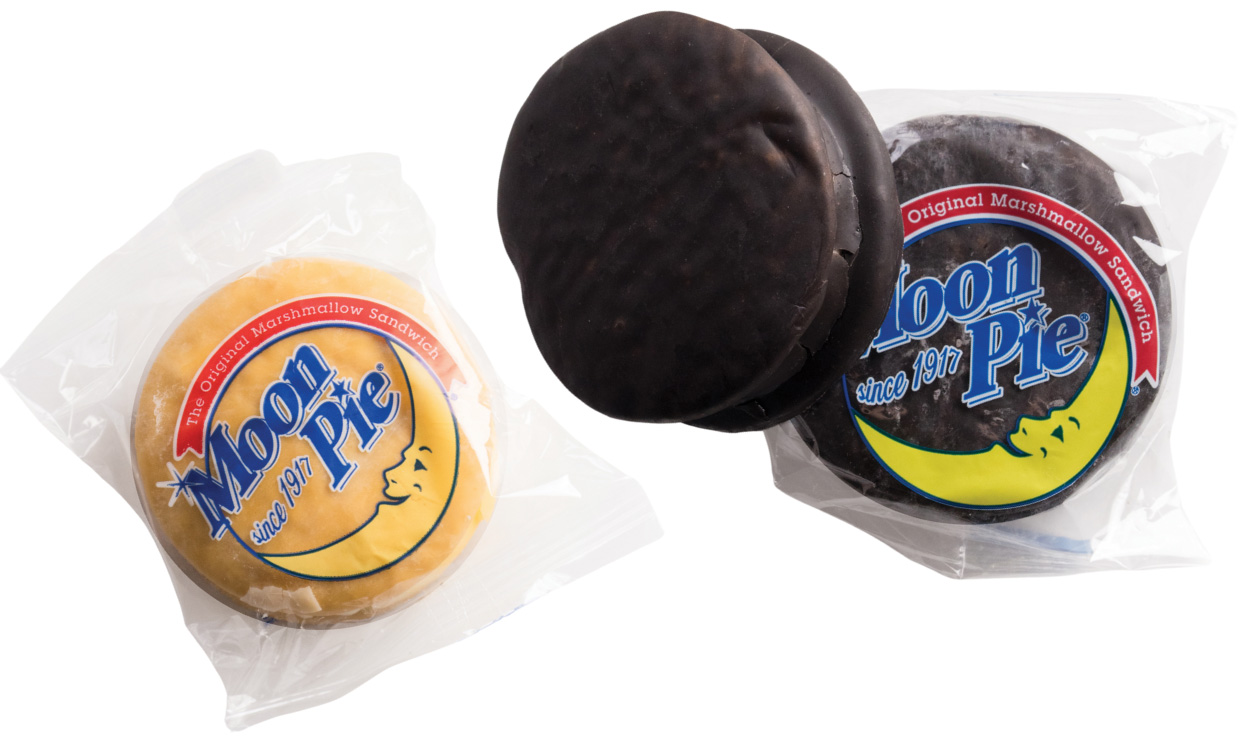
In the Bay area, it’s not Mardi Gras without MoonPies. Traditionally, the craveable snack is made of pillowy marshmallow nestled between two graham cracker cookies and covered in chocolate. The MoonPie originated in 1917, then a few decades later, members of Mobile’s mystic societies began tossing them to paradegoers. Who threw the first MoonPie at a Mardi Gras parade? Many legends claim to know the answer, so the mystery only adds to the magic.
The MoonPie’s mystique does not stop with its history. Inside the Battle House Renaissance Mobile Hotel and Spa, an iconic Downtown institution, lies a thrilling secret which, according to Executive Chef Tony Reynolds, is not such a secret anymore. “I’m afraid the word has gotten out,” he says, laughing. His pastry chef, Sofia Kulakowski, affirms that it has.
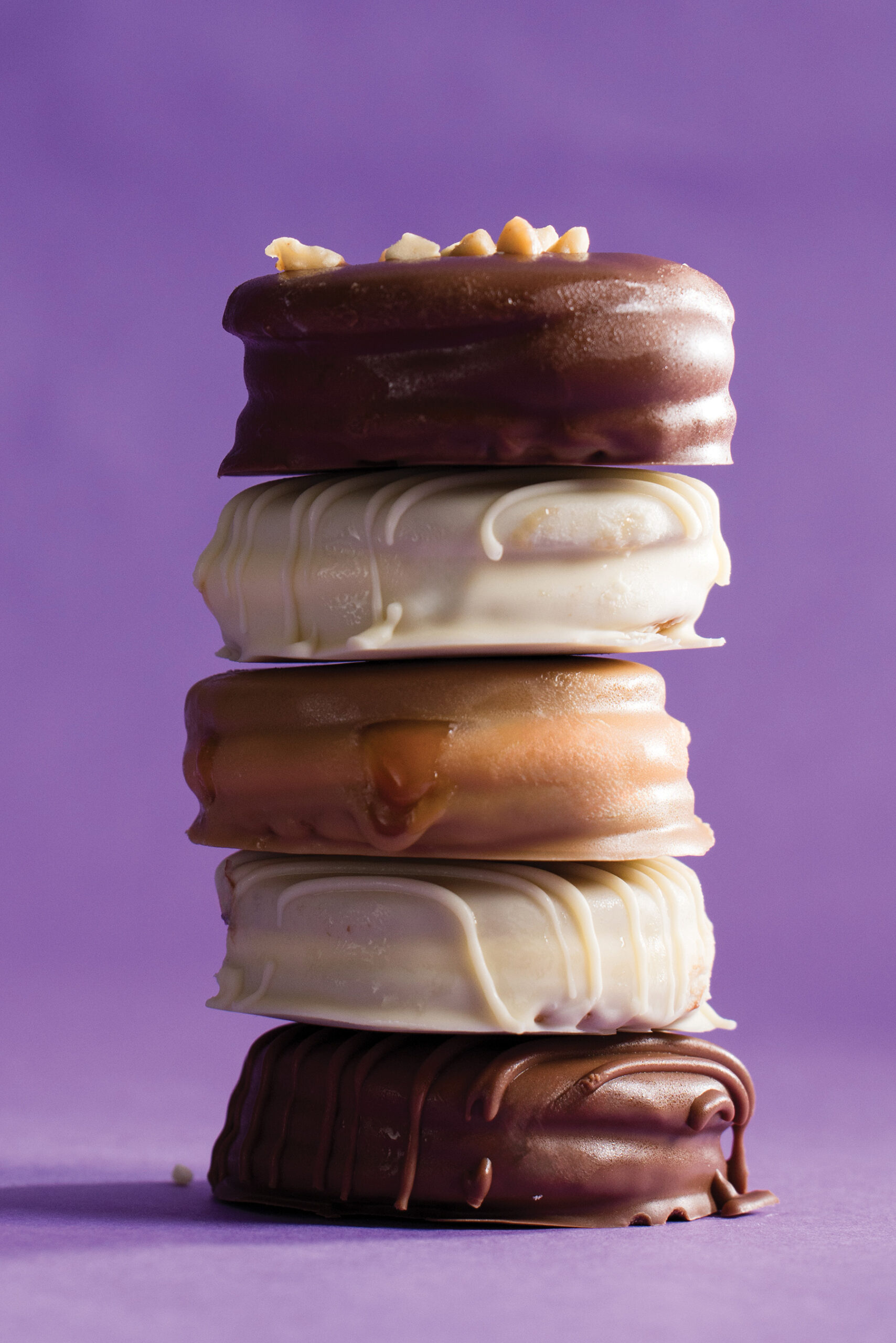
The secret? Kulakowski’s MoonPies, which she describes as “a perfectly imperfect, delicious labor of love.” The MoonPies are made entirely from scratch — the fluffy marshmallow, two different flavors of cookies, everything. Kulakowski sandwiches them by hand before dipping them in chocolate the old-fashioned way, using two forks. Her MoonPies come in a variety of mouth-watering flavors, including milk chocolate, banana, milk chocolate peanut butter and vanilla white chocolate. For one of her most popular flavors, sea salted caramel, Kulakowski special-orders French sea salt to incorporate into her rich, smooth caramel. “It is definitely a labor-intensive process,” she says. “But I love it, and everybody loves the MoonPies.” Her efforts result in beautiful desserts that taste incredible and look like they should be displayed in a gourmet pastry shop window.
Chef Kulakowski has a personal connection to Mardi Gras and the Battle House: She grew up on North Conception Street, only six-and-a-half blocks away from the hotel. Every year, she could hear the parades, and she was delighted to partake in the festivities and disappointed on those nights when she could not attend. “I love MoonPies and always have,” she explains. “And I was like, ‘Why can’t I start making homemade MoonPies?’” Now she is sharing her passion with everyone in Mobile, serving the delicious sweets not far from the home where she first experienced the magic of Mardi Gras.
Initially, the Battle House reserved these special treats for the Carnival season, but as Mobilians have discovered Kulakowski’s talent, they have been eager to offer her MoonPies as wedding favors or serve them at catered events. “Everybody loves a MoonPie, especially a homemade one,” says Chef Reynolds. “[The Battle House] is Mobile’s living room. We try to elevate everything and make everything from scratch, and the MoonPie is just something else in our portfolio that is an icon of Mobile…We like to play our part. I think that’s a small bit of how we add to the magic of the season.”
So how did Mobile’s MoonPie tradition begin? Let’s explore the history…
Excerpt from
“The Story of Alabama in Fourteen Foods”
by Emily Blejwas
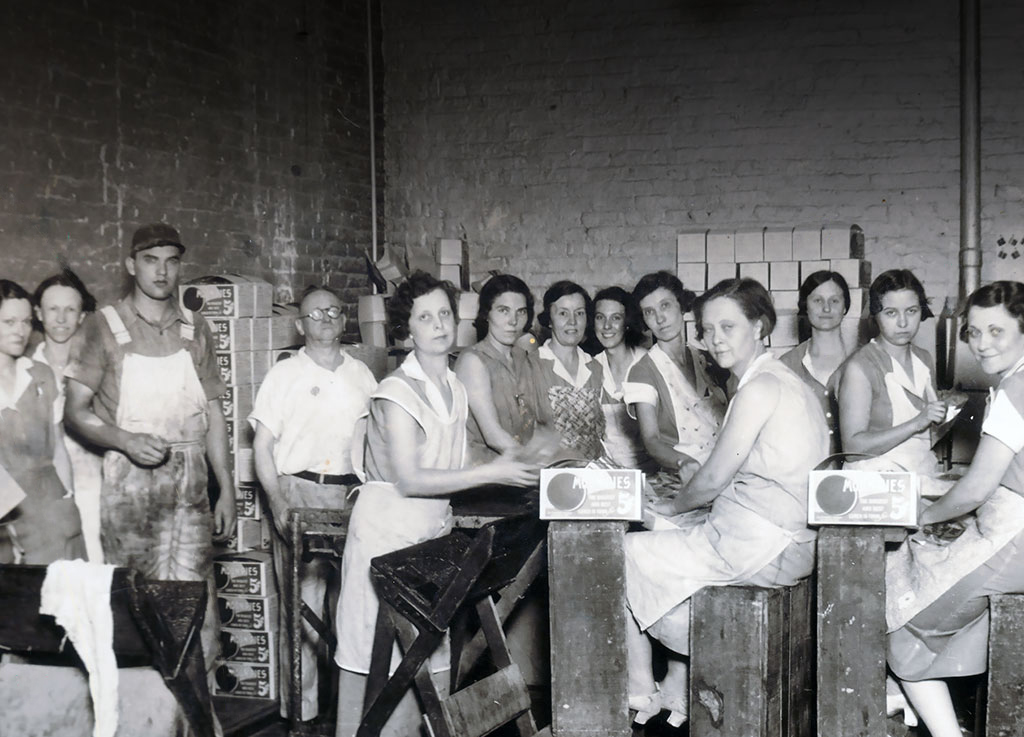
MoonPies were first produced in 1917 at the Chattanooga Bakery, founded in Tennessee in the early 1900s to use leftover flour from the Mountain City Flour Mill. The MoonPie traces its origins to a sales call in a Kentucky coal mining region, where workers toiled “all day long in soot-soaked underground shafts, chiseling the coal into chunks and loading them into waiting carts, which were whisked away one after another in an endless, monotonous ritual,” writes MoonPie chronicler David Magee. “When the break whistle blew, these mining men wanted a hearty snack, not a small package of lemon cookies or ginger snaps.”
When the commissary manager showed no interest in Chattanooga Bakery products, company salesman Earl Mitchell approached a group of miners to ask them what they wanted. One miner replied that they wanted something solid and filling for their lunch pails, then held his hands up to the sky so they framed the moon and said, “about that big.” When Mitchell returned to the Chattanooga Bakery, workers were dipping graham cookies into vats of marshmallow and setting them on a windowsill to harden and dry. With the miners in mind, Mitchell put two graham cookies together with marshmallow in the middle and chocolate on top. He took samples of the new snack back to the miners and received a positive response. At the time, MoonPies were one of two hundred confection items made at the bakery, but they quickly became a top-selling product.
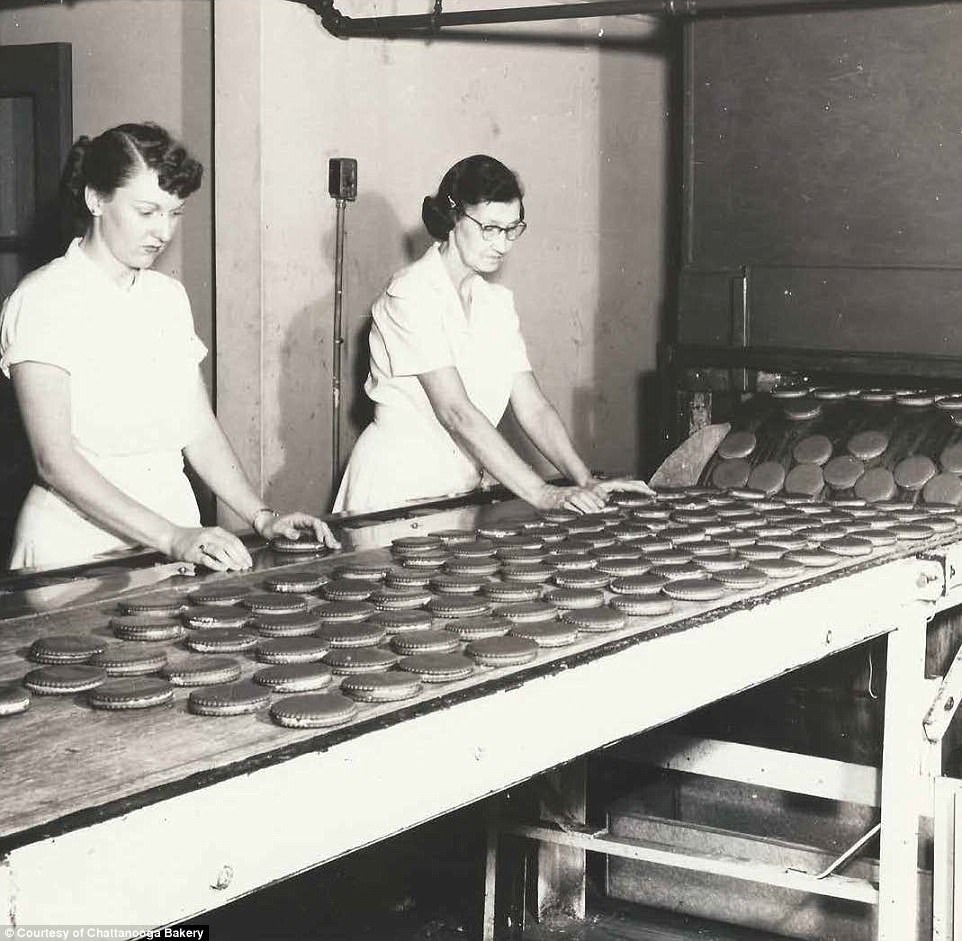
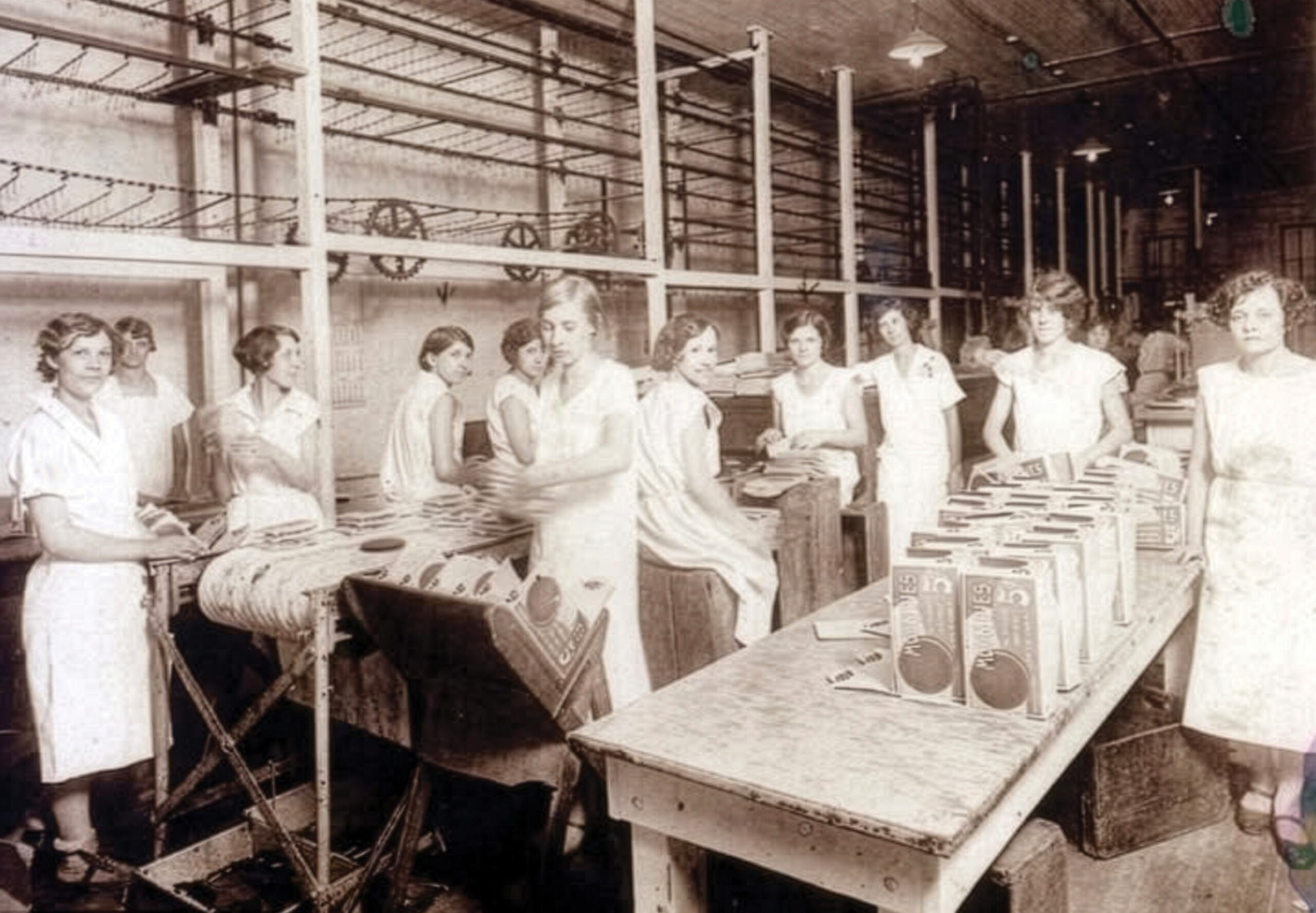
The MoonPie was more than four inches in diameter and sold for a nickel. Because it was affordable and filling, it was especially popular among the working class. Similarly, in 1934, the Royal Crown Company in Columbus, Georgia, began selling RC Cola in sixteen-ounce bottles instead of the usual twelve, also for a nickel. With the MoonPie as the biggest snack cake for a nickel and RC Cola as the biggest soda, together they became a popular ten-cent combination, especially as a workingman’s lunch. Though neither company made any effort to link the two products, the phrase “an RC Cola and a MoonPie” became well-known across the South, bolstered by the 1951 hit country song “RC Cola and MoonPie” by Big Bill Lister.
Transportation improvements in the 1950s, including new state and federal highways, more road-worthy vehicles, and more gasoline stations, “served as a boundary breaker for the MoonPie.” The snack was soon sold and consumed nationally, though it was still most popular in the South and in areas with high numbers of southern emigrants including Detroit and Chicago, where the MoonPie was a staple snack for industrial workers. By the late 1950s, the MoonPie had become so popular that the Chattanooga Bakery produced nothing else.
Around this time, MoonPies made their debut as throws in Mobile Mardi Gras parades. Early Mardi Gras throws, dating to the 1800s, were French bon bons or trick prizes like small bags of four that burst when caught. These were eventually banned, and throws reached a lull until post-World War II, when they became an increasingly integral part of Mardi Gras parades. In the 1940s and 1950s, taffy candy and serpentine (rolls of unraveling confetti) were the most common throws, and it was considered a feat to catch a whole roll of serpentine. “Throw me a whole roll, mister!” became a common parade shout.
In the late 1950s, city officials banned serpentine claiming that people choked on it, but some Mobilians insist the serpentine actually choked the gutters and was a chore to clean up. To replace the missing serpentine, float riders began throwing new items like rubber balls, beanbags, candy kisses (chocolate, molasses, and peanut butter), doubloons (coins bearing mystic society insignia), bags of peanuts, bubble gum, hard candies, and Cracker Jacks.
The thrower of the very first MoonPie is up for debate, and several local legends have sprung up around it. Complicating the issue is the fact that many of the legends’ “first” MoonPies were actually local bakery versions of the Chattanooga Bakery’s MoonPie. Even more perplexing is that all of the legends are probably true. By the 1960s, the Mardi Gras season was two weeks long and featured seventeen separate parades, each with numerous floats, making it highly likely that different people on different floats in different parades began throwing MoonPies (or versions of them) at the same time.
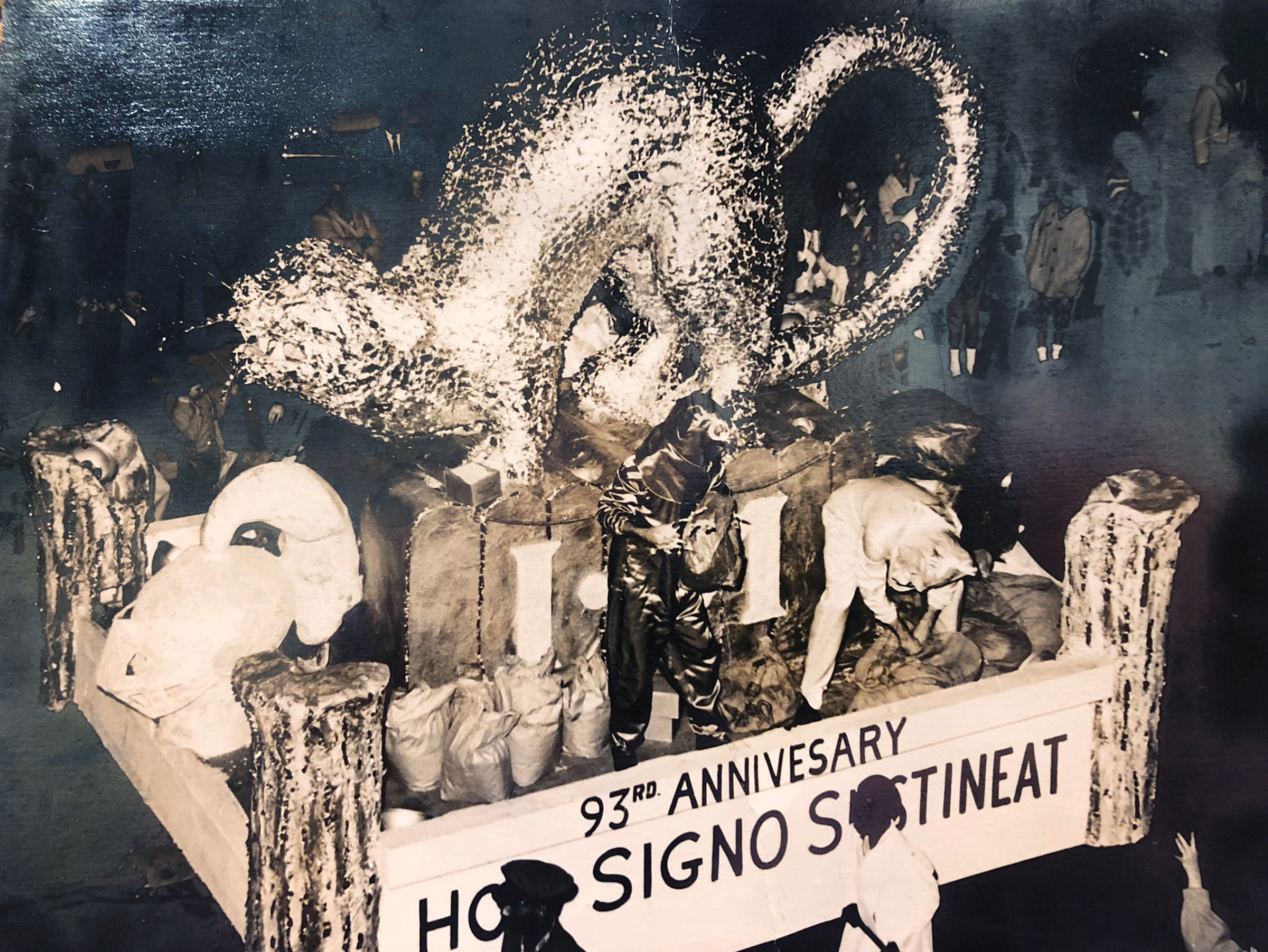
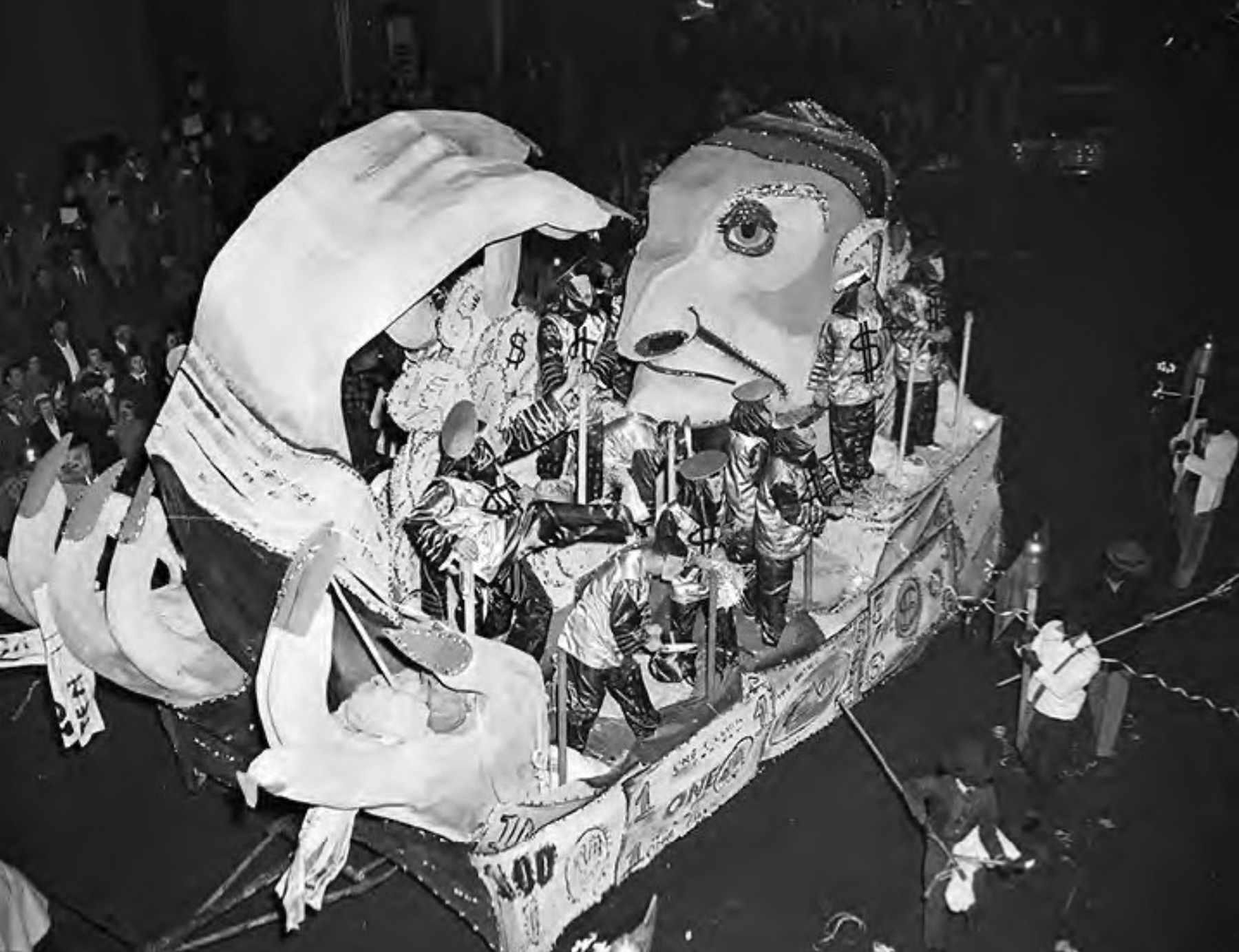
RIGHT A float in the Mystic Stripers parade of 1950. Photo courtesy Alabama Department of Archives and History. Donated by the Alabama Media Group
MoonPies’ real popularity as throws came in the early 1970s when the city of Mobile banned Cracker Jacks (the then-favorite Mardi Gras throw) because the sharp box corners were injuring spectators. MoonPies perfectly filled the Cracker Jack void. They were soft, easy to throw and catch, affordable, and had been a southern favorite for decades. They were an instant Mardi Gras hit. “Oh, to catch a MoonPie!” writes Marie Arnott, who attended parades in the 1970s. “Something that was actually edible and sweet! They were doled out sparingly and the chant in the crowd was always for MoonPies.”
Over the next few decades, MoonPies grew into a Mobile Mardi Gras institution. Today, each float rider throws roughly nine hundred MoonPies during a single parade, estimates Stephen Toomey, owner of the primary Mardi Gras supply store in Mobile. Toomey’s alone sells 4.5 million MoonPies each Mardi Gras season. And though the streets are littered with beads at the parade’s end, there are usually no MoonPies to be found.
MoonPie Legends
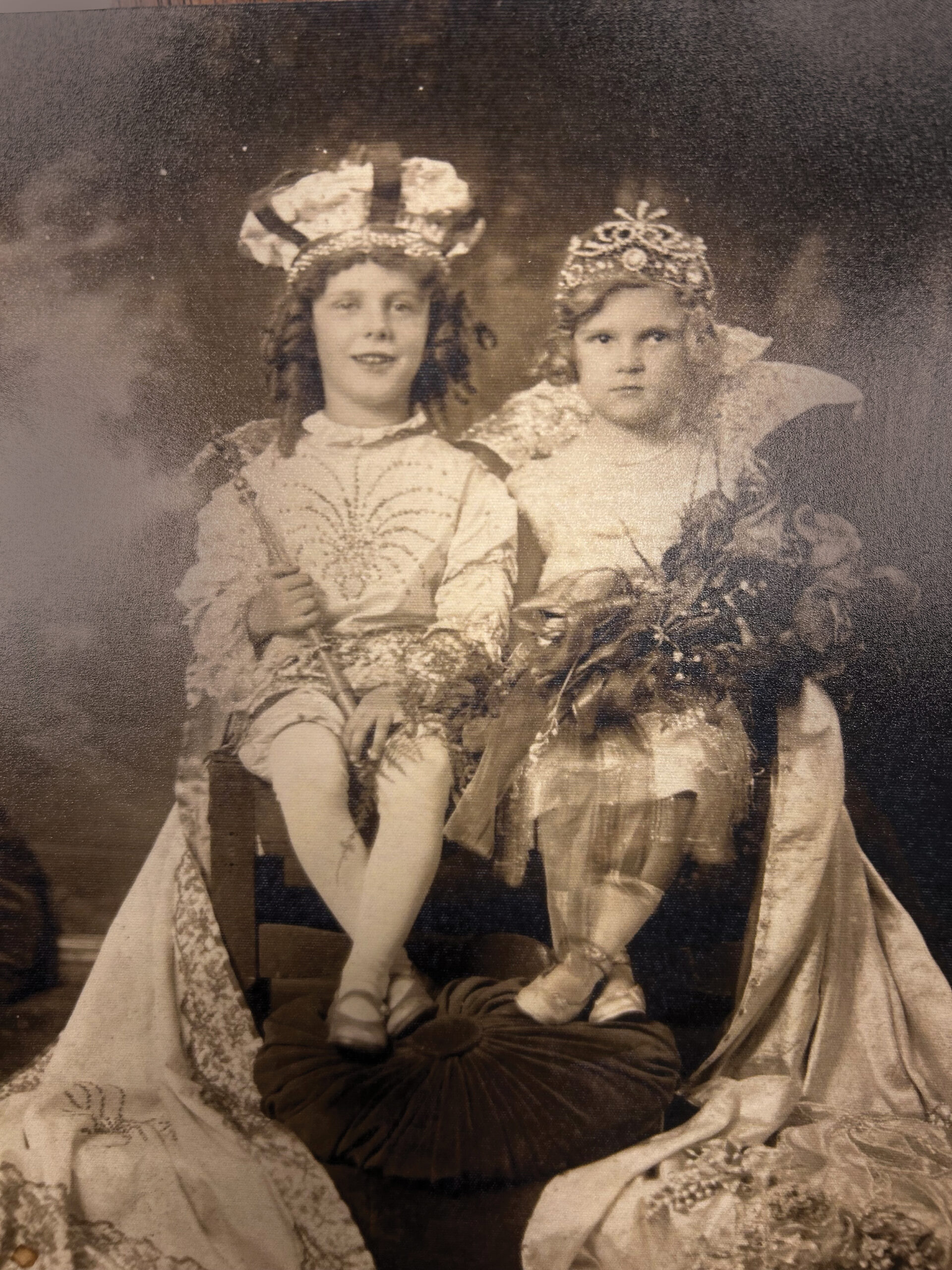
One legend claims that children on the Queen’s float in the Comic Cowboys parade were the first to throw MoonPies in a Mobile Mardi Gras parade in 1956. Another gives the honor to Jerry Curran, who rode in his first parade in 1958 on an Infant Mystics float that carried several employees of Smith’s Bakery, who tossed wrapped bakery products like coconut balls and cupcakes to the crowds. Before the next year’s parade, Curran visited Malbis Bakery, where his father worked, to ask if they had anything good to throw for Mardi Gras. Malbis made their own version of MoonPies, which Curran threw the following year, in 1959.
Referred to by his nephew Glen as “the granddaddy of MoonPies,” Robert “Bob” Harrison is also credited with being the first to throw the MoonPie. In 1967, Harrison was talked into joining the Stripers but had little money to spend on throws. At the time, he worked as a distributor for the Murray Biscuit Company and could obtain MoonPies at a low cost. He brought boxes of MoonPies to the float, a little embarrassed to do so, but the crowd loved them, and the next year, all of the Stripers threw MoonPies.
Another legend credits the Maids of Mirth with throwing the first MoonPies in the late 1960s. As the story goes, Louise “Sister” McClure and Elizabeth “Dibber” Lutz went to Tom’s Candy Sales in search of something different (and less costly) to replace the whole candy bars they had thrown in the past. As McClure relates, MoonPies “were so cheap — two or three boxes for a dollar, a lot less than some throws. We didn’t even try to get a deal from the store — we just bought a dozen or so boxes and started throwing them. They were easy to throw. You could take hold of the cellophane and flip them just like a Frisbee.” The crowd loved the MoonPies, especially the children who could easily catch them, so the next year, the whole float threw them, and soon other societies were throwing MoonPies as well.
Emily Blejwas is the director of the Alabama Folklife Association and author of “The Story of Alabama in Fourteen Foods.”