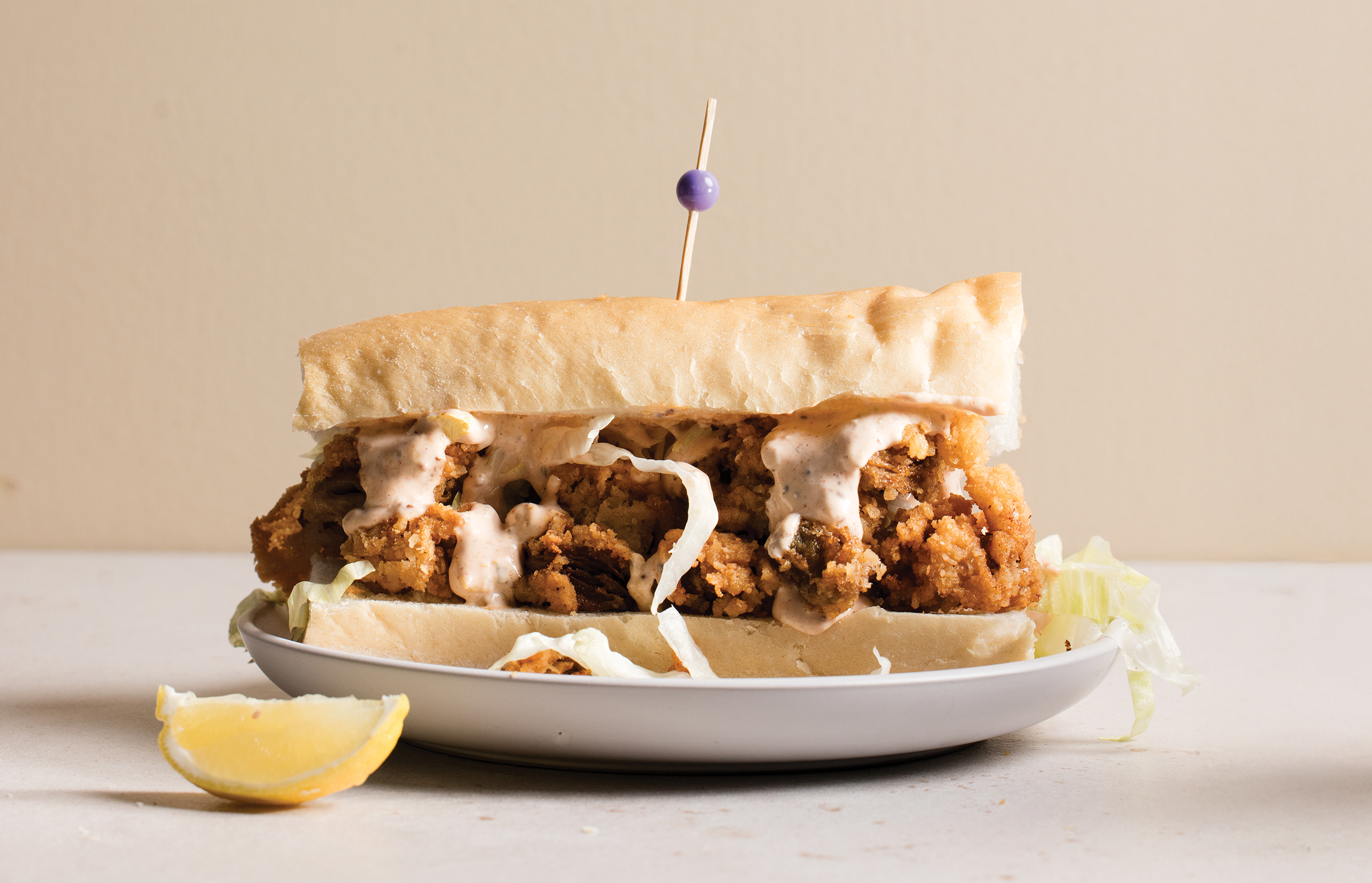
Many argue about the origins of the humble, but oh-so-satisfying oyster loaf, with New Orleans and San Francisco both staking their claim as the birthplace. The exact origins are unknown, and frankly unimportant, as it is clear that residents of the Bay area have been eating these delectable loaves for more than 150 years.
Today, they are found on menus from Downtown eateries to Causeway establishments and all the way to the Gulf beaches. They are most appreciated during Mardi Gras, when oysters are at their prime and a stomach needs a buffer from the alcohol soon to follow. As Carnival rolls in to Lent, the oysters remain on menus and the loaves are a perfect Friday supper for those abstaining — or indulging, depending on how you view it.
Some say the oyster loaf was first called a peacemaker, being the perfect bundle for an inebriated gent to carry home to his fed-up wife after a night on the town.
“The Gulf City Cookbook,” compiled by the Ladies of the St. Francis Street Methodist Episcopal Church in 1878, explains how the peacemaker was constructed. “Cut off carefully the end of a loaf of baker’s bread, reserving the end; scoop out the crumb inside the loaf, leaving the crust entire. Fill the loaf with hot oysters, fried as above, leaving room for slices of pickle. Carefully replace the end cut off.”
While oysters are considered a luxury item today, in early Mobile, they were plentiful, priced at just 25 cents per 100 bivalves. Mobilian and food history enthusiast William Peebles writes, “Once upon a time, (oysters) were one of the cheapest food sources available, to the point of being practically free to harvest. This places the oyster loaf in a particular class of food so humble that it could be enjoyed by just about anyone.”
“The Gulf City Cookbook” continues, “If the oysters are hot, and the loaf well covered, they can be carried quite a distance, or eaten some time after being prepared, without getting cold. This is nice for a hasty lunch or a late supper. One dozen oysters will fill an ordinary sized loaf.”
The loaf later evolved into what we now call a po’boy, sliced down the top and dressed with lettuce, tomato and some sort of sauce, be it tartar, cocktail or remoulade. The pickle is still a nice touch. And while it’s easy to order one to go, it’s also a simple sandwich to construct at home.
Today, most restaurants and home cooks in the Bay area use a cornmeal base for their seafood frying, but many old recipes call for a cracker meal breading. Unsure of what that was or what kind of fried oysters it would yield, we went down the proverbial rabbit hole of oyster recipes, tips and techniques to figure it out. We tried every method and ate oysters for days to get to the bottom of it. (It was a hard gig.)
While there might have been a time when cracker meal was sold in stores, the simplest solution (then and now) is to simply crush soda crackers into a fine, even powder. After dipping oysters in some kind of binder (milk, egg, etc.), you dredge them in the ground soda cracker meal and fry until golden brown, yielding an incredibly crisp exterior with a salty bite in the many nooks and crannies. While this method appears underutilized today, it produced delightfully crunchy oysters when sandwiched between French bread halves and slathered in remoulade sauce.
If you are new to making peacemakers at home, we’ve gathered several recipes, tips and suggestions from Port City cooks through the generations to help you get started. And the cracker meal version should definitely make an appearance in your kitchen this season.
A Step-by-Step Guide to the Perfect Fried Oyster Loaf
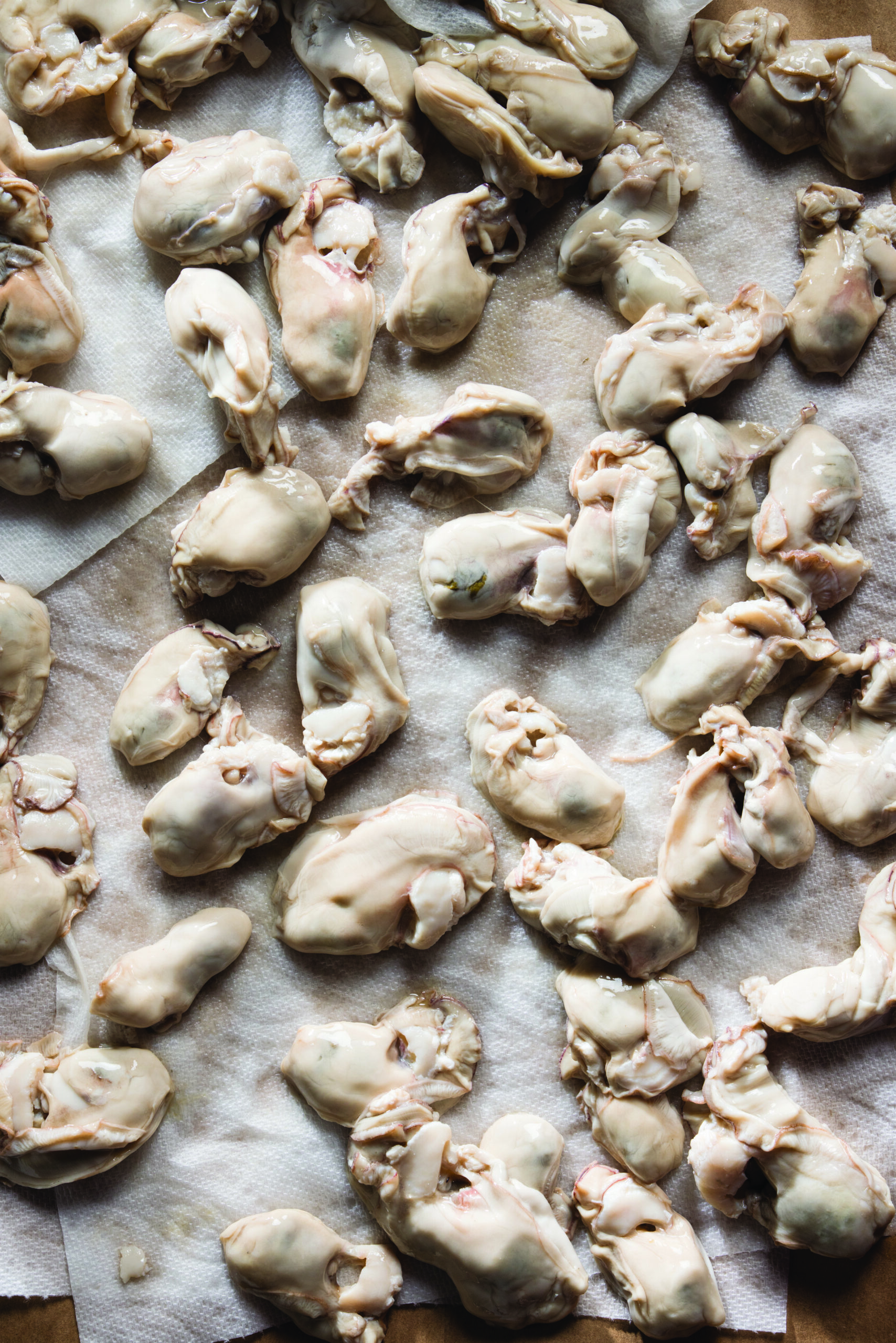
STEP 1: DRAIN
Completely drain the oysters on a paper towel.
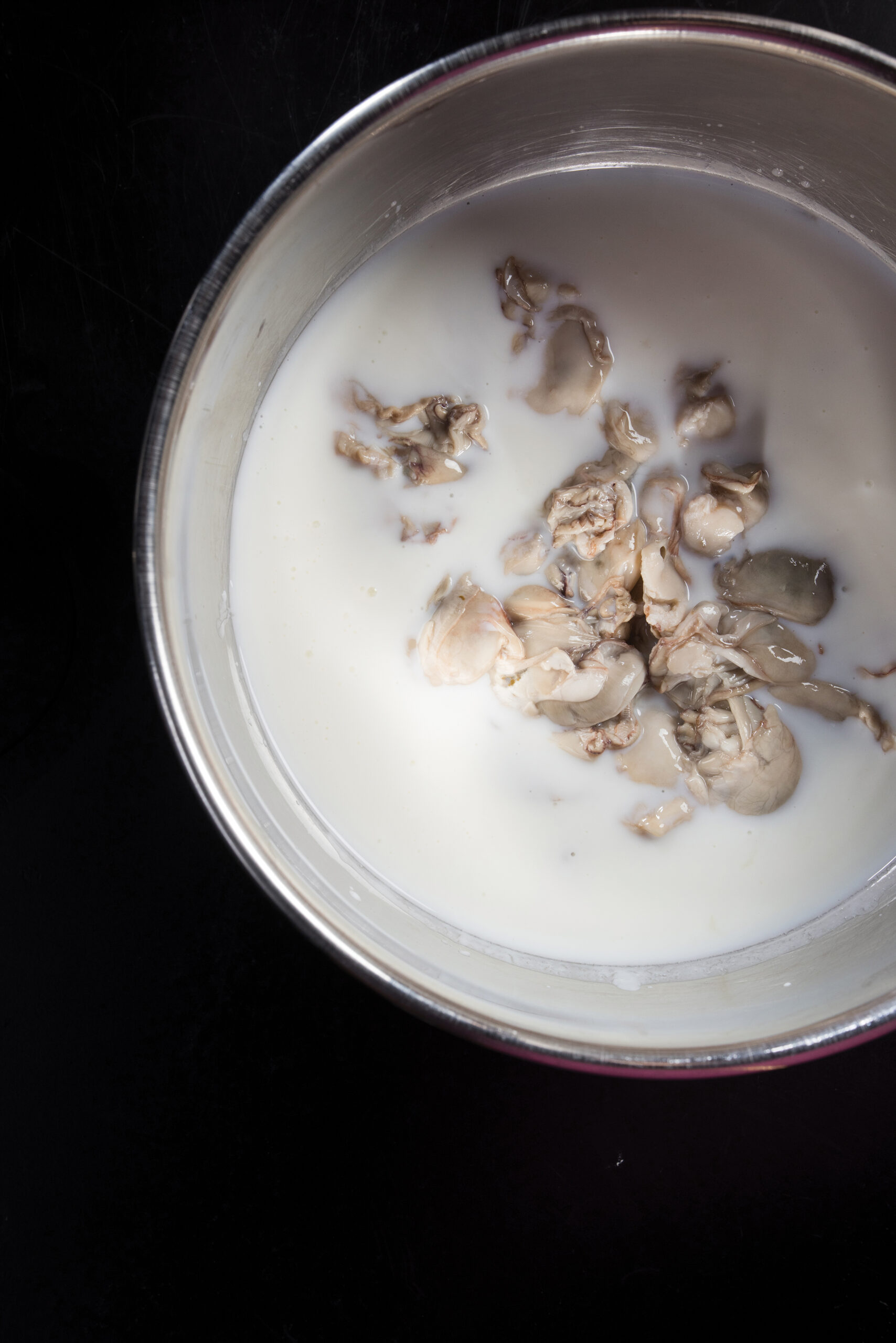
STEP 2: BINDER
Following the lead of local caterer Clifton Morrissette, we soaked our oysters in buttermilk for about 30 minutes for a tangy binder.
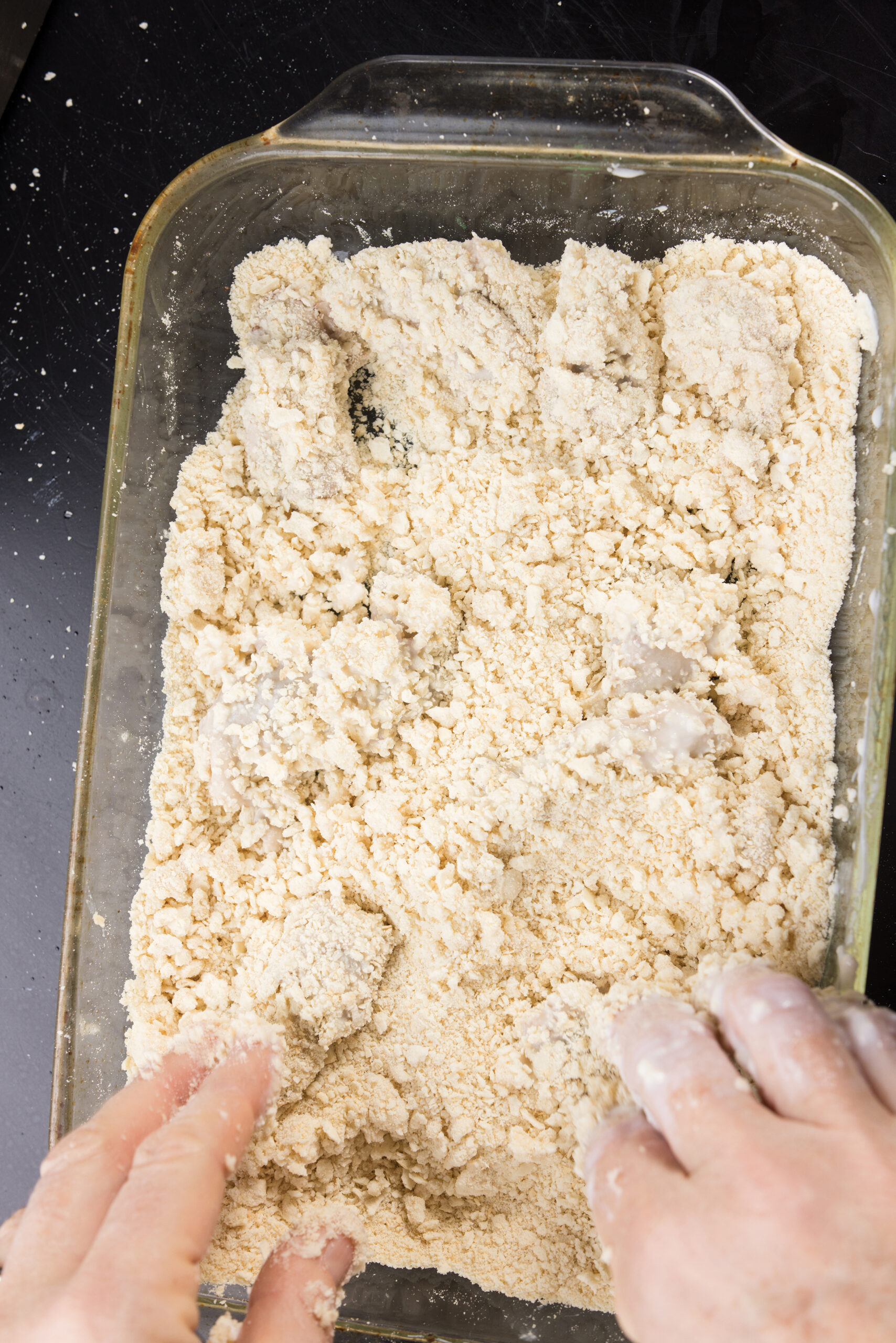
STEP 3: CRACKER MEAL*
Dredge the oysters in crushed soda crackers seasoned with salt, pepper and Creole seasoning to taste.
* You can make cracker meal by crushing Saltines or soda crackers in a food processor or with a rolling pin until they reach a fine, even consistency. The food processor produces the most even crumbs.
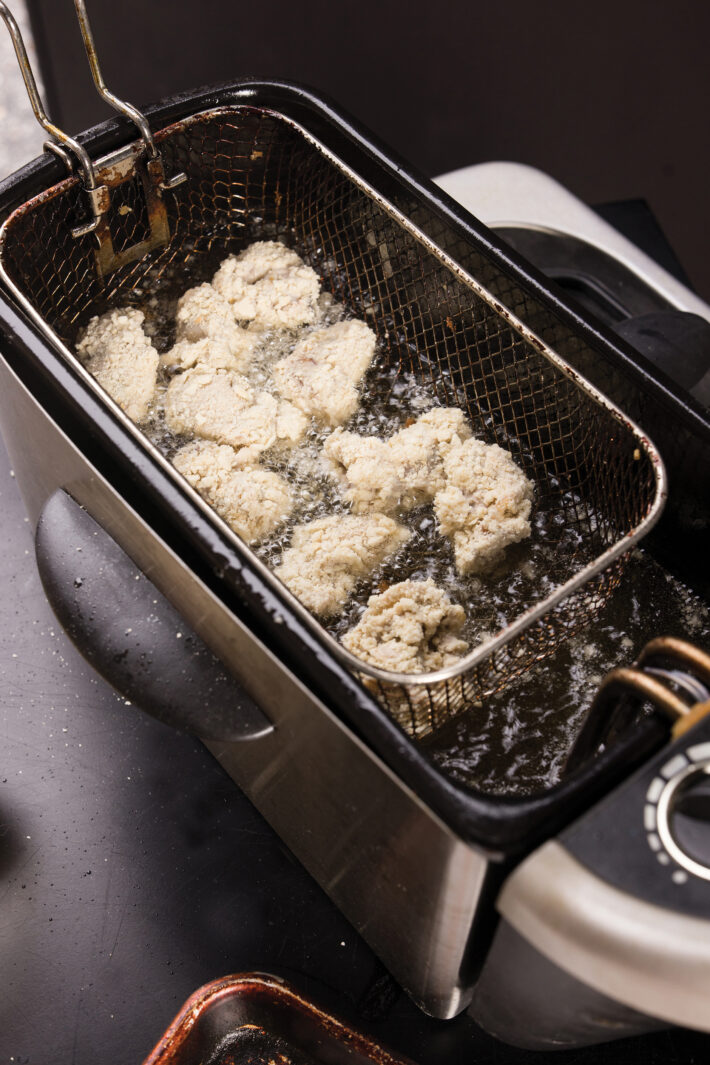
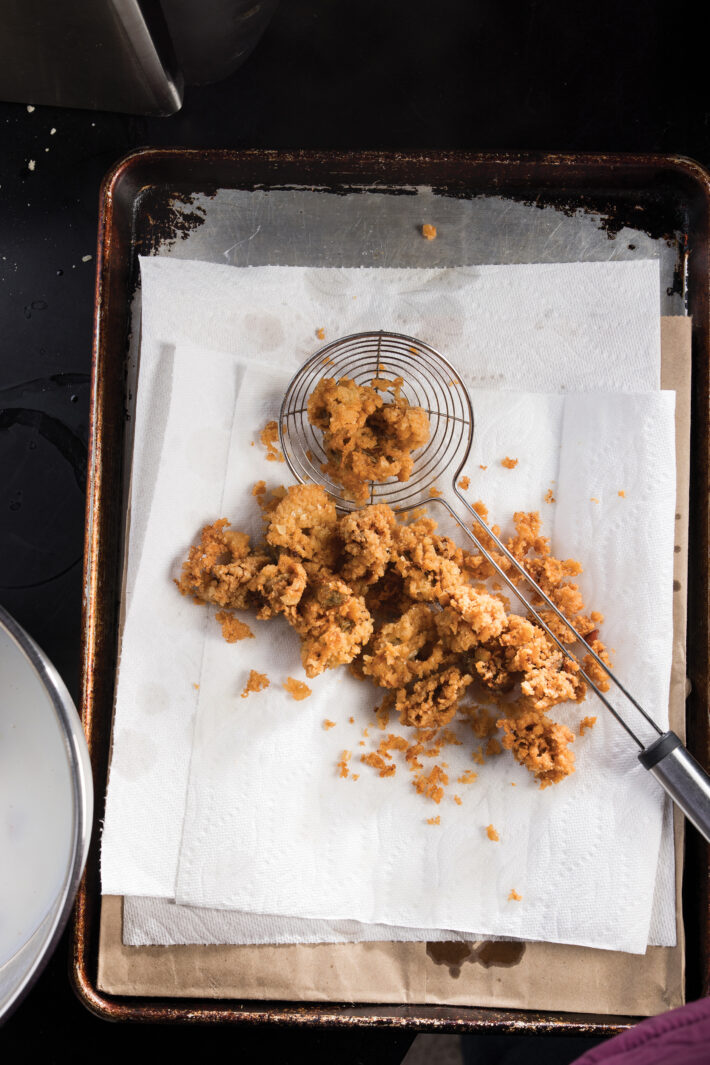
STEP 4: FRY
Deep fry oysters in vegetable oil at 325 degrees, being careful not to crowd. Stir once to ensure all sides are browning, but try not to disturb breading.
STEP 5: REST
Remove fried oysters to a baking sheet topped with a brown paper sack and some paper towels. Let any excess oil drip off, and add more salt if needed.
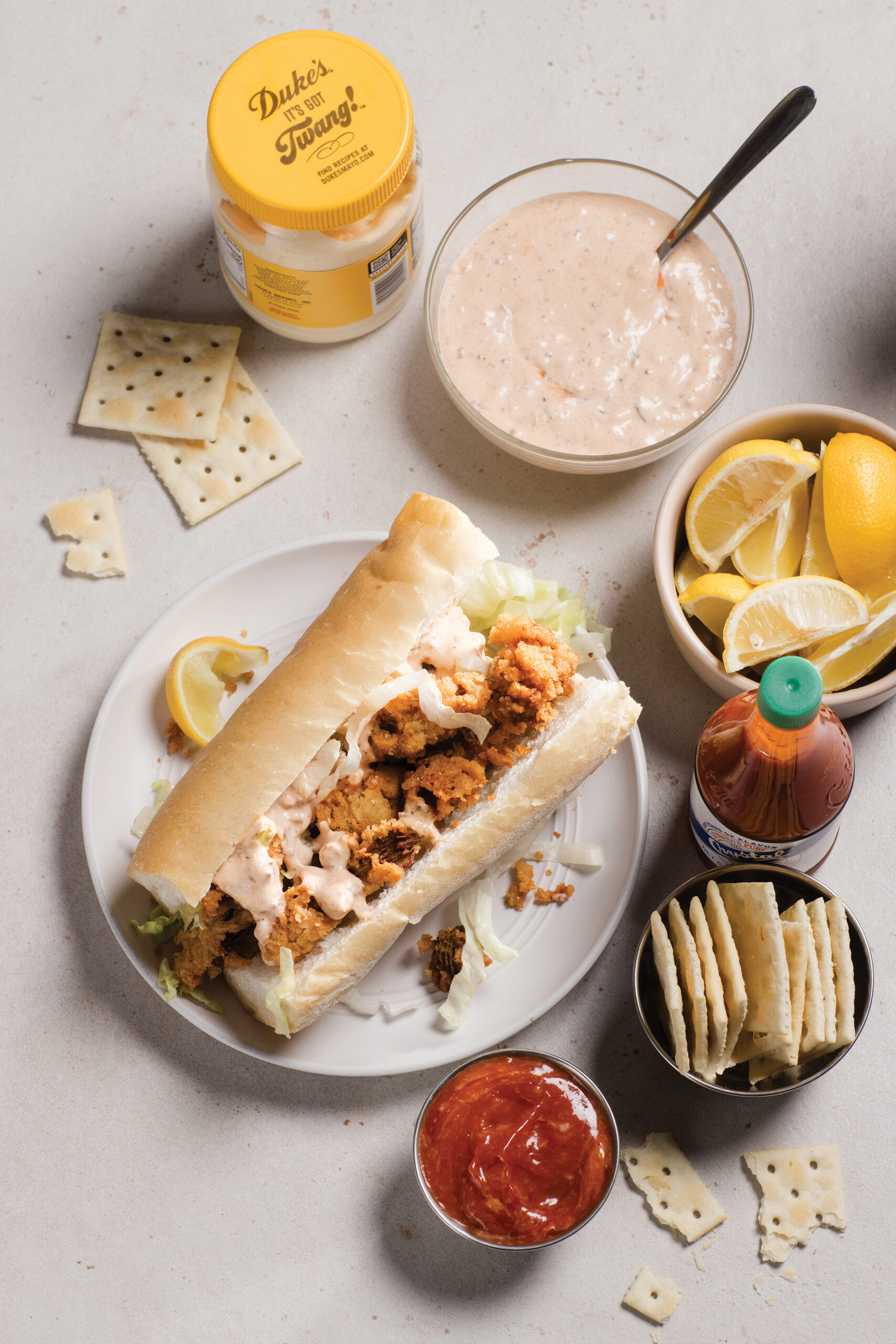
STEP 6: ASSEMBLE
We used Reising’s Poor Boy bread from New Orleans purchased at Rouses to build our po’boy, and topped it with shredded iceberg lettuce and a generous drizzle of remoulade.
Remoulade Sauce
MAKES 3 CUPS
Ingredients
2 1/4 cups mayonnaise
3/4 cup ketchup
1 tablespoon Tabasco
2 tablespoons lemon juice
2 tablespoons smoked paprika
1 tablespoon minced garlic
2 tablespoons Creole seasoning
2 tablespoons horseradish
1 tablespoon Worcestershire sauce
6 tablespoons minced cornichons
Directions
1. Combine all ingredients and mix well. Refrigerate several hours to let the flavors meld, then serve cold on top of a variety of seafood and sandwiches.
Frying Oysters in Years Past
How they did it in 1964
“Fried oysters are easy to prepare and superb if a few basic rules are followed. Drain them well on a paper towel. Some people roll them in cracker meal and some in corn meal. It is really a matter of taste, but add salt and pepper to whichever is used. However, the important things are the grease and skillet. An old iron skillet is best. Have plenty of hot grease and do not crowd the oysters in the pan. If the grease is not hot enough, or if they are crowded, they will be soggy. Given plenty of space and hot grease, they will be crisp and delicious.”
— Recipe by Mrs. John Brady from “Recipe Jubilee” published by the Junior League of Mobile
How they did it in 1878
“Select large oysters, drain and spread on a cloth to absorb all moisture. Beat well two or three eggs, and season them with pepper and salt. Roll some crackers, and dip the oysters in the egg and then in the crumbs, then again in the egg and cracker crumbs. Drop into boiling lard, sufficient to cover them, and cook till of a light brown.”
— From “The Gulf City Cookbook” compiled by the Ladies of the St. Francis St. Methodist Episcopal Church, South