A swamp holds certain men captive. Not captive in the same sense that the Mobile River Delta held some Union troops captive, lost forever in the abyss as they tried to make a night crossing during the Civil War but captive in the imagination. Some men fall in love with the swamp. She is their mistress, and she can be an irresistible siren.
As a young boy, growing up under the sprawling magnolia branches of the Eastern Shore, I spent many a day (and more than a few nights) on Mobile Bay. I knew where most every grass bed, submerged pylon and rock jetty was from Battles Wharf to Weeks Bay, and I caught more speckled trout, redfish and flounder than I could count.
Most days, I would fish alone. I lived too far away from friends to suit the conveniences of most moms, and it was rare that friends spent the night at our house. But I was sometimes up with the sun to chase those illusive South Alabama Grand Slams, and, most days, I didn’t mind being alone on the Bay. With cast after cast came thought after thought of one mischievous adventure and then another and, soon enough, my thoughts drifted to the north and to the Delta.
The Alabama River finds its origins at the confluence of the Tallapoosa and Coosa Rivers, about six miles north of Montgomery. She winds 318 miles, snaking her way to the Delta, where she receives the Tombigbee River, which brings a distant cousin, the Tennessee River, to the reunion, too. This confluence, like granny pouring two pitchers of Kool-Aid together to save space in the “frigerator,” mixes the muddy browns and dark blacks of the two rivers together and forms the northernmost point of the second largest freshwater delta on the continent. And, for the next 42 miles or so, all the little girls of the family surrender their identity to their bigger sister and namesake: the Mobile River. Massive in girth and barreling with a head of steam that some ships can hardly overcome, the Mobile is the primary artery of the Delta. Flanked to her east by the equally massive Tensaw River, the two siblings draw down to the south and find the head of Mobile Bay. There, the fast and wide waters of the rivers slow and spread out… drifting almost aimlessly to Fort Morgan and Dauphin Island, picking up rivers Fish, Dog and Fowl along the way, before they ultimately give all of themselves into the abyss of the Gulf of Mexico.
Cast after cast, as a young boy standing on the wooden floor of that old blue and white Stauter-Built boat, my mind drifted north to the Delta. But it was forbidden.
“Don’t you let me catch you driving up in that Delta. You know an entire regiment of Union soldiers died in the Delta because it is so big that, once it swallows you up, you never find your way out.” My mother’s admonitions were as serious as they were unbelievable, but I was 12, so I believed her. I think she did, too.
I did, though, hear some version of that tale spun more than once. My Cub Scout Troop leader told us that the Union soldiers advancing from Fort McDermott to Blakeley in pursuit of the fleeing Confederates held hands in the darkness of night as they marched in single-file lines through the midnight marsh and swam the black rivers. One soldier felt a tug from the soldier behind him and assumed he had stumbled in the mud. Asking, “You okay, buddy?” the first soldier thought little of it when he heard no response. Hands clasped, they marched another quarter of a mile to the banks of the Tensaw. In the light of a riverside camp, the lead soldier found that all he held on to was a blue-clad arm. The rest of the body of the soldier who marched behind him was torn away by what was, no doubt, a very large alligator.
Possible? Maybe. Plausible? Probably not.
But still, I have told that same story for true almost all my life until I came to better understand alligators.
Make no mistake, there have always been alligators large enough to eat men that roam those sawgrass fields and muddy marshes of the Delta. But marching through it holding hands in single file? That is a further stretch than the rest of the story!
And so, for years, I stayed away, obeying my mother and never venturing further north on the Bay than Daphne. At times, I would sit in the boat just drifting, seeing the southern edge of the marsh fields of the Delta just a few miles away. Well within my reach and an easy motor from my drift, I would daydream about what adventures must abound. Ghost fleets of hundreds of Liberty ships anchored in post-war mothball fields; the Battery, a Civil War era ammunitions depot (which I think might actually be the backside of Fort McDermott); the entrenchments along the Tensaw at Blakeley; the fish camps; the gambling houses; the monsters. There was so much lore to draw the attention of a young boy desperate for something more.
Yes, the Delta, she called.
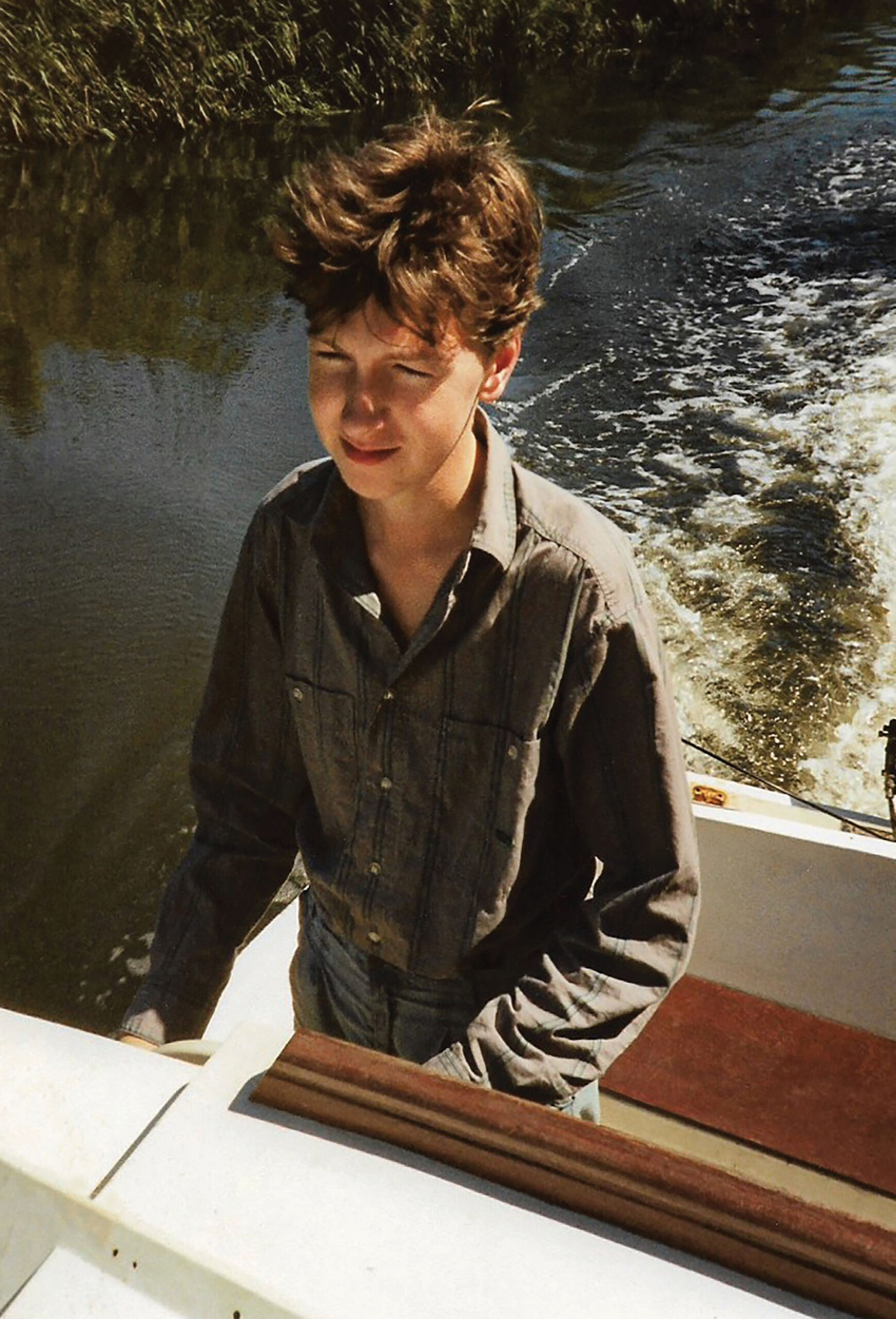
But it would be a few years, still, before I finally found the right combination of courage and defiance to disobey my mother’s instructions, and I’ll never forget the freedom and exhilaration that came from that first trip past the forbidden boundaries. With salty spray licking through my wind-whipped hair, the orange and white two-stroke ‘88 Special Johnson on our 16-foot center console Aquasport that was born the same year I was whined at full throttle as I blew past the boat launch at Meaher State Park and motored up the Tensaw. Knowing I was disobeying my mother was as much a part of the exhilaration as was the idea that I was venturing into the great unknown. It was a journey into the abyss of manhood.
Passing a few fishermen drifting down the river, I proudly raised my hand and smiled as I motored by. Making sure they saw full well that I was a sailor of any “reach” and that the Delta was of no intimidation for the skill and experience of an old salty dog like me, I waved proudly. One of the fishermen puffed a corncob pipe. He gently pulled the pipe from his mouth and nodded, as if to give respect to the boy who passed. The other raised his right arm, not to a wave, but a simple gesture to say, “Hello,” and then they went back to fishing.
As for me, I made way straight up the river, eager to see Gravine Island, a place I had heard my brothers both tell tales of. My oldest brother is 14 years older than me, and my middle brother is 12 years older, so any tale they spoke was spun in my ears on fibers of gold. And to hear them speak of Gravine Island, it must surely be a mystical place. A place where pirates gathered and searched for booty and scantily clad women congregated so that the booty might be found. A place where boats parked for miles and beachcombers lined the sand white flats.
Gravine Island is a phenomenal natural anomaly. A mile-long island of oaks, tupelos, cypress and other water loving trees, the crescent-shaped island curves upriver and sharpens to a point at its northernmost. There, from a higher ridge, a white dune some three or four stories tall falls out from under the congregation of trees at the tip of the north end and rolls down into a flat, sandy beach before it melts into the Tensaw River. It truly is a bleached oddity amongst the greens and browns of the swamp.
But I would be lying if I told you I motored to her beaches to see her sandy shores. No, on the contrary, my two tugboat brothers had told tale of the fair maidens that lay on her shores, and this young pirate wanted to see the Corsair Wenches — that is, those sultry women of few morals and fewer clothes, all eager to come ride in the boat, I was sure.
I didn’t know where Gravine Island was, except to say that it was to the north on the vast running river that is the Tensaw, and the white sand dunes were unmistakable. Ten minutes further up the river, I found a split where the Tensaw continued north while another river joined from the west, and an island formed to the east of the merger. I felt a tinge of excitement as I could clearly see the island curving to a crescent, just as I had been told.
I pushed the throttle harder to the console, as if my extra effort would make the boat go faster, and I ducked down below the windscreen of the console to encourage better aerodynamics… “Faster, faster, faster,” I said to myself with excitement.
And there, a few hundred yards ahead, I could see creamy white hanging down beyond the trees, slowly growing more and more exposed. And there, in front of God with all its glory, I stared in wide-eyed wonder and awe at… absolutely nothing.
No wenches. No bikinis. No nothing. Not even a boat. Just a half dozen or so empty beer cans strowed on an orangish-cream colored beach, a rusty lawn chair and a log. As sailing goes, it is accurate to say that every ounce of wind fell from my sails, and I was utterly despondent at the result of my journey. I shut the motor off and drifted just north of the island, back to the beach. I stared in dejection at the absolute desolation of the place and cursed my brothers for their wicked deceptions.
“It was all for nothing,” I lamented. “I’ll have to lie about the gas being gone and how long I’ve been away, all for nothing.” My frustrations had completely replaced any exuberance I once felt, and anger swept through my veins. At 12, I was confident I could take my oldest brother in a fight. He was “old” at 26 and, therefore, slower and weaker. And, if given enough time and a little machismo, I could have convinced myself that I could have taken my middle brother, too, for anger and frustration will convince any man of many things that are not true.
The boat drifted aground and stopped in a foot or so of water, just 15 feet from the sand shoreline and maybe 50 feet from the log and pile of beer cans that lay down the beach. Growing up, my mother taught me to be a good steward, and, out of habit and without any consciousness of thought whatsoever, I hopped out of the boat and ventured to pick up those discarded beer cans. Halfway to the pile, the log, some 12 or 14 feet long and as big around as a horse, raised its head and stood up. Standing in ankle-deep water, I stared face-to-face with what surely was the very alligator that ate those Union soldiers.
Close enough to feel his breath on my face — or so it seemed at the time — I turned and ran as fast as I could to the safety of the boat. By the time I found my way, the alligator was gone. But make no mistake, I knew he had set his sights on my tasty loins, and he would have me for supper if given the chance. I cranked the motor and floored the throttle, even considering a few times as I blasted down the river that he was chasing me.
And, so it goes, my introduction to the Delta and my love affair with her. I was lost. Not lost inasmuch as I knew well my way home. Lost, though, in that I lay in bed that night with visions of nothing but the vastness, the remoteness, the wild of the Delta. It truly was “powerful enough to draw me away from the protective counsel of my mother and into the abyss of the place where lost men vanish forever,” and I am still lost in it today.
A native of the Eastern Shore, Walt Merrell is a father, attorney, author and lover of the great outdoors.