Jimmy Buffett was our troubadour and our bard. Over the course of more than six decades, he joyfully spread the pleasures of beach life through his unique musical style, variously labeled Gulf and Western, Trop Rock, Shrimp Boat Rock and Island Escapism. In hits like “Life is Just a Tire Swing,” “Tryin’ to Reason with Hurricane Season,” “Havana Daydreamin,’” “Fins,” “Pascagoula Run,” “I will Play for Gumbo” and “A Pirate Looks at Forty,” as well as memorable covers of “Biloxi” (Jesse Winchester) and “Gulf Coast Highway” (Nanci Griffith), he sang of shrimp boats, oysters, sharks, seagulls, palm trees and docks and of colorful characters like Jean Lafitte, Marie Laveau and Phil Clark, the latter-day Key West drug smuggler and rogue.
Most people think of Jimmy Buffett as a musical artist, and little wonder. During his long career, he released 58 albums which sold over 20 million copies, and he maintained an aggressive touring schedule that covered the world. But the range of his endeavors was far broader and, taken in toto, helped turn his relaxed beach bum philosophy into an empire. He wrote seven books — fiction, memoir and children’s literature — three of which reached number one on the New York Times Bestseller List. Under his signature Margaritaville brand, he opened restaurants, hotels, bars, resorts, a casino, retirement communities and a cruise line and offered food and beverage products, as well as an extensive selection of merch ranging from t-shirts, hoodies, caps and flip-flops to straw hats. But even at his busiest, he never ceased to yearn for “mother ocean.” As his friend and fishing buddy Carl Hiassen told Marlin magazine shortly after the artist’s 2023 passing, “When Jimmy wasn’t onstage, he was on the water, or heading full speed to the water.”
No one ever doubted Jimmy Buffett’s Gulf Coast bona fides. In fact, his seventh paternal great grandfather, Jean-Baptiste Baudreau dit Graveline, was one of French Louisiana’s earliest settlers. Born in Montreal in 1671, he hove into the Gulf with Pierre Le Moyne d’Iberville on board the 48-gun ship-of-the-line La Renommée in 1699. A personable and capable young man, Baudreau lived on the Pascagoula River, where he served as a militia captain and helped lay out Old Mobile in 1702 before settling on Dauphin Island. He lived in a modest two-room cabin there, had four slaves (three Indian and one African), kept a vegetable garden, raised a growing herd of cattle and prospered. Graveline Bay on the island’s north side is named for him.
Throughout his long life, Baudreau displayed a restlessness and business acumen that his mid-20th-century musician descendent would inherit in spades. In 1707, he acquired a small brigantine named La Maguerite and transported a cargo of furs to France, returning with merchandise and settlers for the struggling colony. He also traded cattle and pelts throughout the Gulf and Caribbean basins and knew the cobblestoned streets of Havana and Vera Cruz as well as the rutted byways of Pascagoula and Old Mobile.
On the domestic front, Baudreau fell in love with a Choctaw Indian chief’s daughter named Suzanne in 1717, with whom he had a son. A decade later a priest formally married the pair in Mobile, thus legitimizing the boy. Baudreau’s partnership with Suzanne gave him critical trade access to the Indians of the interior, who considered him family. In fact, French Louisiana depended upon such liaisons for its very survival. The Indians taught the settlers valuable and practical skills and provided an important buffer against hostile tribes allied with the English to the north and east.
Besides his widespread mercantile and agricultural activities, Baudreau also acted the part of developer when he grasped Bayou St. John’s potential for the colony’s growth. This small stream links New Orleans with Lake Pontchartrain, and in 1726, Baudreau won land concessions from the Conseil Supérieur along both its banks in exchange for clearing the channel of trees and debris. Death finally stilled his prodigious energies at age 90.
Though intrigued by his colonial ancestor and proud of his legacy, Jimmy drew his greatest inspiration from his grandfather, James Delaney Buffett Sr., for it was that larger-than-life figure who gave him his claim to fame as the “son of a son of a sailor.” As he recalled in his 1998 memoir, “My grandfather… was my Long John Silver, full of tales from the high seas and far-off worlds that ignited my imagination.”
James Buffett’s earliest days could have come out of a Jack London short story. Born in Nova Scotia in 1887, he grew up surrounded by lobstermen, farmers and coal miners. At the tender age of 16, anxious to search for his purportedly shipwrecked brother, he jumped out of his bedroom window and joined a whaleship’s company as cabin boy. He subsequently voyaged to the Arctic and Antarctic on months-long seal hunts. Toughened and matured by these early experiences, he made his way to the Mississippi Gulf coast around 1916. The area was then experiencing a lumber boom, with teeming logging camps, humming sawmills and big three- and four-masted schooners and barkentines hauling logs, planks, barrel staves and roof shakes all over the Gulf and Caribbean.
Young James found work as a wind captain sailing out of Gulfport and Pascagoula for points south. In between trips he stayed at a local mariner’s hostel, where he caught the eye of the owner’s 17-year-old daughter, Hilda Seymour, “a dark-haired beauty” according to Jimmy’s mother, Peets. Enthralled by the seaman’s personality, young Hilda left a note in his room: “Why don’t you talk a little more? You always sound so good.” After dinner, the couple held hands and strolled along the Mississippi Sound. They eloped in 1918 and eventually had two boys, James Delaney Jr. and William, and two girls, Patricia and Katherine.
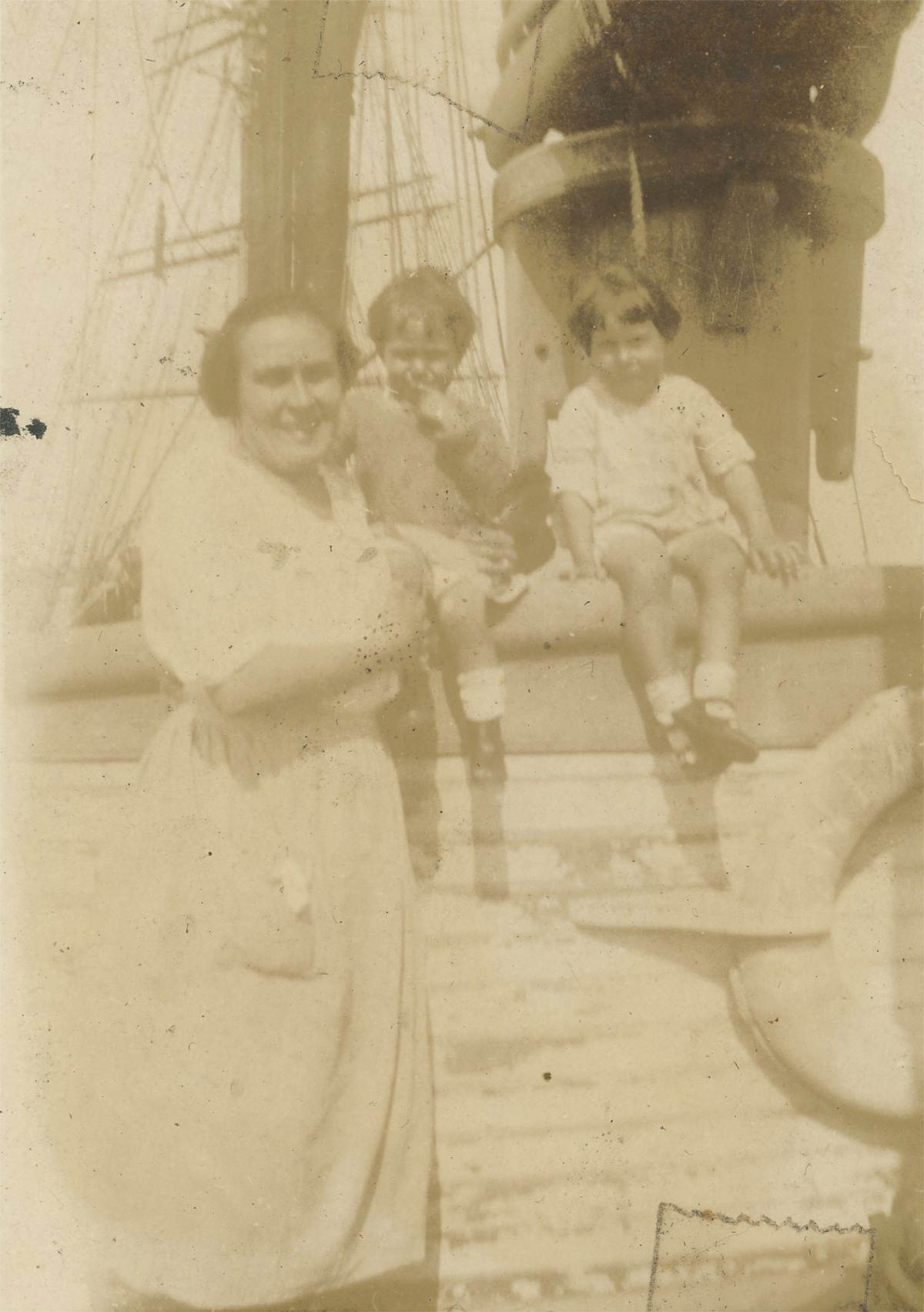
LEFT A faded picture of another age: Hilda Buffett with J.D. Jr. and Patricia on board a sailing ship, circa 1922. Little J.D. took his first steps on a barkentine in Havana harbor.
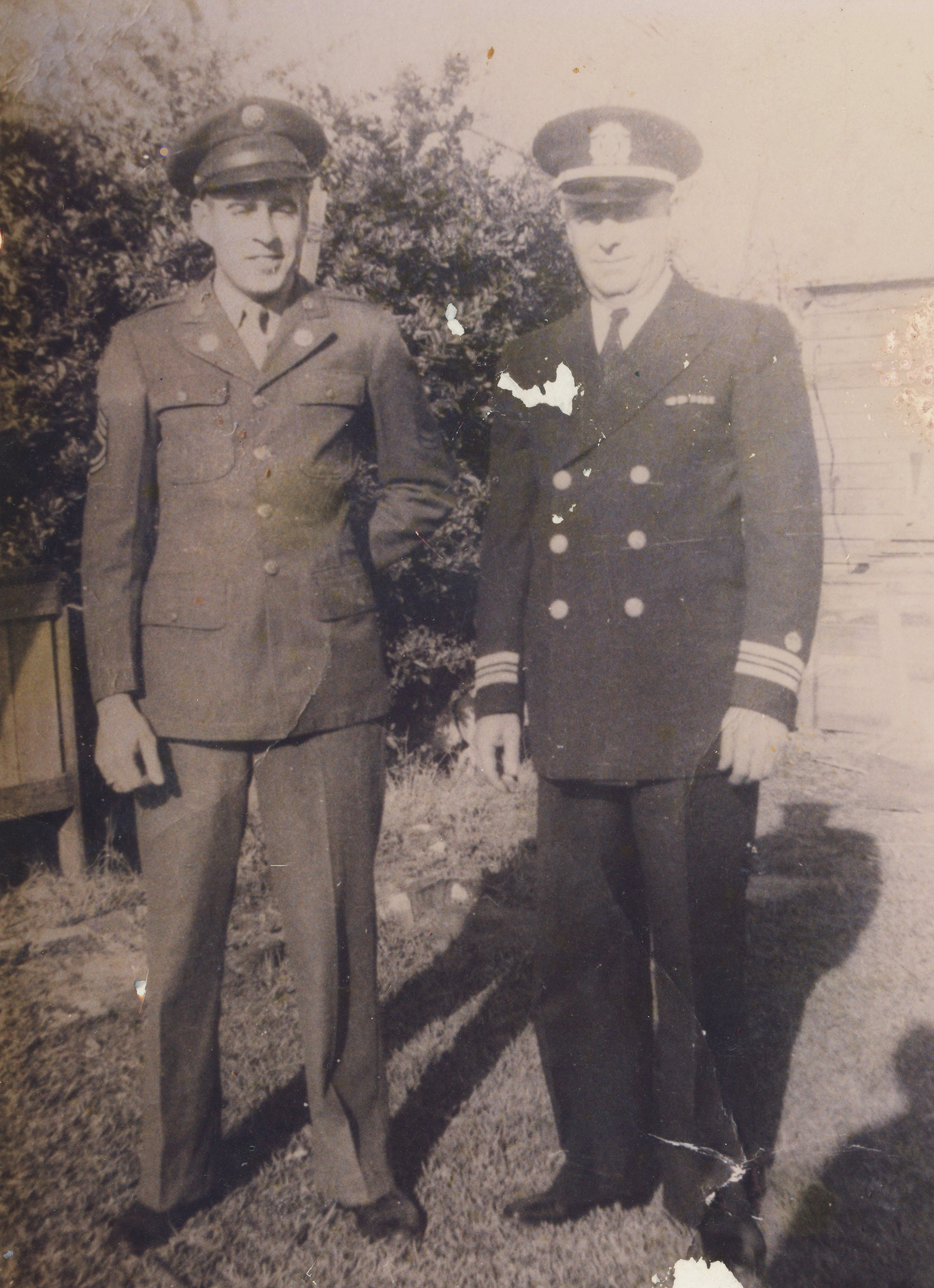
RIGHT Master Sgt. J.D. Buffett Jr., left, and Capt. James Delaney Buffett, right, circa 1945. Images courtesy National Maritime Museum of the Gulf
Eager to stay competitive, Capt. Buffett worked on every kind of vessel he could and soon proudly bore the title of master mariner, one of only a few licensed to command sail, steam and motor vessels. According to everybody who met him, James thoroughly looked the part of an old salt. The 1940 Census recorded that he stood 5’9”, weighed 170 pounds, and had a ruddy complexion with grey eyes, brown hair and a scar at the center of his forehead. Peets recalled first meeting him when she dated his son, James Delaney Jr. The family had gathered at an old riverside cafe in Pascagoula. As Peets described the occasion in the September 1986 issue of this magazine, the big round table groaned under platters of “steaming pink shrimp and russet-colored crabs,” with “frosty beer mugs” at each setting. She found the captain a “weathered seafarer — except he was shorter than I expected — about my height. His face was tanned and deeply lined, his dark crewcut had hints of gray at the temple, and under his crisp, white Arrow shirt there was a suggestion of a pot belly.” She was especially struck by his grey-blue eyes, which “seemed to twinkle even when his expression was serious.” Jimmy also remembered their arresting color in a 1980 Miami Herald interview and added, “He could cut you down with those eyes.” If the old sailor seemed intimidating, no one doubted his ability to bring his ship and his people home in any emergency.
During the 1920s, Capt. Buffett worked hard, running cargoes of lumber, coal, salt, iron and guano all over the Gulf and Caribbean. From 1923 to 1927, he commanded the four-masted schooner Chiquimula, named for a region in southeastern Guatemala. One of his most harrowing experiences at sea occurred on board that vessel during a trip from Cuba to the Canary Islands. A strong hurricane hit, and in an interview with a Press Register reporter in 1949, the good captain recalled that “angry waves washed across the decks. It was nip and tuck for days, but the ship won out, although her timbers were strained and she developed a bad leak.”
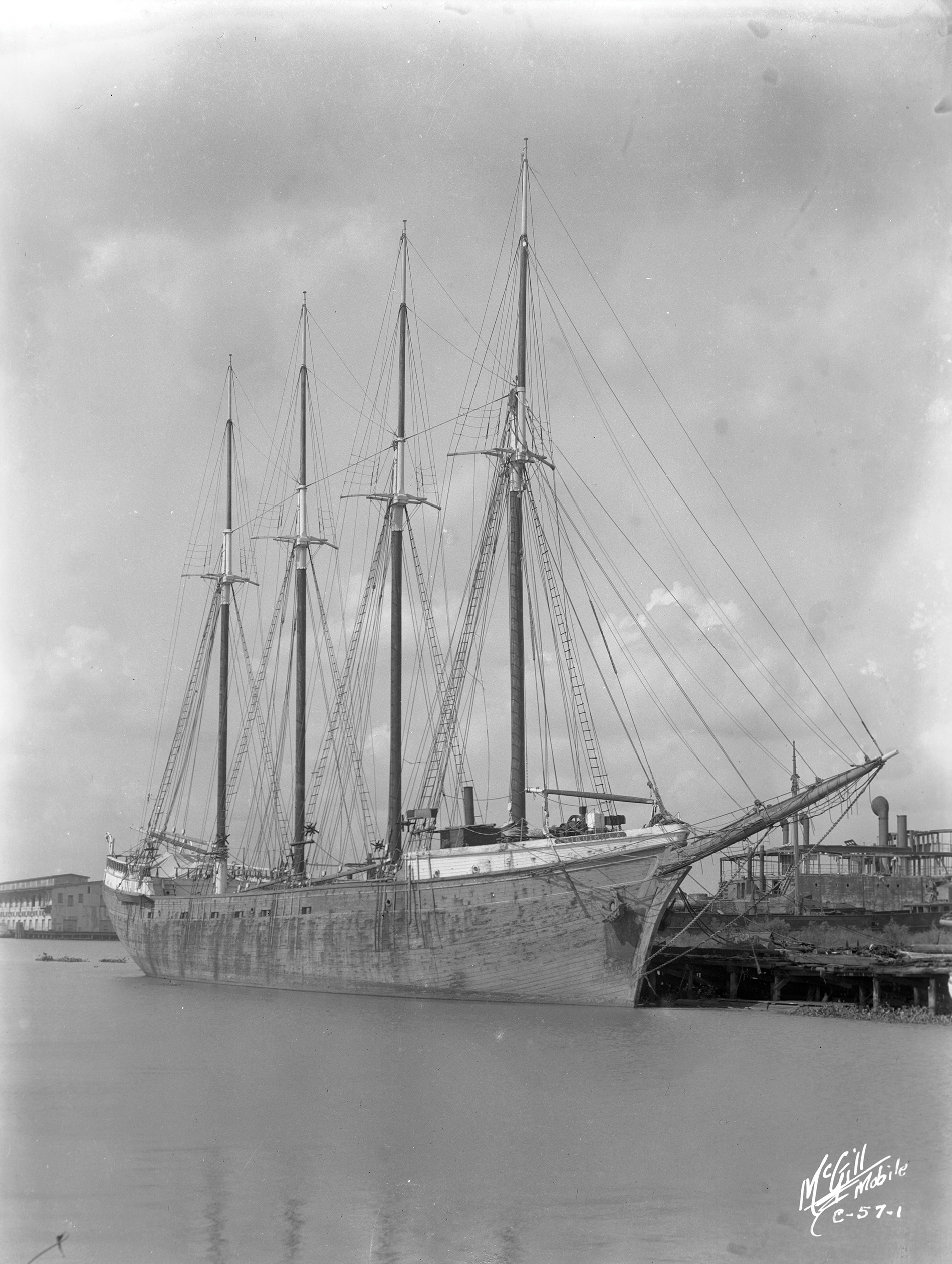
RIGHT The Chiquimula during her lumber-hauling heyday in Mobile harbor, circa 1920. Image courtesy Doy Leale McCall Library
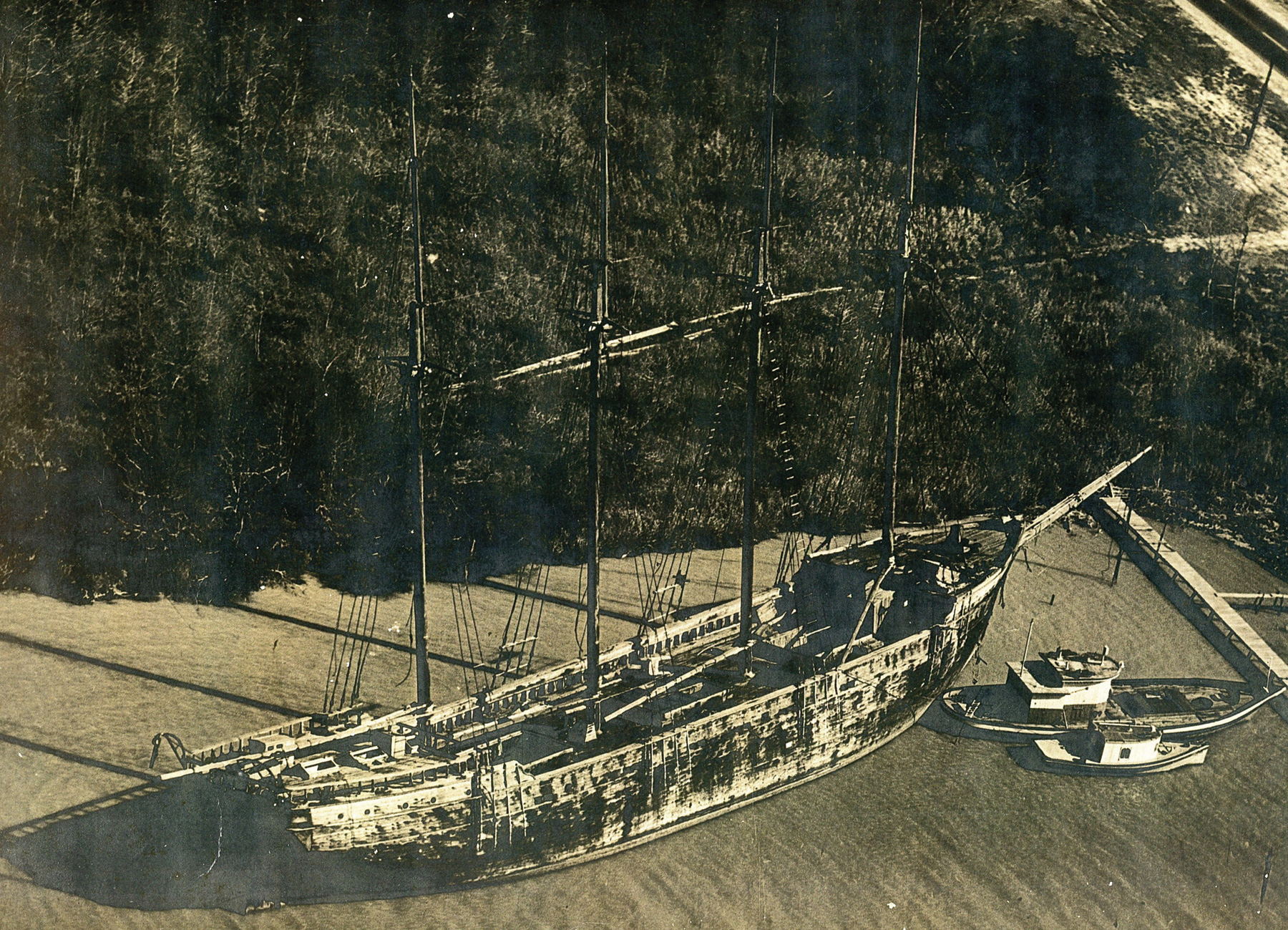
After her short but eventful career, Chiquimula entered Mobile Bay lore when a contractor towed her into Shellbank River at Spanish Fort to serve as a dormitory for men building the Causeway. Afterwards, developers intended to convert the schooner into a restaurant, but vandals burned her to the waterline in 1953. When the Press Register reporter asked Capt. Buffett about rumors that she had been a rumrunner, he scoffed that she was “too slow and too big for such service.”
On the eve of WWII, Capt. Buffett commanded the SS Delmundo for the Delta Line, carrying cargo and passengers between New Orleans and Latin America. He retired shortly thereafter, but with the U.S. entry into the war and the need for experienced mariners, he rejoined the Merchant Marine. During the war, he captained Liberty ships, ferried American troops back to the U. S. from Okinawa, and then immediately afterwards returned displaced persons to their homes. On one such trip he departed Mobile in command of the SS General R. L. Howze, a 522-foot, 9950-ton troopship capable of carrying 3,500 soldiers and the largest vessel up to that time to visit the Port City.
Late in life, the master mariner reflected on his lengthy career in several newspaper interviews. He drew a sharp contrast between the sailors of yesteryear and the modern era. “The type of men going to sea today wouldn’t get near the waterfront in my day,” he remarked. But despite the storms and hard knocks he had experienced on board everything from windjammers to steel-hulled troopships, he praised maritime service. “It’s a fine life, a clean life and there’s always something exciting happening.”
After Capt. Buffett’s 1970 passing, Jimmy reflected, “My grandfather was a big influence on me. He was a sailing captain, and when he’d come back, I’d go down and listen to his stories. He’d talk about places like Madagascar and Mozambique, and to an 8-year-old they’d just ring, they were so exotic.” The smitten grandson beautifully paid homage to his grandfather in his 1976 ballad, “The Captain and the Kid.” Speaking of the song in his 1980 Miami Herald interview, Jimmy declared, “Every word had to be right to portray in three minutes what this marvelous man was all about and what he meant to me.” Despite the song’s popularity, Jimmy only sang it when he felt the mood was right.
Jimmy’s father, James Delaney Jr., was born in 1919. One of the loveliest stories in Buffett family lore concerns his first birthday celebration. Capt. Buffett had taken his young wife and baby with him on a short trip to Havana. Their vessel, a barkentine named the Monfalcone, anchored in its historic harbor, surrounded by El Morro castle and the city. In preparation for little J.D.’s party, the cook baked a cake, and Hilda dressed her boy in a white sailor suit with blue piping and a star on each collar. At that point, the baby pulled himself up and took a few tottering steps across the deck. Overjoyed, Capt. Buffett ordered all Monfalcone’s flags run up the halyards. When the other captains around the harbor signaled to ask the reason, Capt. Buffett replied that they were saluting his son’s first birthday. In response, all the other ships in the harbor ran up their flags, too, where they fluttered against the azure sky.
The family lived in Pascagoula, though Capt. Buffett was frequently absent on trips. J.D. attended local schools and graduated in 1939. Just before Pearl Harbor, he met a vivacious and independent-minded young woman who worked as a secretary at Ingalls Shipyard. Her name was Mary Loraine, but her friends called her by her last name, Peets.
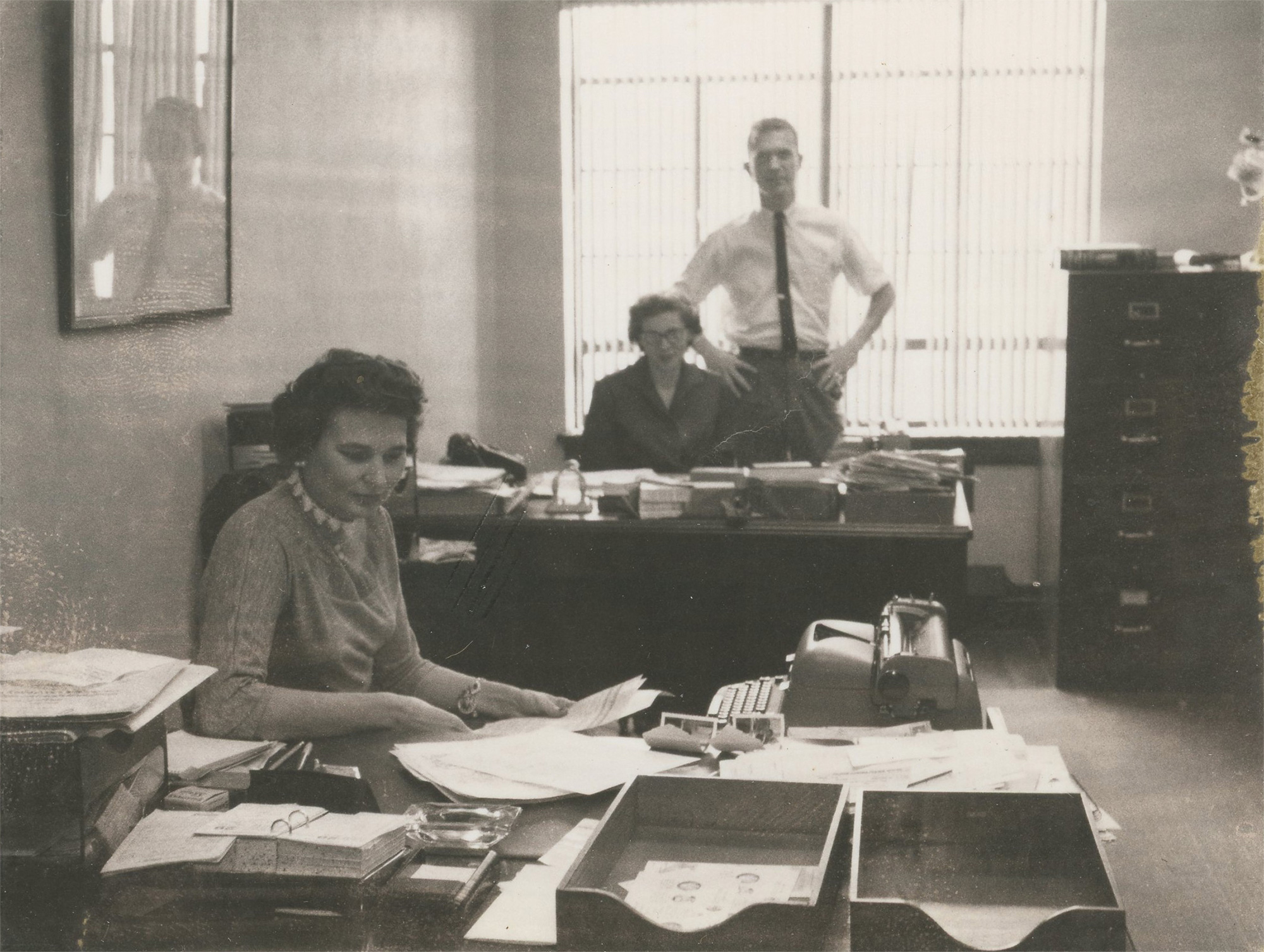
Museum of the Gulf
The pair began dating and married on May 6, 1942. J.D. had already joined the U.S. Army Corps of Engineers and did subsequent wartime service in Maine, Africa, India and the Pacific. He mustered out in 1946, and he and Peets moved to Mobile, where he went to work for the Alabama Dry Dock and Shipbuilding Co. (ADDSCO). The family lived in several midtown locations, including the newly constructed Stonewall Place Apartments on Hunter Avenue.
The Buffetts eventually had three children — Jimmy, born on Christmas Day, 1946; Laurie (known in the family as Lala), 1948; and Lucy (Lulu), the tardy child in 1953. Peets went to work at ADDSCO the year of Laurie’s birth, where she steadily advanced until her 1979 retirement.
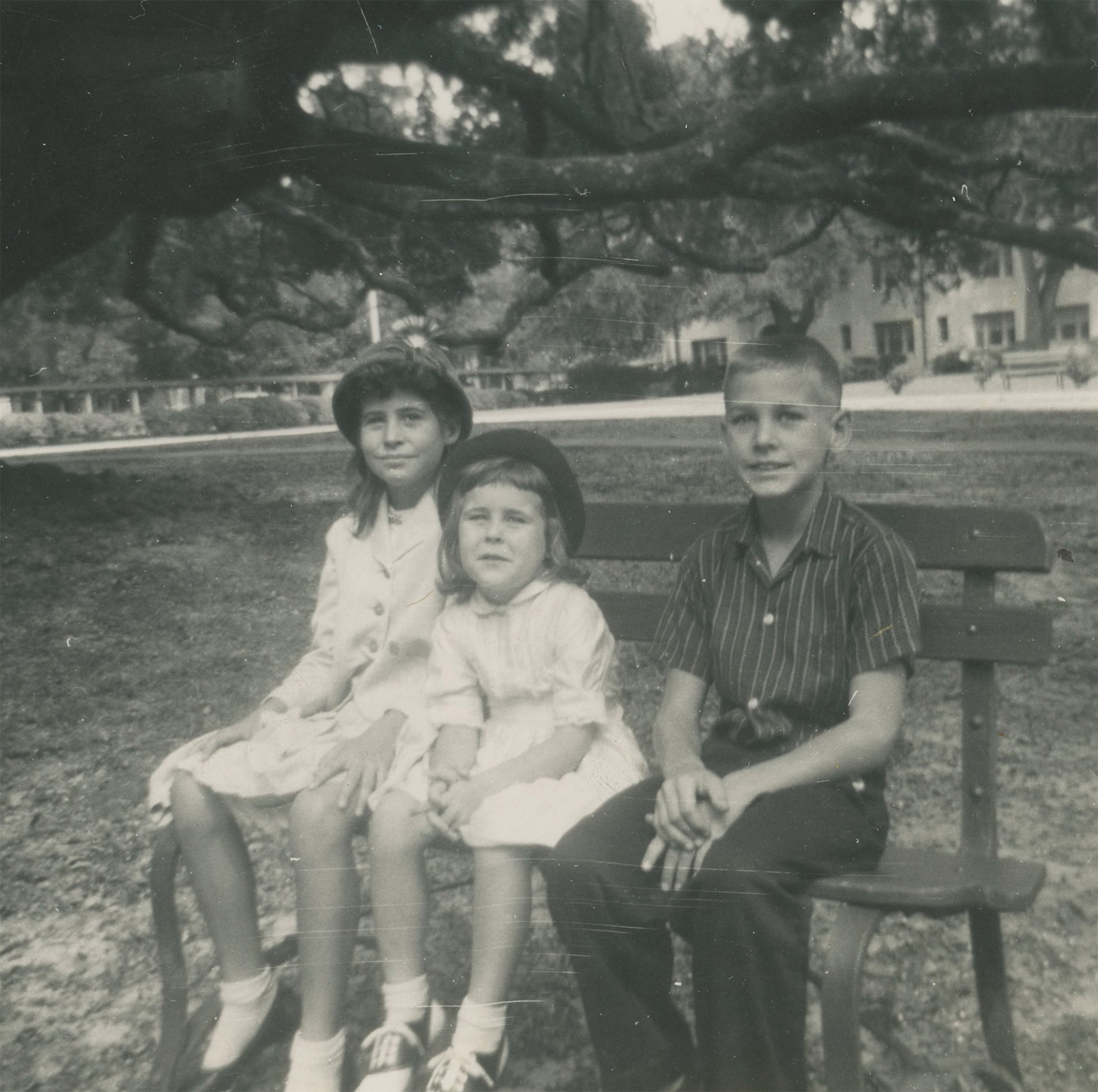
Peets instilled a love of the arts in all her children. While not fond of school — Jimmy attended St. Ignatius Catholic Elementary on Spring Hill Avenue — he became a devoted reader thanks to her influence, devouring classics like Jonathan Swift’s Gulliver’s Travels and Robert Louis Stevenson’s Treasure Island. These remained lifelong favorites. As he matured, William Faulkner, Ernest Hemingway, Pablo Neruda and Peter Mathiessen became favorite authors. Jimmy later admitted: “I wanted to be a writer first, and then music just came along as something I discovered. It wasn’t planned at all.” Of course, he would eventually do both.
During his formative years, Jimmy reveled in his coastal environment and his charismatic elders. He first went fishing at age 5 and loved trips to the beach. Besides his grandfather and father, he also looked up to his Uncle Billy, who inspired the 1989 song “Pascagoula Run.” Years later, Jimmy remembered his uncle as “a wonderful, bad influence on my life. He went to sea most of his life and he would always bring me exotic gifts.” As Jimmy told an interviewer in 1986, “I grew up in a seaport town with a rough waterfront, all my family were seamen. So, I was into the whole existence as a kid. Jean Lafitte was my hero.” Not surprisingly for such a lad, he wrote at 16, “I am thinking more & more seriously about a career in the Navy, Coast Guard or Merchant Marine have sent off for information concerning the academies.”
In the meantime, Jimmy attended McGill High School, where he played trombone in the band, and worked the graveyard shift at a local shipyard. He loved the nocturnal riverside, illuminated by “industrial lighting that created giant distorted shadows out of the rigging of ships in the drydock and the booms of the giant cranes.” During his free time, he gravitated to water pastimes like sailing, surfing, fishing and skin diving. In an interview with a boating magazine, he proudly recalled, “I sailed on just about everything — Stars, a Crosby Cat, yacht club boats… you name it.” At 18 he joined the Mobile Devilfish Skindiving Club and fished on offshore shipwrecks. Surfing proved frighteningly dangerous. Once, when a hurricane churned the Gulf, he and some pals headed down to Perdido Pass to try their luck. As he wrote in his memoir: “It looked angry. … A steady procession of six-foot top-to-bottom waves rolled in. They were like the poisonous tentacles of a Portuguese man-of-war stretching out from the eye of the storm.” Sobered but determined, he kicked into the maelstrom, only to be tossed, rolled and knocked in the head by his broken board. Bloodied and bruised, he temporarily gave up the sport but returned to it later in life. In “A Pirate Looks at Fifty,” he shared the enchantment that kept him hooked: “I can never get tired of watching a wave breaking on the shore. A wave is pure energy, its lineage connected directly to the sun, and it’s born far out to sea in the belly of the wind.”
Upon his 1964 graduation, Jimmy went to Auburn University. For the first time in his life, he was living inland and hated it. Motivated in part by a desire to meet girls, he asked a fraternity brother to teach him how to play guitar. Uninspired by academics, he flunked out but shortly thereafter enrolled at the University of Southern Mississippi “because it was close to New Orleans.” To secure financial independence, he started busking in the Big Easy and playing bars and clubs all over the central Gulf Coast. As is now beloved local lore, these gigs included regular appearances at the Admiral’s Corner bar in downtown Mobile, where he made $10 plus tips.
Jimmy’s path to fame was by no means easy or direct. After taking a bachelor’s degree in history at Southern Miss, he married a Spring Hill College graduate named Margie Washichek and made a run at Nashville. But the marriage only lasted three years, and his first album sold a measly few hundred copies. Stuck in another inland city and convinced he had to follow his own creative path, he headed south to Coconut Grove, Fla. with friend and fellow musician Jerry Jeff Walker. Gigs were few and far between in those early days, so Jerry Jeff squired Jimmy down the Overseas Highway and introduced him to Key West’s vibrant bar scene. Jimmy fell in love with the island community and relocated there in 1972.
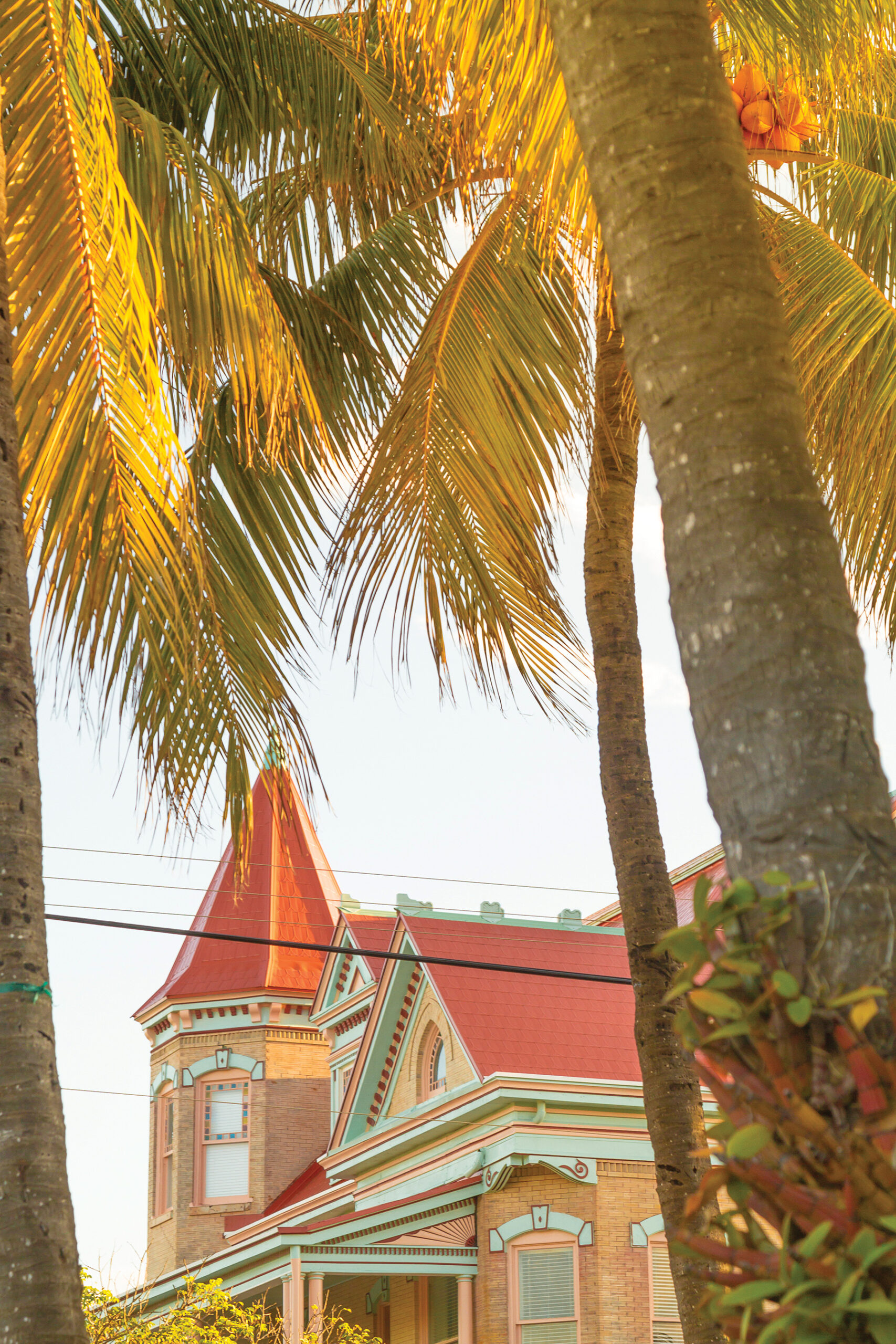
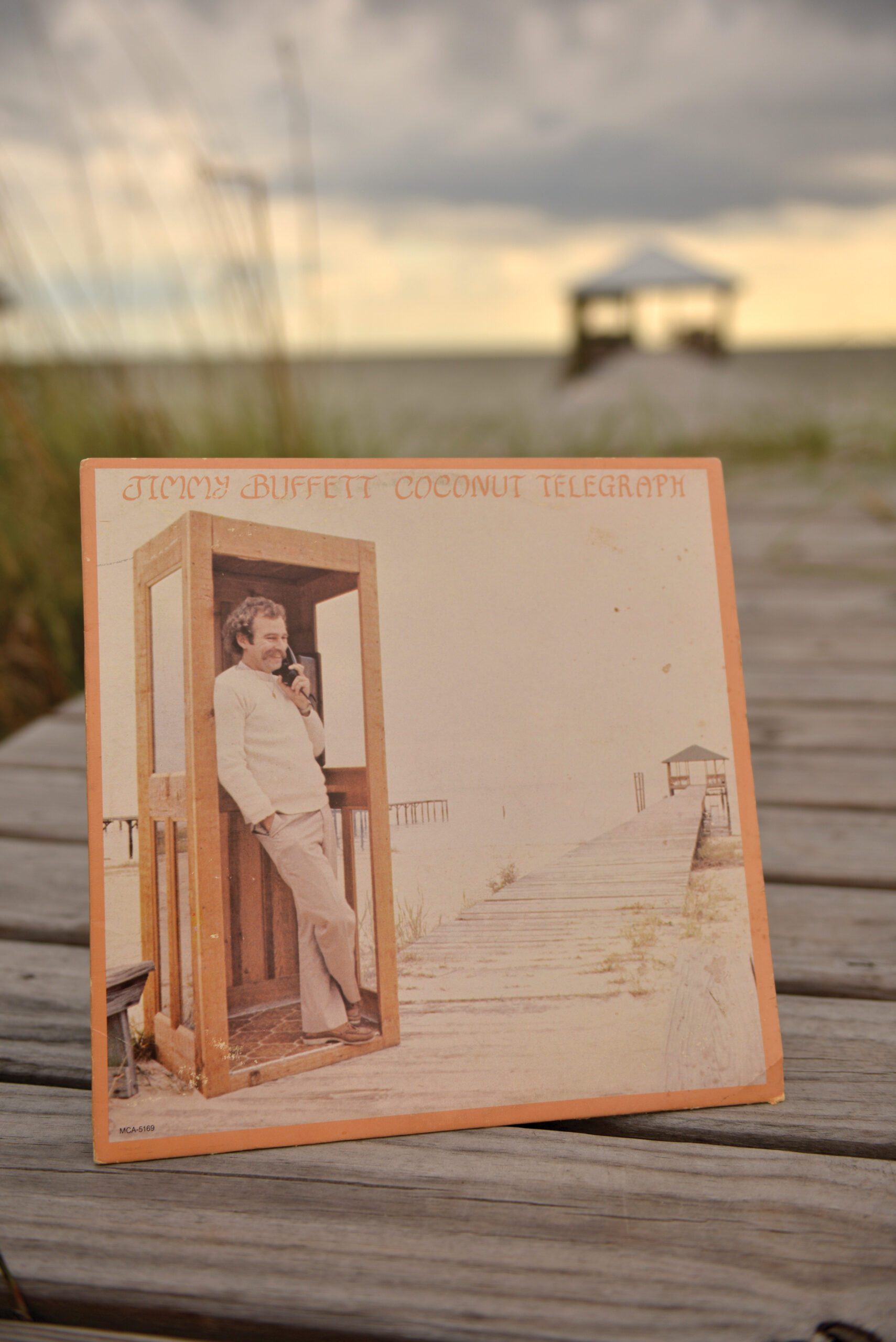
RIGHT A copy of “Coconut Telegraph” sits on the wharf boards where it was initially photographed. Photo by Chad Riley
Sundrenched, wind-blown, laid-back and filled with free spirits, the continental United States’ southernmost reach provided Jimmy with just the kind of setting he needed. In a 1977 interview with the Washington Post, he said: “The most important thing about the place was that it was completely virgin territory, completely different than what I’d left behind. Incredible characters, great bars. A different form of life, almost.” Among the people he met was a University of South Carolina student on spring break named Jane Slagsvol. The two formed an immediate connection. Slagsvol never returned to school, and the pair married in 1977. They would eventually have two daughters, Savannah and Sarah Delaney, and adopt a son, Cameron.
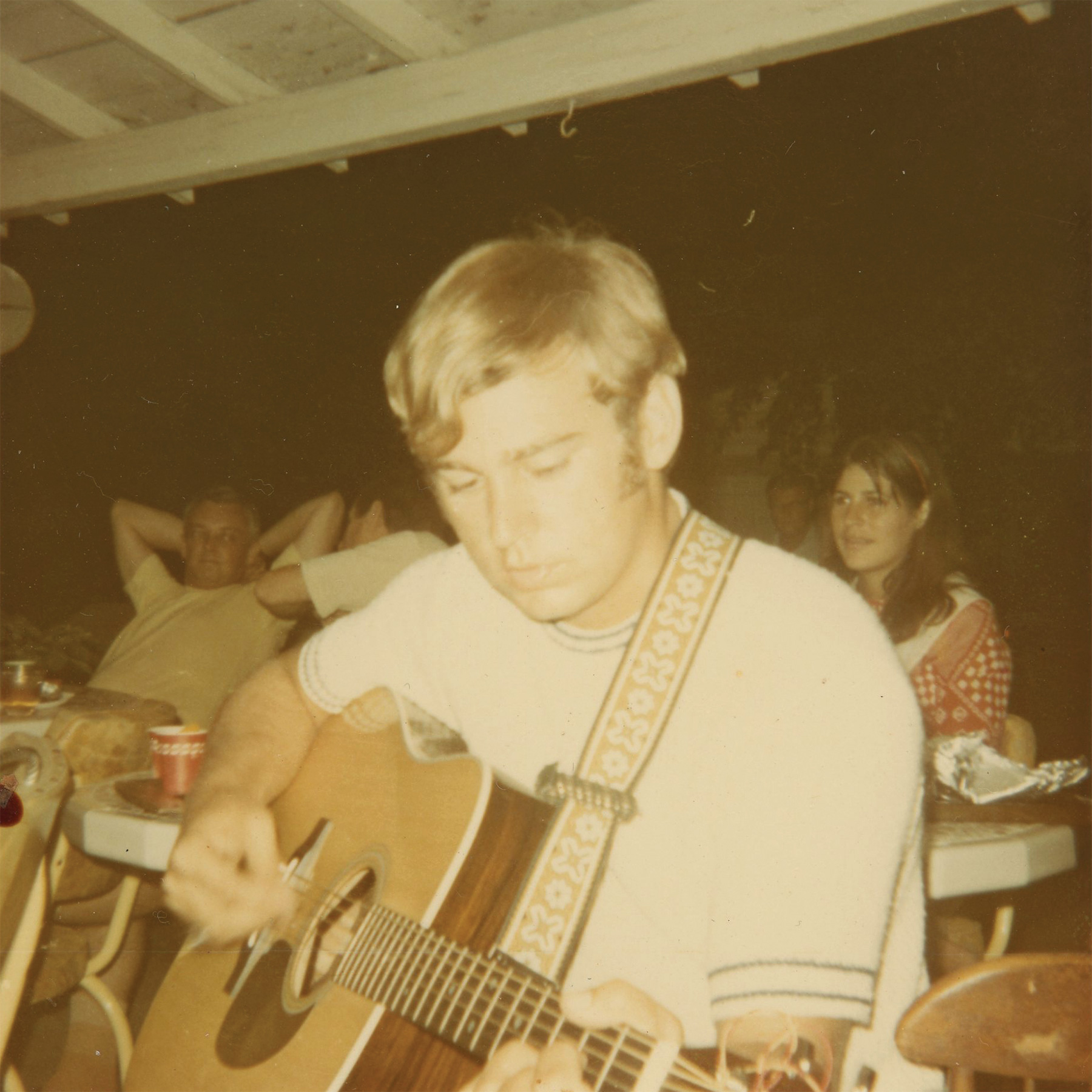
In Key West Jimmy made the kind of music that moved him. Backed by talented studio musicians on acoustic and electric guitars, pedal steel guitar, harmonica, drums and keyboards, he released four albums during his early Key West years. “A White Sport Coat and a Pink Crustacean” (1973); “Living and Dying in ¾ Time” (1974), which featured his first Top 40 hit “Come Monday”; “A1A” (1974), named for Florida’s east coast state road; and “Havana Daydreamin’” (1976) all developed and honed his particular style. Shortly after the latter album’s release, High Times magazine wrote that Jimmy’s sound had “its roots in Mobile and Nashville and the Southern tradition, but influences flow in from everywhere, from the copacetic calm of drifting in the Gulf Stream, to the frantic rush of chemical cutups in back-water towns.” Then came 1977’s “Changes in Latitudes, Changes in Attitudes,” and the smash hit “Margaritaville.” Backed by his own Coral Reefer Band playing steel drums, congas, bass, guitars and keyboards, Jimmy Buffett had arrived. Over the next 40-plus years, cheered on by legions of devoted fans known as Parrot Heads, he played hundreds of concerts and released studio, compilation and live albums at the rate of practically one a year.
With the profits from “Changes in Latitudes,” Jimmy purchased a handsome 33-foot sailboat named Euphoria and cruised the Caribbean and Bahamas. Like his grandfather before him, he proved to be a resourceful and capable wind captain. “Deep down, everyone wants to sail,” he told a travel writer, “…live a romantic, come and go as you please existence, and if they can’t they dream about it.” Another of his favorite hobbies was flying, especially flying boats. He owned several sea planes over the years, including the “Hemisphere Dancer,” a restored 1955 Grumman Albatross. In his 1998 memoir, he nicely captured the appeal of piloting his own plane: “When I’m flying out over the water, I feel like I am functioning at all levels of human existence, better than at any other time of my life.” In 2022, Jimmy anonymously donated two aircraft, a Grumman Goose and a Boeing Stearman, to the USS Alabama Battleship Memorial Park where they are currently on display at the Medal of Honor Aircraft Pavilion.
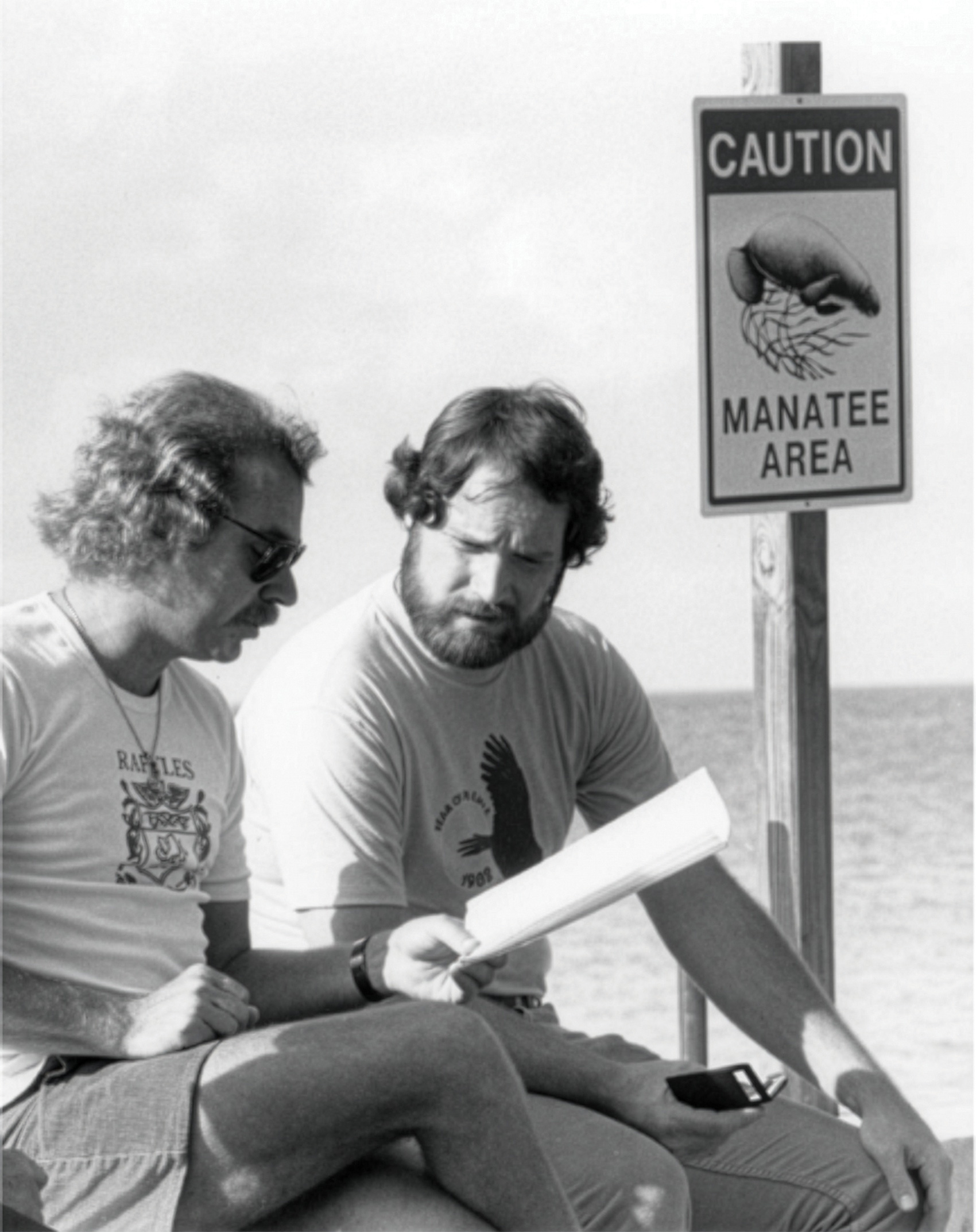
Loving the Gulf waters, islands and beaches as much as he did, Jimmy encouraged their preservation for future generations. In 1981, he co-founded Save the Manatee Club with Florida governor Bob Graham. “If we let these sweet and docile creatures disappear, it doesn’t bode well for our civilization,” he stated in an interview. Jimmy lobbied for manatee sanctuaries, boat speed regulations and habitat protection. Additionally, he championed the protection of coral reefs, seagrass beds, mangrove forests and estuaries and pushed for a shark sanctuary in the Bahamas. “It’s pretty simple,” he said of his environmental activism. “We live in paradise, and paradise is in peril. We need to pay a little more attention to the place where we grew up, and where our children should grow up. It’s not that hard.” And when paradise sometimes turned ugly, as when a hurricane barreled ashore somewhere, he gave benefit concerts for the victims.
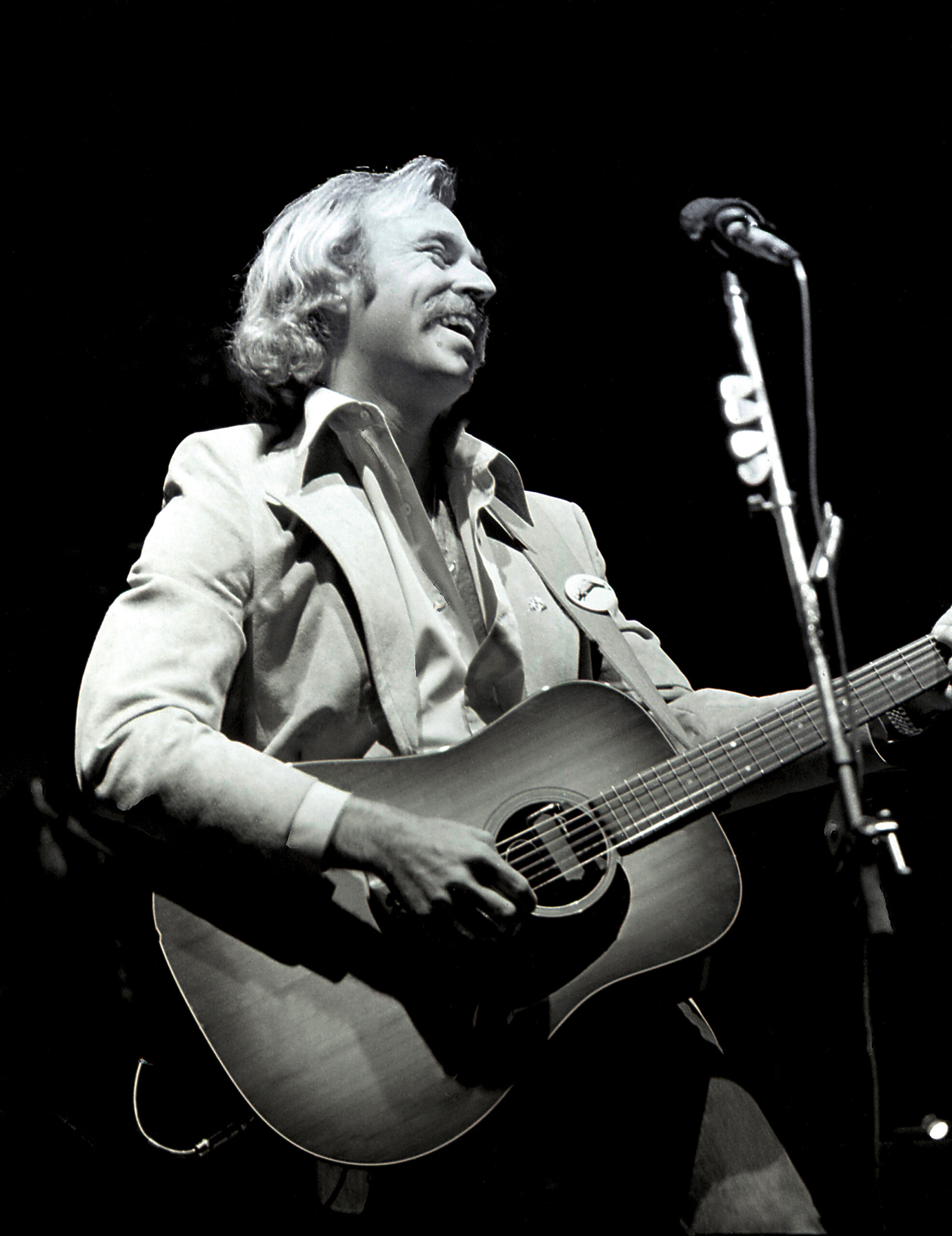
RIGHT Jimmy in Boston in the 1970s. Photo by Chris Lauber, Courtesy National Maritime Museum of the Gulf
Fortunately, Jimmy’s parents lived to share and enjoy his success. Shortly after they retired, he bought them a house on Mobile Bay’s Eastern Shore where they lived for almost 30 years. According to his father’s obituary in The Mississippi Press, “J.D. rose most days at dawn to enjoy a pot of strong coffee before heading outdoors to check the crab traps and walk the dogs.” If he took a notion, he could go fishing or joyride on board the 17-foot Mako center-console skiff his son bought him.
Jimmy returned home on occasion to visit his folks, personally flying into Fairhope Airport. Like many bayside families, the Buffetts would sit on their pier and chat. In his memoir, Jimmy beautifully evoked these practical constructions fingering out over the water: “They were not just shelters from the near-tropical sun. They were wooden islands. Collections of creosote, two-by-fours, and tenpenny nails that connected both children and adults to the wonders of Mobile Bay.” Sadly, J. D. passed from Ahlzheimer’s Disease in May of 2003, and the inimitable Peets followed just over four months later. They were married for 62 years.
As every Parrot Head knows, Mobile’s tropical troubadour crossed the bar himself on September 1, 2023, at the age of 76. He died of a rare form of skin cancer. In a column for the Key West Citizen only days later, Lulu described their last visit. Fittingly, she brought along some “gumbo and water and sand from the Gulf of Mexico,” things that “inspired his dreams as a child.” He liked that and urged friends and family to keep the “party, and the good life” going. His last words to his sister were, “Have fun.”
Jimmy Buffett left an extraordinary legacy for the people and culture that he loved. Though musical tastes may change, it is wonderful to think that his memory and his irrepressible spirit will forever animate the white sands and lapping waters of the places he held most dear and celebrated so joyfully with his whole heart.
John S. Sledge is a maritime historian-in-residence at the National Maritime Museum of the Gulf. His new book “Mobile in the Heart” is due Spring 2027.