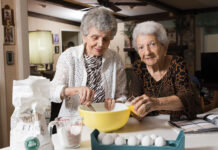
On a shaded street in Fairhope, nestled inside a home filled with coastal light and the echoes of generations past, where family heritage is richer than the aroma of a favorite dish, Lucy Buffett knows exactly where the magic happens. It’s not just in the kitchen. It’s around the table. You see, for Lucy, food has never simply been about what’s placed on a plate. It’s about the people gathered around it; the conversations that linger long after the last luscious bite, the memories stirred by familiar flavors and the traditions passed down one meal at a time.
“Food was so germane to the Buffett gene pool,” she says. “We celebrated with it and we mourned with it.”
That simple admission from the Gypsy Rebel herself may best describe the role food has played throughout her entire life. Meals were the backdrop for birthdays and holidays, but also for difficult seasons, tumultuous transitions and tearful goodbyes. The table became a place where stories were told, relationships were strengthened, love flourished and family history was preserved.
Two Tables, One Gulf Coast Story
For Lucy, those lessons began in childhood, at two very different Gulf Coast tables. She grew up visiting both of her grandmothers, two women who represented two distinct expressions of food, family and hospitality. Her paternal grandmother, Hilda Buffett, lived in Pascagoula, Mississippi, on Parsley Avenue. Next door lived Lucy’s aunt and cousins, creating a family compound built around two small, unassuming homes with large backyards.
“It was a very humble house,” Lucy recalls. “But we were playing outdoors all the time in these big backyards. We had games out there and whatever came with all of that. And we could go back and forth between my Aunt Patsy’s and my grandmother’s.”
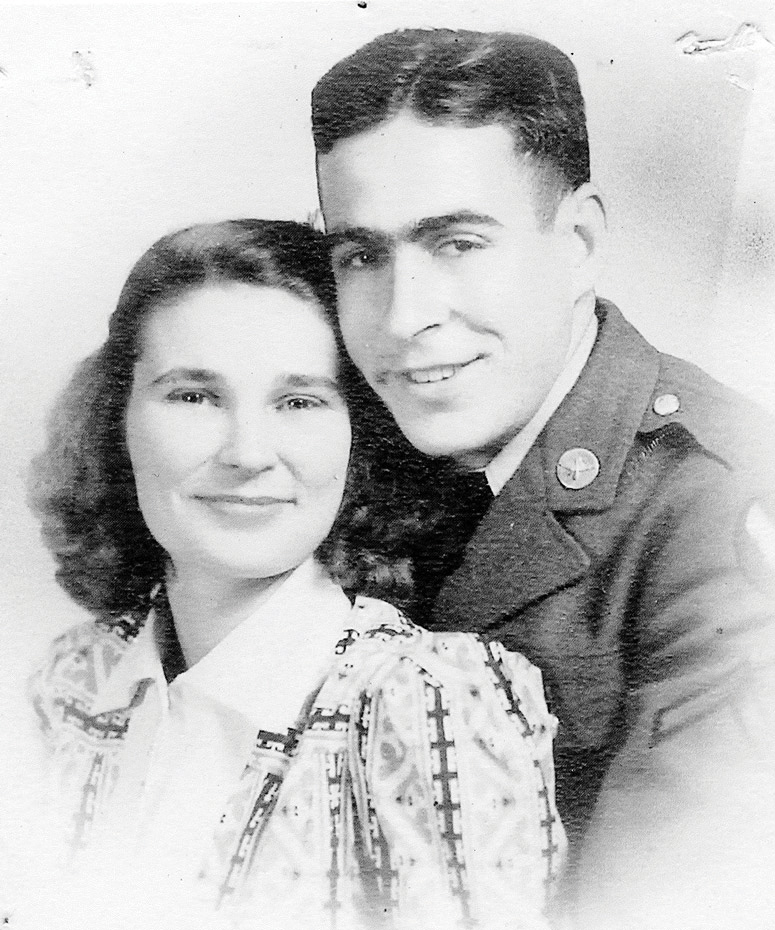
Every other weekend, Lucy and her family made the trip from Mobile to Pascagoula after Sunday Mass. At the house of her grandmother — affectionately known as “Mom Buffett” — the day revolved around an enormous family lunch.
“It was always just a big family,” Lucy says.
Her uncle, Billy, the merchant mariner who would later inspire her brother Jimmy’s song “The Pascagoula Run,” might be home from sea. Her aunt, who lived next door, would be there with her family. Other relatives could come trickling in and out depending on the weekend and time of day. The house was small. The family gathering was not.
“They all had their seats at the table,” Lucy remembers. “And then my grandfather was out at sea, too. He didn’t retire until I was in my late teens, I think. And then he was home. He was always at the head of the table.”
The scene was anything but quiet.
“All the women would be in the kitchen,” she remembers. “It was loud. It was noisy. There was a lot going on, and the kids were all put out on the porch or outside.”
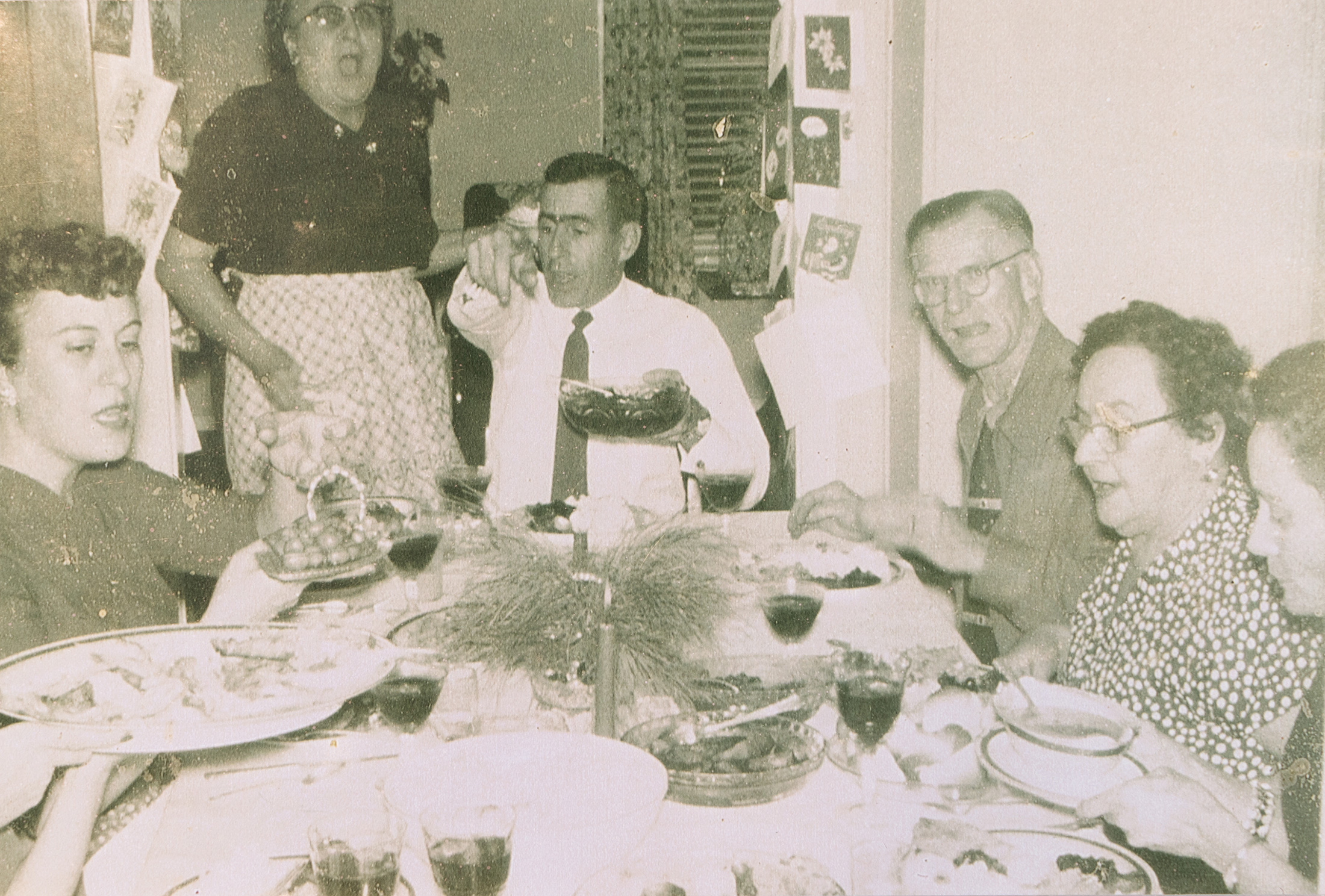
The children did indeed have their own special place on the back porch while the adults gathered inside. Depending on the weather, meals sometimes moved outdoors, where large tables were set up on the concrete driveway.
The children loved these outdoor meals. “That was a big deal, because then we could roller skate,” Lucy says.
After lunch, the family would settle into familiar Gulf Coast rhythms. If the weather was nice, people lounged outside. If the New Orleans Saints were playing, the men moved into the living room to watch the game. The home itself may have been modest, but those walls cradled something much larger and something far more special: generations of family history. It was a place where cousins grew up together, where stories were repeated and where food became the language of belonging.
But that was only one side of Lucy’s Gulf Coast culinary education. Her maternal grandmother, Bessie Peets, introduced her to a very different style of dining. A dietitian at Gulf Coast Park College in Long Beach, Mississippi, Bessie created a world of ceremony and presentation. After all, at Gulf Park, Sunday lunch meant dressing up. There were gloves and Mary Janes. There were attendants in large chef hats carving steamship rounds. There was crabmeat au gratin and carefully prepared meals served to young women attending the finishing school.
“It was very different than the Buffetts, who were sipping the rum out in the garage,” Lucy says with a laugh.
Somewhere between those two larger-than-life women, Lucy learned the full range of Gulf Coast food culture.
“I got to see both sides,” she says. “The real, homemade, homestyle and then the food that was served to these very wealthy women who were coming to learn the ways and get their little two-year degrees.”
Those experiences shaped the way Lucy viewed food and left an indelible mark on the way she would one day cook. The recipes mattered, but the people mattered more. The meals at Mom Buffett’s house were never about elaborate presentation or overly complicated techniques. They were about feeding a crowd. Lucy describes them as “batch recipes,” big dishes designed to bring a lot of people to the table.
“If there was a roast, there was going to be rice and gravy and mashed potatoes,” she says. “There was also always potato salad.”
There might be macaroni and cheese, vegetables and a simple salad made with lettuce and tomatoes. Even the dressing reflected the practical creativity of the time: a homemade Thousand Island made with mayonnaise and ketchup.
The food was familiar. It was comforting. It was Gulf Coast family cooking at its most honest.
The Secret Was Never the Chicken
But among all the dishes that made an appearance, one stands out in particular: fried chicken. For Lucy, this was not just a recipe. It was an event.
“My daddy learned how to do that,” she says.
In Lucy’s childhood home, her father carried forward some of the culinary traditions he learned from his mother.
“He would make the fried chicken,” she says. “And he would make the potato salad. He would make the gravy and then whatever other kind of vegetables.”
The preparation itself was part of the memory. The chicken was not purchased already cut and ready to cook. The family prepared everything by hand. Flour went into a paper bag as the chicken was seasoned and coated. The pieces were fried in cast iron until they reached the perfect golden brown.
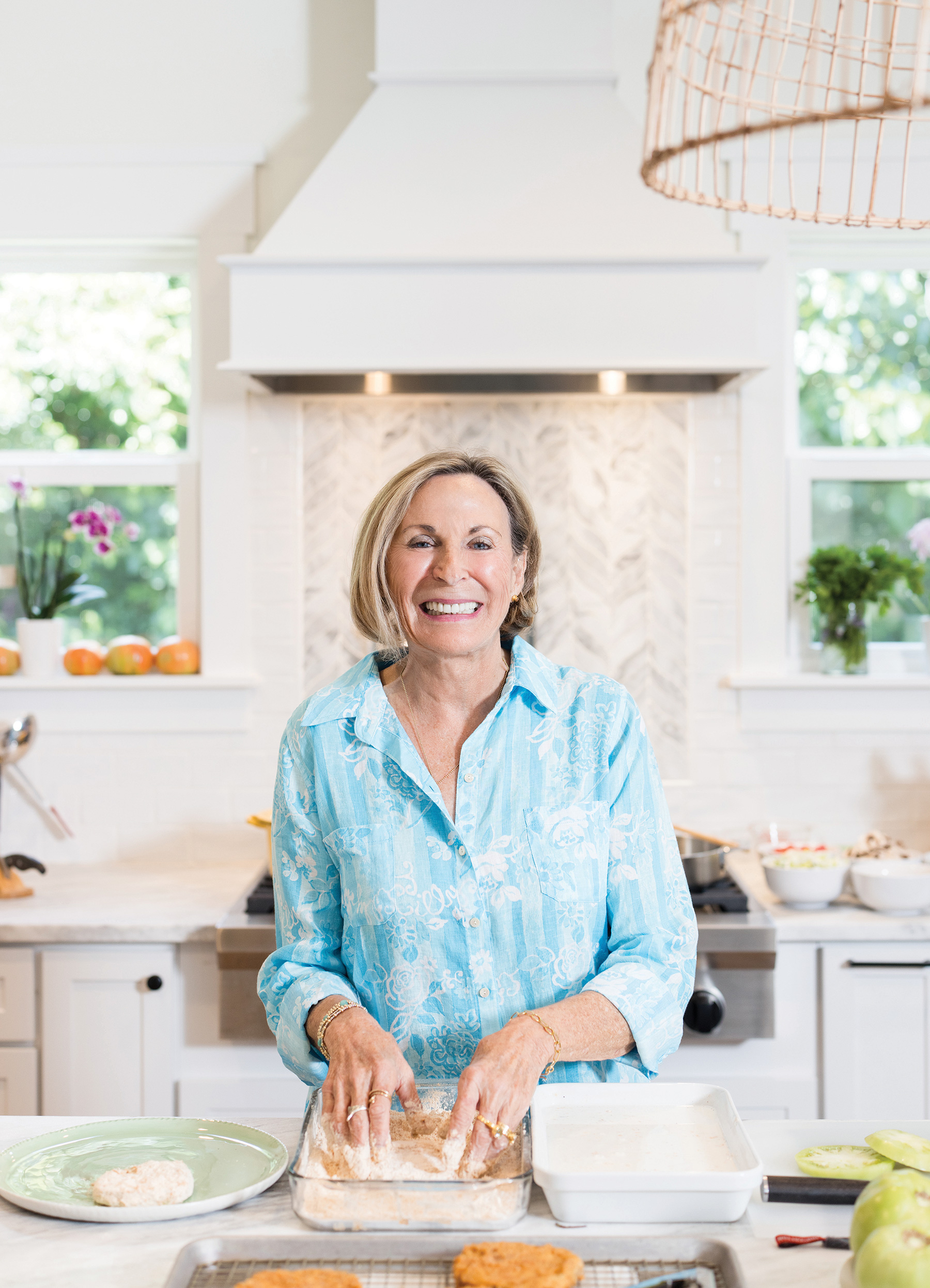
“They didn’t use thermometers,” Lucy recalls. “They just figured it out.”
Once the chicken came out of the grease, it was drained on the paper bags.
“There’s just nothing that tastes better,” she says. “The grease was hot, but it was not special. We called it grease, but it was just Wesson oil.”
What made the meal special was not a secret recipe or a sophisticated technique.
“It was not fancy,” Lucy says. “It was just another one of the dishes that they would do.”
But when the family was coming home, especially her brother Jimmy or her sister, fried chicken became more than a dish. It became a celebration.
“Daddy, will you fry chicken?” someone would quietly ask. And then the whole process began.
“It became a production!” Lucy says between laughs. “Because he needed everything to be set out perfectly.”
Every piece of celery. Every potato. Every detail mattered. Not because the family was trying to create a flawless meal. Because they were creating a memory. Those memories continued evolving as Lucy grew older and developed her own culinary voice. One of those traditions was her grandmother’s potato salad. While working on menus for Margaritaville, Jimmy once called his sister with a question.
“He called me and said, ‘What was that special ingredient Mom used to put in the potato salad?’”
The answer (and the answer to all of life’s problems) was cheddar cheese.
“When the potatoes were hot, she would cut up cheddar cheese in tiny, little pieces and she would throw it in there and they would melt,” Lucy says.
It wasn’t a restaurant signature. It wasn’t a carefully guarded culinary technique. It was simply how her grandmother made it.
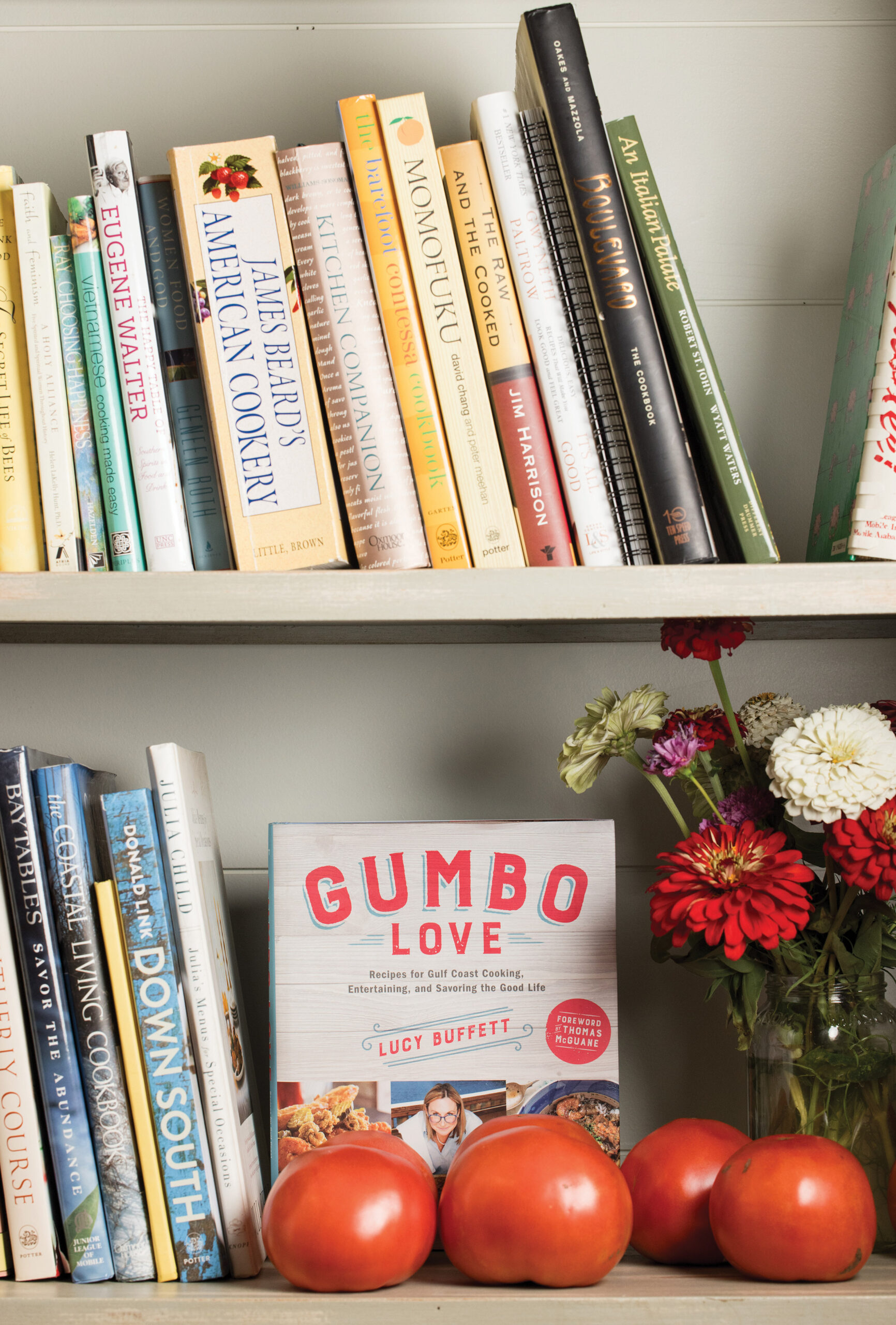
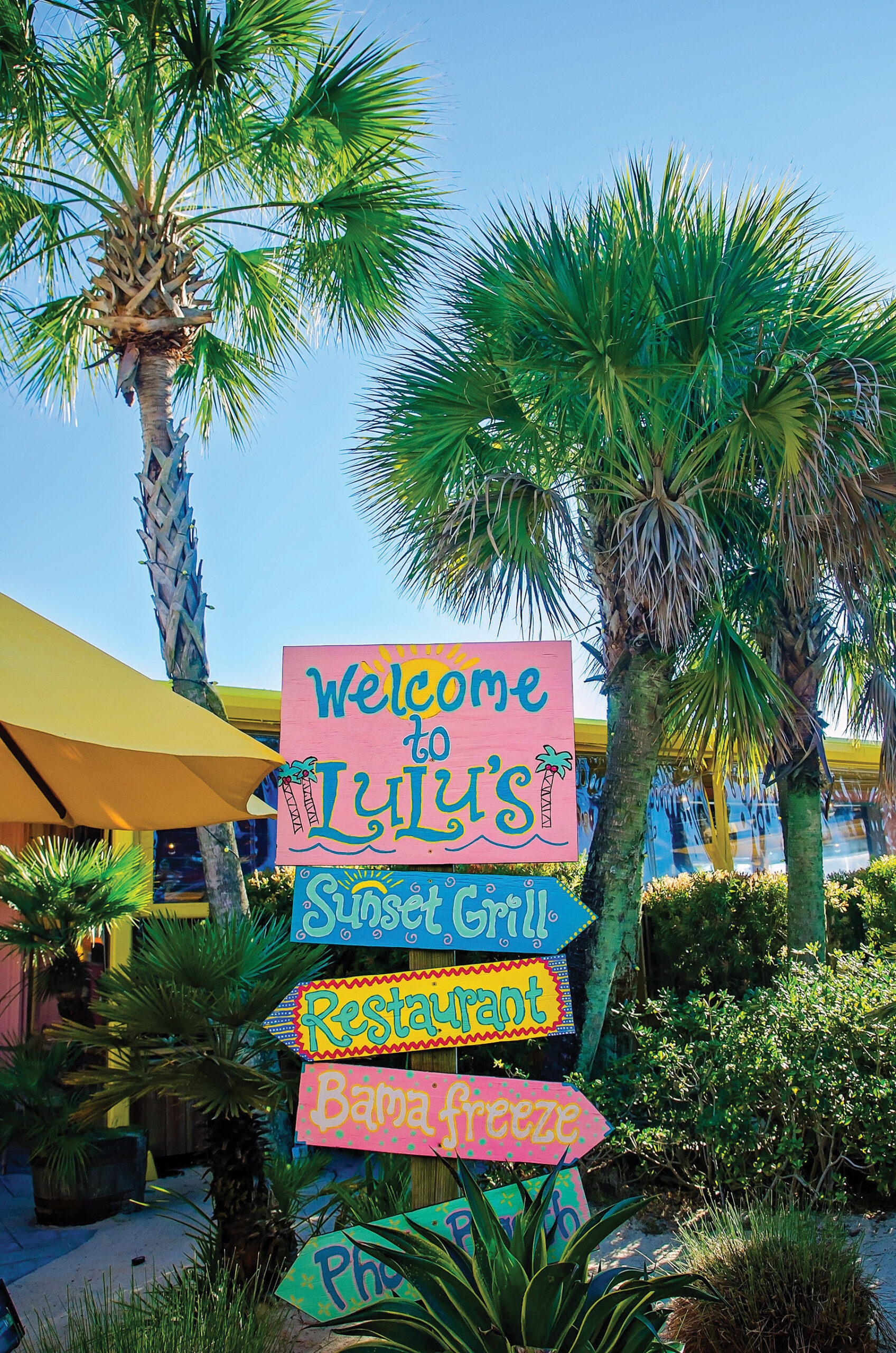
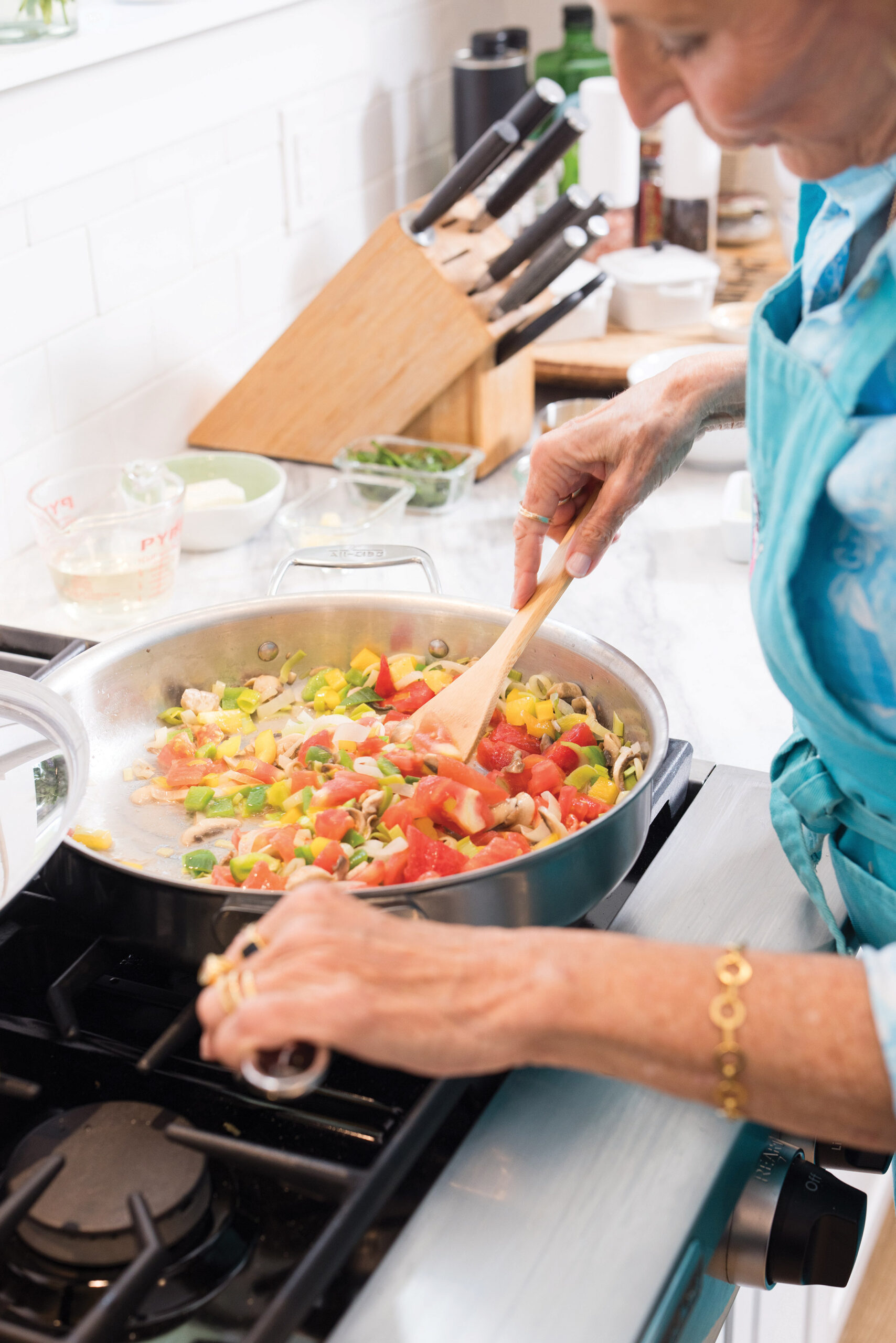
Finding Her Own Flavor
Lucy’s own journey in the kitchen began early. As a child, cooking started as curiosity and independence.
“When I was 10, I was frying my own frozen French fries in the afternoon as my snack,” she says.
Eventually that curiosity led her to New Orleans, where she immersed herself in the city’s culinary culture and expanded her understanding of Gulf Coast food.
“So much of that New Orleans cuisine migrated across the Mississippi Gulf Coast and Alabama Gulf Coast,” she points out.
Over time, she developed her own style — one shaped by childhood memories, Gulf Coast traditions and the influences she discovered along the way. For this feature, Lucy selected recipes that reflect that journey. The shrimp remoulade salad celebrates one of the Gulf Coast’s most recognizable ingredients.
“Everybody just wants to eat shrimp,” Lucy says. “They will always eat shrimp.”
The lump crab à la LuLu over garlic cheese grits connects back to her grandmother’s love of crab dishes, including the crabmeat au gratin Lucy remembers from Sunday Buffett lunches. The key lime squares reflect the same spirit of coastal simplicity: bright flavors, familiar ingredients and something meant to be shared.
But behind every recipe is a story. A dish is never just a dish. It’s a memory of who made it, who taught it and who gathered around the table to enjoy it. For Lucy, those traditions continued with her own family. The location changed, but the purpose remained. When Jimmy bought their parents a home on Mobile Bay, complete with a long pier, the family found a new gathering place. For 20 years, weekends became synonymous with meals on the water.
“The whole culinary scene of the Buffetts evolves into what we did every Saturday and Sunday in Daphne for 20 years,” Lucy says.
The pier became the new table. There were nautical flags flying, blenders running and meals prepared outdoors with family and friends gathered nearby. The recipes continued evolving, but the tradition endured. Recipes, after all, are a little like heirlooms. They may pick up a scratch or two from one generation to the next, but their greatest value isn’t in staying unchanged. It’s in staying in the family. Even dessert carried its own memories. Lucy laughs when asked who had the biggest sweet tooth.
“I think maybe me! And Jimmy, too, of course,” she says.
In all seriousness, the family loved sweets, including homemade ice cream on the pier. But Lucy remembers that Jimmy always had a particular weakness.
“He was always looking for a little piece of chocolate after lunch,” she says.
Later in life, as Jimmy became more conscious of what he was eating, he developed a phrase that wound up becoming part of the family vocabulary.
“I think it’s a cheat day,” he would say.
The kids would tease him: “Uncle, it’s always a cheat day with you!”
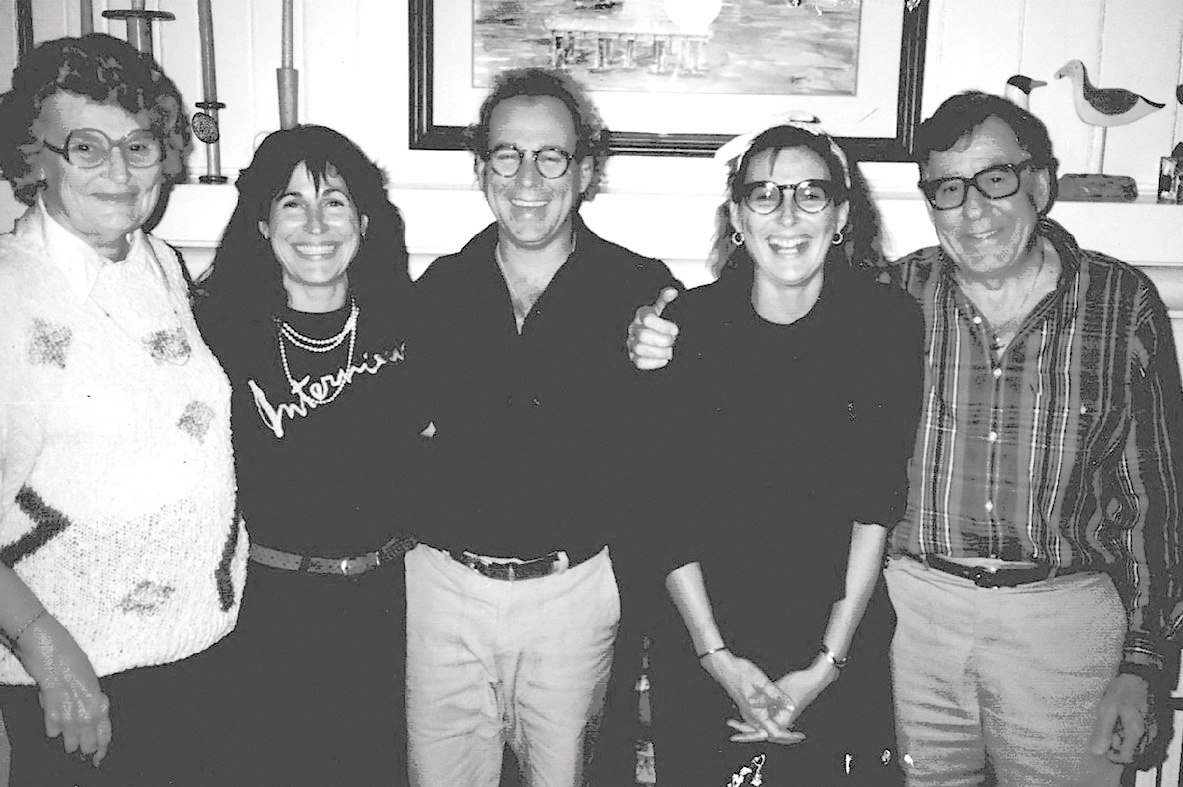
For Lucy, those moments reveal something larger about her brother. Even after fame and success changed his world, what mattered most remained remarkably simple.
“He got more humble,” she says. “It just opens you up to those opportunities of deep appreciation because you know your time’s running out.”
What he valued most was not the accumulation of things, but the experiences that connected him to people. It was the same instinct that drew him back, time and again, to places like Judge Roy Bean; places where the real attraction was never just the music or the menu, but the community gathered around them.
“It was about family and connection,” Lucy says. “It was all about experience and people and, yes, the food.”
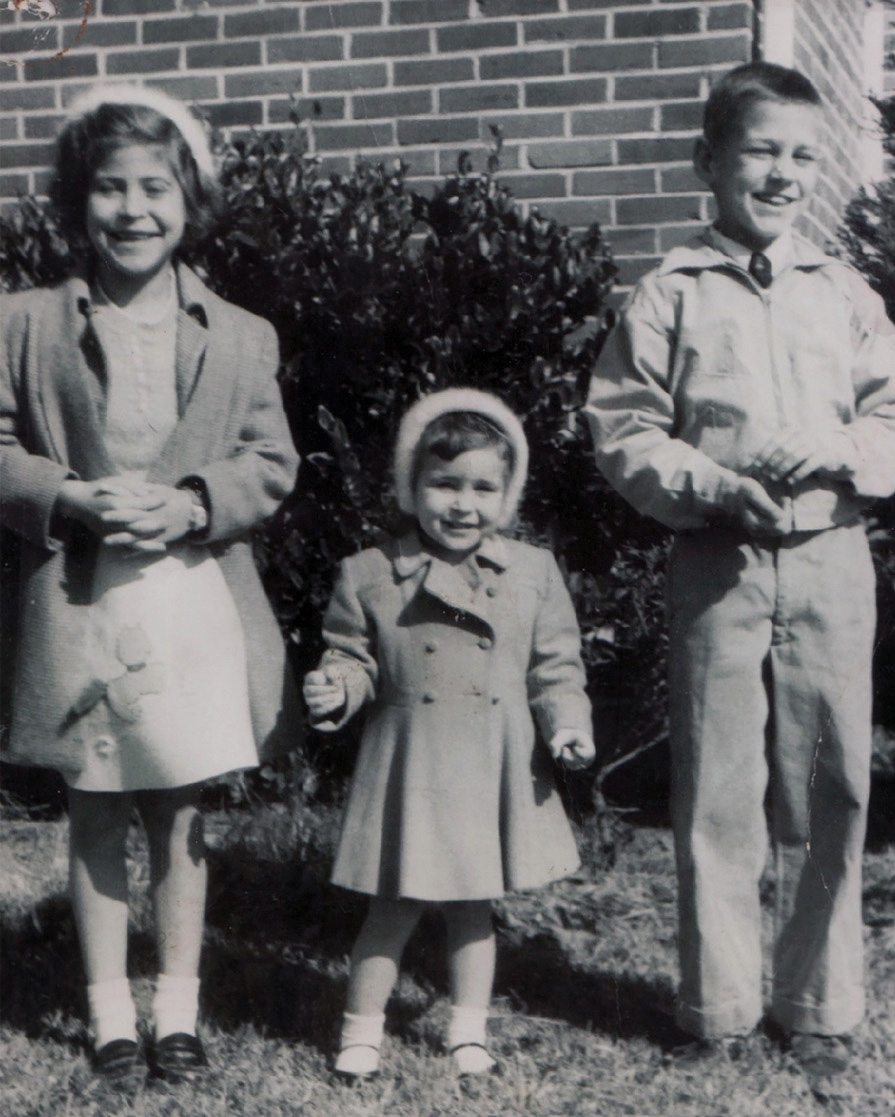
That mantra was something the entire Buffett family carried in their own way. Lucy describes the three siblings as each finding their own path: Jimmy becoming the celebrated musician and storyteller, her sister becoming the cowgirl and Lucy becoming the cook.
“We all figured out our place and we all have a talent somewhere,” she says.
It wasn’t a perfect family, though. After all, no family is.
“Now, listen,” Lucy says. “We were dysfunctional. Don’t get me wrong. But one thing we always knew is that we were loved.”
And perhaps that’s the greatest recipe Lucy Buffett inherited. Not a list of ingredients. Not a cooking technique. A way of bringing people home. Because long after the plates are cleared away and the recipes are written down, what families remember is not what was served.
They remember who was there. They remember the laughter between bites. The stories told over second helpings. The chairs that somehow always seemed to make room for one more. Decades after the recipes fade, those are the ingredients that remain.
Some recipes are written on index cards. The best ones are written on childhood.
3 Southern Recipes from Lucy Buffett
Lump Crab a la Lulu over Garlic Cheese Grits
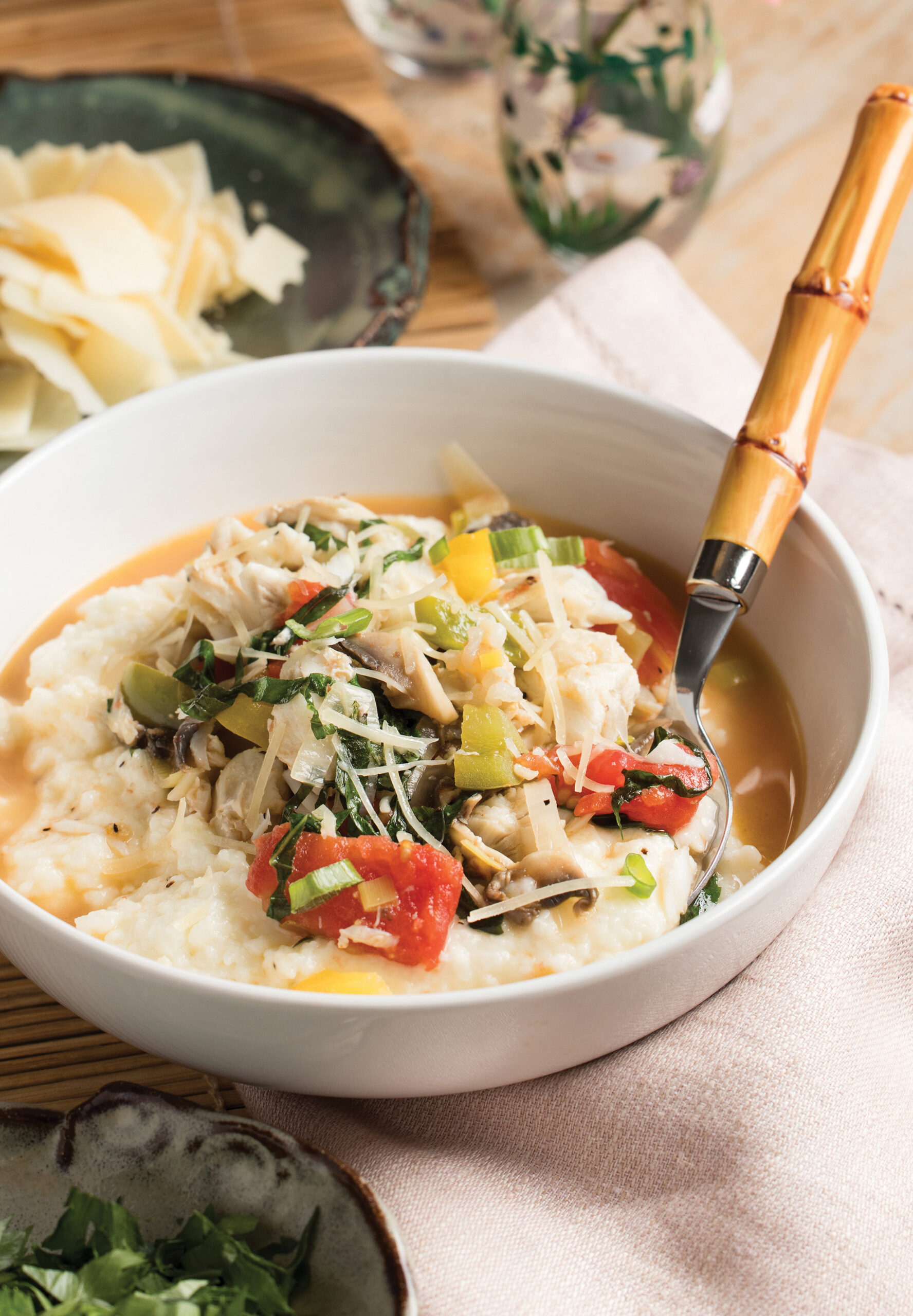
SERVES 4
Ingredients
1 stick unsalted butter
1 large leek, cut in 1/4 inch slices, including the green part
1/2 cup green bell pepper, coarsely chopped
1/2 cup yellow bell pepper, coarsely chopped
1/2 pound mushrooms, sliced
2 medium – large fresh tomatoes, peeled, seeded and chopped
3/4 cup good white wine
1 1/2 teaspoons kosher salt
1 teaspoon black pepper
1 pound jumbo lump crabmeat
Large handful of fresh basil leaves, cut into ribbons
1/2 cup grated Parmesan cheese
Garlic cheese grits for serving (recipe below)
Directions
1. In a large heavy saute pan, melt butter over medium heat. Just as butter begins to sizzle, add leeks and cook until tender, about 5 minutes.
2. Add green and yellow bell pepper and continue to cook for 2 minutes.
3. Add mushrooms and continue to cook for another couple of minutes until mushrooms are softened and mixture is juicy.
4. Add tomatoes and continue cooking for 2 minutes.
5. Add wine, salt and pepper and mix well.
6. When liquid is bubbling, gently add crabmeat. Shake the pan instead of stirring so as not to break the large lumps of crab. Cover and cook for 1 minute or until crab is heated through and mixture is back to bubbling.
7. Add basil to crab and top with Parmesan cheese. Cover and reduce heat to low. Cook for 1 additional minute. Correct seasonings. Serve immediately over garlic cheese grits.
Garlic Cheese Grits
SERVES 4
Ingredients
2 tablespoons unsalted butter
6 cloves garlic, minced, or more to taste
6 cups water
1/2 cup milk or heavy cream
1 1/3 cup regular grits
1/2 teaspoon salt
2 cups sharp cheddar cheese, grated
Salt and pepper to taste
LuLu’s Perfect Pepper Sauce, to taste
Directions
1. In a small skillet, melt 2 tablespoons of butter. Add minced garlic and saute until garlic is barely soft. Make sure not to burn butter. Set aside.
2. In a heavy saucepan, bring water and milk to a slow boil.
3. Slowly add grits and salt, stirring constantly to keep the grits from clumping.
4. Reduce the heat to medium-low, and simmer for 15 – 20 minutes until grits are thick and creamy, stirring often.
5. Add cheese, salt and pepper, and hot sauce, to taste, and cook until cheese is melted. Serve immediately.
Classic Shrimp Remoulade
“This is my take on the New Orleans original remoulade sauce. Over the years, there have been many renditions of this classic cold dressing for seafood, many using shortcuts like a mayonnaise base. But the original is an emulsion of olive oil and Creole mustard with fresh herbs and spices, including paprika, which gives it its reddish color. On this one, I’m a purist. This recipe may seem long and arduous, but in fact, it’s just a lot of ingredients tossed into a food processor. So it is truly easy if you gather all your ingredients at once.”
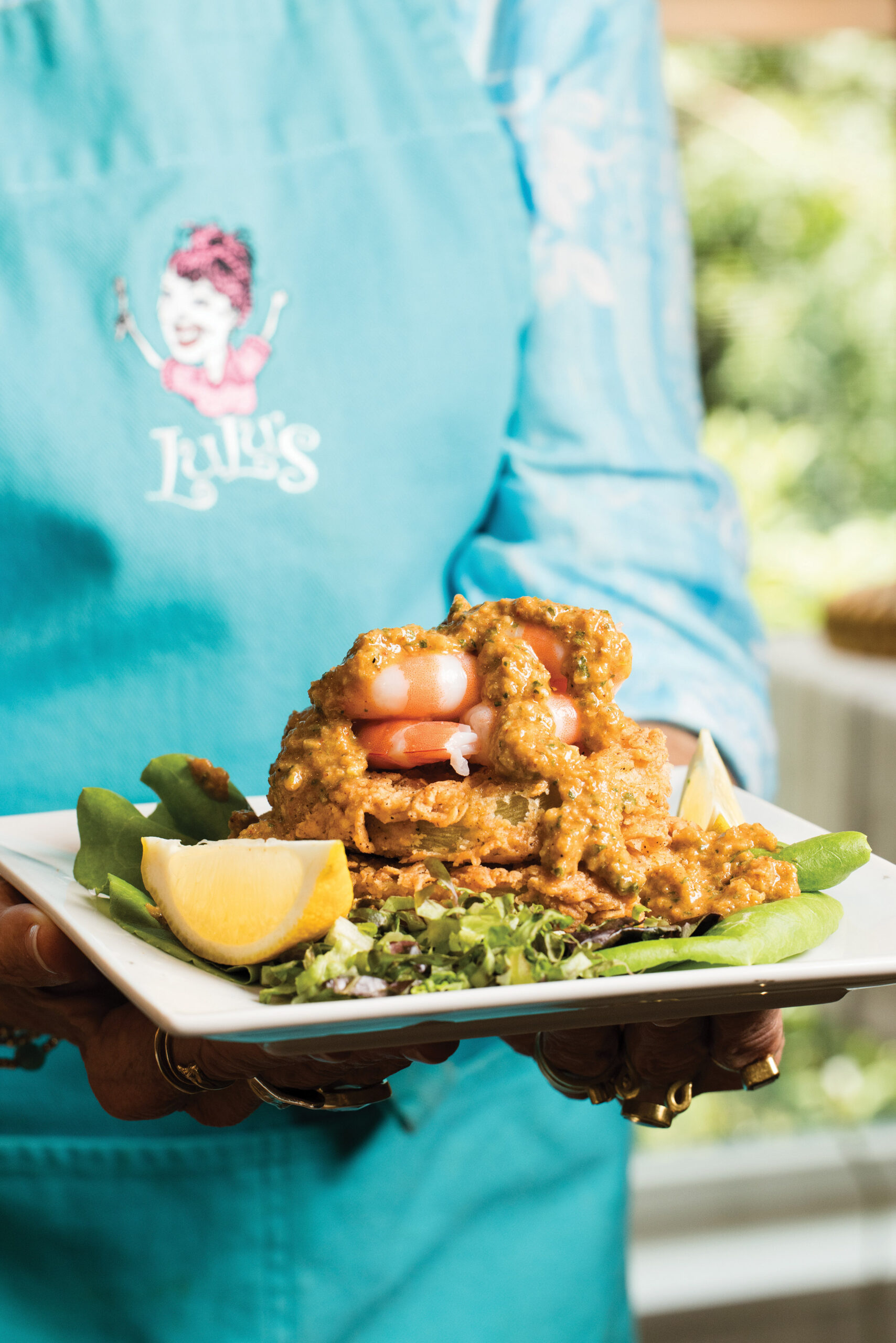
SERVES 6 – 8
Ingredients
2 pounds large wild-caught Gulf shrimp, boiled (recipe below)
3 stalks of celery, with leaves, coarsely chopped
4 green onions, coarsely chopped
1/2 small sweet onion, coarsely chopped
4 whole peeled garlic cloves
Small handful of parsley with stems (about 1 cup), divided
Leaves of 4 large sprigs of fresh tarragon
1/4 cup freshly squeezed lemon juice
1/4 cup red wine vinegar
1 teaspoon hot sauce
1 tablespoon horseradish
1/2 cup Creole or Dijon mustard
1 tablespoon tomato paste
1/2 teaspoon sea salt
1/2 teaspoon LuLu’s Crazy Creola
Seasoning or other Creole seasoning
1/4 teaspoon white pepper
1 teaspoon sugar
1 tablespoon paprika
1/4 cup vegetable oil
1 head red or green leaf lettuce, rinsed, dried and coarsely torn or chopped
2 hard-boiled eggs, peeled and quartered, optional
1 cup halved cherry tomatoes, optional
Famous fried green tomatoes (recipe below)
Directions
1. Prepare boiled shrimp according to recipe that follows. Peel and refrigerate until ready to use.
2. In a food processor, combine celery, green onions, sweet onion, garlic, all but 2 tablespoons of the parsley, tarragon, lemon juice, vinegar, hot sauce, horseradish, mustard, tomato paste, salt, Creole seasoning, white pepper, sugar and paprika. Pulse several times to thoroughly combine.
3. With the food processor running, gradually add the vegetable oil and process until the mixture is the consistency of a sauce, about 1 minute. Set aside.
4. Prepare fried green tomatoes according to recipe that follows right before serving shrimp remoulade. Set aside.
5. Arrange the lettuce on top of a serving platter or on individual salad plates. Stack several fried green tomatoes on top and then add the shrimp. Spoon the remoulade sauce over the top of the shrimp. Garnish with the remaining parsley and the egg wedges and tomato halves if using. Serve immediately.
Easy Boiled Shrimp
MAKES 2 POUNDS
Ingredients
8 cups water
3 tablespoons sea salt
2 bay leaves
1/4 teaspoon liquid crab boil or 2 tablespoons LuLu’s Crazy Creola Seasoning or other Creole seasoning
1 lemon, sliced
2 pounds large wild-caught Gulf shrimp in the shell
Directions
1. Combine water, salt, bay leaves, crab boil or Creole seasoning and lemon slices in a medium stockpot and bring to a boil over high heat.
2. Add shrimp and cook 3 – 5 minutes. Remove from heat and drain. Cover with ice. When the shrimp are cool to the touch, drain and discard ice. Place in airtight container and refrigerate until use.
Famous Fried Green Tomatoes
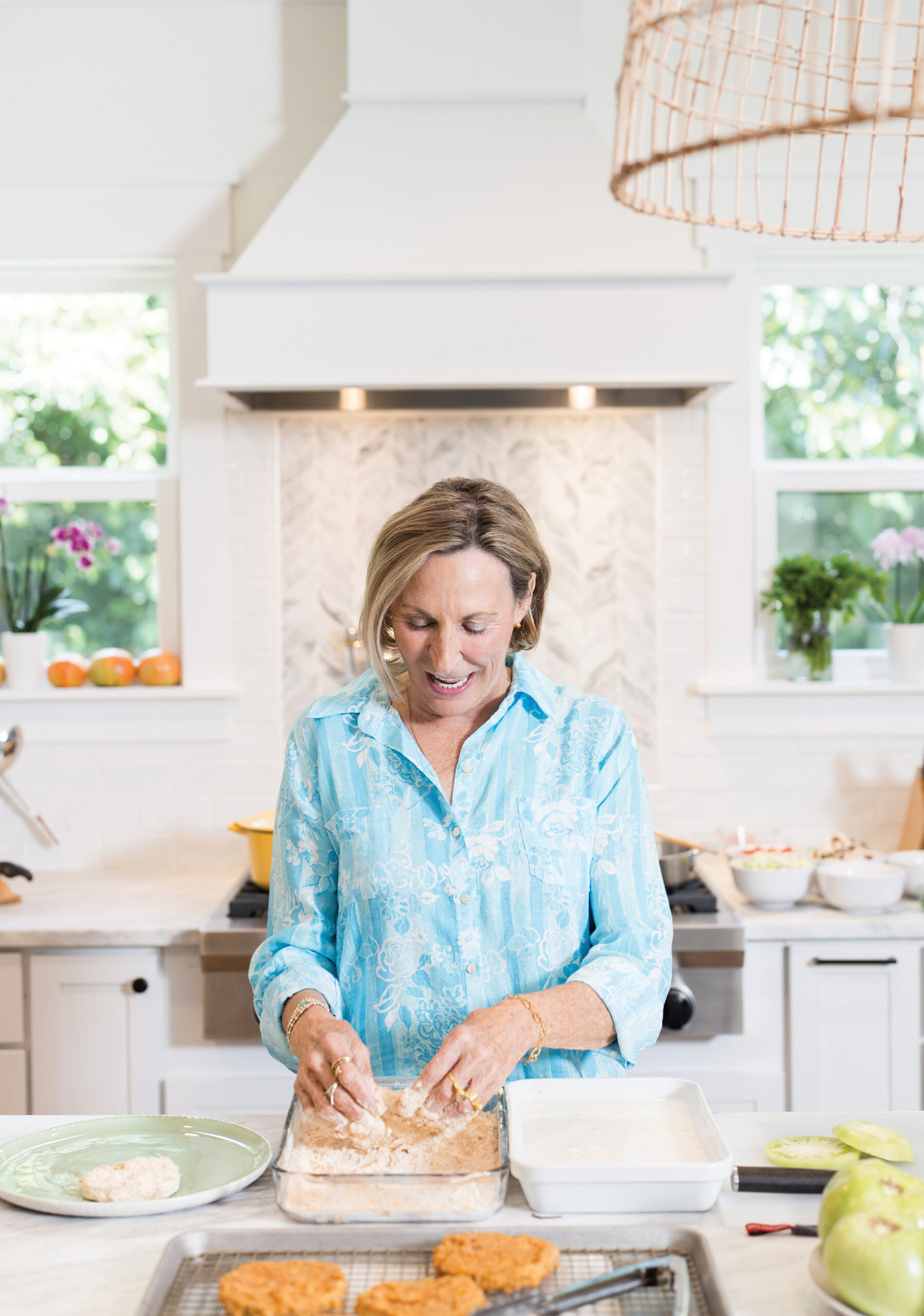
SERVES 4
Ingredients
2 cups all-purpose flour
2 tablespoons LuLu’s Creola Seasoning
1 1/2 teaspoons salt
1 tablespoon black pepper
1 cup whole milk
1 cup buttermilk
1 tablespoon LuLu’s Perfect Pepper
Sauce or any “medium-hot” hot sauce
4 green tomatoes
Peanut oil or vegetable oil, (approximately 6 cups or enough to fill a skillet about 1 1/2 – 2” deep)
Directions
1. Preheat oven to 250 degrees.
2. In a mixing bowl, combine flour, seasoning, salt and pepper. Mix thoroughly.
3. In a separate bowl, combine milk, buttermilk and pepper sauce.
4. Slice green tomatoes 1/4” thick and place in milk mixture to soak.
5. In a cast iron or heavy skillet, heat oil to 355 degrees over medium-high heat. (Use candy or fry thermometer for accuracy or until a little flour flicked into the oil sizzles).
6. Dredge tomatoes through flour mixture, dip back into milk mixture and dredge again in flour mixture, coating tomatoes thoroughly.
7. Fry tomatoes in small batches (approximately 4 at a time) for 1 1/2 – 2 minutes per side, turning once during cooking.
8. Drain on paper towels. Place cooked tomatoes in oven while others are cooking. When all batches are completed, serve immediately.
Key Lime Squares
“My dear friend, Suzanne Cleveland, for years arrived at every pier-party, holiday get-together or general shin-dig with her trademark lemon squares. The children would wait impatiently for her to arrive with a tray of tasty treats, powdered sugar all over their faces and fingers, within minutes. This dessert is inspired by her recipe, with a tart little key lime twist.”
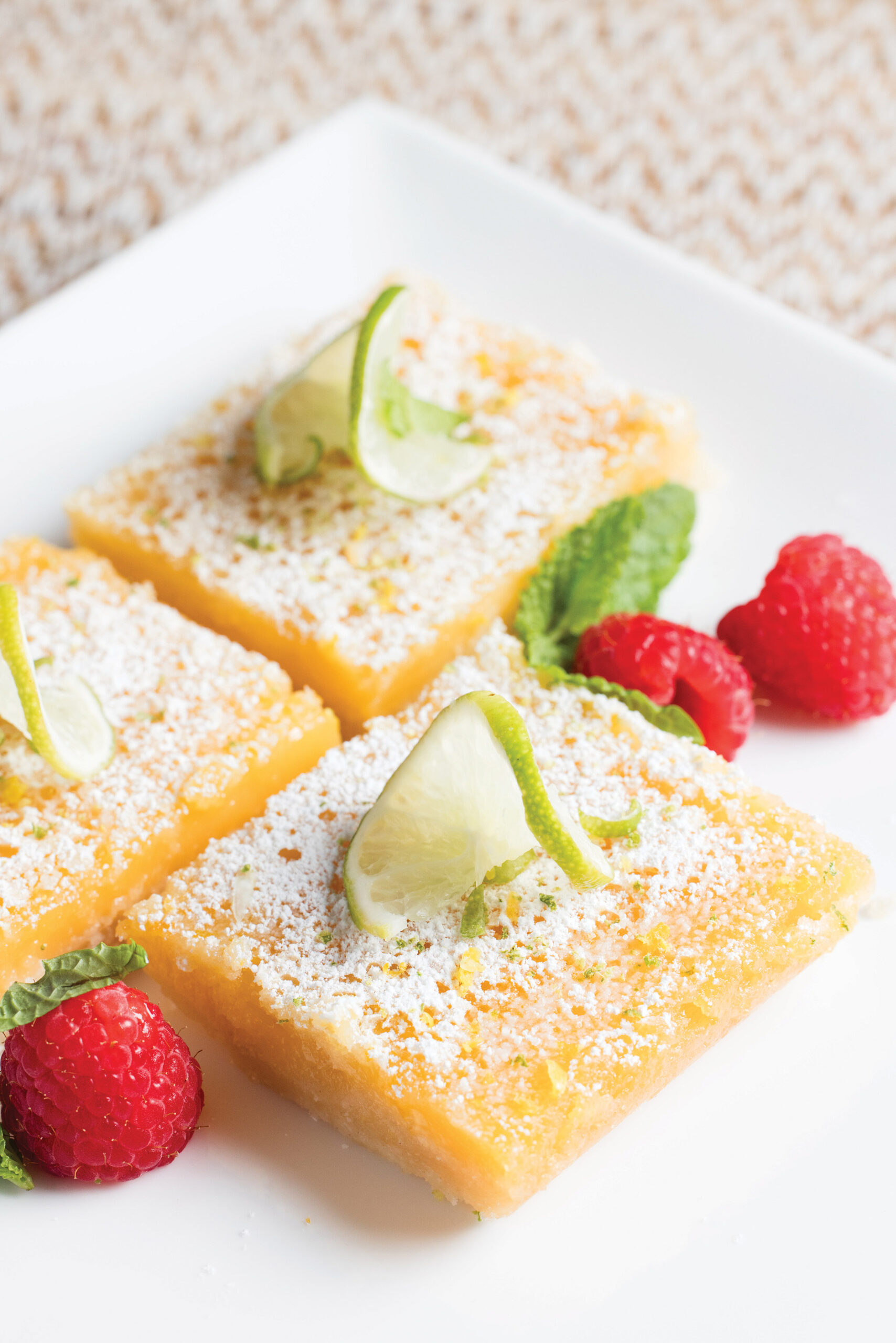
SERVES 10-12
For Crust:
1/4 cup blanched almond slivers
1 cup unsalted butter, softened
2 cups all-purpose flour
1 tablespoon powdered sugar
1/4 teaspoon almond extract
For Filling:
5 eggs
2 cups white sugar
3/4 cup key lime juice
Pinch of salt
1/2 teaspoon orange zest
1/4 cup powdered sugar
Directions
1. Preheat oven to 350 degrees. Grease and 8 x 12” glass baking dish and set aside.
2. Using a mini food processor, chop almonds into a coarse meal.
3. In a large mixing bowl or food processor, combine almonds, butter, flour, 1 tablespoon powdered sugar and almond extract. Blend into a thick dough and pat into the bottom of prepared pan.
4. Bake the crust for 15 minutes then remove from the oven and set aside. Reduce oven temperature to 325 degrees.
5. Gently beat eggs. Add white sugar, salt, key lime juice and orange zest. Mix thoroughly.
6. Pour key lime filling over partially baked crust and return to the oven.
7. Bake 20 – 30 minutes or until key lime filling sets.
8. Remove from oven and cool.
9. Sift remaining powdered sugar on the top and cut into squares.