There’s no song like a Jimmy Buffett song. With just one guitar strum and a single line, he can transport you to a tropical paradise or on one of his many adventures. A talented lyricist, he had a knack for blending specific references with universally relatable themes, creating music that can be enjoyed by anyone, yet still with a poignant sense of place.
One of the places that shaped Buffett was his hometown of Mobile. No doubt that his life near the port, the Bay and the beaches inspired his nautical lifestyle from a young age. Locals are all familiar with stories of his days as a boy at St. Ignatius Catholic School and McGill Institute and, later on, his nights playing at The Admiral Semmes Hotel. Days spent at beach bars and performing in his usual Gulf Coast joints honed his craft before fame hit; later on, they’d serve as the places where Buffett reconnected with his roots, with surprise concerts now and then when he was back in town. These stories go beyond word-of-mouth recollections. They also show up in his songs. While most Parrotheads think of places like Key West and the Bahamas when singing Jimmy Buffett songs, references to the Port City — both direct and indirect — and how it shaped Buffett can be found in his lyrics amongst his signature escapism, storytelling and tall tales.
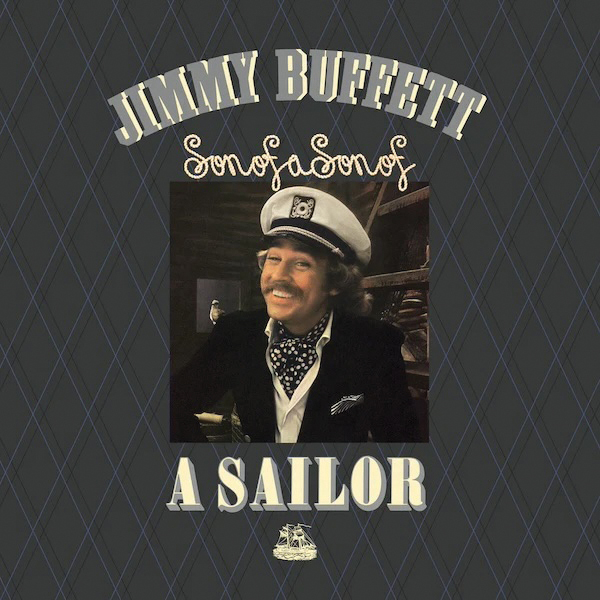
I’m just a son of a son, son of a son
Son of a son of a sailor
The sea’s in my veins, my tradition remains
Buffett sings about his family’s lives in his hit “Son of a Son of a Sailor.” The song details the lives of his grandfather, James Delaney Buffett, who was a steamship captain, his father, J.D. Buffett, who traveled with the Army Corps of Engineers before moving his family to Mobile to work for the Alabama Dry Dock and Shipbuilding Company, and young Buffett as he grew up in the port town of Mobile and later worked in the shipyards himself. The song details the similarities between the three generations of his family and how his family’s seafaring history influenced his own need for adventure on the waves, no doubt emphasized by the backdrop of Mobile’s port and the proximity of the Gulf Coast beaches. Buffett sings, “I’m just a son of a son, son of a son / Son of a son of a sailor / The sea’s in my veins, my tradition remains…”
Hands up high, eyes open wide
Throw me something mister, that’s why you ride
Cracker Jacks with toys inside
Real beyond our wildest dreams
Floats and masks and a two mule team
Some things really are the way they seem
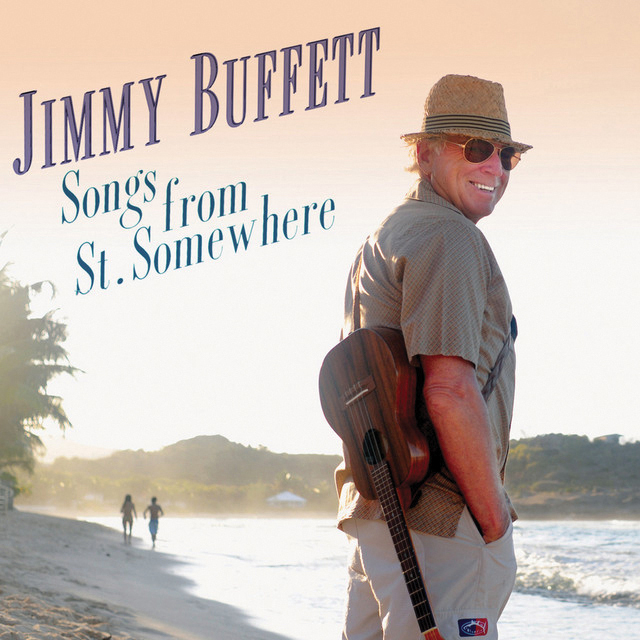
There’s hardly an exploration of being raised in Mobile that doesn’t eventually lead to Mardi Gras. Buffett got a healthy dose of Carnival in the Port City and also in New Orleans, where he had family history, eventually living in the French Quarter and playing in a band on Bourbon Street for a time. All of these experiences are chronicled in “Serpentine,” track five of his 2013 album “Songs from St. Somewhere.” The song explores what Buffett describes as his “early Carnival years,” watching the Mardi Gras magic unfold.
He sings, “As I side-stepped those brothers with their sacred hearts / Yet for those two weeks a year, it was all about sin / Folly’s chasin’ death, you can count me in.” The first line describes his days at McGill-Toolen Catholic High School, known then as the all-boys McGill Institute, where the Brothers of the Sacred Heart served for 93 years. Buffett was an altar boy from a young age until about 17. In “Serpentine,” Buffett contrasts the structure and order of his days at the private Catholic high school overseen by the religious brothers with the indulgence and frivolity the entire city got away with during the Mardi Gras season, allowing even the most pious to let loose and have a little fun.
Throughout the song, Buffett references a famous Mobile saying — “Throw me something mister, that’s why you ride” — the pair of leaders that is a staple of the OOM parade — “Floats and masks and a two-mule team / Some things really are the way they seem” — and a favorite Port City throw before the city banned them in the 1970s and the MoonPie took over — “Cracker Jacks with toys inside.” While the sea and Jimmy Buffett are hardly separable, Mardi Gras surely gave him his spirit of always having a good time. It’s this spirit that is evident in his music, with Buffett later admitting in the song, “Though tomorrow would bring ashes and penance by the ton / Mardi Gras’s where I learned to have fun.” New Orleans references mix with those from Mobile to paint a full, colorful history of Buffett’s Carnival escapades — which later included secretly riding in the KOR parade in Mobile Mardi Gras.
Some Port City landmarks, haunts and locations where Buffett spent ample time as a young boy eventually made it to his lyrics when he took up songwriting as a young adult. His 1994 song “Love in the Library” chronicles a story of a crush in a place that he often visited: The Mobile Public Library. He sings of the Ben May Library “on the corner of Government and Bay Avenue” that was cool and calm, where no one noticed how the “sirens were wailing in the gulf coastal heat” outside. The library was the perfect place to study and cool off…and to observe people, a trifecta for a then-reserved boy with a big imagination. There, as the song goes, Buffett notices his crush amongst the bookshelves. In a COVID-era video series in which Buffett explored the meaning behind some of his songs, he said the song took him back to Mobile, where he’d spend lots of time studying Civil War and Gulf Coast history in the air-conditioned library. “It was hotter than the hinges of hell in Mobile, Alabama, when I was growing up,” he quips. As for the inspiration for the love interest in the song? “There was a cute librarian at the time.”
Passed the old joints, my favorite haunts
We’d stay for twelve or ten
Ain’t it quite funny word gets around
I heard I was in town
His 1982 song “I Heard I Was in Town” was inspired in part by a hangout popular with crowds on both sides of the Bay. Buffett frequented Judge Roy Bean, a bar in Daphne with a larger-than-life reputation, to play shows as he was building his repertoire and fine-tuning his craft in the Bay area. Even when Buffett’s career began to take off, when he was home, he would sometimes come to Judge Roy Bean to have a few rounds, chat with friends — which included bar owner John Warren “Jack” West — and maybe play an impromptu show.
Word spread about these pop-up shows, and West sometimes used it as leverage to drum up business, starting rumors that Buffett just might show up that night, whether he knew it for sure or not…you just had to be there to see. Sometimes, the rumor turned out to be true, and Buffett would play a concert. Regardless, the place was packed whenever there was a whisper that Buffett might show, so much so that the rumor might even have reached Buffett before he reached Judge Roy Bean. In the chorus to “I Heard I Was In Town,” Buffett muses, “Passed the old joints, my favorite haunts / We’d stay for twelve or ten / Ain’t it quite funny word gets around / I heard I was in town.”
One popular Buffett hit has been taken by fans to reference another south Alabama attraction, though the song’s beginnings were quite different. “Bama Breeze” was written by Chris Tompkins, Josh Kear and Mark Irwin about an old bar in Decatur, Alabama, and the song was recorded by Buffett in 2006. His tropical flair and a few lyric tweaks immediately transformed the song into an ode to Gulf Coast bar culture, and the release after Hurricane Katrina paid homage to those the hurricane destroyed. Buffett sings, “At the Bama Breeze / You’re one of our own down there / You’ll never drink alone down there / Good god, I feel at home down there.” Despite its origins, the song is widely believed to be inspired specifically by the Flora-Bama, which Buffett describes as “the rally point of my misspent youth.” In the first verse, he sings about getting caught smoking a joint behind the bar while out in his car and being taken to jail, only to be bailed out with money from the bar’s tip jar. Whether true or fabricated is not the point. The image, like so many of Jimmy’s, is poignant enough to push the story forward and make the ode to Gulf Coast bars that much richer.
Buffett also occasionally poked fun at Mobile’s collective love of tradition (and resistance to anything viewed as being more experimental). In his 1974 song “Saxophones,” he sings, “I’m doin’ really nice and travelin’ around / But they won’t play my record in my old hometown.” In the chorus, he quips, “But if I had saxophones… I could get some recognition from that Mobile, Alabama, DJ.” Little would Buffett have expected the lyrics to his rendition of “Stars Fell on Alabama” to live on at Bay-area celebrations (sometimes with saxophones, sometimes without): “Right up over Spanish Fort into Mobile, my hometown…”