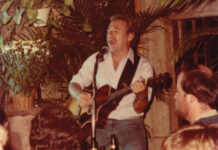
Although Milton Brown grew up in 1940s Mobile, with parents who loved opera and classical music, young Milton, ear to the radio, fell for country and bluegrass. At the University of Alabama, he bought a $10 pawnshop guitar, joined a country music band at his fraternity and started writing his own material. He graduated, did a stint in the U.S. Army and returned home, marrying Margaret Luce and working in the family industrial business, and later real estate, still dreaming of being a songwriter. He became co-owner of Product Sound Studio at Mobile’s Loop, making demos for others yearning to become recording artists.
The year was 1969. America was mired in Vietnam. Popular music was the young generation’s soundtrack. Topping the pop charts was the Rolling Stones’ “Honky Tonk Women” and the country charts boasted Merle Haggard’s “Okie from Muskogee.” There was a mellow groove, too, musicians like John Denver, Jim Croce and Gordon Lightfoot.
Into Product Sound Studio one day, Brown welcomed Margie Washichek, Miss USS Alabama, who made an appointment for her boyfriend. He’d played with little success in a bar band on New Orleans’ Bourbon Street, returned to Mobile to work in the shipyard and take gigs at the Admiral’s Corner, a hotel lounge. He wanted to make some recordings.
“He walked in, and his smile lit up the room,” Brown recalls of 23-year-old Jimmy Buffett. “I remember thinking, ‘I wonder if he can sing.’”
The answer was evident to Brown right away. After Buffett cut a few demos, a folk-pop sound like Lightfoot’s, who was a favorite of Buffett’s, Brown said he was impressed. But breaking into the music business was tough.
Brown remembers, “Jimmy asked, ‘Can you help me?’”
Brown had developed contacts in Nashville and was starting to manage some Mobile-area musicians. He agreed to agent the big-smiling, gentle-crooning song-maker.
In May of 1969, the two men signed a three-year contract. Ten percent of the artist’s revenues during that term would go to Brown, including monies “after the expiration of the term,” from royalties, for example, for songs produced during that period. It was hardly lucrative.
Brown pitched him to local radio stations. “I played the demos he’d cut in our studio. They said, ‘He doesn’t fit our format. He’s not country, he’s not pop.’ Jimmy later told me, after he was a success, ‘They said they didn’t have a genre for me. And now I am a genre.’”
Brown offered him as the entertainer for a preliminary pageant night of America’s Junior Miss, forerunner of America’s Distinguished Young Women. No luck.
On the pageant board, Brown finally got him a gig playing a 7 a.m. breakfast. He can still see the boyish charmer perched on a stool, strumming and singing, teen girls from across the nation gathered around.
“They seemed to like it,” Buffett wrote in “Buried Treasure” of his appearance, with the “Junior Miss contestants singing along” to his cover of the Mamas & the Papas’ smash hit, “California Dreamin.’”
Brown tried to get him a raise, too, at the Admiral’s Corner, where Buffett became full-time.
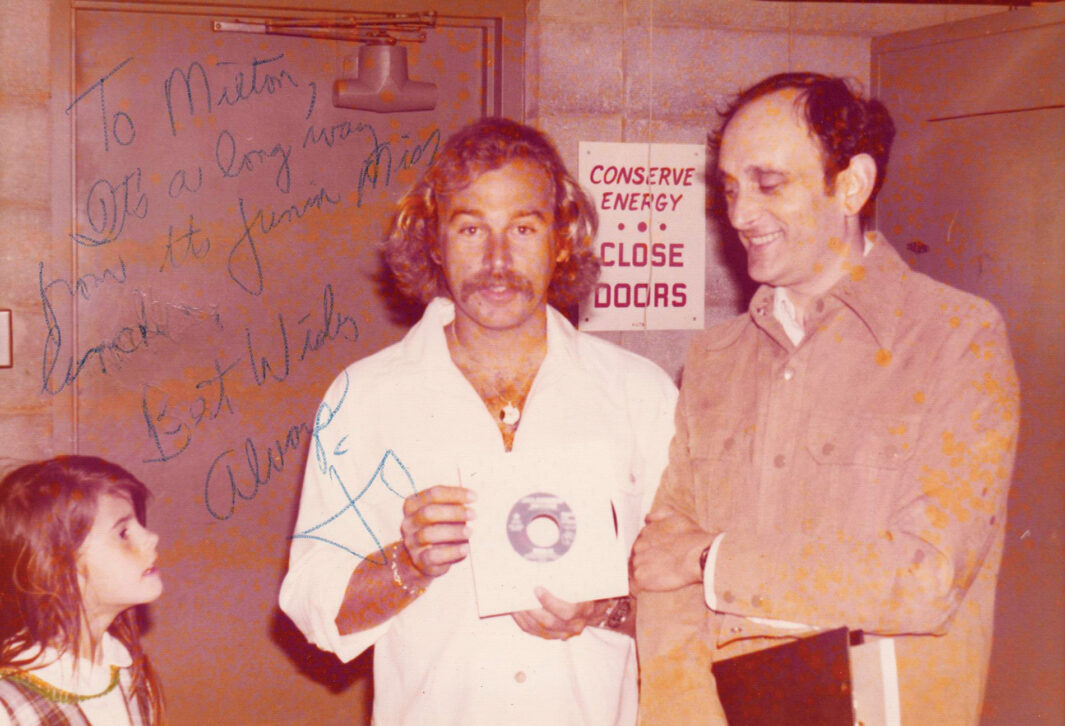
Years later, having made it big, Buffett signed one of his many photos to Brown, “A long way from the Junior Miss…”
“Milton was the wizard who found me work around town and was my first manager,” said Buffett in “Buried Treasure,” a collection of his demos from Product Sound and other studios, discovered decades later.
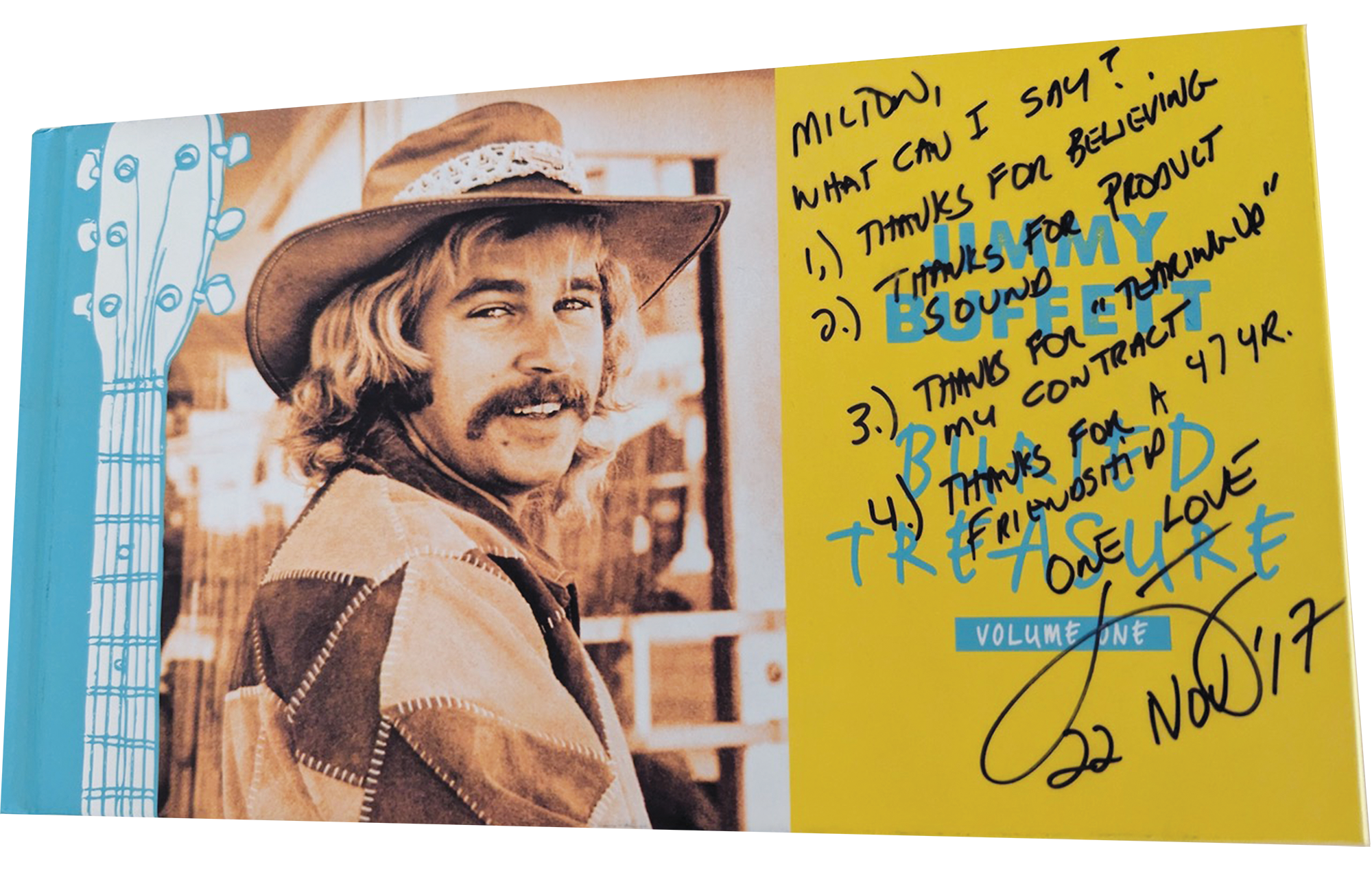
Those demos — reel-to-reel tapes, with studio musicians backing — were essential to getting a start. Brown recorded some of his own in Nashville, where Travis Turk, of Product Sound, had moved to be recording engineer for Buzz Cason. Cason had just founded Creative Workshop to develop and produce new artists. According to their website, “before the paint could dry they were tracking a young songwriter from Mobile named Jimmy Buffett.”
Paydirt! CBS Records in Nashville offered Buffett money and a deal to cut an album. Brown went to Nashville to finalize it but the deal fell through.
Buzz Cason stepped in, offering Buffett money and a contract. Complications ensued.
Brown was back in Mobile when his phone rang.
“Jimmy called me up from Nashville, almost crying, saying, ‘If you don’t tear up the management contract, Buzz won’t sign me.’”
Buffett’s future was in Brown’s hands. “I could only take him so far in Mobile,” Brown realized. “I said to Jimmy, ‘Consider it torn up.’”
That canceled contract turned up years later in a box of papers in Brown’s office, now part of his Buffett memorabilia. He’d tease Buffett and his mother, Peets Buffett, about the revenue he would have generated if he’d gotten his 10%.
Does he, deep down, have regrets that he retained no piece of the action?
He shakes his head, having enjoyed his own songwriting success, and forever celebratory of the musician whose career suddenly became supercharged in 1977 with the chart-zooming “Margaritaville.”
“‘Margaritaville,’” Brown observes, “was the beginning of Jimmy’s island sound, that sun-and-sand feeling, kick back, have a drink, relax in the sun. That was the turning point.”
No matter that Buffett was the joyful leader of an ever-vaster Parrot Head Nation, a “sand-between-the-toes Caribbean cowboy,” as Brown describes his persona.
“Our spirit of friendship,” Brown explains, “never went away.”
Buffett felt the same.
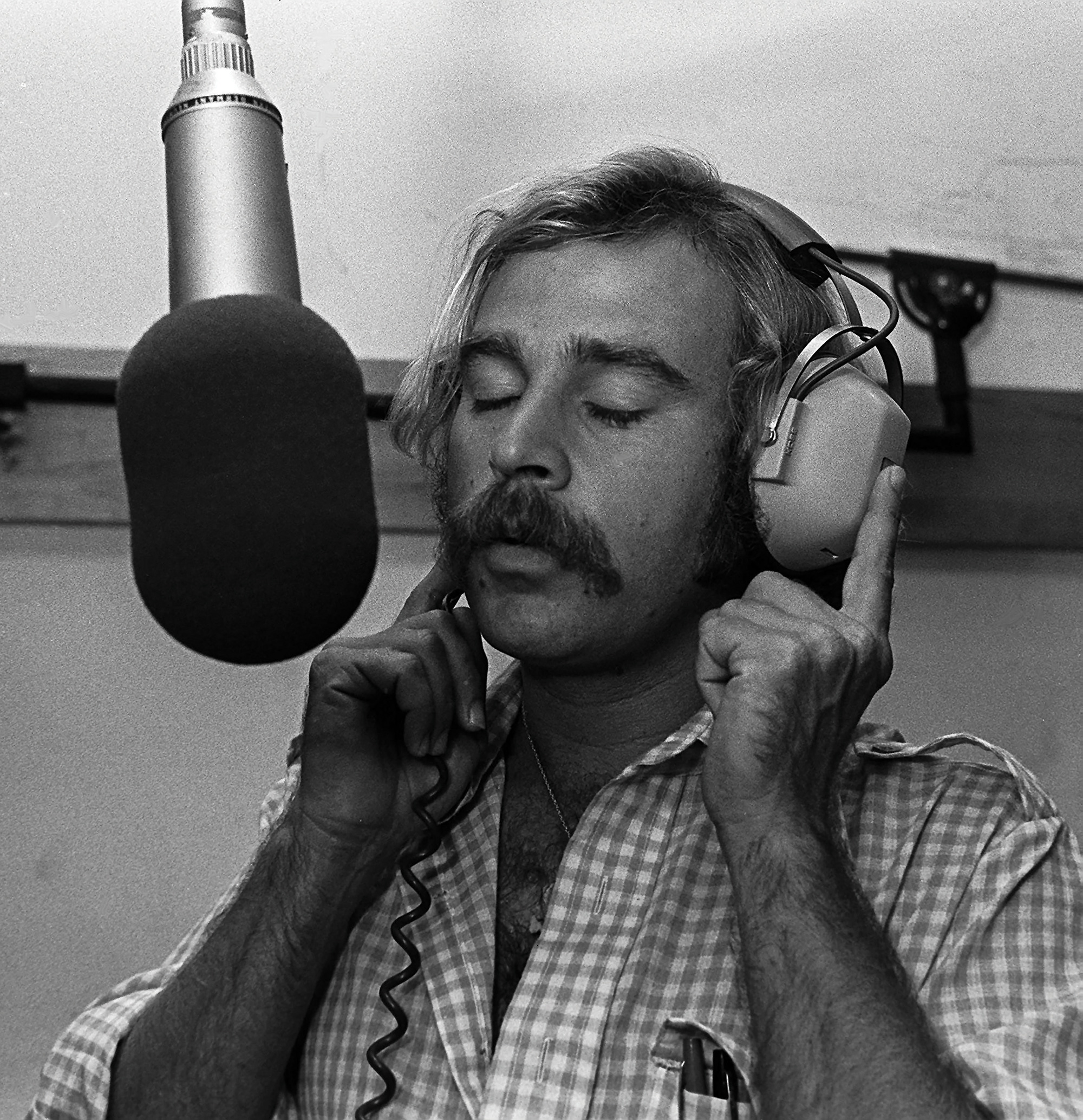
In Brown’s office, on a framed image of “Buried Treasure,” produced in 2017, is Buffett’s handwritten note: “Milton, what can I say? 1.) Thanks for believing. 2.) Thanks for Product Sound. 3.) Thanks for ‘tearing up’ my contract.’” 4.) Thanks for a 47 year friendship. One love. 22 Nov. 2017.” While moving in different orbits, the two men kept close over the years.
After a brief marriage to Washichek, Buffett married Jane Slagisvol in 1977, raised daughters Savannah Jane and Delaney and son Cameron. Milton and Margaret Brown had son Sam and daughter Margaret. For both men, devoted to generations of their families, music remained a heartbeat.
In 1969, Brown sold publishing rights for his first song in Nashville to Country-Western star Ernest Tubb, who recorded, with Loretta Lynn, Brown’s “I Won’t Cheat on You Again if You Won’t Cheat on Me.” The following year, when Buzz Cason placed Buffett’s first album, “Here on Earth,” with Barnaby Records, Brown co-wrote with Buffett “The Christian?” with its lyrics about religious hypocrisy: “Could you really call yourself a Christian/If charity cost half as much as beer.”
As a songwriter who came up with lyrics, Brown later collaborated with Steve Dorff, who composed melodies, their creations recorded by singing cowboy Roy Rogers, Canadian pop star Anne Murray and rough-and-tumble Merle Haggard. Through a Hollywood producer, Snuff Garrett, they answered a call to pitch a theme song for a 1978 Clint Eastwood movie, “Every Which Way But Loose.” Eastwood had rejected attempts by other songwriters but when he heard the Brown-Dorff number, he said, “Play it again,” then, “That’s it!”
Country sensation Eddie Rabbitt performed the track, and when it debuted as a single in November 1978, it hit the Billboard Hot Country Singles chart at an amazing #18, skyrocketing to #1 for three weeks in February 1979.
It’s a story, among others, that Brown recounts in his memoir, “Lyrics from Home: The Stories Behind the Songs” (Atmosphere Press).
For the movie sequel, “Any Which Way You Can,” the Brown-Dorff duo supplied the theme song for Glenn Campbell.
Over the years, Brown’s colleagues in the music business and in Hollywood had advised him that relocating to Nashville or Los Angeles was essential to accelerate his career. No way.
His wife Margaret did not want to leave her grandmother and he did not want to make a life on the road. He wanted to deepen his lifelong connection to his hometown and give their children something of the same upbringing they had known. Sam became a game builder, daughter Margaret an Emmy-nominated documentary filmmaker. From the Bay to their longtime Spring Hill neighborhood to Gulf Coast culture and the arts, Milton and Margaret flourished right where they started out.
And Blake Shelton, Brown says, has made a new recording of “Every Which Way But Loose.”
But he always stayed connected to that 23-year-old bard with a guitar who’d made his first demos at Product Sound, located over a dentist’s office at the Loop. He speaks with emotion of their times together over the years. Brown was at his home in Mobile, November 2022. The phone rang. “Hi, Milton, it’s Jimmy. How about a visit?” “When?” “I’m at the airport in Mobile.” Shortly after, Buffett arrived in an Uber, the driver having no idea of his famous passenger. Buffett took a seat on the sofa and played with Max Pickle, daughter Margaret’s wire-haired dachshund, who was staying there while she was traveling. “We had a great visit,” Brown says. “We laughed. We revisited a lot of good times.” Sadness enters his voice.
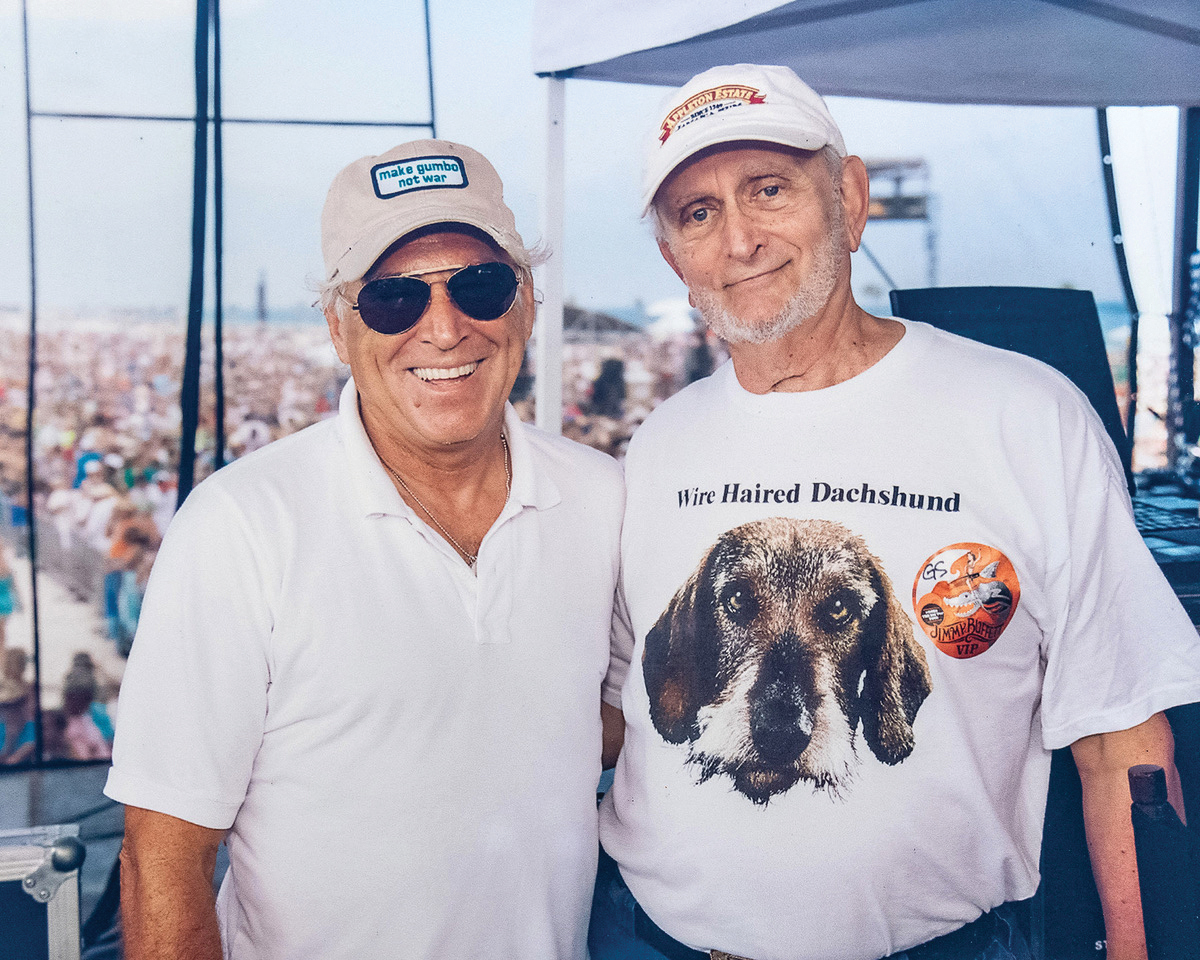
Another memory comes, this one jubilant. It was July 11, 2010, Buffett’s benefit concert for the Gulf Oil Spill. Brown met up with him backstage in Gulf Shores, just before the show. “He was a giant in his field, at the height of a career that lasted,” Brown says. There were thousands, packing the sands. “But he never lost his humility.” The concert was starting soon. Waves lapped the shoreline. “When he looked out at the audience, it was literally as far as you could see down the beach. Jimmy looked back at me and said, with awe, ‘Can you believe this?’”
“Yes, Jimmy, I believe it.”