Jimbo Meador never told people he was going fishing with Jimmy Buffett. He just told them he was going fishing.
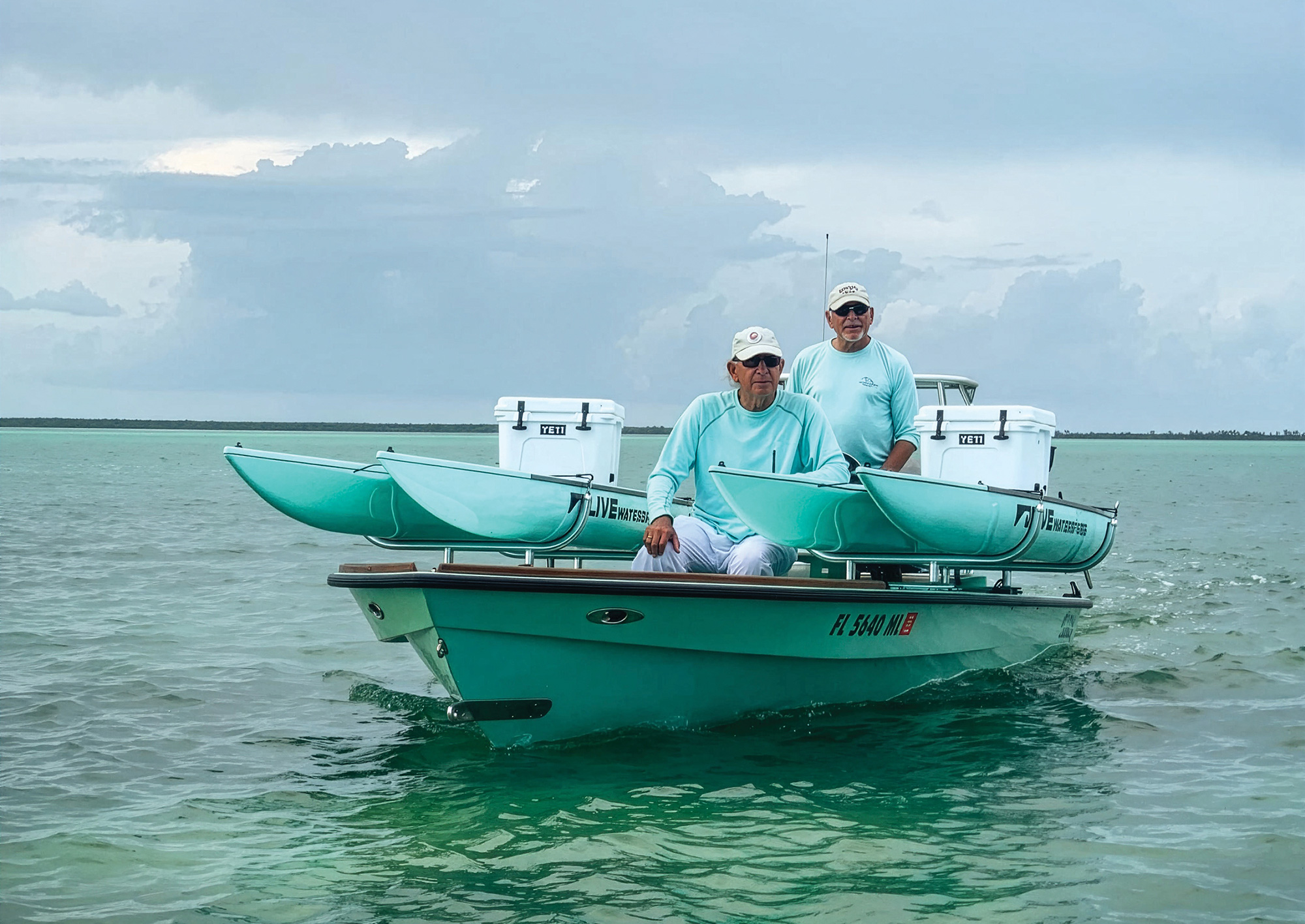
Sometimes that meant loading a fly rod and disappearing into the Bahamas aboard a boat equipped with everything an angler could imagine. Sometimes it meant climbing into a seaplane and searching the islands from above for hidden flats, untouched surf breaks and places where no one else had been. Sometimes it meant paddling through mangrove tunnels into secret water where bonefish had rarely, if ever, seen a fly. But Meador never saw much reason to mention who was beside him.
“I kept a low profile,” he says. “I didn’t tell anybody I even knew Jimmy Buffett. Most people didn’t even know I knew him because I never said, ‘I’m going fishing with Jimmy,’ or ‘I’m going to the Bahamas with Jimmy.’ I just said, ‘I’m going fishing.’”
That may explain why their friendship worked. To millions of fans around the world, Jimmy Buffett was Margaritaville. He was packed arenas, tropical escapism and the soundtrack to countless summers spent around boats, beaches and bars. But somewhere far from the crowds — standing on a flat with a fly rod in his hand, searching the water for the shadow of a bonefish — he was simply Jimmy.
Meador first knew Buffett when they were growing up together in Mobile. “We didn’t know each other well,” Meador says, “but we knew each other.”
The friendship really developed years later through another passion entirely: rowing.
Meador had become interested in rowing shells — the long, narrow boats used in competitive rowing — and Buffett became intrigued.
“He saw me rowing and decided he wanted to row,” Meador says.
Before long, Meador was teaching him. Anyone who has tried rowing a proper shell knows it is not as simple as pulling oars. The timing, movement and rhythm all have to come together.
“It’s like rubbing your stomach and patting your head,” Meador says. “There are so many different strokes. You’ve got to feather your oars and all that.”
From rowing, the friendship naturally drifted toward the water in another form: fishing.
At the time, Meador was deeply involved in fly fishing. He worked with Orvis, taught fly casting and was particularly drawn to saltwater fly fishing. Buffett was already a lifelong waterman — a sailor, surfer, pilot and fisherman — and he became fascinated with chasing bonefish, permit and tarpon on the flats.
Soon, Meador was joining him on trips throughout the Bahamas.
“He’d invite me to go fishing and we’d go fishing,” he says. “I was doing what I loved to do.”
They were not ordinary fishing trips. Buffett had the curiosity — and the ability — to explore the ocean the way most fishermen only dream about. They traveled by boat and seaplane, sometimes flying over remote areas looking for places worth exploring. His larger boat carried flats boats, paddleboards and everything they needed to disappear for days.
But what interested Buffett and Meador was not luxury. It was finding places other people couldn’t reach and figuring out how to fish them.
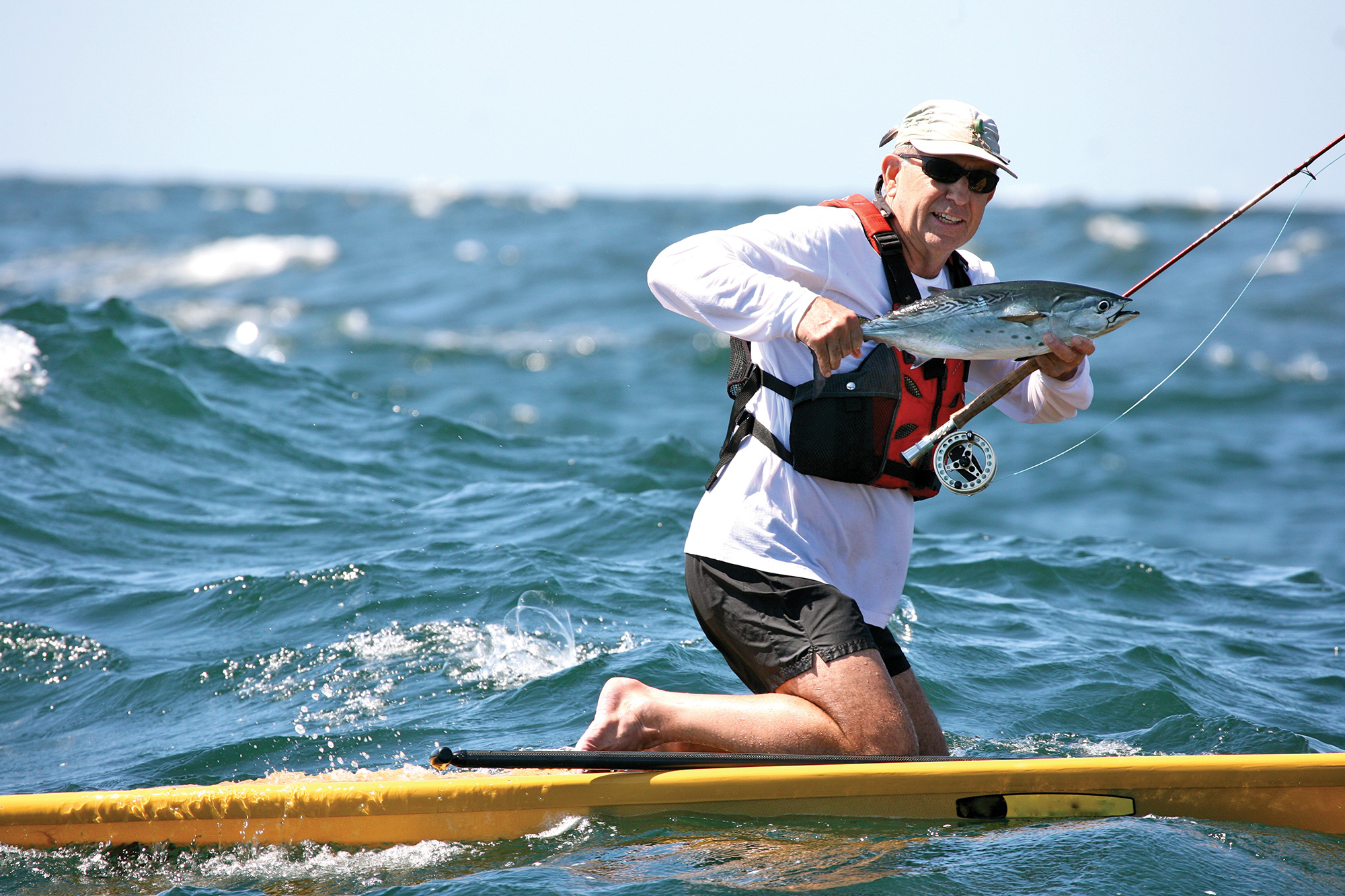
Meador had always been an inventor at heart. He liked solving fishing problems. While most anglers chased better rods, reels or boats, he started thinking about entirely different ways to approach fish. First came kayaks stable enough to stand and fly cast from. Then came stand-up paddleboards modified specifically for fishing.
The advantage — height — was simple.
“A great blue heron has long legs and a long neck,” Meador says. “It has a good vantage point because it can see so much better in the water. So, if you’re standing up, you can see better.”
He designed paddle clips so fishermen could free their hands to cast. He created anchor systems that could be operated while standing. He modified fins to work better in shallow flats. Every change had one purpose: getting farther back. Farther from boats, farther from people, farther from the world.
And Buffett loved that part. “He loved being innovative,” Meador says. “We were doing things nobody else was doing.”
Eventually, they found a place that Buffett gave a name: The Promised Land.
Meador still won’t say exactly where it is. “The Bahamas,” he says with a laugh.
That is about as specific as he gets. The spot was hidden behind mangroves, unreachable by traditional flats boats. The bottom was the soft white marl mud common in the Bahamas, impossible to wade because a person could sink waist-deep.
But paddleboards could cross it.
They would anchor the boat outside, unload the boards and slip through the mangroves into a place where they had the fish to themselves.
“Nobody in a flats boat could go in there,” Meador says. “But we could go in there on our paddleboards, and we had it all to ourselves. It was full of bonefish back then. Happy bonefish.”
Those were the places Buffett loved most. Places where there was nobody waiting for a photograph, nobody asking for a song, nobody expecting him to be Jimmy Buffett. Meador saw firsthand how difficult that could be.
One time, Buffett flew his seaplane to Petit Bois Island, where Meador met him in a flats boat. They purposely chose the middle of the island because most visitors went to the ends. They hoped they could avoid attention.
A seaplane landing on a barrier island, however, is not exactly subtle.
“There wasn’t anybody there,” Meador says. “But within a few minutes there were all kinds of people.”
Someone eventually wandered over. “Is your name Jimmy?”
Buffett tried to avoid the question. Eventually, he admitted it.
“Jimmy Buffett?”
“Yes.”
The man immediately called everyone else over. That was the part of fame Buffett could never fully escape.
“He had a lot of fame,” Meador says. “But he just wanted to be left alone at times.”
On his fishing trips, nobody expected Buffett to be Buffett. “We got back to the boat, and everybody was worn out,” Meador says. “We never asked him to play music. On some occasions, he might want to, but we never asked him.”
The fishing adventures continued for years. And it wasn’t always just about fishing.
“He was a great surfer,” Meador says. “Honestly, he may have liked surfing more than fishing. We didn’t usually fish a place he couldn’t surf.”
There was a trip to Vieques, Puerto Rico, where Buffett surfed while Meador snorkeled and realized the bottom was covered with old military bombs.
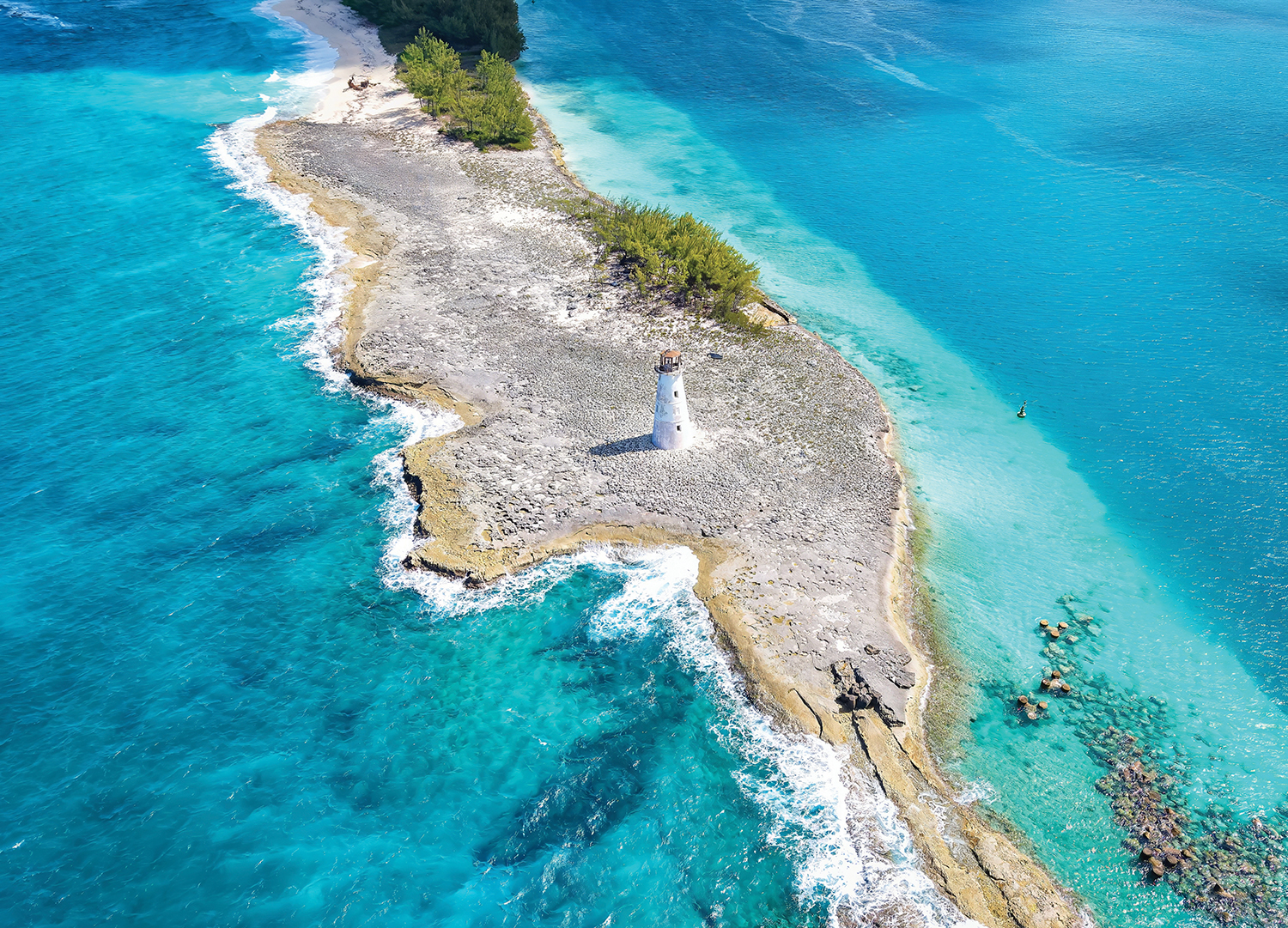
“And he was fascinated with abandoned lighthouses. We’d fly all over, looking for them. There was this one that had a dead whale on the beach and a wrecked plane full of bullet holes. He didn’t usually take anything, but he got one of those whale bones and put it on his boat.”
At the time, Buffett was working on the novel “A Salty Piece of Land,” which centers around a lighthouse restoration, and Meador says those trips were part of his research.
“There was another one he’d wanted to get into, but the door was padlocked. We came back with some bolt cutters, but they’d welded a steel bar over it too. We ended up squeezing through a window. Then we climbed up some rickety stairs to see the light. He was fascinated with lighthouse lights. He’d just want to go up there and look at them.”
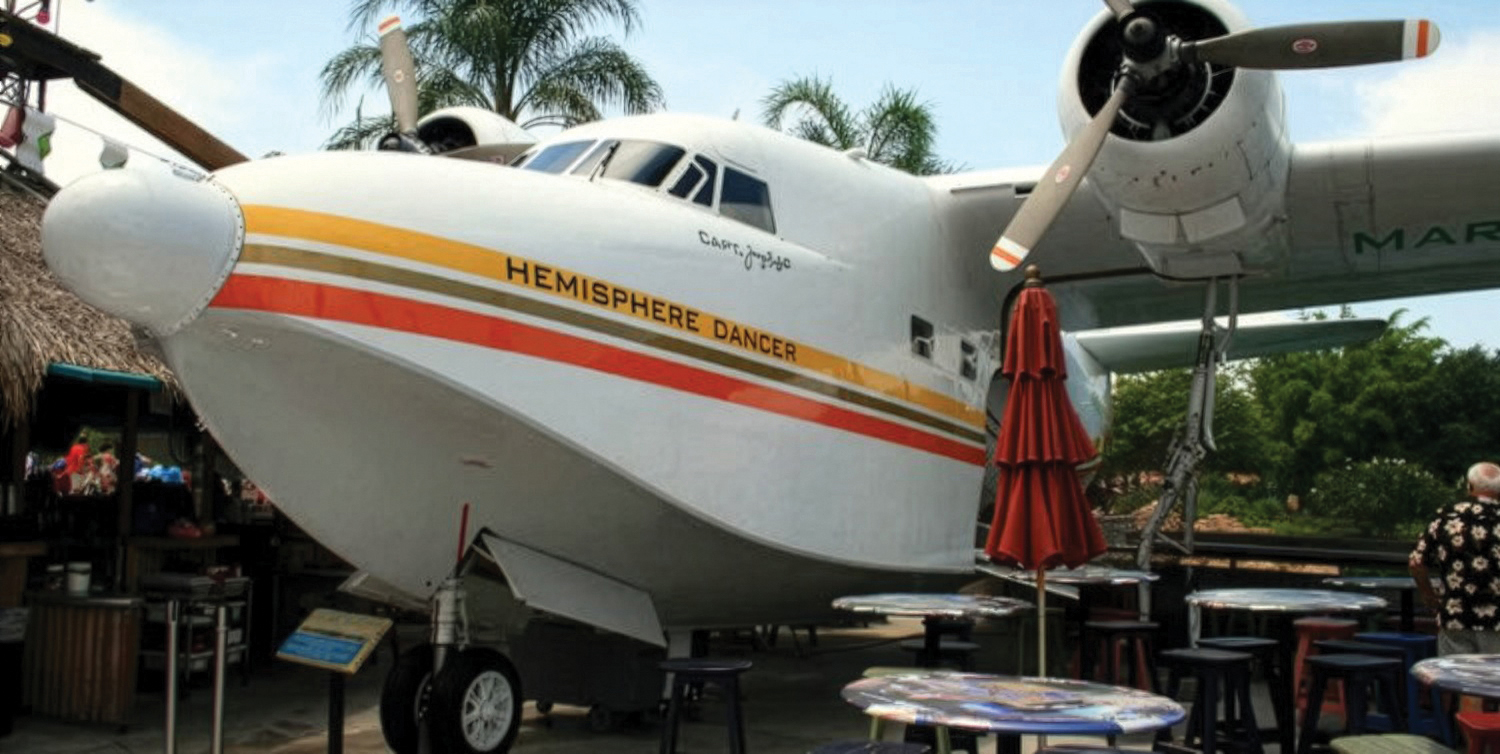
“He loved to fly,” Meador continues. “And he was a damn good pilot. I was never worried.”
There was the time Buffett flew straight through a rainstorm because his seaplane needed washing after landing in salt water.
“He looked at it and said, ‘A wash!’” Meador remembers.
There were also fish stories.
The greatest fish Meador remembers was actually one he never landed. He and Buffett were wade fishing a flat when Meador spotted the largest permit he had ever seen moving along a drop-off. He cast a crab fly. The fish ate.
“Man, he took off across that flat,” Meador says. “My fly line — it was singing through the water.”
Buffett saw the whole thing unfold beside him. The fight eventually became a stalemate. The big permit turned sideways in deeper water, and Meador couldn’t move it. Finally, the hook pulled free. It was gone.
But like many great fishing stories, catching the fish was only part of it.
“Everybody got so excited because they saw the fish,” Meador says. “It would have been better if we’d caught him, but just to see it all happen was worthwhile.”
Buffett loved technology, too.
“He had more stuff than anybody I ever saw in my life,” Meador laughs. “I was kind of the opposite. I just took what I might need.”
Sometimes he had more gear than he needed. Meador remembers deciding to tow some kayaks rather than load them back on the boat. One flipped, scattering Buffett’s gadgets everywhere.
“It took us forever to gather up all his stuff,” Meador says.
Later, Buffett even used drones to help find fish. One day, another boat was tied up near a spot they wanted to fish. Buffett started flying a drone nearby. The fishermen saw it hovering overhead, became suspicious and left.
“So we went over there and fished,” Meador says.
Buffett loved his gadgets. And whenever possible, he liked them in one particular color: seafoam green.
“He loved seafoam green. Everything was seafoam green. His boats, his rods, his paddleboards. One time, he called Yeti and asked them to make him a seafoam green cooler. They said it was a 200-order minimum for a custom color. Jimmy said to send them on. Then he gave most of them away to friends. He was real generous.”
For all the planes, boats, gadgets and adventures, Meador remembers Buffett mostly for something simpler: generosity.
“He was a real thoughtful person,” he says. “He looked out for a lot of his friends, especially me. He did a lot for me.”
Buffett even slipped Meador into his music. In “Mailbox Money,” he included a reference to “giggin’ big fat flounders with Jimbo at slack tide.” It was a small tribute to a friend who had spent years protecting the one thing fame constantly threatened to take away: normal life.
When Buffett came home to Mobile Bay, he sometimes used another name. Once, Meador called to meet him at the Grand Hotel. Buffett gave him instructions. Don’t ask for Jimmy Buffett; ask for “Wardrobe.”
It was a small attempt to hide in a world where hiding had become almost impossible. Except out on the flats, past the mangroves. Here, there were no crowds, no cameras and no expectations. Just two friends with fly rods looking for fish.
“I feel blessed to have been able to fly all around with him and go to all the different places we went,” Meador says. “Places that were pretty much unknown, that didn’t have any other humans. I like that, being away from everything.”
Watch the Interview with Jimbo Meador
Interview by Watt Key // Video by Joseph Brennan
Note: Some strong language included