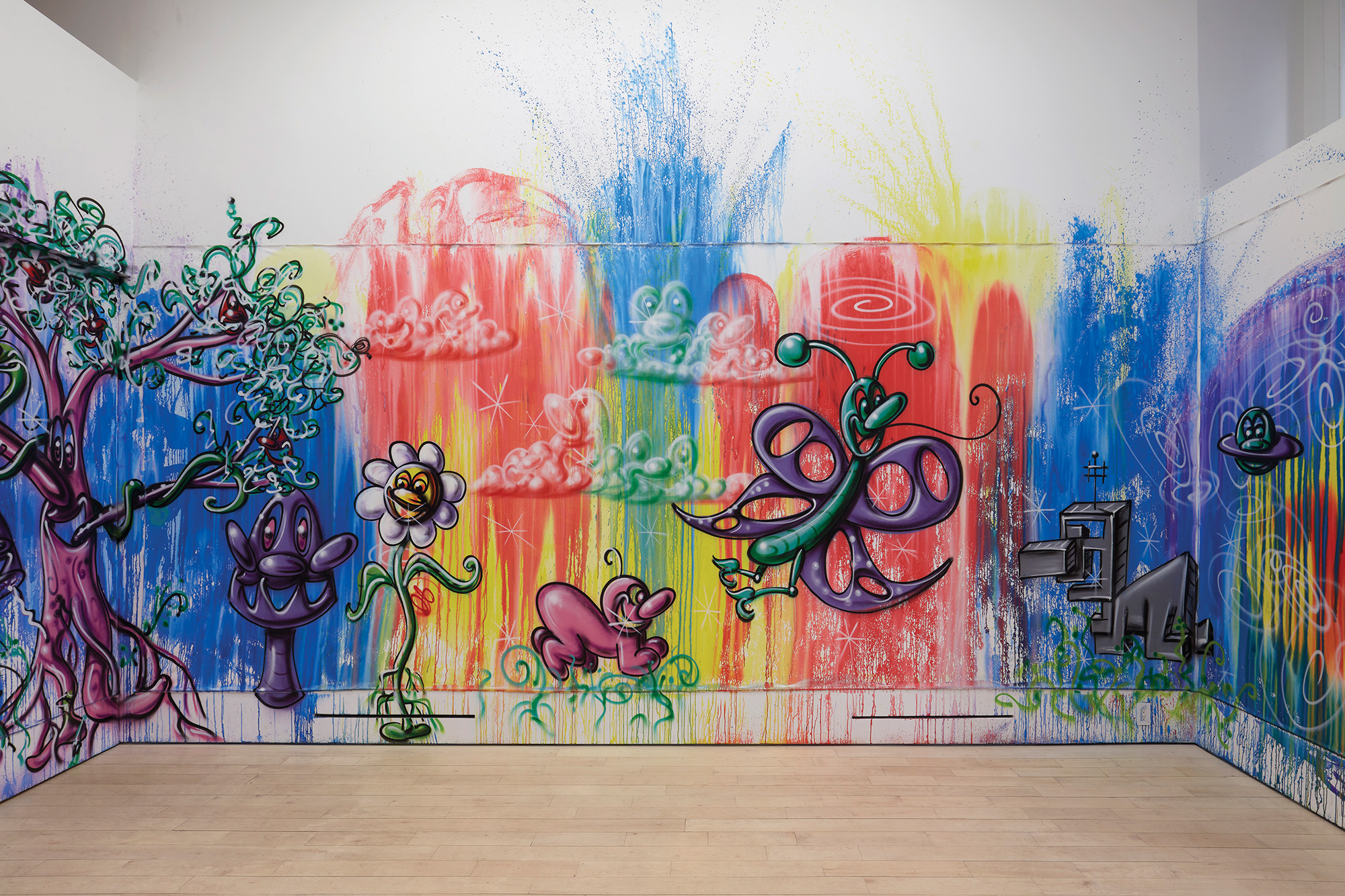
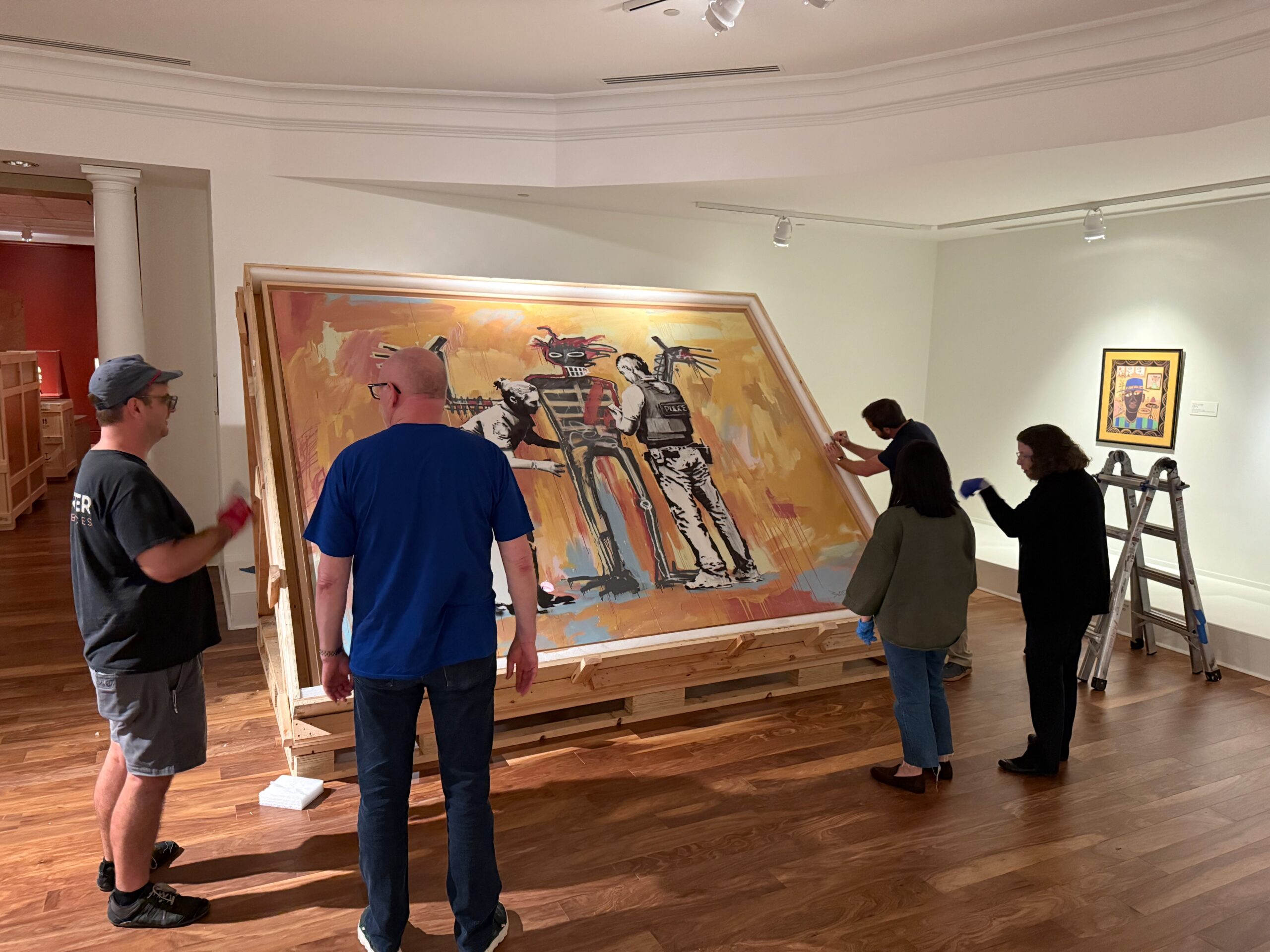
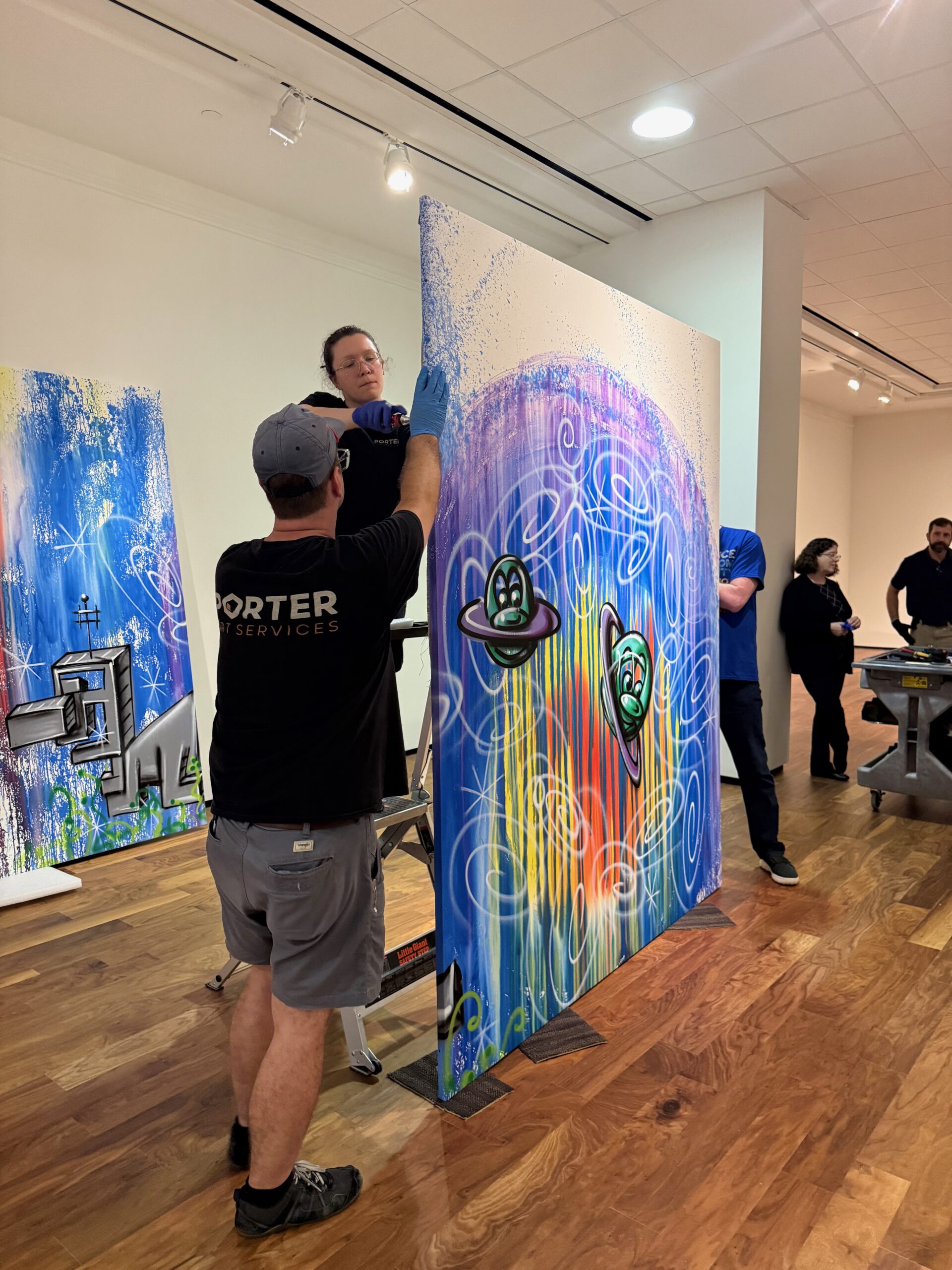
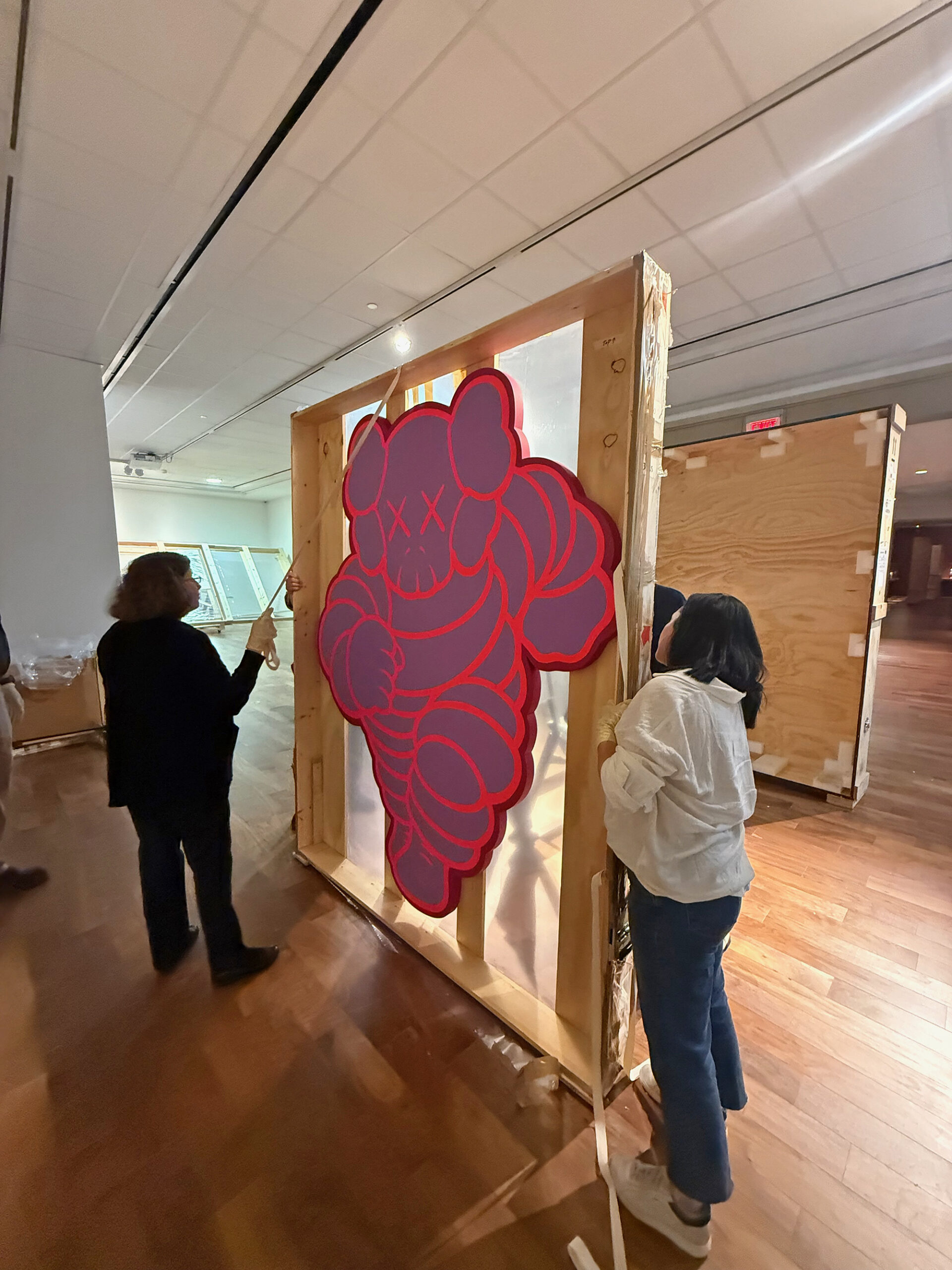
A massive painting on one wall depicts a human-like figure being frisked by policemen — a piece created entirely by Banksy in tribute to Jean-Michel Basquiat — leading guests into the gallery. There, black-and-white stenciling decorated with pops of red characterizes more Banksy pieces. Around the corner, paintings filled with various signs and symbols and, usually, a crown indicate work from Basquiat. On the next wall, tarps painted with a sense of speed and urgency mark the style of Keith Haring. The next wall is covered by a massive piece filled with bright colors and cartoonish characters created by Kenny Scharf. Finally, the last series captures figures with X-ed out eyes, identifying the work of KAWS.
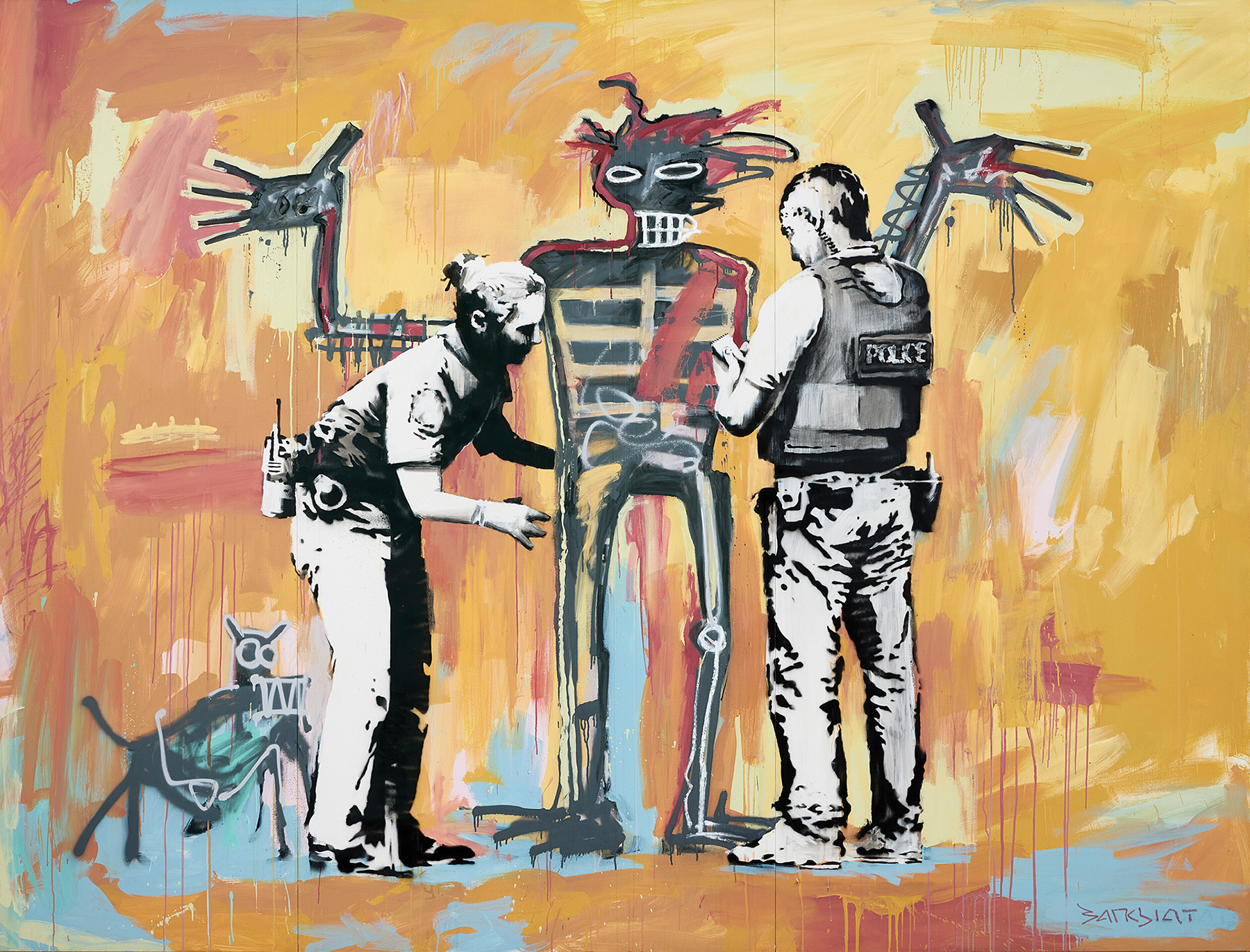
Banksy, “Stop & Search” (2020), Courtesy of Pest Control Office. Image courtesy Mobile Museum of Art
These pieces and these names are well-known even to those unfamiliar with street artists. Of these five artists, most came up through New York’s street art scene in the 1980s, 1990s and beyond, although Banksy started in Bristol, England, in the 1990s before he, too, brought his work to the U.S. All left an indelible mark on the street art scene and went on to achieve wide commercial acclaim. But this incredible, one-of-a-kind display is not in New York, and not even in Paris, London, Hong Kong or Los Angeles. It is in Mobile, Alabama, at the Mobile Museum of Art.
This is not the first time that Mobile has provided a home for these artists’ creations. In fact, one of them has his work on permanent display Downtown. On the corner of South Jackson and Conti streets, bold colors and larger-than-life cartoon characters pop off the old Alabama Contemporary Art Center. The mischievous, whimsical faces wrap around the structure, leading to a silver plaque titling the work “MOBLOBZ” and attributing the spray-painted mural to its creator: Kenny Scharf.
Now, Scharf’s pieces, alongside those from Banksy, Haring, Basquiat and KAWS are featured in “Gateway: From Graffiti to Gallery,” a new exhibition at the Mobile Museum of Art that opened September 1 and has been made possible through Masterworks, an art investment platform.
“Right now, we’re the exclusive venue for this show. This is a big, big moment for our cultural community here in southwest Alabama,” says Jon Carfagno, executive director of the Mobile Museum of Art. Having a show of this magnitude will entice far more than local art aficionados; people from all over the world will be eager to visit this display to see these iconic pieces for themselves. Beyond the expected reaction of marveling at the masterpieces, Carfagno is confident that this show will also encourage both locals and tourists to appreciate Mobile as a city that celebrates the arts.
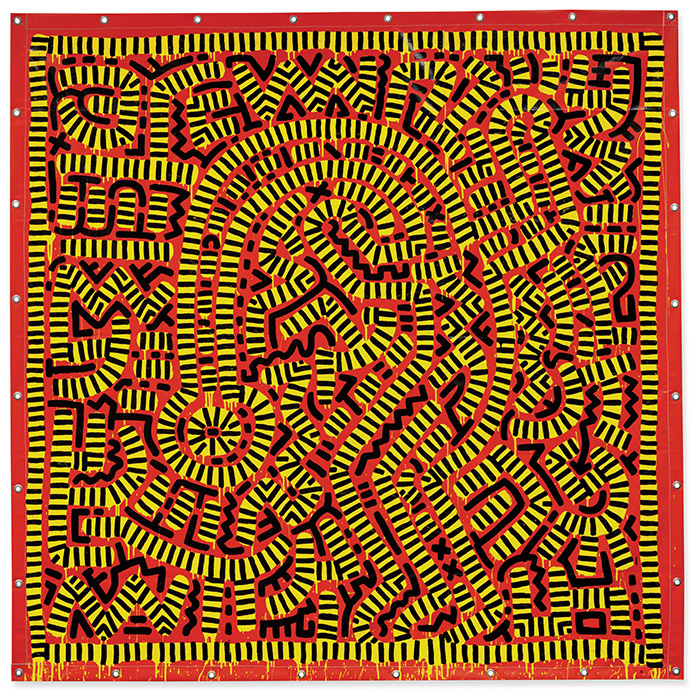
Each of the “Gateway” featured artists is renowned in his own right: the mysterious Banksy, whose identity has never been confirmed, is widely recognized for his social and political commentary and pieces like “Girl with Balloon,” which will be included in the “Gateway” show. Brian Donnelly, known as KAWS, repeats characters and motifs and often uses a black “X” in the place of eyes. Keith Haring’s style is vibrant and energetic while Basquiat’s is gritty and raw. The final featured artist is, of course, Kenny Scharf, whose ties to Mobile make his inclusion in the collection even more meaningful to the Bay area. But, until now, these artists have never been displayed together in this way. All that is changing now that the Mobile Museum of Art and Masterworks have worked together to curate this exceptional collection.
As for how Masterworks got involved in the project, it is largely due to the role the Bay area has played in Nigel Glenday’s life. For Glenday, who has served as the chief financial officer of Masterworks since 2019, Mobile has been an anchor throughout childhood, college and beyond. Moving here was never a matter of “if,” but “when.” His stepmother, Kay Giddens Glenday, is a native Mobilian, so he first visited Mobile as a child; despite having lived in major cities and even in Paris, his family home in Point Clear always made him feel at home in his “adopted hometown.” It came as no surprise to him when he married a woman from the Bay area. In New York, he met his wife, Betsy Clarkson Glenday, through a blind date — ironically, set up by a mutual friend in Mobile. The two were married on the Eastern Shore, and, after years spent living in and around New York, settled in Fairhope to raise their children near their families. For them, moving south meant coming home. Once settled, Glenday connected with Carfagno and the Mobile Museum of Art and allowed the museum to look through the Masterworks collection. From there, “Gateway” was born.
Through Masterworks, anyone can invest in individual paintings, making them public stock. “That enables investors to build a portfolio across individual paintings. They’re investor-owned,” Glenday explains. By investing in a piece, the goal is to loan the pieces out so they can be shared and enjoyed by others. Each piece in the Masterworks collection is from the post-war contemporary art segment, and most are from well-recognized names one would expect to find in a high-end art gallery or for sale at a prestigious auction house like Sotheby’s. For about a year, curator Gemma Cirignano worked closely with the museum to curate a show that would resonate not only with Gulf Coast residents, but with people from all over the world who will be drawn to the exhibition. The 28 paintings chosen will be displayed together in Mobile for the next year. “My hope is that the ‘Gateway’ show… can demonstrate how art can really catalyze a community like Mobile where there is so much culture, so much history,” Glenday says.
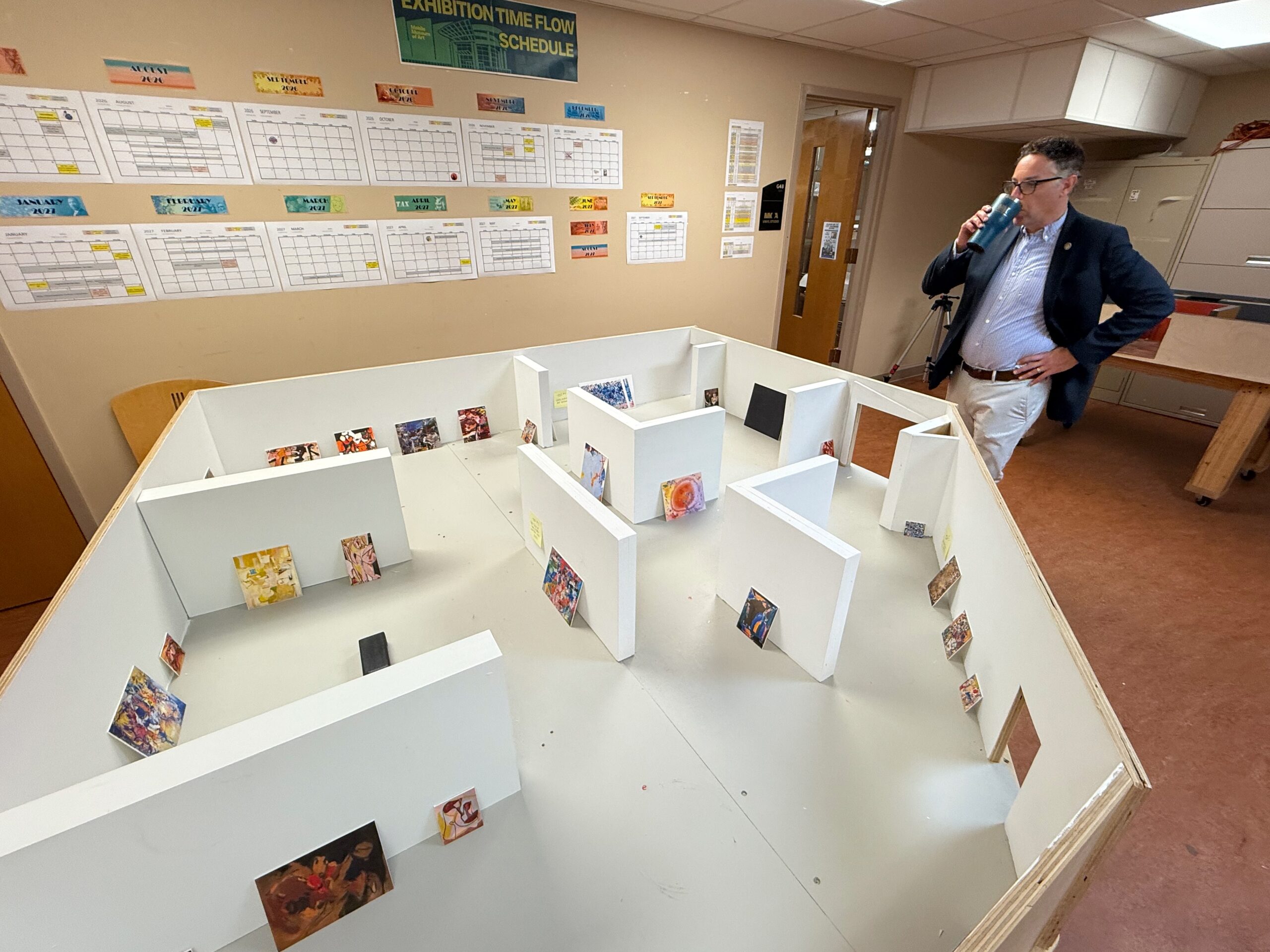
“Gateway,” according to Carfagno, showcases the strength of the culture and arts scene in the Bay area. A show like this would typically be found in a major city but having it in Mobile reinforces the existing local culture of street art and shows how this style has moved into commercial spaces. Clothing is one of many examples. A T-shirt might bear Basquiat’s crown, or a pair of sneakers might be decorated with Keith Haring’s pop art. These artists started by leaving their mark on the walls of buildings or on empty subway station signs but, clearly, they did not stop there. “Gateway” celebrates this journey. “The art is so immediately accessible by design. It’s a show that will have something for everybody,” Carfagno says. Mary Beth Lursen, manager of external affairs at the museum, adds, “We already have a pretty strong street art culture here, and it’s interesting to see this art form on a scale where it’s being recognized so widely. By showing the importance of street art in such a prominent way, we show that it’s a style meant to be enjoyed by all, regardless of the viewer’s background.”
What is astounding about the featured artists is the way each one expanded beyond street art to achieve more commercialized recognition, thus making their works and missions more widely known. “All five artists used their voice to respond to issues and opportunities that define their world and did so with immediacy and poignancy in a manner that is engaging, interesting and accessible,” Carfagno says. The same is the mission of Masterworks and of the “Gateway” exhibit: to make art available to all.
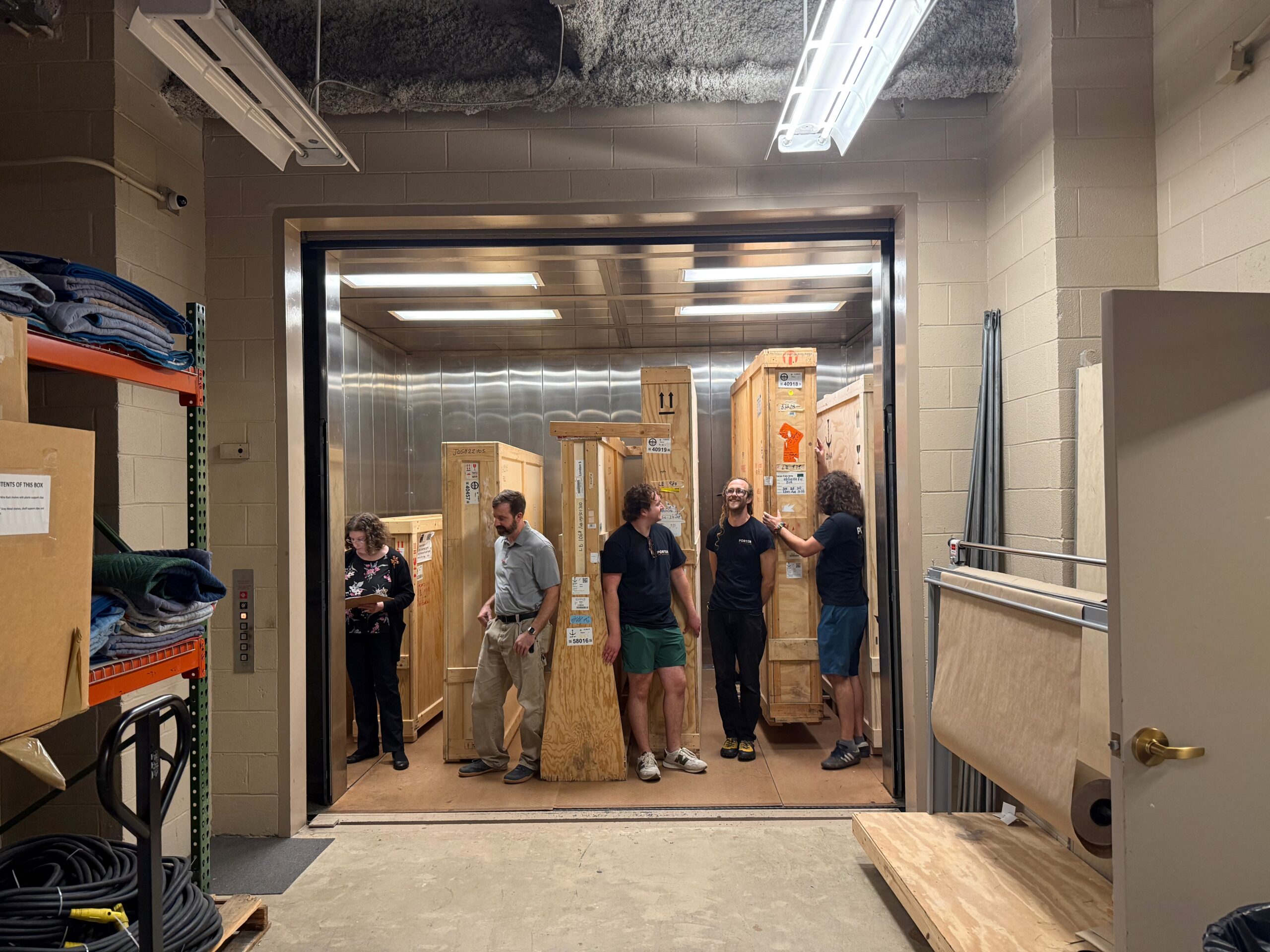
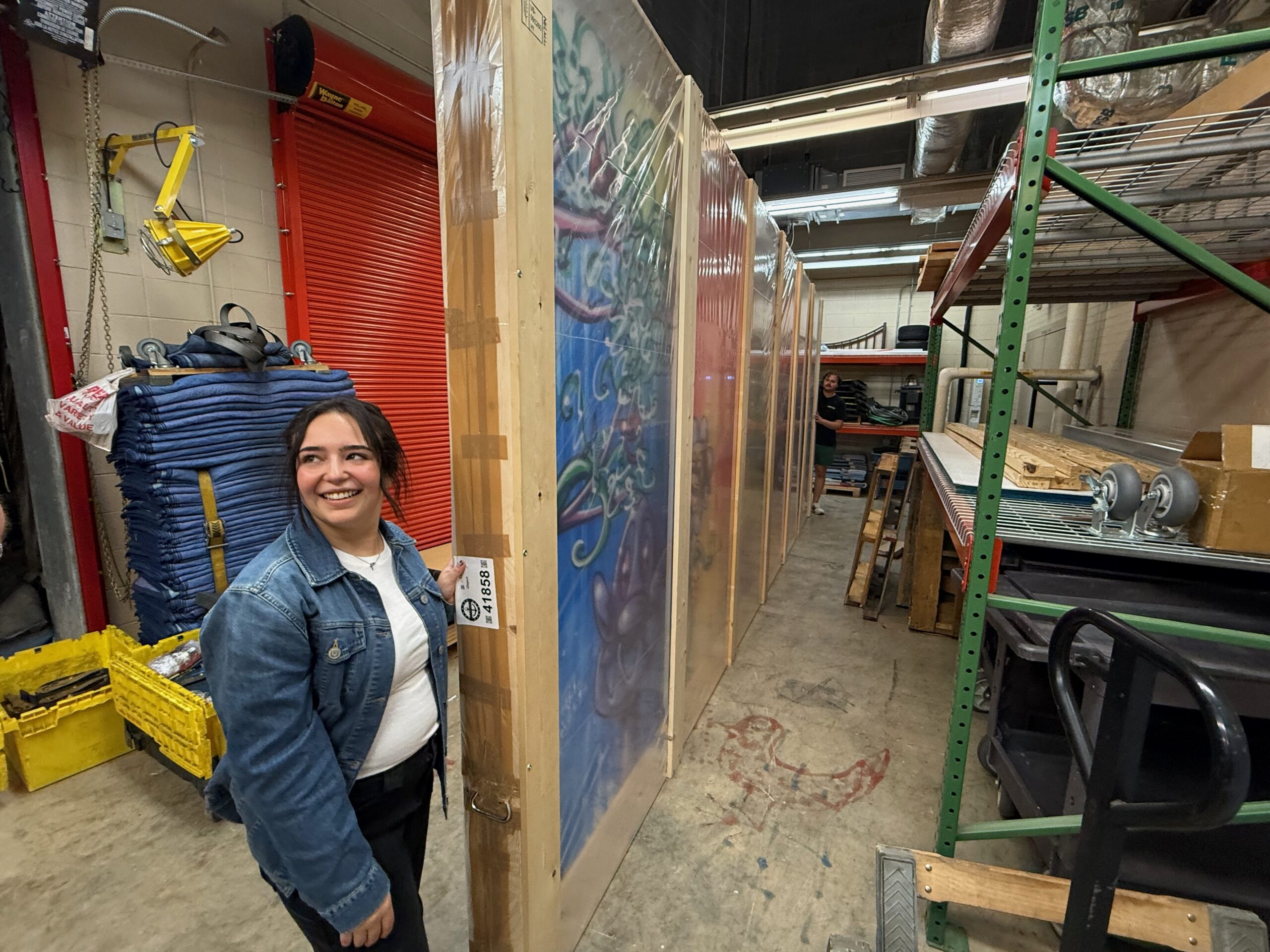
Beyond the inspiring stories of the individual artists, the stories behind each of their pieces bring additional layers of interest and intrigue to the collection, but these layers cannot be fully accessed or understood from afar. To view a photograph of a painting is one way to enjoy it, but it is not the same as standing before a piece, examining the individual brush strokes, the way the light reflects off the colors, the way the care put into the painting’s creation is so apparent. Art is meant to be experienced directly. “I’d love for the collection to catalyze pride in the city, its cultural heritage and its ability to attract shows of this caliber, because it’s important,” explains Glenday. “Standing in front of these objects and having a direct experience with them, understanding the story and bringing yourself to them is a vital aspect to all this. I want people to be able to experience that.”
Some people are intimidated by art or feel as if galleries are exclusive spaces reserved for certain people. The collective goal of MMOA and Masterworks is to eliminate these preconceived notions and barriers to make art more widely available. “We want everyone to come in and learn from these creative geniuses, and we want to show that it’s not something you have to have an art background for. It’s just something you can experiment with,” Lursen says. “We’re telling different stories relevant to anybody in our community.”
Anyone who visits the “Gateway” exhibit will surely find their own story reflected there — whether in the art and style, the artist and their story or all those things. When wandering around downtown Mobile, street art can be found everywhere — in various murals on the buildings, in sculptures lining the streets and even in a piece dedicated by a world-famous artist, Kenny Scharf. It can be easy to pass by these artistic displays without looking too closely at them. But, after visiting “Gateway: From Graffiti to Gallery,” perhaps one will be encouraged to stop and look. Closer examination allows the viewer to reflect on the way the Bay area’s culture and community influence the art filling our city and beyond. With this understanding, one can find a message and meaning in an accessible art form that can be appreciated both on the streets of Downtown and in the hallowed halls of an art gallery.
Mobile Museum of Art • 4850 Museum Dr. 208-5200 mobilemuseumofart.com