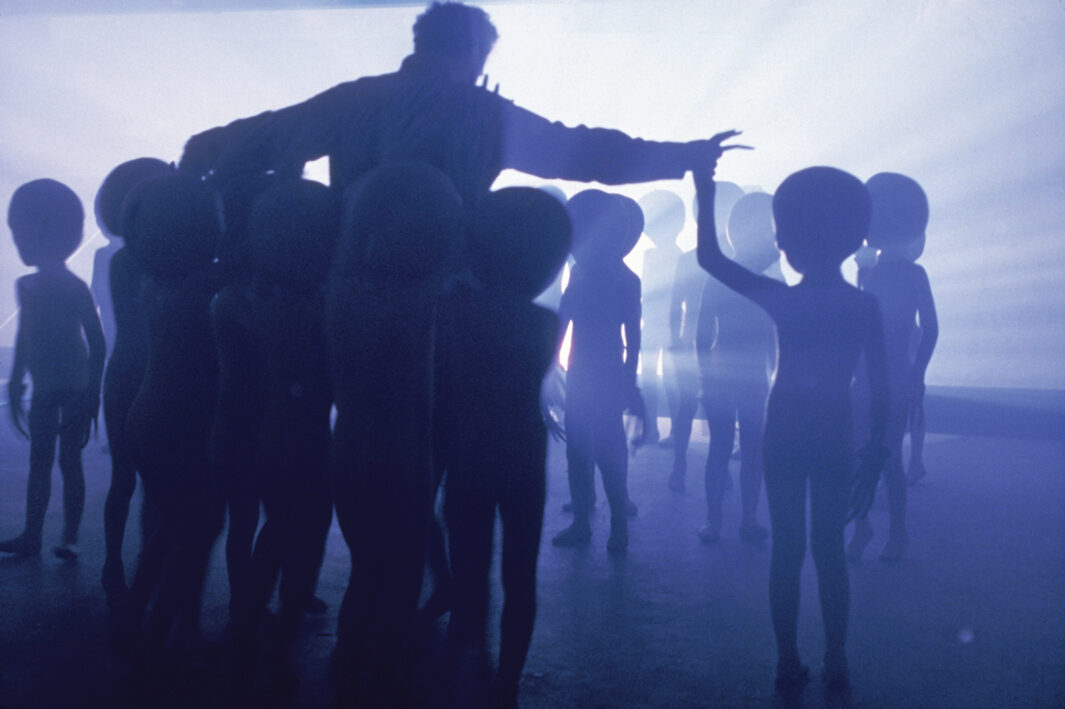
“Close Encounters of the Third Kind” ranks among the best movies ever. But, without the involvement of Mobilians, the 1977 science fiction spectacular might never have been made. It was in Mobile (and Bay Minette and Fairhope) that director Steven Spielberg found the massive spaces he needed. After the problems that came with filming “Jaws” on the water, Spielberg wanted something totally under his control. He brought his movie stars to town — Richard Dreyfuss, Teri Garr and Melinda Dillon chief among them — to take advantage of hangars at the old Brookley Air Force Base. Inside one, he had constructed the roadway where Dreyfuss first encounters an alien ship. Inside the other, he had duplicated the top of Devils Tower and the landing area where Dreyfuss would eventually make contact with these otherworldly visitors.
Every set and scene shared one commonality: the need for extras. They filled the background of shots, playing scientists, technicians, military personnel and townspeople. Children were outfitted as aliens for the big reveal near the end of the picture. Not everything Spielberg filmed over the course of the May-to-September shoot 50 years ago made it into the movie, but the experience of making the film remains imprinted in the memories of those who spent days, weeks or even months providing what’s called “atmosphere” — a Hollywood term for extra.
Jonathan Robinson was born in Mobile in September 1976, the same month the Hollywood folks left town. He grew up fascinated by the movie made in his hometown and became a filmmaker himself. His directorial debut was a documentary about the locals who contributed to “Close Encounters,” called “Who Are You People?”
Memories from the Filming of “Close Encounters of the Third Kind”
Robinson: You’re left with the impression that they were absolutely happy that this circus train pulled into town. And it left them for the better, I think, in their life even though they never went on to work on another movie in their life, and most of them did not.
Glen Brazell: I was an X-ray tech. I was working from the University of South Alabama Medical Center, and they let me off to do this for a while. I think it was six weeks or more.
Christopher Bryant: I was teaching school. About half of the Mobile County Public School System was in that movie.
David Toifel: I was teaching social studies at Hillsdale Middle School. Since I was a teacher and had the summer off, I thought, “Why not make some extra money?” I didn’t know whether it would be a week or two weeks. It took up almost the entire summer. I was at the base at Brookley in the hangar. I went in and everybody else got jumpsuits, but I got a polo shirt and slacks, blue slacks, and I actually had a name. I was “Dr. Spectro.”
Gerald Deas: (a Marine working at the reserve center in Mobile when Hollywood came calling) They were looking for military-type people, and what I mean by military type is physically. The haircuts and the whole nine yards. They wanted military-looking people and, of course, who do they call? The Marines.
BC Ellis: (at the time an acting student at the University of South Alabama) I had miming skills. That’s why they picked me. They wanted the men in the white overalls at the Devils Tower area to move in slow motion. As they would be moving in slow motion, the kids that were dressed up as ETs would be running around them at regular speed. Then they would speed the film up so that we would like we were moving at regular speed while the ETs were just zipping around us. We practiced that for about three weeks. We got that going as best we could. We understood completely why they decided not to do that. When we’re standing, when we had both our feet planted on the ground, moving in slow motion, we looked great. When you’re running, you have to have your feet off the ground at the same time and in slow motion, you can’t.
Mike Rabig: I was at Baker Elementary School, and they sent some folks out because they were looking for kids to be the little aliens that came off the ship at the end of the movie. They put us in the gym and they were going “you” — pointing at kids — “you.” And they got to me and they said, “You’re too fat.”
Elizabeth Darby Rehm: They wanted ballet students, and they actually came to my school. They asked me to do a ballet move. I did a plie and then a grand plie. That’s how I got picked for it. My understanding is because what we walked down was a mirror and they thought that ballet students might be able to shift their feet in different positions to avoid falling or slipping.
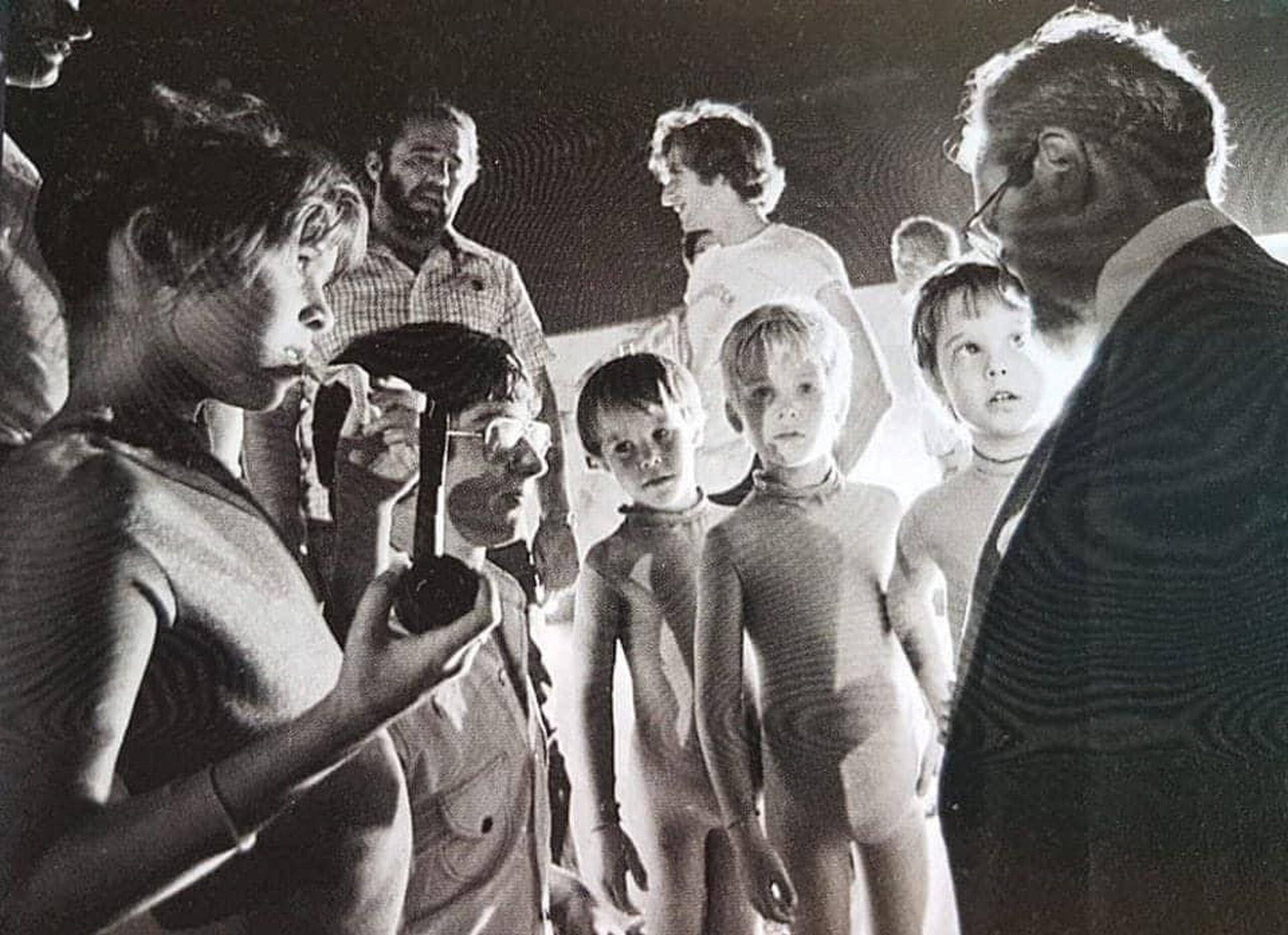
Dayni Deats: (who accompanied her father, a rigging grip on the film, to Mobile and found herself cast as an alien) The first time that we were getting ready to come out of the spaceship, our suits were made out of nylon and as soon as they told us to go forward, we all slid down the thing like a slide and ended up in a pile. They had to put rubber, like wetsuit stuff, on the bottom of our suit so that we could walk down that mirror thing.
Scotia Steadman: The producers came to my dancing school in Mobile, and we weren’t aware of it, but they sat in and observed us. They selected a couple of children that they thought would be good fits. Then, that evening, they called my mother and wanted to verify that I weighed less than 50 pounds. The following day, we went to Brookley Field, and they hooked us up to this flying contraption to see if we could be flyers in the film. Out of maybe 60 people that were Martians, there were actually three flyers, and I was selected to be one of those.
Ellis: We knew about the alien aspect, especially when we saw all the little extraterrestrials, but we had no idea what everything was going to look like. But regardless of what we didn’t know, they wanted us to know less.
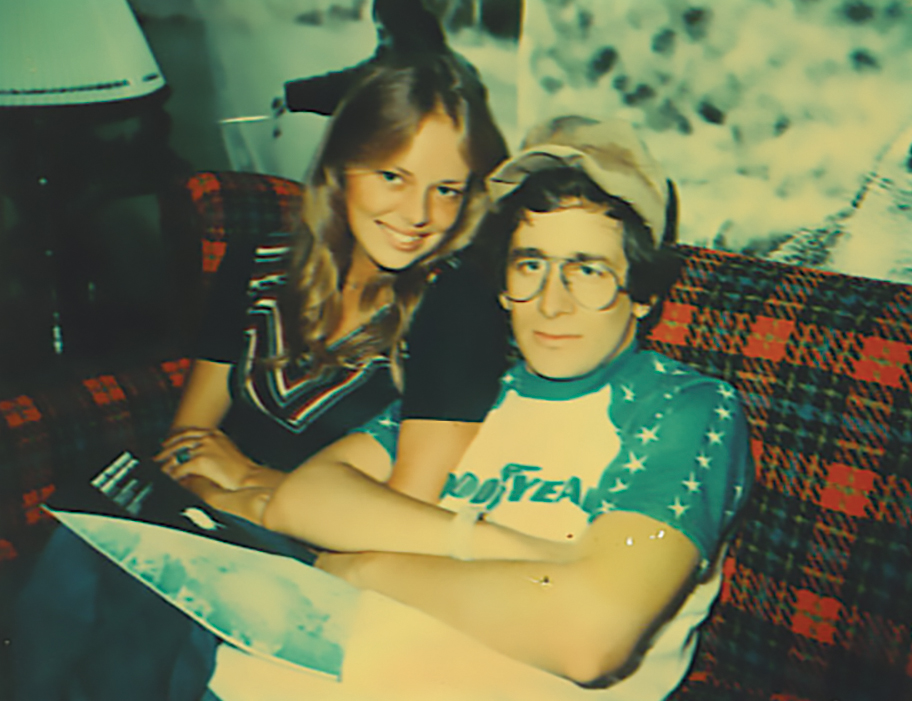
Dawn Addison McKinney: (a student at the University of South Alabama studying psychology and philosophy and also waitressing at the Jolly Ox) I had waited on [Spielberg] twice at the restaurant and he was young. I mean, he was 27. He was a kid. He was a baby. I was a baby. I never aspired to be in the movie. I didn’t sign up for this. It just happened I was waiting on him at the restaurant, and we chatted and he said, “Well, you should come up to the set.” There was a huge screen, about as big as a house. We did have to stand up and stare at the blank screen at one point in awe, so I did that.
Guy Mead: (the owner of the Gator Drive-In in Satsuma) You had to make believe that something was happening. All the extras were doing the same thing. It was pretty easy. They coached us: You have to look surprised and shocked or maybe a little bit afraid.
Brazell: I was supposed to run across from side of the set over to the other. They tell you don’t look at the camera. Well, I couldn’t help but look at the camera.
Toifel: I was there for everything that was shot at the base from day one until the end. I saw all of that. Everything they did at the base — and it looks like that’s 20 minutes — but in actuality it takes a lot longer to put that 20 minutes together.
Rabig: (who was about 8 years old when he served as an extra in the evacuation scene filmed in Bay Minette) We spent the whole day just getting on the train, getting off the train, getting on the train and getting off the train. That scene in the movie goes by very quickly. I guess it kind of gives you an idea of how much time you spend on the littlest things. Spielberg’s movies were so great, and you can kind of see why when you see how many hours you spend just on that one little thing.
Dennis A. Kalec: (who took time off from his Coast Guard duties to work as an extra) It was actually cooler outside than it was in that hangar. That hangar turned into an oven when they shut the air conditioning off.
Brazell: Sometimes you were on the set, sitting there and getting paid for doing nothing, but you had to stay there in case they needed you. But they fed you good food. Steak, gravy, mashed potatoes.
Kalec: We ate good. I put on 15 – 20 pounds.
Steadman: It was miserable. It was absolutely miserable. In addition to having that leotard-type thing going and the mask underneath, I had another contraption where they hooked me up to the line. It was not comfortable. It was the whole summer before I went into first grade. My older sisters got to stay home and have fun all summer long and I didn’t.
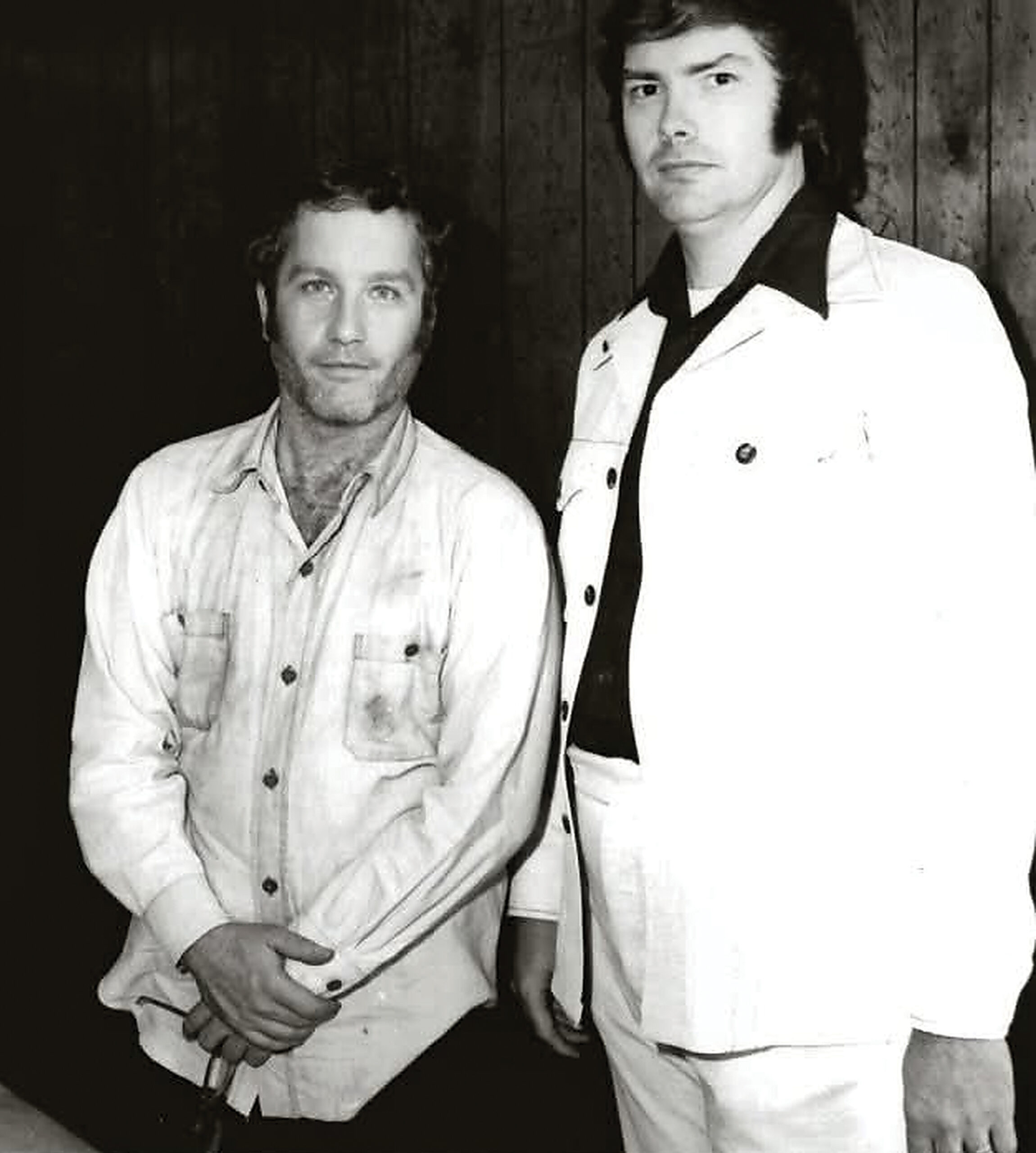
Wayne Dean: (an official with the state employment office, was an extra in the scene shot in Mobile Auditorium featuring François Truffaut) That was a 12-hour shoot. At the end of that 12-hour shoot, Steven Spielberg came out. He says, “I think that’s pretty good, but why don’t we come back tomorrow and do it again?” We came back the next day and did another six-hour shoot. That was a minute, two minutes at the most, on screen.
Ellis: There were several days where we’d show up, hang around the set for about eight hours and then they said, “All right, that’s it for the day.” I think the thing that was irritating the most were the days where we went in there and nothing happened. A lot of people brought books to read. I had my sketchbook. I would draw people’s faces here and there. Not what was going on with the set — just with the extras. I don’t even know what happened to all those drawings.
Deas: They used me in three different parts. The first thing that I was in was in the First National Bank building in downtown Mobile. There was a whole bunch of us that was sitting around a table. I had a speaking part, but they cut my speaking part out. I still remember that today, because I had to repeat it several times to get it down pat.
Brazell: I was amazed. Whenever they do movies, you don’t see the finished part. Just like when the mothership landed. The part that we saw was the bottom piece that lifted up, and that was done by crane. That’s all we saw. We didn’t see this humongous thing with all the lights.
Toifel: Like everybody else that’s in a movie, you look for yourself, and in all these years, I’ve never found myself.
Deats: You can see me. When the aliens come and they surround Dreyfuss and one takes his hand and leads him, that’s me.
Christopher Bryant: (whose scene aboard an airplane was cut) The first time I saw it, I said, “Wait, where’s my scene?” It wasn’t in there. It was real disappointing because I spent a whole night out there trying to be in the movies.
Steadman: I am very double-jointed, so there’s a couple of scenes where I could identify myself just because of the way I was standing.
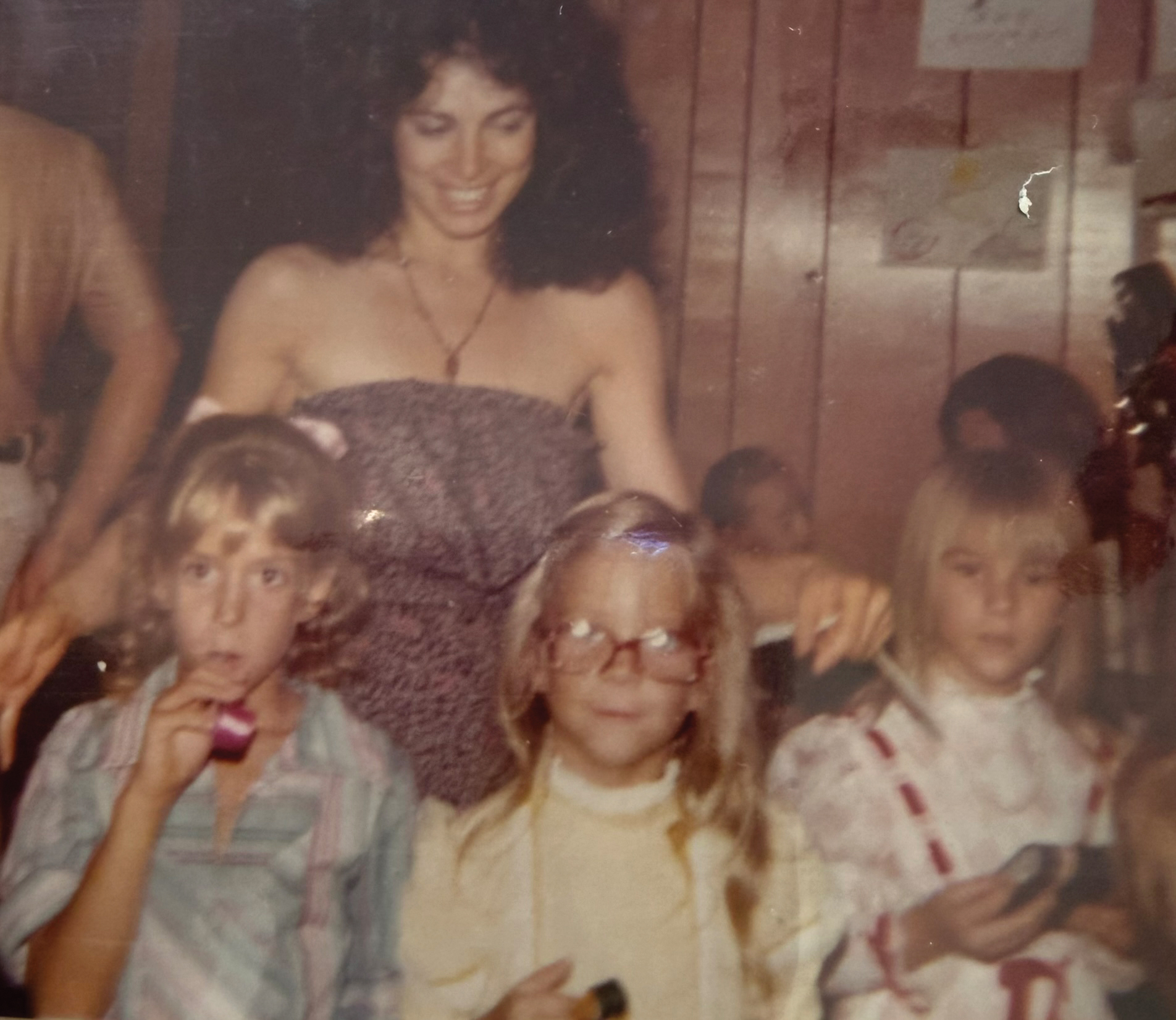
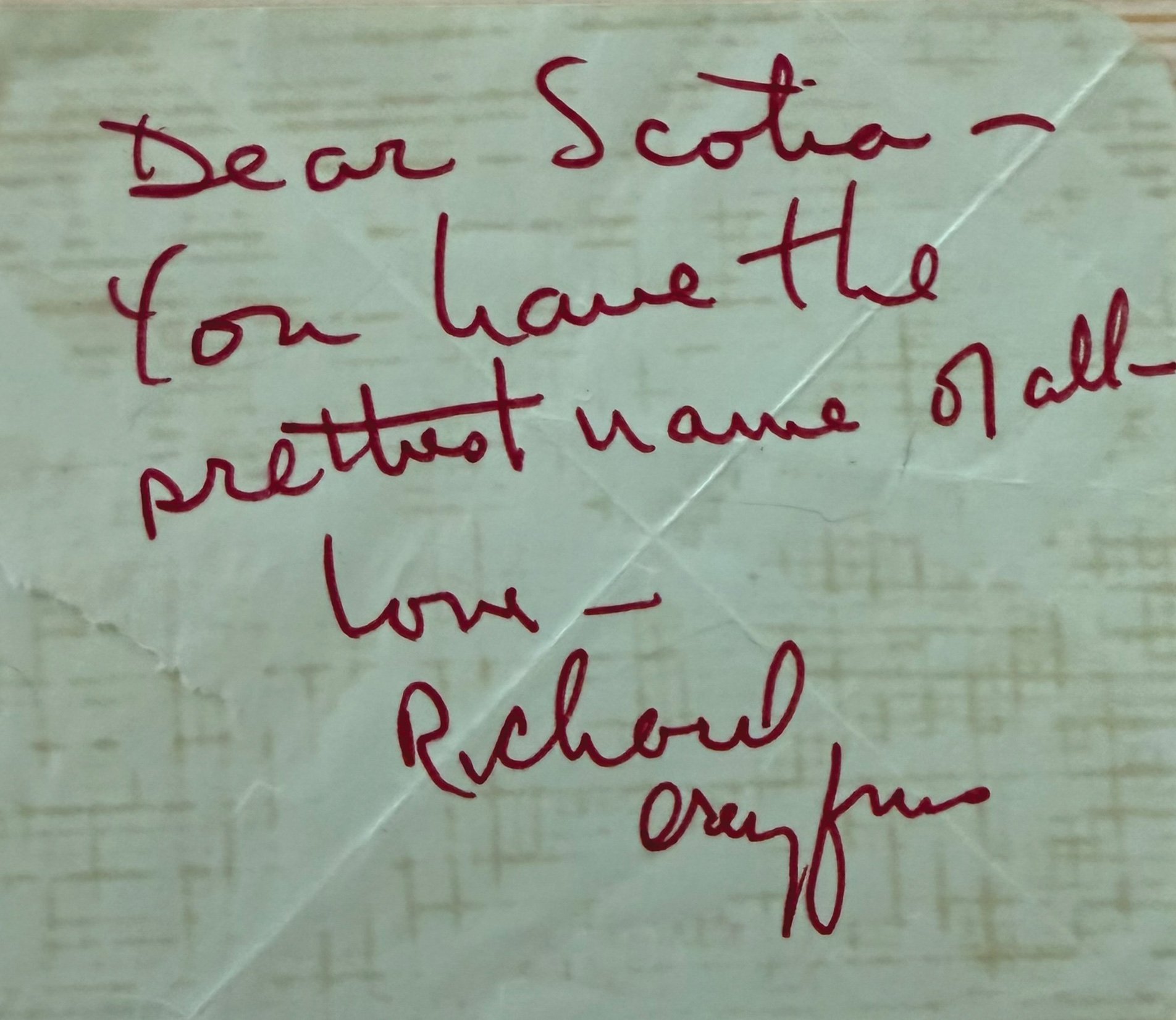
Bryant: It was a really big deal in Mobile and it kind of opened the door, because there have been a lot of movies filmed down here since then. Nothing on that scale, but it was a big deal as far as Mobile was concerned. All those old guys like me still have a lot of fond memories of it.
Rabig: I don’t think I had the appreciation of what I was a part of until much later.