Mud.
It has had many uses throughout history, including making dwellings, pottery and as a therapeutic aid in healing wounds.
It is also a great preservative. Archeologist Dr. Gregory Waselkov, professor emeritus at the University of South Alabama (USA), thinks that many dugout canoes that have been discovered underwater may have been intentionally submerged in mud because the canoes were usually made of cypress or longleaf pine and were thus submerged as a method to preserve these wooden vessels. Others were thought to have been buried by powerful storms (especially hurricanes), then later found when uncovered by another storm.
One such example of a Mississippian-era dugout canoe is on display in the History Museum of Mobile. It was discovered approximately 40 years ago by two young boys who were out fishing in the aftermath of a hurricane. A second example of an ancient dugout canoe is part of the collection of artifacts at the USA Archeology Museum. A third is on display at the Orange Beach History Museum, which is overseen by curator Eric Daily.
Archeologists have discovered a number of canoe canals that the people back then dug and then paddled along, using these shallow-draught, dugout canoes they made by hand. Daily said, “Local canals were intentionally dug so indigenous people could paddle their dugout canoes and navigate the coast.”
“It’s a Gulf Coast kind of thing,” Dr. Waselkov explains, referring to the discovery of dugout canoes, found preserved in mud. “Dozens [of them] have been found in Florida and several have been found here.
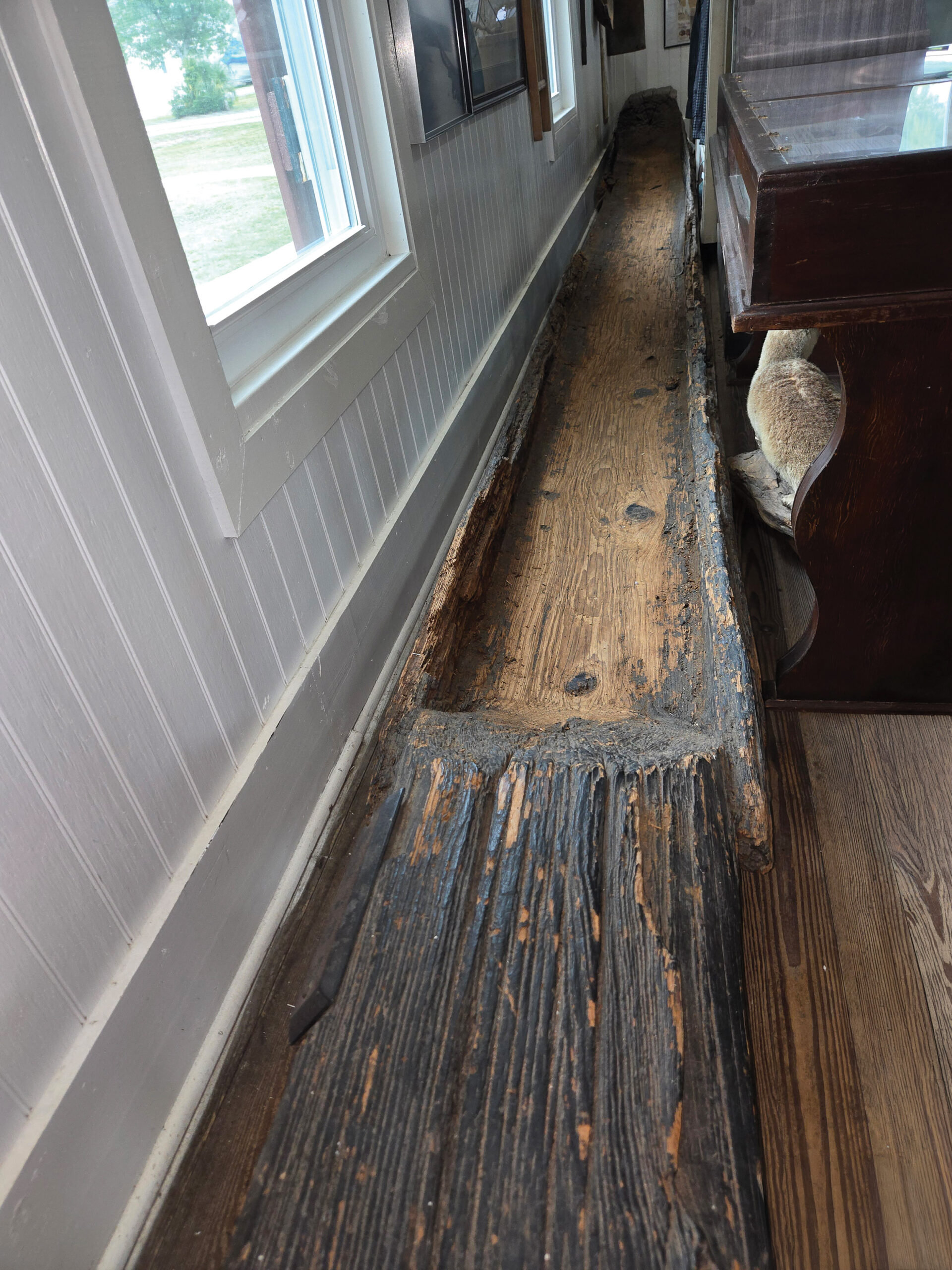
“Dugout canoes were (and still are) relatively easy and quick to make, especially if the person making it had access to a steel axe or an adze,” Waselkov continues. “The one at the USA Archeological Museum (in Mobile) actually has steel axe marks in it and was made within the last few hundred years. The ones we’ve found have been determined to be anywhere from 500 to more than 1,000 years ago, somewhere in that range.”
The dugouts were made from a solid tree trunk, often of bald cypress, with a kind of flat platform on its bow, so someone could stand up on it and pole the craft to maneuver it through the shallow canals.
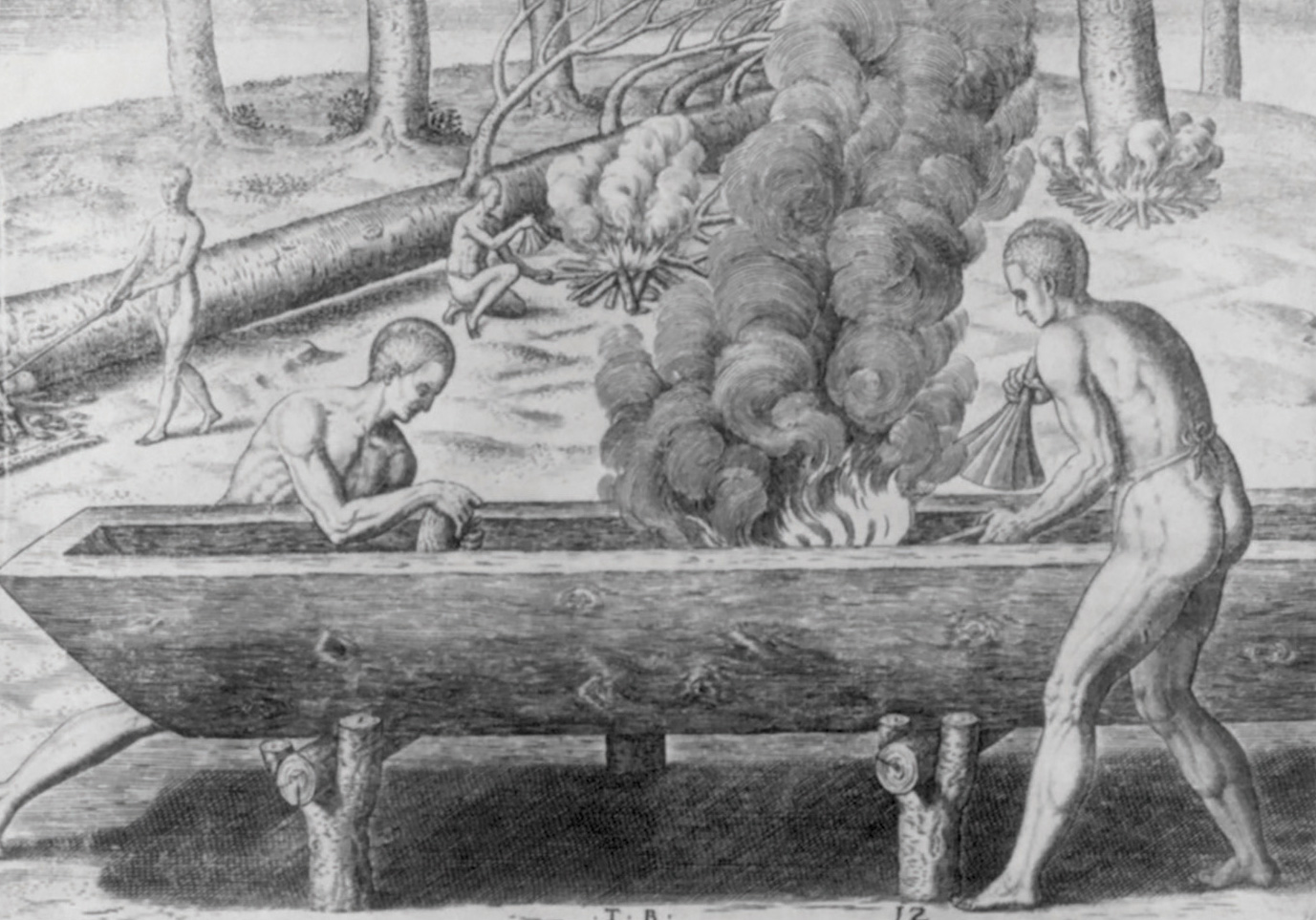
“The ones we’ve found along the coast are about 20 to 30 feet in length,” Waselkov adds. “The people making these canoes had to be patient, because it wasn’t a quick process. They had to find a tree large enough in diameter to make a canoe that would be, when burned and chipped out, big enough to haul people and their possessions or game. They would use fire to burn the base of the tree, then hack away at its base until it fell. Then, using fire and stone or metal axes or adzes, they would burn away the tree in a kind of controlled burn.”
Once the canoe makers had put out the fire and the remnants had cooled, they would chip away the charred remains of the wood until eventually, they would have a vessel that was long enough and deep enough to transport people.
As far as a canoe’s speed, Waselkov says, “Like our modern-day canoes, it depends upon the water current, the direction of the current and so on.” He adds, “When Hernando De Soto explored this coast, he used rafts but was met with and chased out of the area by the indigenous people using their dugout canoes, so I guess you could say they could go pretty fast if you needed them to.”
The Gulf Shores Canoe Canal ran from Oyster Bay down to Little Lagoon. Nearby, modern-day Plash Island was the main settlement site for the ancient indigenous people. Archeologists know this because of middens of shellfish, oyster shells and fish bones in that area.
The museums and their exhibits show how indigenous people of long ago lived, survived and navigated around the coast. The curious can learn more about these ancient people by visiting the History Museum of Mobile, the USA Archeology Museum and the Orange Beach History Museum, formerly known as the Indian and Sea Museum.