Off Highway 90 in Loxley, Jenkins Farm Road takes a sharp left curve, making the family farmhouse impossible to miss. On this day, a light rain had stopped. West of the house, the sun reflects silver smooth sided chunks of soil from the recently plowed field.
Cousins Dr. Marcia Jenkins Littles and Willie Taylor met on the farm in Les Gathering Place, a former Quonset hut now transformed into an elevated event space. The two spend an afternoon together reminiscing and walking around Historic Jenkins Farm. They bring articles, memoirs and family trees. Two cousins, though six years apart, pick up where they last left off. Marcia remembers a lot of challenging work even as a child. “All of us children gathered potatoes, and we’d fill up the barn,” she says, pointing to the location where the building used to stand. “They would sprout over the winter and then get planted the following year.”
Both women are retired from their careers but still active in their communities. They beam with pride recounting their family histories. Littles’ husband, Dr. Douglas Littles, pops in from time to time. The couple has been married for over 50 years and owns the farmhouse and the surrounding 250 acres, where they continue to grow crops, rotating between soybeans, sweet potatoes and peanuts. “Faith, family and farm is what the Jenkins family is all about,” Marcia says while looking over an article about the farm’s history, which brings back a shower of memories. John Wesley Jenkins (1874-1935) purchased land in Loxley, Alabama, in 1915 in what Marcia calls “the wilderness,” and she credits her grandfather for starting the economic farming engine. “My grandfather worked at the Malbis Plantation, and he asked to be paid in land,” she says. “We recently found the deed to the first piece of land he owned.” John Wesley started producing turpentine from the timber and continued to purchase contiguous land.
His personal life turned upside down when his wife and two children passed away in 1916 from illness not long after the family relocated to Loxley. In 1919, John Wesley Jenkins married Amelia Taylor (1894-1966), a schoolteacher who left her job to join him on the farm. “They were a tenacious farming family,” Doug says, adding, “Education was important too.” Not just any schoolteacher, “Amelia T” as she is affectionately referred to by her granddaughter and grandniece, attended what was known then as Tuskegee Institute. “Booker T. Washington was the principal, and she had George Washington Carver for science class,” Marcia says. Littles served as president of Reid State Technical College for over 10 years and wears a sweater with the college’s crest.
Willie and Marcia both graduated from Baldwin County Training School. Marcia’s mother Helen taught at the school. Willie Taylor, influenced by the many teachers in the family, taught mathematics, English and science for more than 30 years. In her early years, Willie, while teaching in Montgomery, was a leader of the Alabama State College’s (University) Student Nonviolent Coordinating Committee (SNCC). For several years, she “spent weekends in Atlanta and the Carolinas under the leadership of John Lewis, Julian Bond, Stokely Carmichael and H. Rap Brown,” according to her memoir, “Reaching Reality East of Mobile Bay.” Taylor continues to volunteer in schools and is persistent in her efforts to bring attention to Baldwin County’s rich African American history. “We’ve been here, too,” Taylor reminds historians. Helen Jenkins, Marcia’s mother, taught students English and Physical Education at the Baldwin County Training School. She was an ACT consultant on the English portion of the test. “They didn’t know what color she was, and they didn’t care because she was providing quality feedback.” She also received review copies of textbooks from publishers, including McGraw Hill, Marcia says. “She used these textbooks, not the hand-me downs from the white schools, to teach her students.”
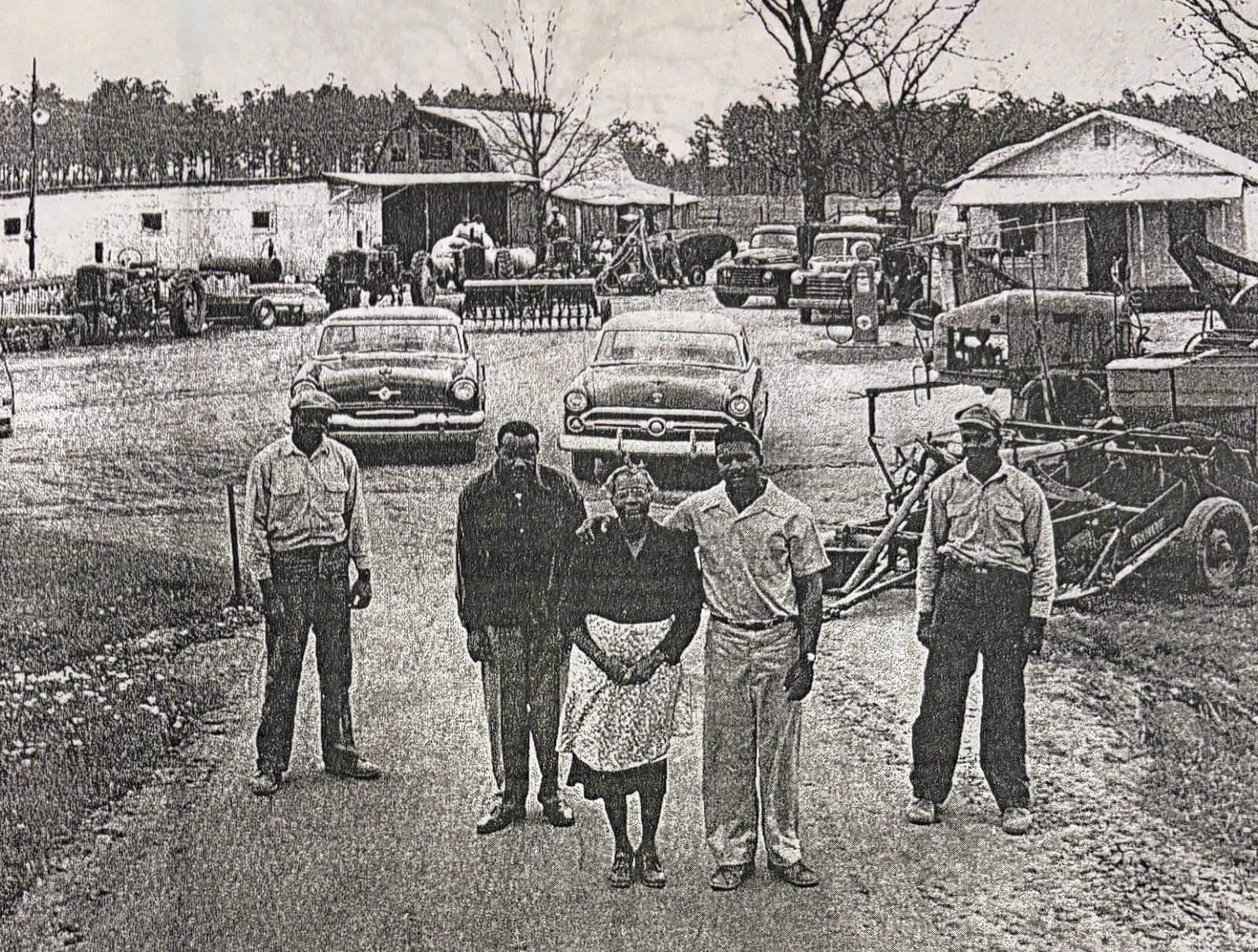
The success and notoriety of the Jenkins family and their profitable farm did not go unnoticed in the national media. In August 1953, Ebony Magazine published an in-depth interview with the family under the title “Alabama’s Richest Farm Family.” The sub-headline reads, “Amelia Jenkins and sons gross more than $130,000 yearly on huge 1,052-acre property,” and notes that the family owned “perhaps the richest Negro farm in the state.” The craftsman-style house her grandfather built in 1935 is part family home part museum honoring John Wesley, and is filled with family treasures, like the original dining room table and the piano she learned to play, and ephemera — including photographs, awards, newspaper clippings — honoring the family legacy. “He was an American Woodsmen, and this place has been the center of the farm ever since,” says Marcia. It took six years, she says, but the farm was listed on the National Register of Historic Places in 2016. The historic marker was installed in 2019, Alabama’s Bicentennial.
A graduate of the University of South Alabama Medical school, Marcia had a private geriatric practice for over 20 years. Now retired, she says, “We restored the home and take care of the place to honor my family, especially my father, my grandparents and those who did the work.”
John Wesley, shortly after completing the house, died in 1935. The couple had 10 children, most of whom would remain on the farm and assist with the family business while Amelia T was the “boss lady.” In the 1950s, the farm was managed by Marcia’s father, Hilliard Jenkins, the son of John Wesley and Amelia. The operation included timber, cattle, hogs, cotton, soybeans and various vegetable row crops. Hilliard was the operational manager of the farm. Even with the success of the family, he was enthusiastic about expanding their land because, “when a man has soil, he has a future.”
Racism was an unfortunate fact of life for African Americans in Baldwin County during the 1950s and 1960s. As reported in the same Ebony Magazine, the family experienced this issue during several occurrences on their own land. Seeking a conversation with Mr. Jenkins, a white man copped an attitude towards Hilliard when he said that he was the owner of the farm. The white man responded, “I know you’re kidding me. Let me see the man who owns the house.” Hilliard ordered the man off the land. White residents of Baldwin County were aware of the prominence and influence the Jenkins family held within the African American community, but it was not without its challenges. Local white markets would only pay Hilliard two-thirds of the going price for his crops. “So, my dad bought a transfer truck and shipped our potatoes out of state,” Marcia adds.
The Tuskegee Institute noted Hilliard Jenkins as the “top Negro farmer of the year in 1952.” Hilliard was awarded the “Negro Farm Family Merit Award” in front of a crowd of over 3,000 people on the campus of Tuskegee Institute in 1952. Jimmy Faulkner, publisher of The Baldwin Times, recorded in the press Hilliard’s “achievements and leadership among the Negro race” in Baldwin County and applauded Tuskegee’s choice. Coronet Magazine, a national publication owned by Esquire Magazine, sent a reporter to Loxley to interview members of the Jenkins family about their success. The interviewer asked Hilliard to reflect on school. Hilliard, then 13 years old, responded, “I’m bigger than the rest of us,” referring to his brothers, and said, “I’ll quit school now, run the farm and send the rest of us through college.” He was true to his word. After Hilliard graduated from high school, the farm began producing enough income to put five of his siblings through college, including two graduates of Tuskegee. At its heart, the Historic Jenkins Farm was always a community farm. While running the operation, Amelia T cooked a meal every day for up to 45 workers because, as Littles says, “It may have been the only hot meal they got all day.”
Jimmy Faulkner reprinted the Coronet article, in its entirety, in his newspaper. He also made note of the importance of the interview and the Jenkins family to Baldwin County in his memoir, “Byways of Baldwin.” Amelia believed in making the most of her time on earth and leaving a sustainable future for her children. “Our vision,” she explained in an interview, “was to farm on a large scale, so we could make jobs for our children. I thought it only right to finish what my husband had begun.” Amelia Jenkins died in 1966, and she is buried with her husband in Daphne at Mt. Aid Baptist Church, which the couple attended and where he had been a deacon. The farmland was deeded to Hilliard and his wife, Helen Jenkins. On the death of Hilliard Jenkins in 1992, Helen Jenkins was able to maintain the operation and continue managing the property as income producing, which continues under Marcia and Douglas.
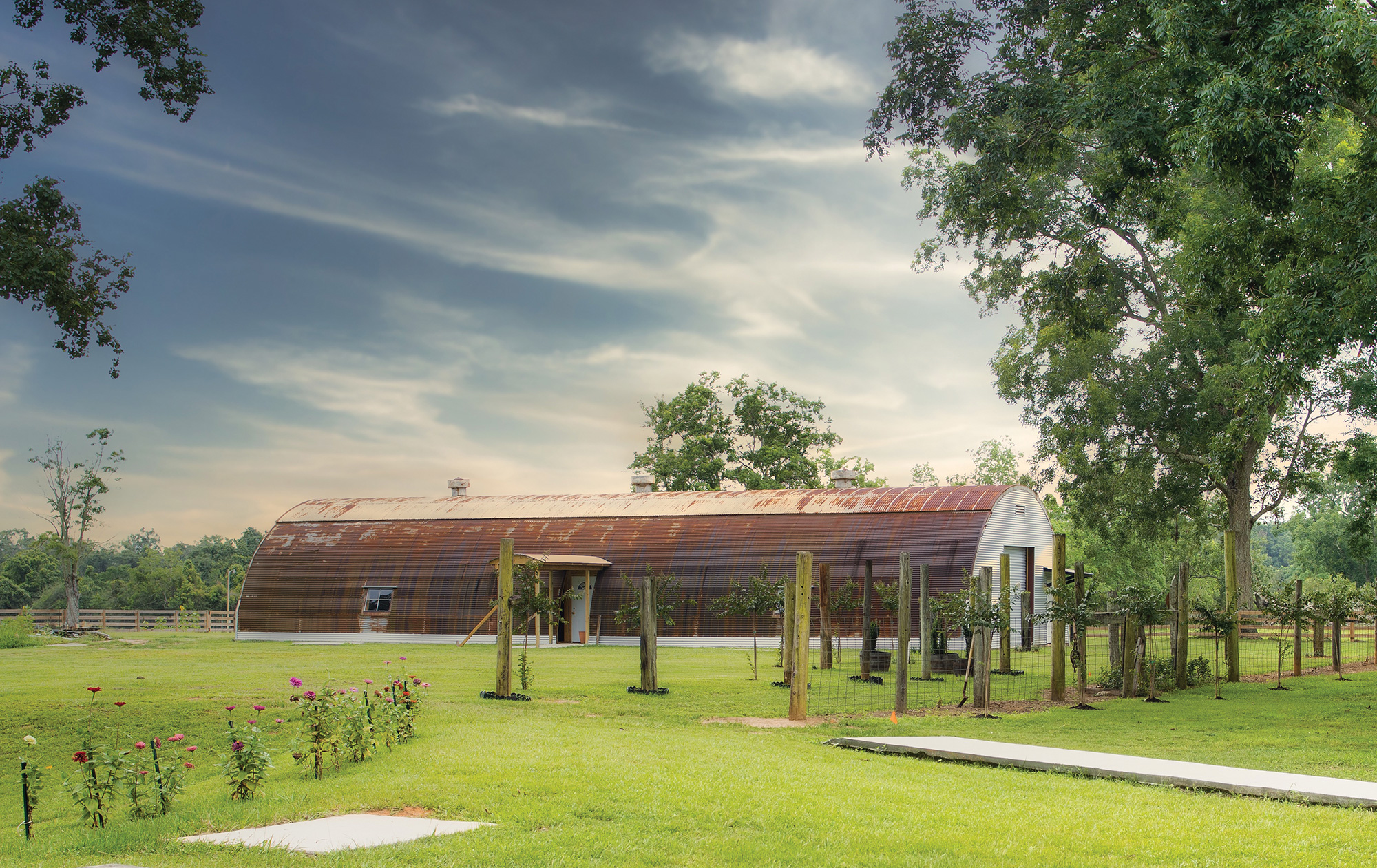
The farm continues to transform. Les Gathering Place has hosted large local groups, national corporations whose leaders have local roots and an international group. A documentary is in the works about the Historic Jenkins Farm, which is an Alabama Century Heritage Farm, and they have started the process of creating a Landmark District, which recognizes historic resources such as buildings, sites, structures, objects, districts and cultural landscapes. Barnwell, Bon Secour, Stapleton, Rosinton and White House Fork are designated Baldwin County Landmark Districts. “We fed our family, our neighbors and our country on the land we’re standing on,” Marcia says, and as the two look across the street at the plowed field, Willie adds, “We want the community and future generations to know what was accomplished here.”