In Mobile, Mardi Gras has never belonged to one season alone. It belongs to families. To peaceful front porches and picturesque parade routes. To children waiting for beads as eagerly and excitedly as the street vendors awaiting customers. To the artists, painters, welders and dreamers who spend long nights coaxing steel, pigment and plywood into rolling works of art. It belongs to stories told so often they begin to feel inherited — like a last name, a grandmother’s recipe, a family heirloom or like a crown passed carefully from one set of hands to another.
This year, that inheritance becomes unmistakably visible.
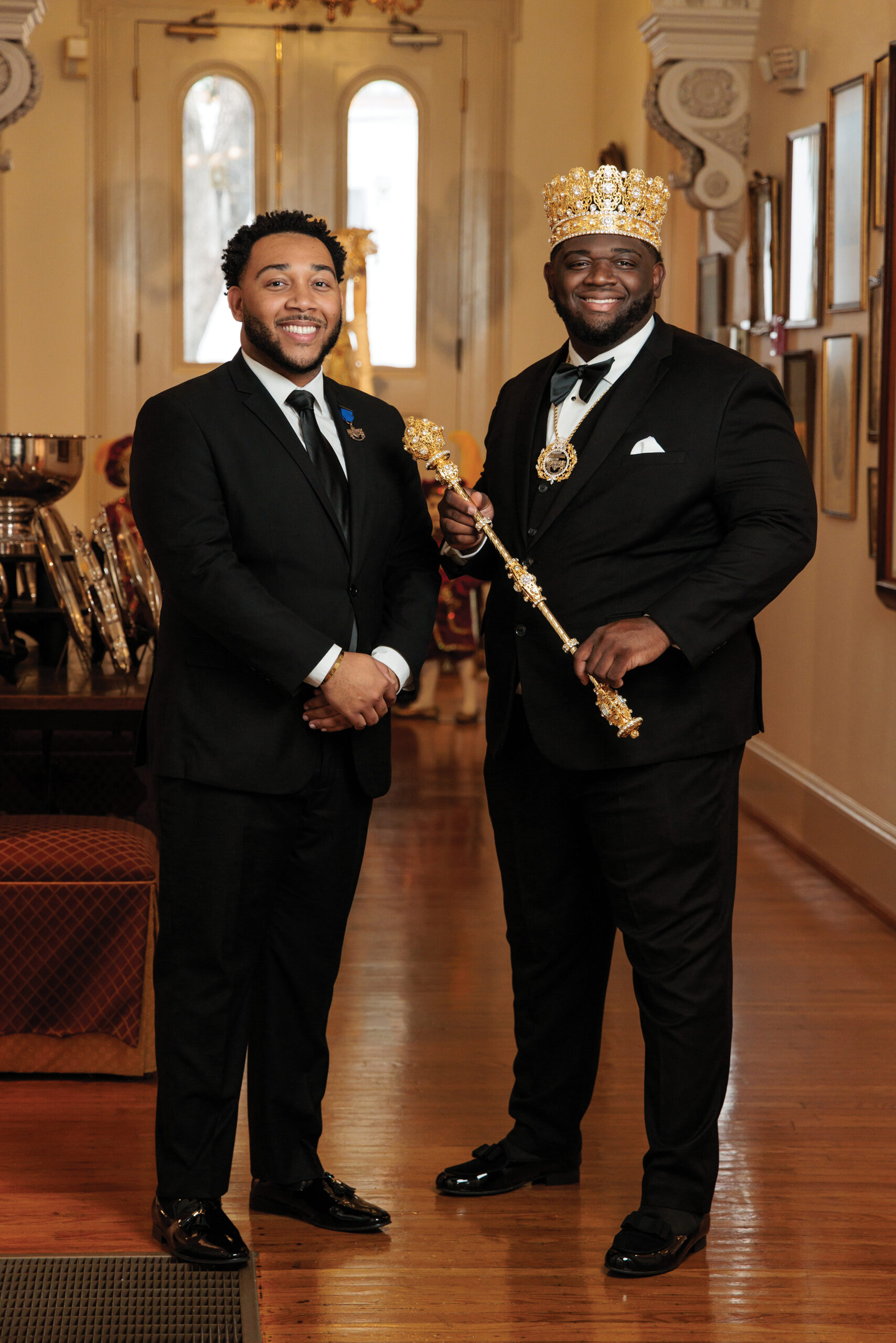
For the second time in the 88-year history of the Mobile Area Mardi Gras Association (MAMGA), two brothers will have worn the crown. Thirty-one-year-old Terrell Patrick has already completed his reign. Now, his younger brother, 25-year-old Bernard “BJ” Jenkins Jr., prepares to step into the same ceremonial role — becoming the next King of an organization whose roots stretch back to 1938, when it was incorporated as the Colored Carnival Association under the leadership of Black professionals, tradesmen and civic leaders determined to create something lasting for their community. “This is different,” Terrell says. “Because it’s not just another King. It’s my brother.”
That distinction matters here. In fact, it matters more than most folks realize.
The crown BJ will wear carries weight — polished brass and velvet, yes, but also decades of purpose. MAMGA was founded not simply to parade, but to cultivate leadership, education and civic responsibility within Mobile’s African American community. Its mission — to promote knowledge, arts, sciences and community betterment through Carnival — has remained steady even as generations have turned over.
Dr. Wilborne Russell, a respected dentist and civic leader, served as MAMGA’s president for 50 years, envisioning the
association as a proving ground for young people long before “servant leadership” became a buzzword. He personally authored and read the proclamation at coronation ceremonies for half a century, embedding ritual with responsibility.
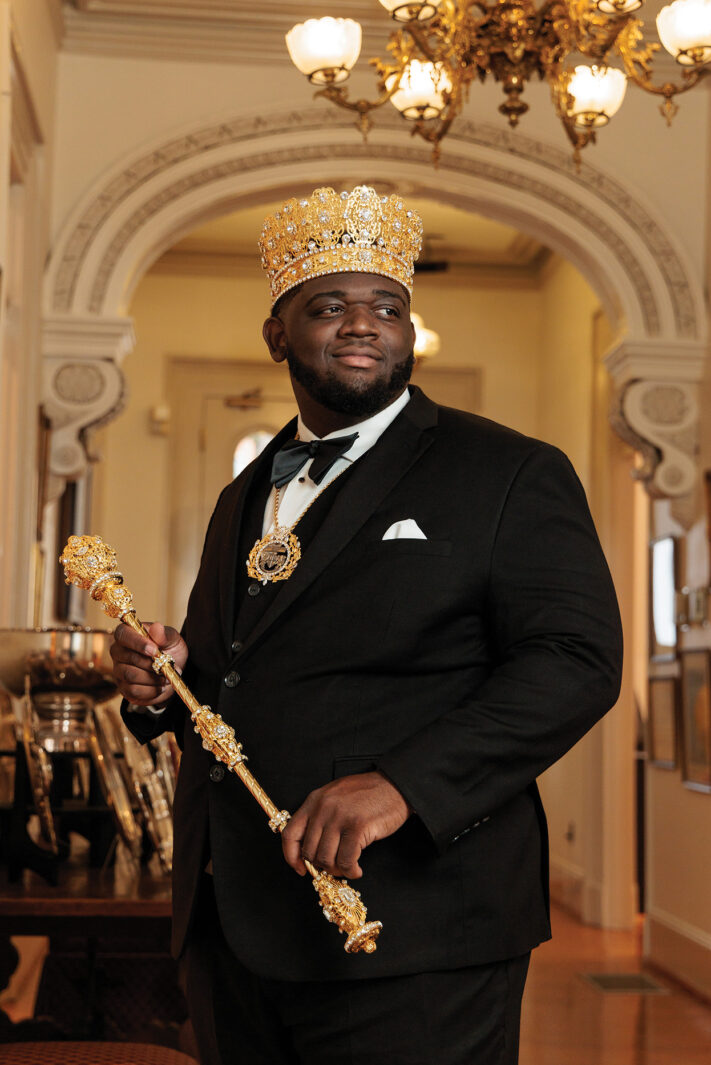
LEFT MAMGA King Bernard “BJ” Jenkins Jr.
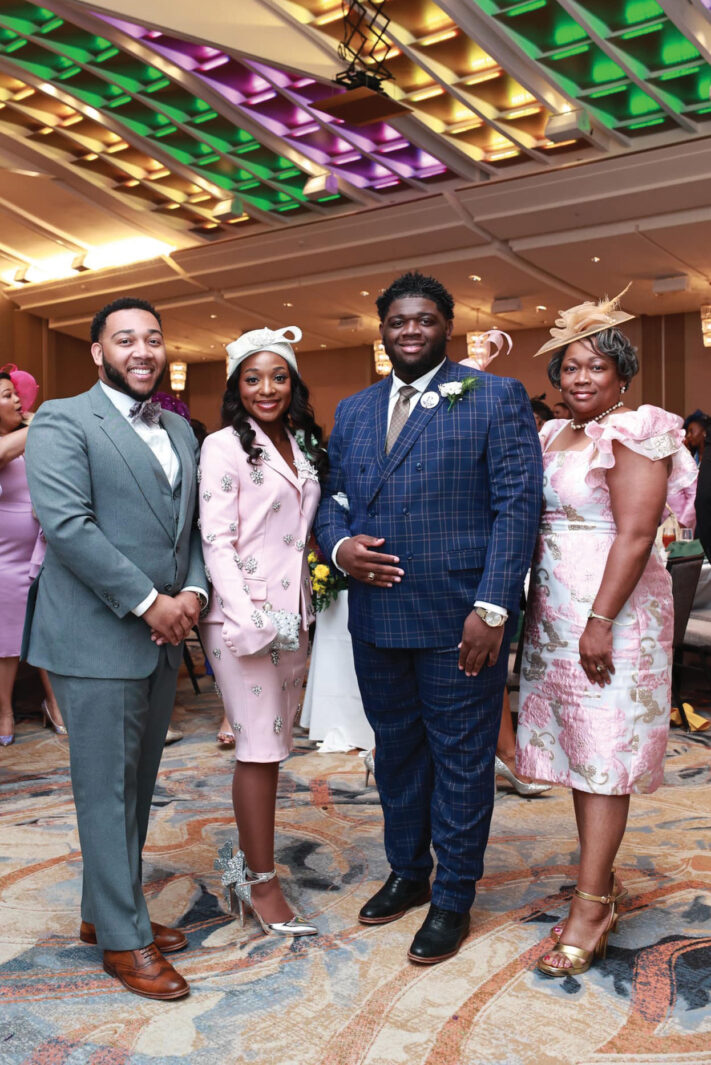
RIGHT Terrell Patrick, Lauryn Nobles, Bernard Jenkins Jr. and Connecyt Patrick-Jenkins at the Royal Luncheon of 2025.
That same understanding and passionate embrace of leadership lives on in the Patrick-Jenkins family.
“My reign paved the way for BJ’s,” Terrell says. “We’ve been through the ropes already — Mardi Gras, family, expectations. This is BJ’s vision. He’s using my Legacy Train, but he redesigned it. That’s how this works.”
BJ nods at that, a subtle smile on his face. A fourth-grade science and social studies teacher by day at W H Leinkauf Elementary, he understands the crown not as an accessory, but as an extension of the classroom.
“It’s a lot of responsibility,” he says. “People see you everywhere, even when you’re not wearing it. Kids are watching. Families are watching.”
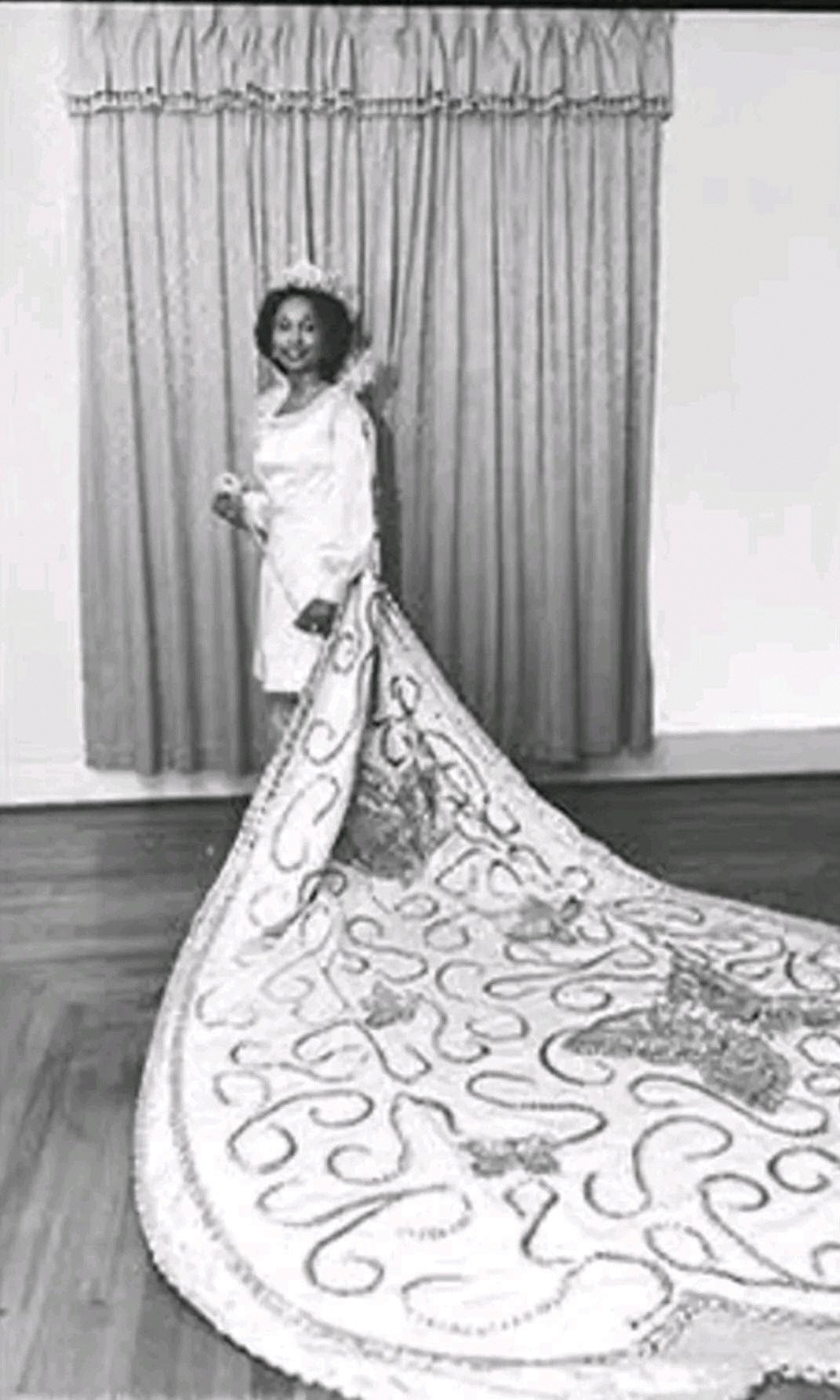
That awareness echoes MAMGA’s earliest intent. From its first parade in 1939 to its inaugural Royal Court in 1940 — when Alex Herman was crowned King and Aliene Jenkins Howard became Queen — the association positioned celebration alongside uplift. Over the decades, its courts have included prominent Mobilians, national leaders and cultural icons, including baseball legend Henry “Hank” Aaron as Grand Marshal and former U.S. Secretary of Labor Alexis Herman as Queen. The last two brothers to reign were King William Burks III, (1987) and King Fredrick N Burks (1992).
Yet within the Patrick-Jenkins Family, the story begins closer to home. “Our grandmother started this for us,” Terrell says, a twinkle of fond remembrance in his eyes. “She took us to parades. She taught us the pageantry. She made sure we understood what it meant.” That legacy runs straight through their mother, Connecyt Patrick-Jenkins, who has watched both of her sons navigate the preparation, pressure and public expectation.
“It’s exciting,” she says. “But it’s overwhelming too. Leadership changes how people see you. You’re always under the microscope.” She pauses. “In order for us to do this, to do it right, you have to have God in your life. He makes the impossible possible.”
Faith, family and service form a familiar triad in Black Carnival tradition, where Mardi Gras unfolds less like spectacle and more like reunion. Along Davis Avenue and neighborhood routes, grills smoke, children perch on shoulders, elders wave from folding chairs. It’s joy with roots. It’s everything Mardi Gras was meant to be.
“For us, Carnival puts family first,” Terrell says. “That’s what makes it different.”
That difference is also why MAMGA’s impact often extends quietly beyond the parade route. Scholarships. Mentorships. College funds. Business networks. Men who serve not just as Kings, but as examples. Not just as parade leaders, but as pillars in the community. This is the very heart of MAMGA.

“Jewels are often kept silent,” Terrell notes. “We don’t always seek the spotlight. The work reaches further than publicity; it reaches much further than Mobile. We have students who come back often to serve. We don’t seek the recognition, but we do want to make sure we’re cultivating leaders and that our students will come back to Mobile to serve. We don’t want them going off elsewhere. We want them to stay here and be successful.”
BJ sees that reach clearly now.
“When my brother was King, I didn’t fully understand it,” he admits. “I was younger. I was an athlete. But watching where it took him and how it matured him, that changed my perspective. I plan on starting my own family one day and I would like for my kids to see the legacy and traditions. I wouldn’t push it on them early, but I do want them to see it.”
Now, standing at the threshold of his own reign, BJ also hopes young people see something familiar when they look at him.
“I hope they see themselves,” he says. “Not me. The crown on their own head.”
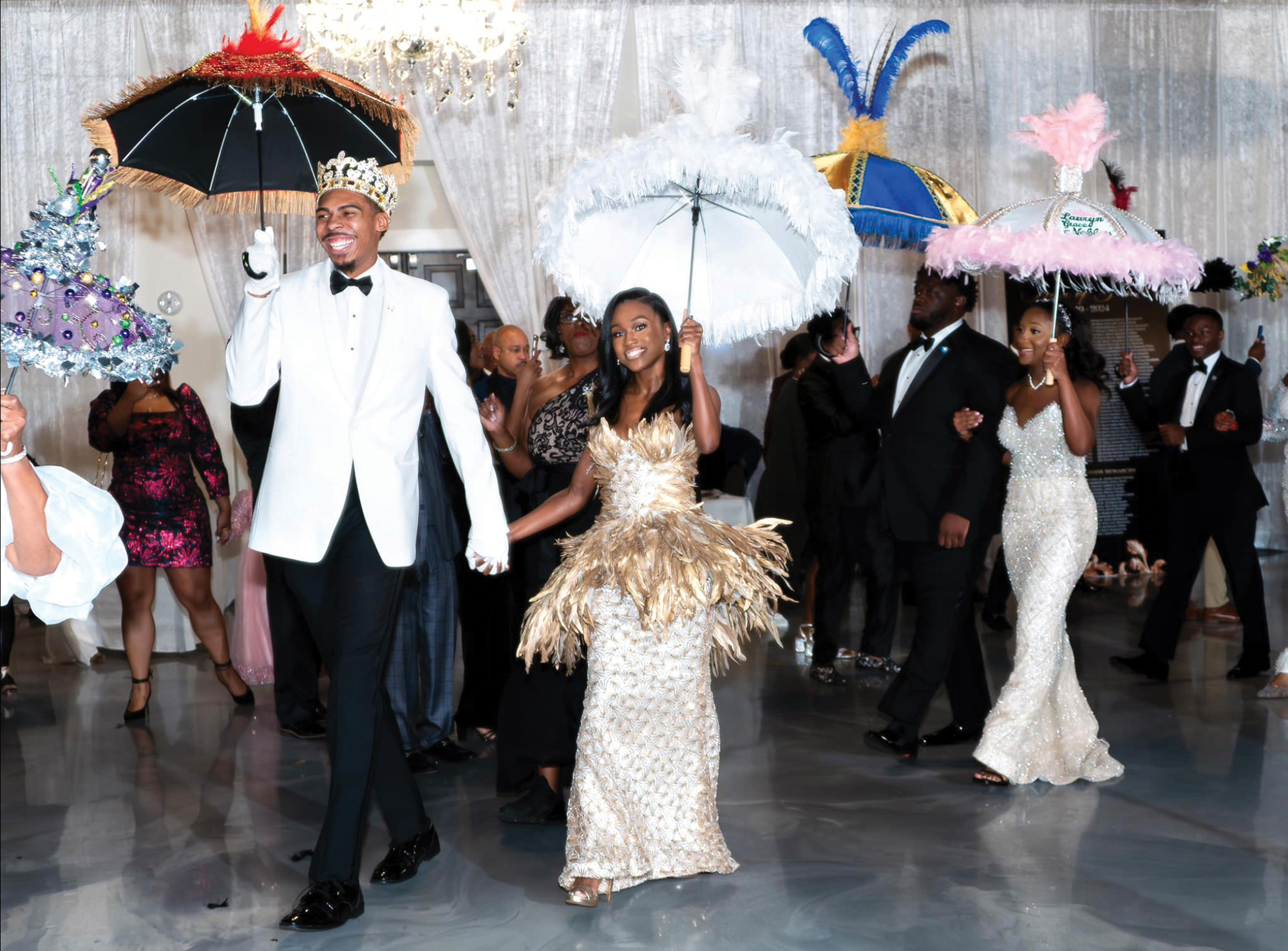
That hope mirrors the vision of pioneers like Mrs. Frederica Evans, an educator, civic leader and chairperson of MAMGA’s Auxiliary Ladies who helped shape the organization’s early structure and is still honored as the “Mother of the Colored Carnival” to this day. It’s a reminder that legacy isn’t loud. It’s consistent.
“There’s power in number,” Terrell says. “Legacy doesn’t stop with one person.”
In Mobile, a city that feels like a pot of gumbo, layered and inseparable, this moment matters. Not just because crowns are rare, but because continuity is. And long after the beads are swept away and the floats roll back into storage, the lesson remains: some traditions don’t end when the parade does. They live on — in families, in service and in the quiet confidence of a crown passed hand to hand.