“Over the Bay” is one of the most distinctive and magical of local expressions. The descriptive conjures more than a place or destination. A state of mind as much as place, Over the Bay is comprised of multiple landscapes, informed by numerous bodies of water and shaped by centuries of history.
The Eastern Shore of Mobile Bay that the description references is worthy of such a seemingly simple yet still incredibly evocative moniker. While the residents of any established city of any pretense have their preferred summer vacation destinations, the Eastern Shore is unique among those watering holes that have long defined the American South. The landscape, architecture and traditions of Over the Bay have survived longer than many of its counterparts elsewhere.
As the scale and scope of change accelerate in the Mobile area, it is time to celebrate the look, feel and evolution of the traditional bay house, particularly those in present-day Point Clear. The heart and soul of the Over the Bay existence, these bastions of family, fun and meaning exemplify so much that is good of Gulf Coast life. The approach to, walk within and view from these remarkable ensembles continue to reflect the past and possess importance in the present.
As with so many treks (even those that are contained within the confines of a summer weekend), a sense of anticipation is the start of the experience of being Over the Bay. For generations, Mobilians have been making the journey from the Port City to the Eastern Shore. Changes in scene and pace generate excitement, especially when they are as familiar and beloved as the water. While the travails of travel can, at times, take away from the enjoyment, our local commutes are not that bad in terms of length, that is when compared to those for most summer retreats.
Imagine if access was still by way of the water itself. Before the completion of the Causeway and the Bayway — the former in 1926 and the latter in 1978 — the route Over the Bay was by boat. Private vessels and ferries conveyed Mobilians from wharves lining Mobile’s docks to wharves at principal communities, not to mention their own private establishments.
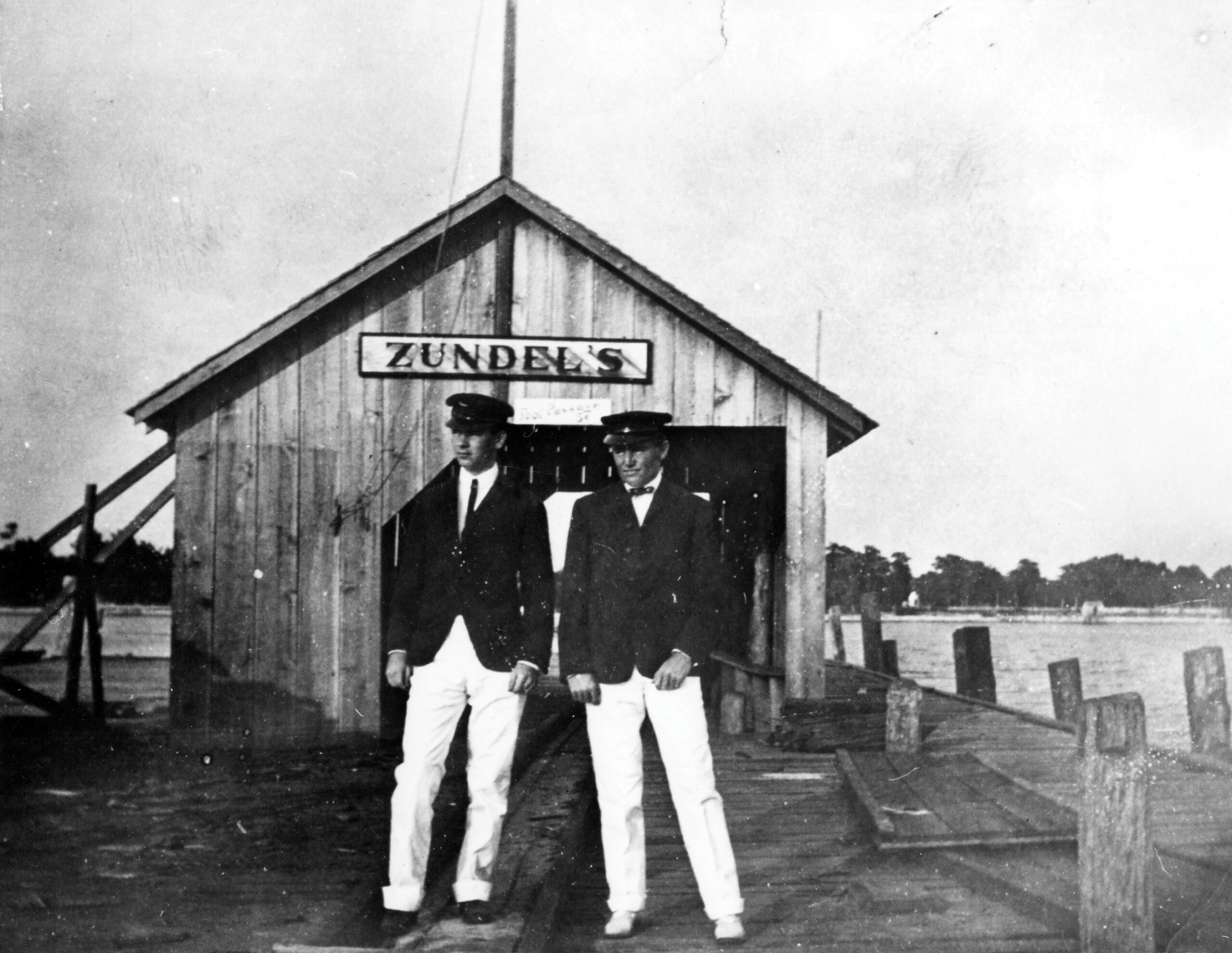
Even though you could go back and forth daily — and quite a few men did — when you went for a stay, it was for a spell. Some families stayed for months on end. Duration of stay, customs of the time and realities of life made for considerable difference in what was packed for a visit to the Eastern Shore. Count yourself lucky when you have only a duffle bag, hanging case and a cooler. Steamer trunks, crates, valises and all manners of luggage for families and retainers alike made packets ferrying families resemble Cleopatra’s barge in late spring and early fall. The family dog might be easy to corral for the journey — try other animals, including horses and cows! Yes, our present-day commutes are not nearly as bad as those that preceded them!
The multi-sensory experience of arriving by water must have been exhilarating. The sight rivals the return view, after all. Bay houses dominate the view. Like white sentinels lining the shore, these proud piles still punctuate the shoreline. For residents both then and now, the destination was in sight, as well in mind and heart. Framed and sheltered by trees and surrounded by plantings, Bay houses face the Bay for reasons more important than approach. The salubrious breezes from the Bay and the less dense landscape as a whole were the motivation for the escape. Southern urban centers in the days before vaccines and air-conditioning were furnaces, and with mosquitos the size of hummingbirds. To be honest, they are still hotter than the hinges of Hades in a heatwave in the present! Being Over the Bay was an escape from the inconveniences of life and, in its early years, the preservation of life itself. Fevers and epics ravaged communities on an annual basis. Healthy places of refuge were needed.
Bay houses are now reached by road. Most Bay residences thus have two fronts — Bay and land. Changing transportation patterns prompted the adoption of these dual orientations. Progress by way of the land approach is none too shabby. Scenic 98 remains picturesque perfection incarnate. Massive trees, lush plantings and fence row after fence row make for vistas that are equally as refreshing as the older approach by water. Familiar names inform property signs just as they have in history books, social accounts and business dealings. No other Southern resort community can rival the continuity of people to place as Point Clear.
The water and land fronts and lawns differed vastly once. The former back lots off of Scenic 98 are considerably more formal today. Cows, chickens and other animals once resided on some of the expansive lots. A few cattle gaps remain between the entry to some properties as testaments to these former occupants. Stores existed over the Bay. Farmers in the close proximity and sellers offered the essentials and bounties of the seasons, but many families had their own livestock and grew their own produce. Animals require shelter as well. Chicken houses and cow sheds were far from uncommon. Stabling for horses was followed by housing for motorized vehicles. Lodgings for domestic staff occupied portions of these lots, as well. Kitchen buildings were freestanding or in a wing to prevent fires, isolate smells and reduce heat in relation to the main house.
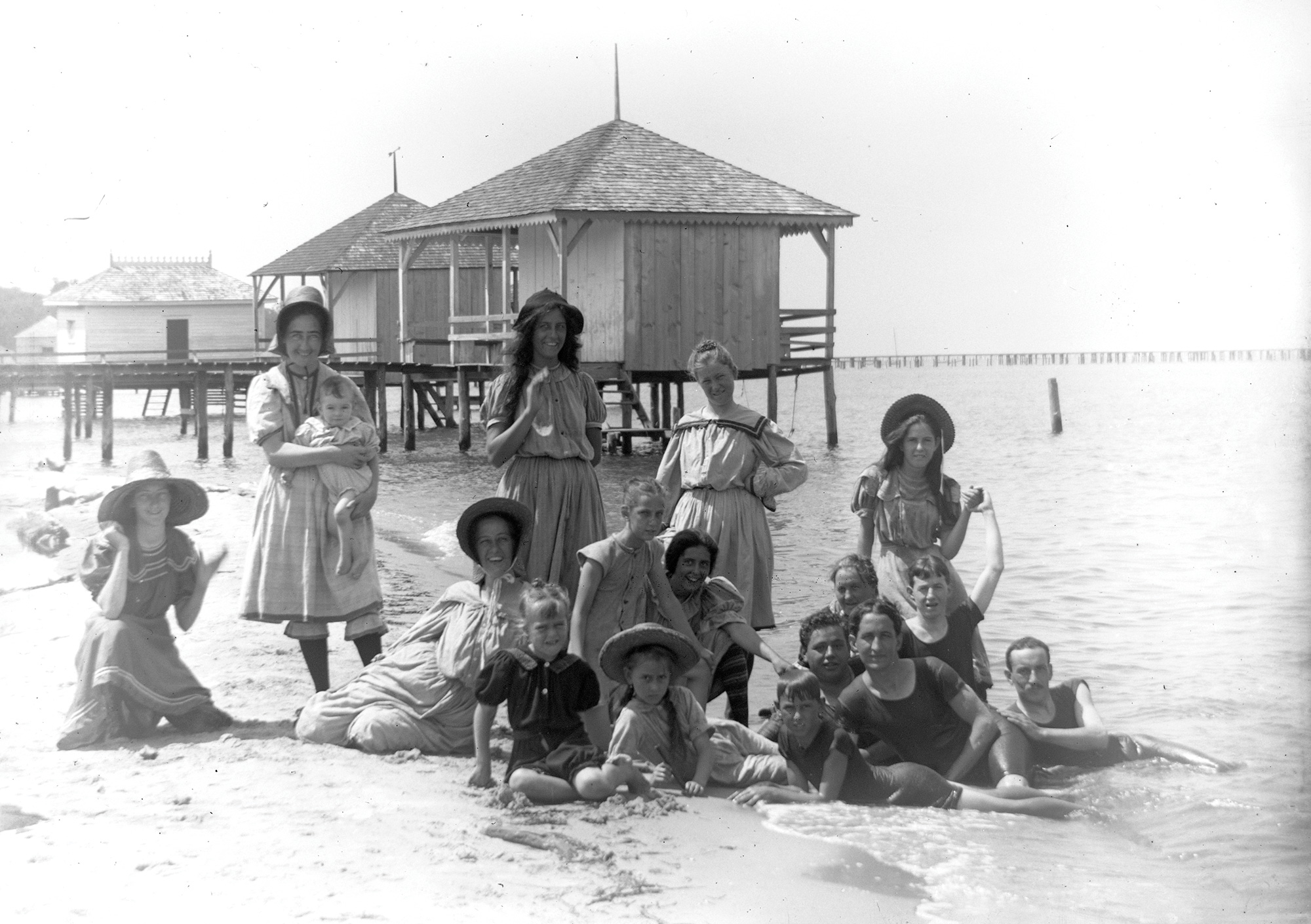
As previously mentioned, there were wharves and, in certain circumstances, changing houses that enlivened the Bay front. In that respect, it was party in the front and business in the back, with or without a mullet! Bad puns aside, like the Downtown residential compounds and villa estates of Midtown and Spring Hill, the Bay house was only one part of a larger property that operated on multiple levels.
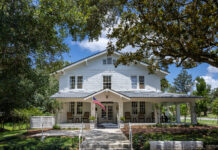
What of the Bay house itself? There is considerable variety among what were constructed as seasonal habitations. Nineteenth century and early 20th century dwellings shared certain characteristics of construction, material, planning and features. Wood frame buildings with clapboard siding, they were raised above the damp soil by way of brick piers. Walls were punctured by ample fenestration. Sash windows, jib windows and French doors opened onto galleries.
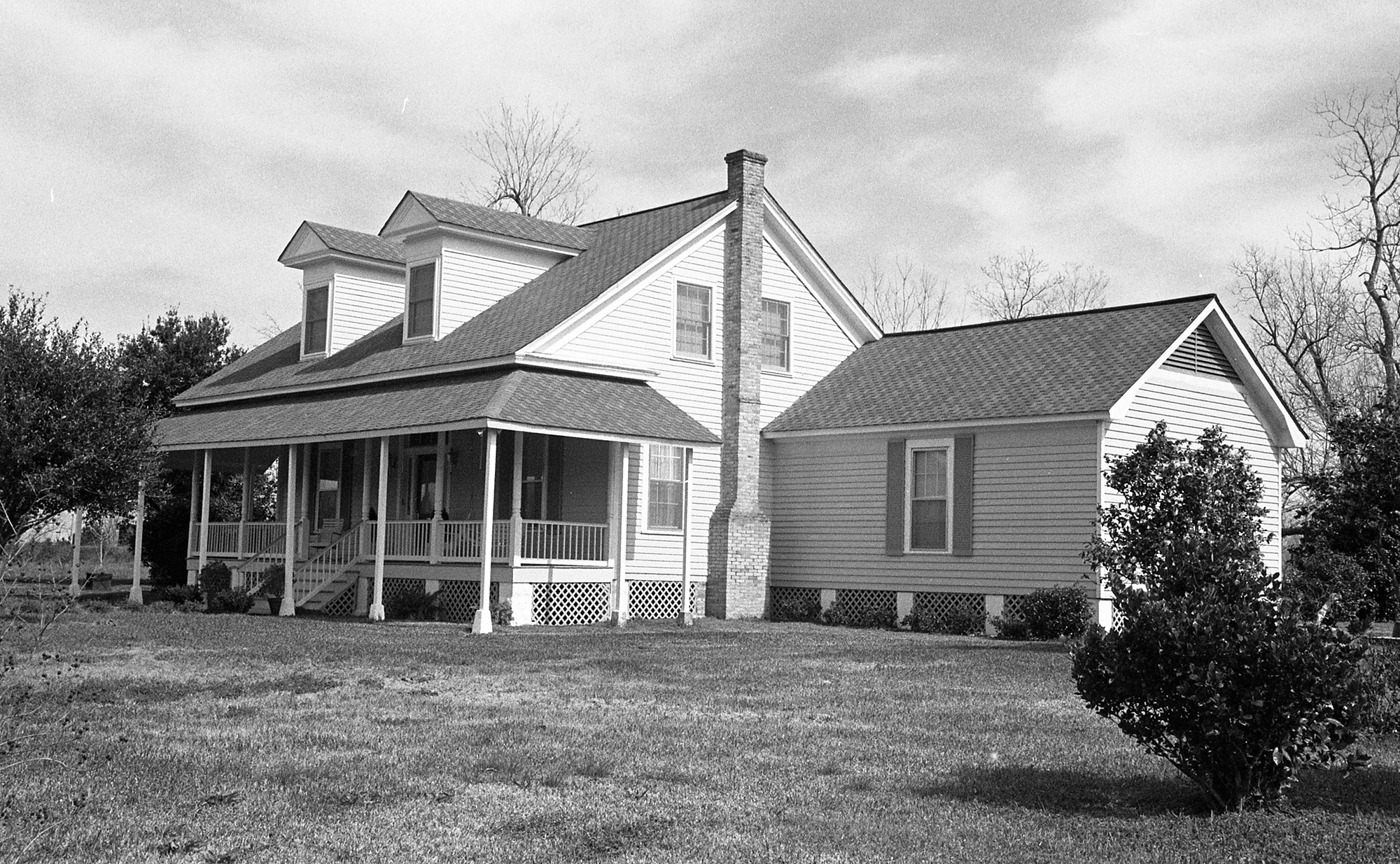
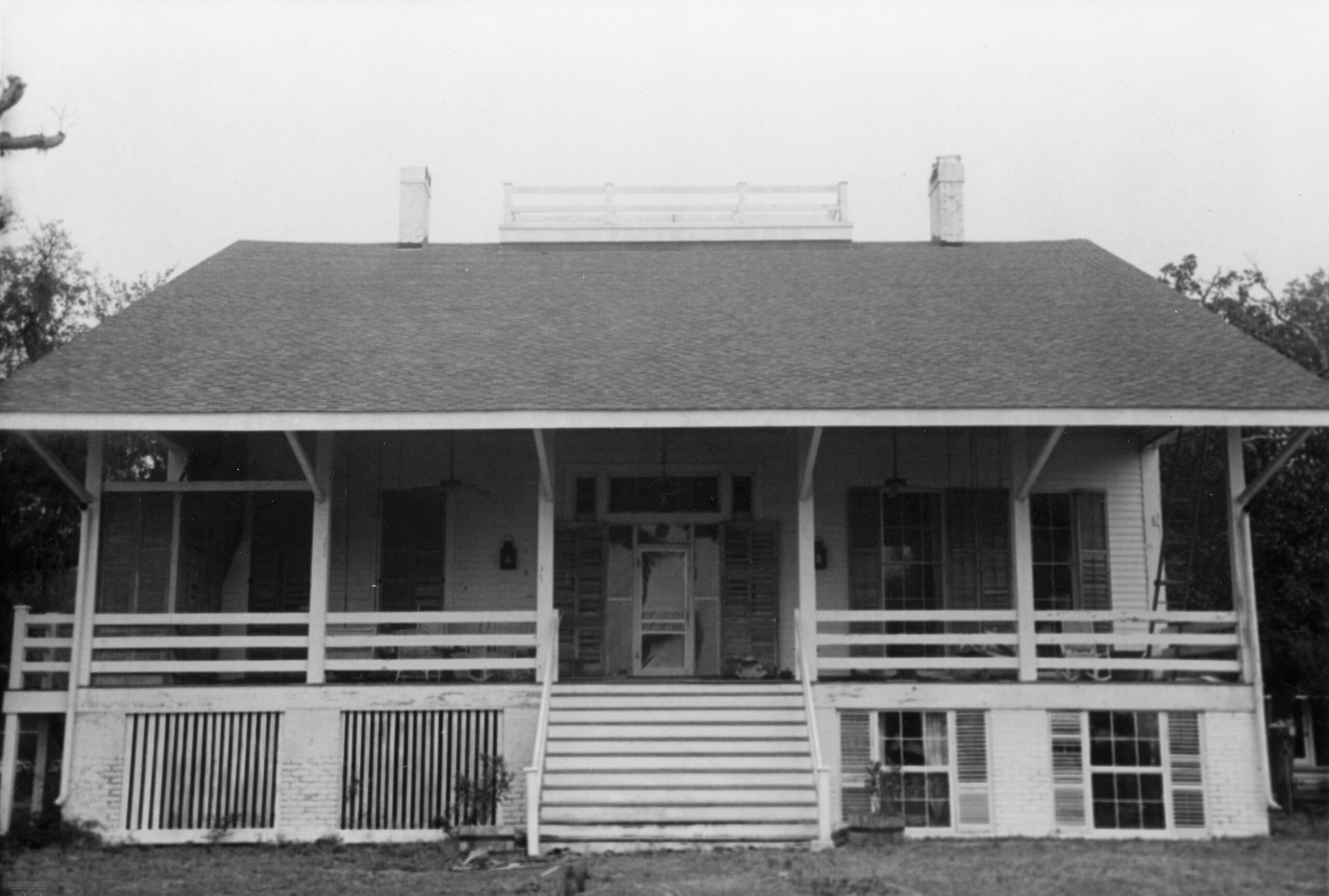
Umbrages of all types are the most important design element of a Bay house. They serve to shelter interior volumes, as well as functioning as outdoor living, dining and, in certain cases, sleeping spaces. Many of these porches feature wooden overhangs that result in further shade, along with additional protection from frequent showers. Quite a few galleries assume the form of rain porches, a construction in which supporting posts or columns are found not only on the outer edge of the porch deck, but also rise from independent foundation piers and support the roofs of overhanging eaves. Many galleries wrapped around multiple elevations. While most dwellings were single-story, there were examples of multiple floors. Gable or hipped roofs often had dormers for garret-level rooms or attics.
Exterior appearances were just part of the larger package. The volumes within are just as important. There was logic behind good lines and proportions. A successful dialogue between that which was without and that which was within was crucial. Traditional Bay house interiors are bathed in light from the abundance of fenestration. Porches shaded rooms fronting them, as was crucial for warm weather occupation. Exterior shutters flanking doors and windows could further temper light and temperatures. Ceiling heights were high because heat rises.
Most Bay house interiors had a central hall with a room or rooms to either side. Rooms with two outside exposures were prized. As families grew or as need arose, it was far from uncommon for galleries to be infilled. Side and rear additions are far from uncommon. Sometimes, after a gallery was enclosed, a new gallery was built off of it! The organic feel and responsive nature of Bay house development is part of their appeal. These houses were, after all, summer residences.
Evolutions aside, certain Bay house typologies can easily be discerned. These readily identifiable forms assumed all manner of stylistic expressions. Greek Revival, Aesthetics Movement and Arts and Crafts guises enliven without overwhelming the shared spirit and individual characteristics of dominant Bay house forms. One particular typology — the coastal cottage — constitutes the largest number of house types. The name alone captures something of the geography and attitude of early Bay houses. Wood frame construction, galleried Bay fronts, ample fenestration, rooms in garrets and center hall plans, they possess the characteristics of a traditional Bay house. Examples of this genre include the old Bestor House, Demouy-Cooper House and the Frye House.
These few typologies highlighted in this piece in no way embrace in full the entirety of Bay house architecture. Just as this piece explores Point Clear instead of the larger Over the Bay landscape, there is further variety in massings, plans and aesthetics that inform Bay house architecture.
The residential architecture of the Eastern Shore is far from simply a history that ends in the early 20th century. Architects and designers such as Thomas Cooper Van Antwerp, John Platt Roberts, Harry Inge Johnstone, Hays Towne, Dillon and Virginia March, Kenneth Rabb Giddens and Thomas McCown contributed notable examples during the mid-century period and the decades following it.
Over the past few decades, there has been a resurgence in traditional Bay house design. In the present, as the Eastern Shore of Mobile Bay becomes even more popular, preservation of the earliest essays in Bay house design should be a priority. Once these beautiful buildings and their resplendent cities are lost, they cannot be recreated.