Fifteen-year-old James Fleetwood Foster anticipated an exciting trip. And why not? For only seven bucks, he had a ticket for a seaborne jaunt from Mobile to Pensacola and back, complete with music, dancing, food and fun. In a short reminiscence decades later, he described the resulting experience, which turned out to be anything but a pleasure cruise.
On Saturday evening, August 30, 1856, Foster arrived at the Mobile wharf, already crowded by “fully 200 young bloods of the Gulf City,” dozens of young ladies and “a few old men taken along for counsel.” Pushing and laughing, these high-hearted excursionists filed on board the low-pressure steam packet Cuba, scheduled to depart at 8 p.m. After a short overnight run, she would arrive at the Pensacola Navy Yard the following morning, then depart Sunday night at 10 p.m. and arrive at Mobile early Monday morning. Foster, who had made the trip twice before, expected an easy “sea ride with a band of music in attendance, two nights of refreshing sleep on the bosom of the Gulf” and a pleasant day “with the good people of old Pensacola” spent “fishing, sailing or visiting the historic portions of the town.”
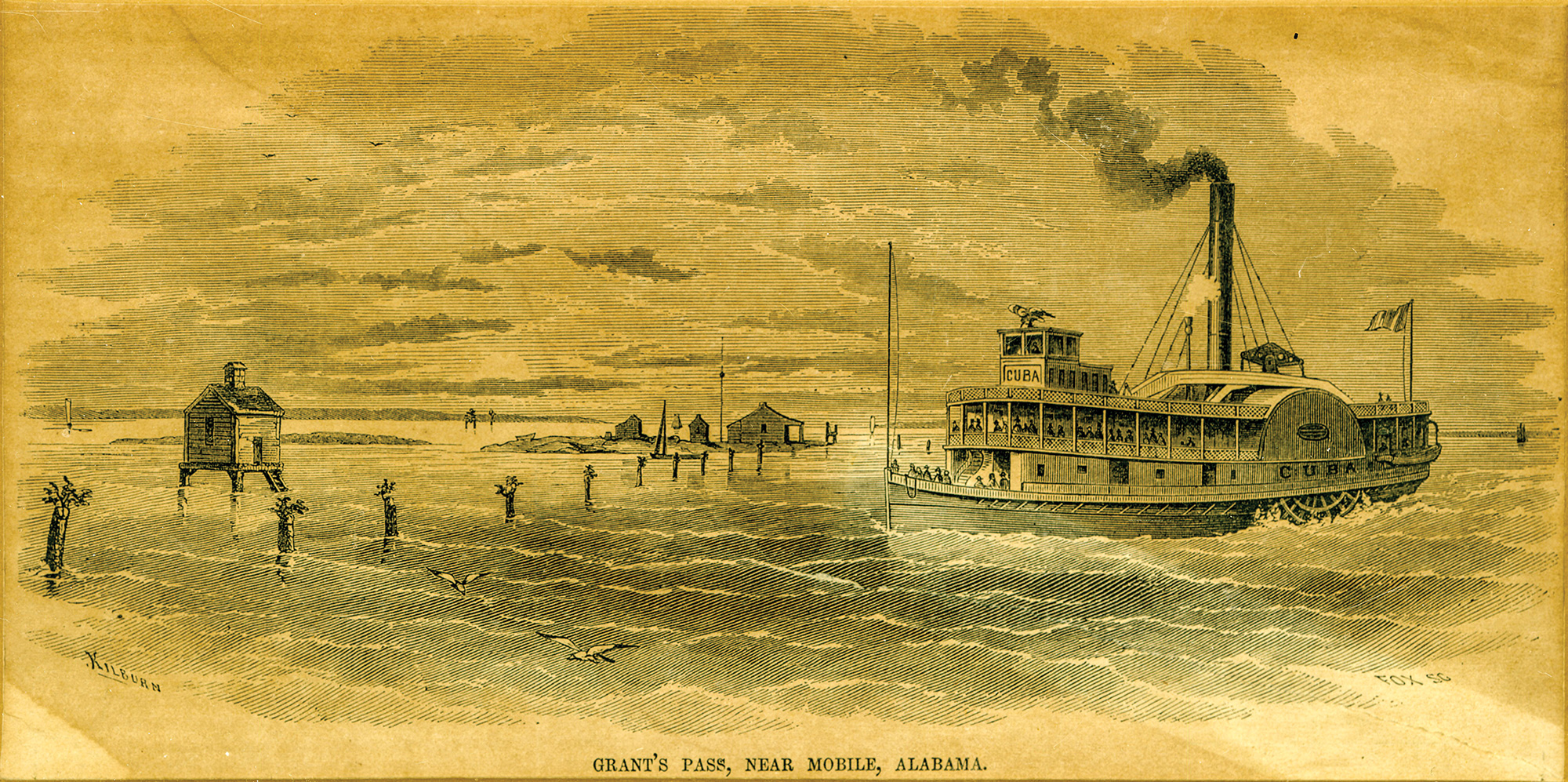
Only a year off the ways, the Cuba belonged to the New Orleans Daily Steamboat Line, which utilized her on the regular New Orleans-to-Mobile mail run. During the summer months, the Line booked her for weekend pleasure trips. She was a handsome 820-ton sidewheeler with main, boiler and hurricane decks, a pilot house and a single tall smokestack amidships. Though she was built for river and lake work, no one doubted her suitability on the gulf. Indeed, the Mobile Daily Register pronounced her “as staunch and safe a sea boat as ever sailed on blue water.” Likewise, her master and crew inspired the highest confidence and praise. Captain William A. Hern was an experienced hand, and Foster called her pilot, William A. Dearing, “a born sailor and one of the finest pilots of his day.”
As the passengers thronged the rails in a holiday mood, clouds steadily rolled up out of the southeast, and by dusk, Foster recalled, “vivid lightning began to play along the horizon.” Nonetheless, neither he nor his fellow passengers worried. “No one dreamed of danger,” he wrote. “The vessel was new and seaworthy and strong.” So down the Bay they went, the band playing merrily, music and laughter trailing over the water.
At Fort Morgan, conditions deteriorated. The wind whipped up, lightning flashed and great cracks of thunder interrupted the revelry. According to Foster, many of the passengers appeared “visibly alarmed,” and the captain advised everyone to take to their cabins because it was going to get rough. Rather than obey, Foster sheepishly recalled, the passengers “began making suggestions and criticizing the master and his crew.” But then the wind increased, great waves rocked the vessel and blowing spray made the rails untenable. “The clouds seemed to hug the angry waters,” Foster marveled. “The phosphorescence glowed like the furnaces of Hades, which seemed but awaiting our coming.”
Seasickness overtook all but the most seasoned sailors, while cries and prayers filled the air. Just then a loud racket and crash startled everyone. Someone yelled that the vessel’s chain box (a massive chest on wheels containing heavy iron weights used as a counterbalance to keep the vessel from listing to one side or the other) had broken from its fastening, careened across the deck, smashed through the rail and plummeted into the channel. Even more terrifying, a large bull — tied in the forecastle for delivery to a Pensacola cattleman — snapped its rope and smashed through the bulkhead before skidding the length of the deck and landing “next to the gentlemen’s saloon.” Then the hog chains yanked loose from their fastenings. These iron rods crisscrossed overhead between square posts that stood along the length of the vessel like masts. They helped keep the hull in tension, and without them, the vessel risked hogging or sagging in the middle and breaking in half.
The frightened passengers cowered in their life preservers, though Foster doubted these would do any good in “those lashing waters.” To make matters worse, the vessel’s lights dimmed, and the captain and crew were absent, too busy managing the boat to offer reassurance. Fortunately, Captain Hearn proved equal to the moment; when he sensed a lull in the wind, he ordered the boat to come about. She caught the swell at just the right moment, wallowing briefly and then safely making the turn, engine laboring loudly and sidewheels chopping the black water. “The run back was not an enjoyable one,” Foster admitted, “but wonderfully pleasing when compared with the one that faced a 50-mile hurricane.” Safely back in Mobile, the woozy passengers told their sea story and swore that, in future, they would eschew Sabbath-breaking for churchgoing. Hearn made light of the damage, though Foster noted the vessel “was for many days in the hands of the carpenters.”
In fact, the gale was severe. Old salts declared it the worst such blow in 30 years. The Mobile Daily Advertiser reported Navy Cove over-washed by gulf water and a cotton ship grounded in the lower Bay. The paper opined that had the Cuba “not been judiciously brought back by Captain Hearn,” none would have survived. Foster, by his own admission a rowdy youth, lived an eventful life thereafter. He served four years under Robert E. Lee in Virginia, returned home, married, became a probate judge and newspaper editor in Wilcox County. He died aged 70 in Birmingham, far from Mobile Bay.
John S. Sledge is maritime historian-in-residence at the National Maritime Museum of the Gulf.