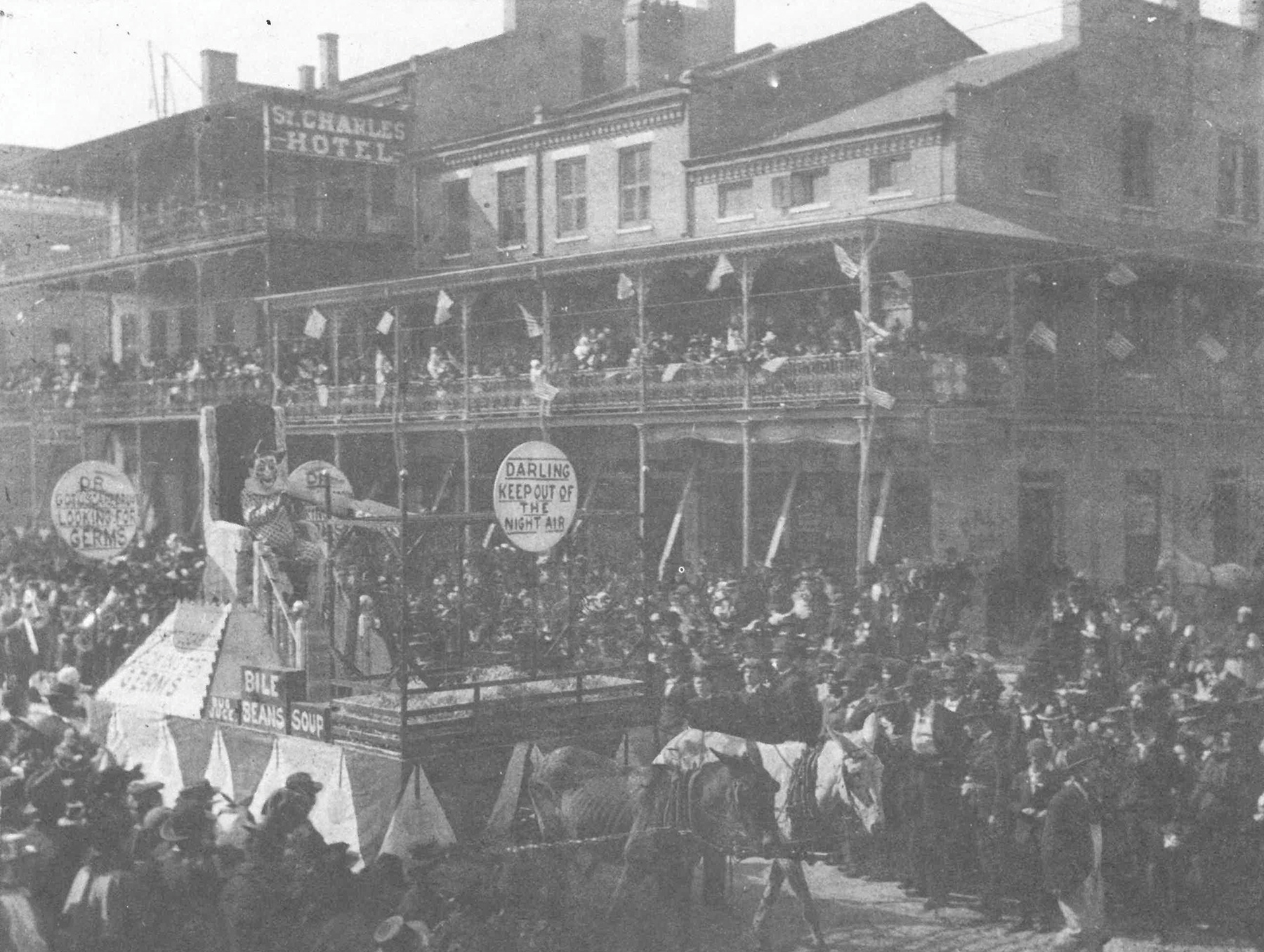
“In all the years of day parades, devoted to absurdity pure and simple, nothing funnier has ever been seen than the burlesque pageant of Doctor Cutter’s Wildest Western Show originated and carried out to exemplify the untamable and unquenchable vim of Mobile flat marksmanship.”
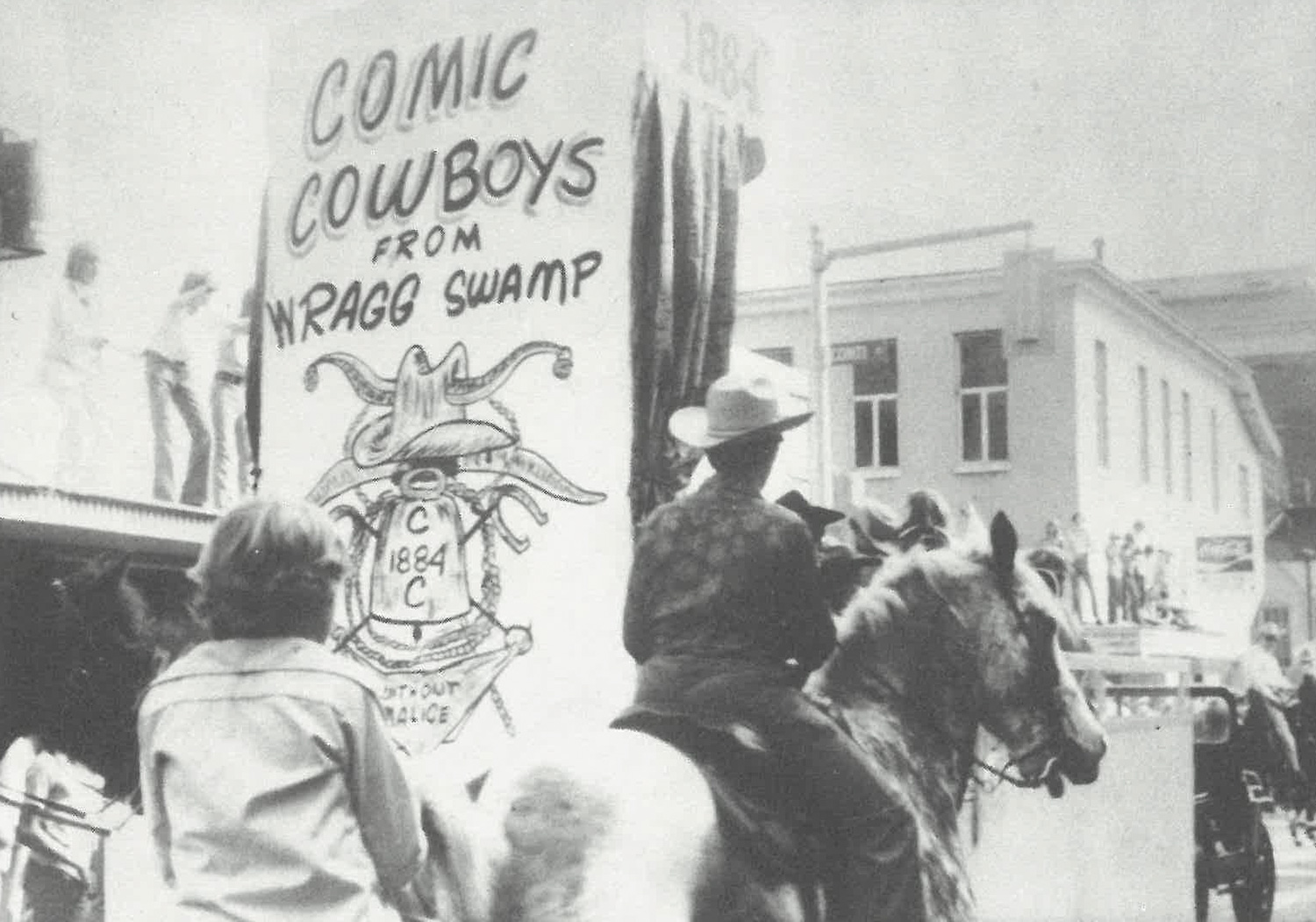
The Daily Register so described the inaugural parade of the Comic Cowboys in 1884 — an overwhelming success. In the year leading up to the parade, a young Mobilian named Dave Levi awoke from a deep sleep, jumped up and right away began to plan a parade for all, something different from the elite affairs hosted by the few Mardi Gras organizations of the time. He wanted to use humor, wit and satire to draw attention to the issues of the day in the hopes to both entertain and leave the citizens thinking.
Samuel Eichold, a devoted Comic Cowboys historian, in a book marking the 100th anniversary of the mystic society, wrote, “With scant funds cajoled from a few friends, Dave organized the first irreverent parade with a group of similarly motivated Mobilians, and proclaimed the birth of a different kind of Mardi Gras hoopla.”
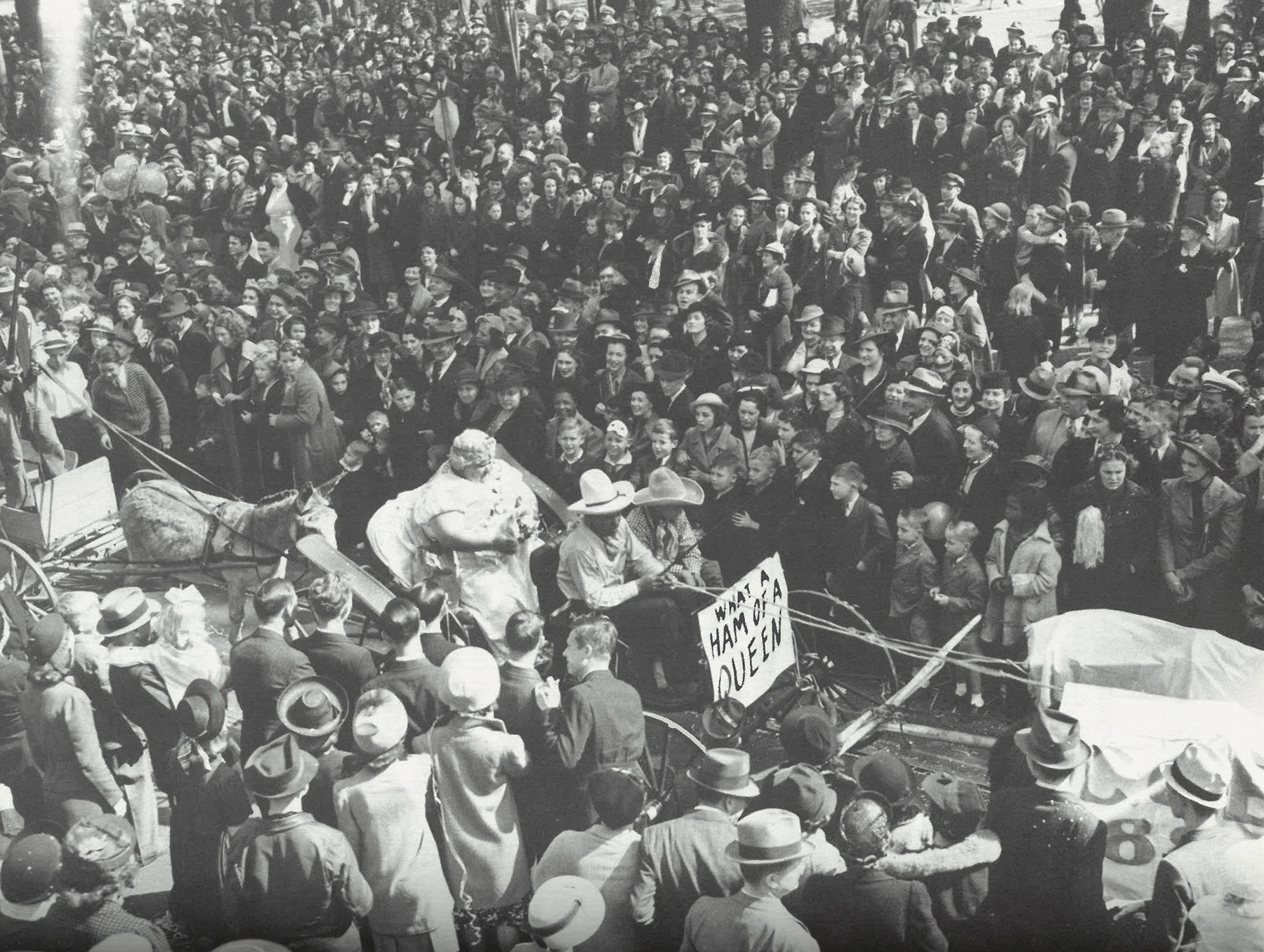
RIGHT “What a Ham of a Queen” precedes the Cowboy dressed in drag as the organization’s leading lady in 1938 as photographed at Bienville Square from the Cawthon Hotel balcony.
History tells that the Comic Cowboys emerge each Carnival season from their den in Wragg Swamp, an area which was later filled in to construct Springdale Plaza and Bel Air Mall. “Out of this miasma,” Eichold writes, “has erupted the Copeland Gang, 12-foot alligators, skunks, big brown bears and a varied assortment of flying creatures.” And so, too, come the Cowboys.
Levi built floats around a theme each year, painting signs to illustrate points and provide punchlines. Citizens flocked to the parade route on Fat Tuesday afternoon to see mule-drawn wagons pulling elaborate scenes, all lead by an emblem float with a bull’s head, the Boss Cowboy on an untamed bronco and a crowd of cowboys parading on horseback. The Excelsior Band usually lead the march.
The parades had themes such as Dr. Cutter’s Wildest Western Show (1884), A Bottle of Mixed Pickles (1889), Nero & Family, From Rome, at Mobile (1892), Bum-Ta-Ra-Chest-Nut (1904) and Toothpicks of the Day (1926).
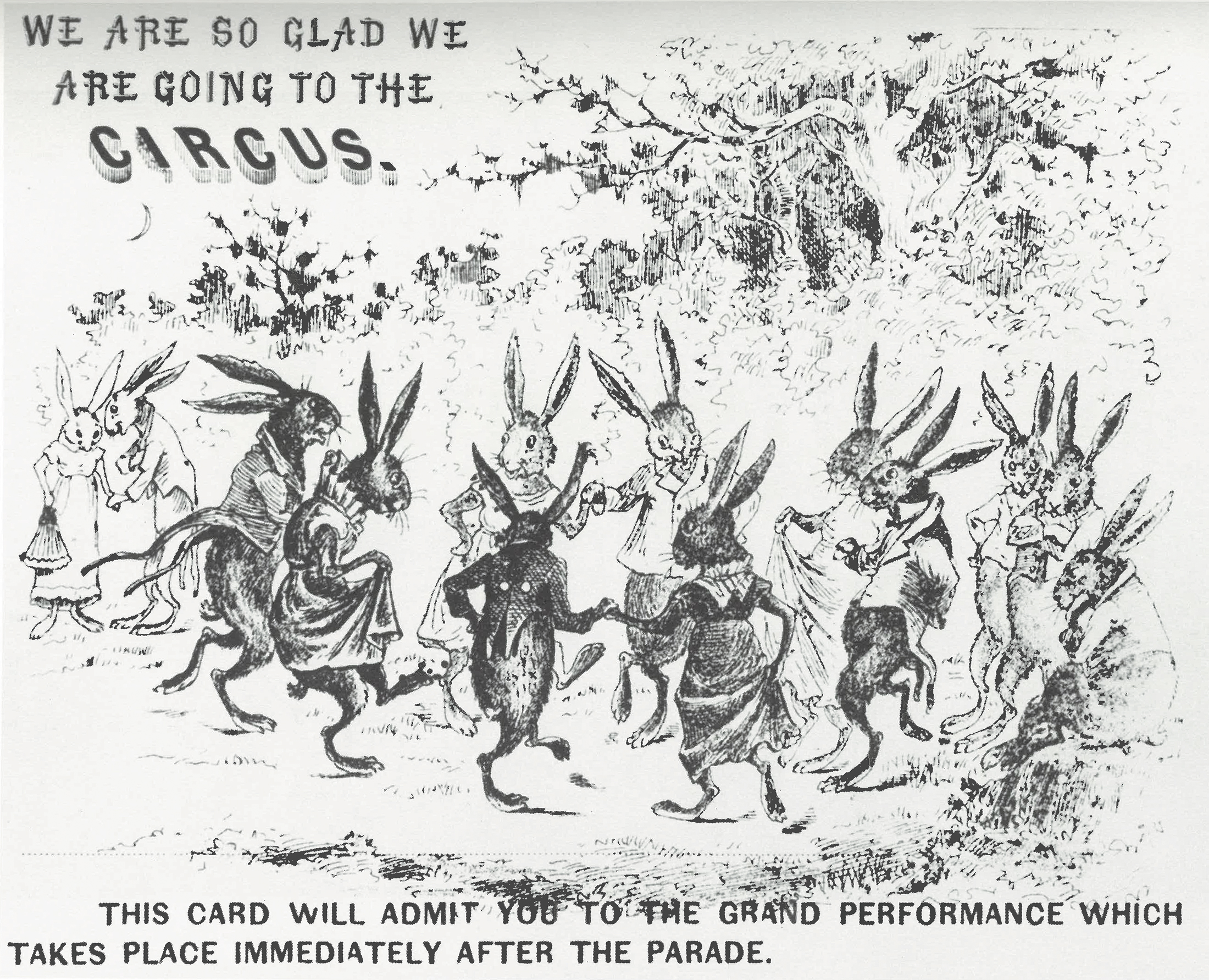
For the second-anniversary parade in 1885, the theme was “Adam 4-Ma’s Great Moral Circus and Menagerie,” possibly inspired by Adam Forepaugh’s circus which had just recently come through town. The Daily Register described throngs of visitors in the city of Mobile, having arrived by train and steamboat by the hundreds. To introduce the circus parade, there was a gaily decorated fire engine, an artillery company with brass music and the Mobile Rifles and their Regimental Band.
Following the parade, the Cowboys invited the general public to a dance in Bienville Square. “There was said to be ample room for all, preparations were most adequate and the society had erected a sign: ‘MAIN ENTRANCE TO THE COWBOY’S DANCE… WUP YOUR FEET, AH, THERE…’ on a carpet stretched from the street to the gate.” According to the CCB history, “The dance was a success…it never took place!” Silliness, irony and sarcasm abounded, and the crowds couldn’t get enough.
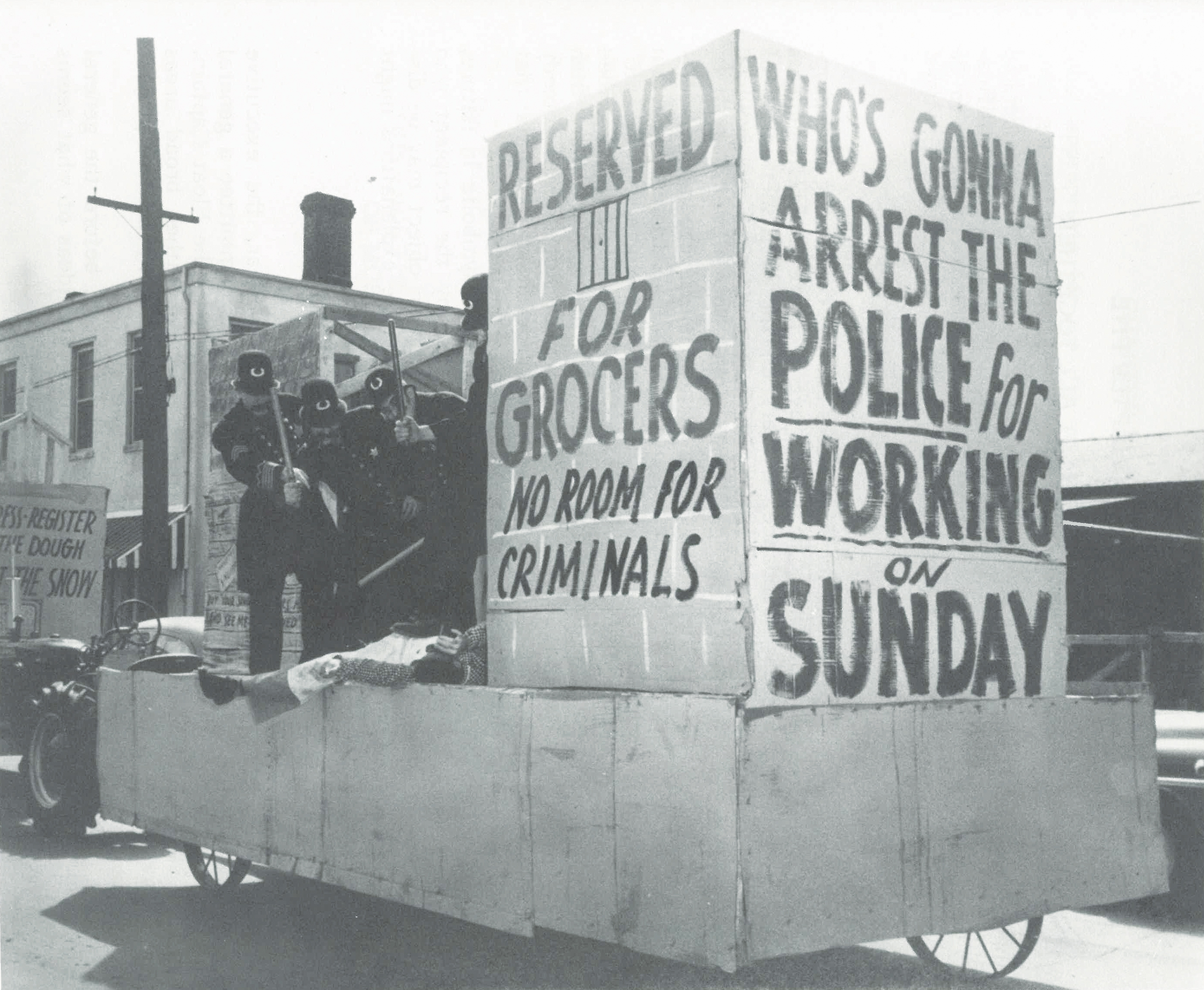
RIGHT A 1953 float satirizing the laws against selling alcohol on Sundays.
That year, the Comic Cowboys were said “to provide laughter as that glorious medicine to drive away clouds of despondency. Troubles seemed to be surmounted by the rainbow of merriment,” all thanks to Dave Levi.
While Levi was described as a modest man in his obituary, a clerk by trade, he was also an entertainer who graced every stage in the Port City and even traveled with a minstrel group across the South. The paper wrote upon his death: “No other contributed so largely and so long to the entertainment of his fellows, and few persons have won so sincerely the affection of the public as he. In disposition he was cheerful, thoughtful of others and quick to see and seize upon the follies of the day to make them the target of his parade pictures. In his way, he was unique. His place will be difficult to fill.”
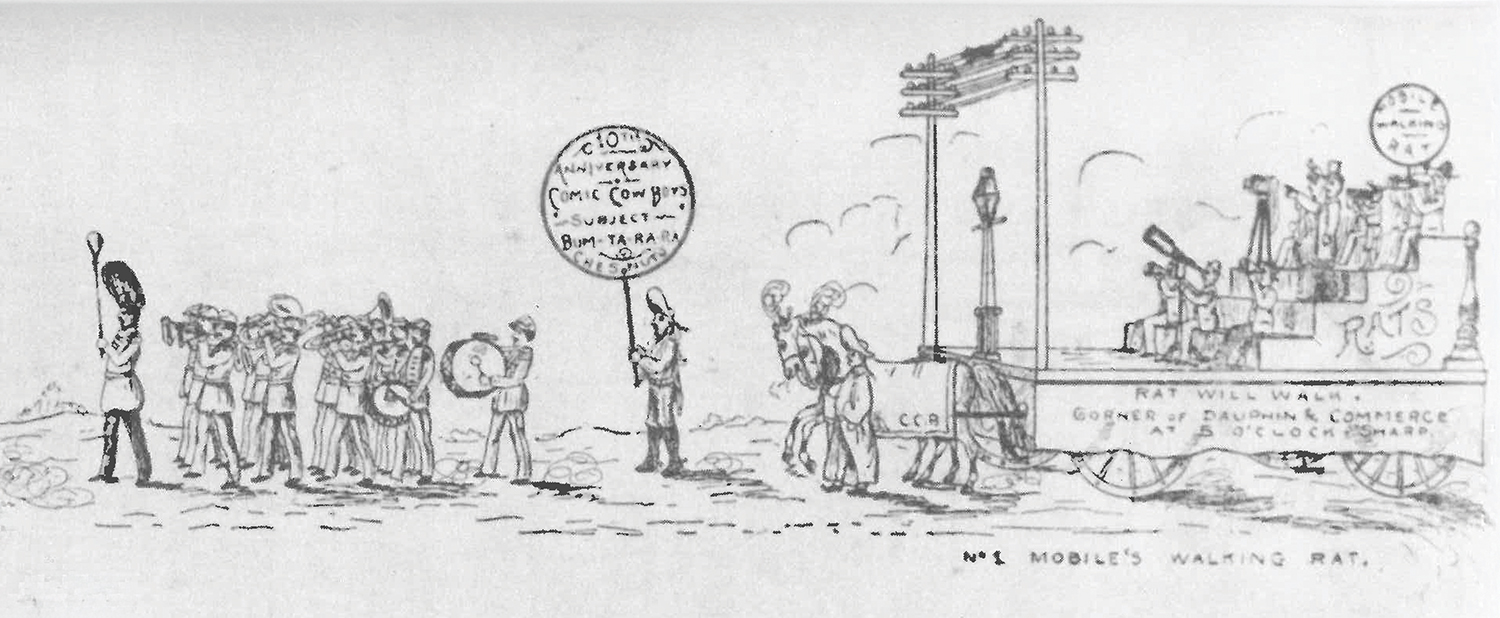
The Next Chapter
After the death of Levi, Ike Felis and friends continued the tradition of the annual parade of floats based upon a theme, lampooning and calling attention to everything from national politicians to the Port of Mobile, local cotton mills to the fledgling Mobile Carnival Association and its Kings, even to yellow fever outbreaks and the way the city was dealing with them. While the parade began to fade a bit in the 1940s, it found new energy and new leadership in Donald Smith.
In the offices of the Mobile Area Chamber of Commerce, Smith (the son of Smith’s Bakery founder Gordon Smith) assembled a group to reorganize and incorporate the Comic Cowboys. Also that year, Alfred Staples and the Mobile Mardi Gras Association donated $1,000 to finance the purchase of the undercarriages for 10 floats from Sears and Roebuck. “Ingenuity,” writes Eichold, “combined with clever management by the Chief Cowpoke and his cohorts, put together the olla podrida of nonsense that Dave Levi initiated 76 years earlier.”
Smith along with Joe Baker, J. Roy Smith, Wythe Whiting, Les Davis and Albert Reynolds gained the support of another 100 Mobilians, and together, “they put the second wind into the deflated bag of wind that had been the Comic Cowboys.”
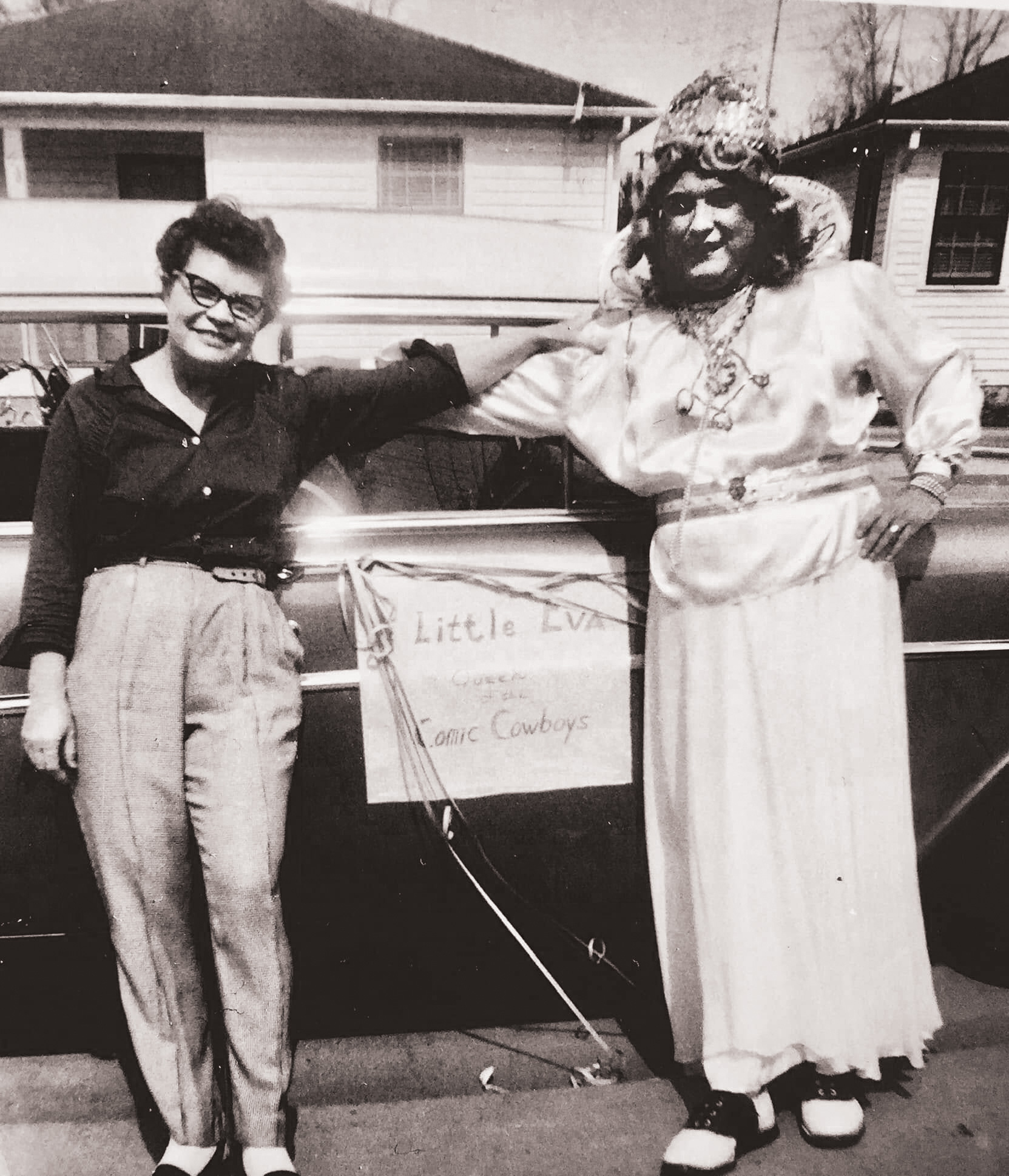
The themes of the parades were no more, the slogan “Without Malice” was adopted and a Queen was introduced. The Queens were quite unlike those seen leading other balls and parades or kneeling beneath a scepter at the Coronation.
“Ike still laughs when he describes hoisting Charles Blanchard onto the Queen’s float, for it was a burden of some 300 pounds!” writes Eichold. “Each Mardi Gras, in the regalia of woman’s attire, Charles Blanchard was transformed into a Queen. On a throne, the Queen rode with all pride of poundage and plumage! What brought an end to Ike’s regime was probably exhaustion of physical, financial and emotional resources.” In all its many years, the Comic Cowboys have had only seven other Chiefs besides Levi — a testament to the dedication of its members.
While a historian might seek to explore the floats, themes and jokes of years gone by, it is perhaps a futile endeavor. From year to year, newspaper to newspaper, the stories change and the leaders are replaced. The jokes don’t hold up, and they aren’t meant to. While the early floats don’t resonate with a modern audience, the Comic Cowboys today continue Levi’s mission of entertainment and mirth with a purpose. And yet, it is remarkable how little has changed.
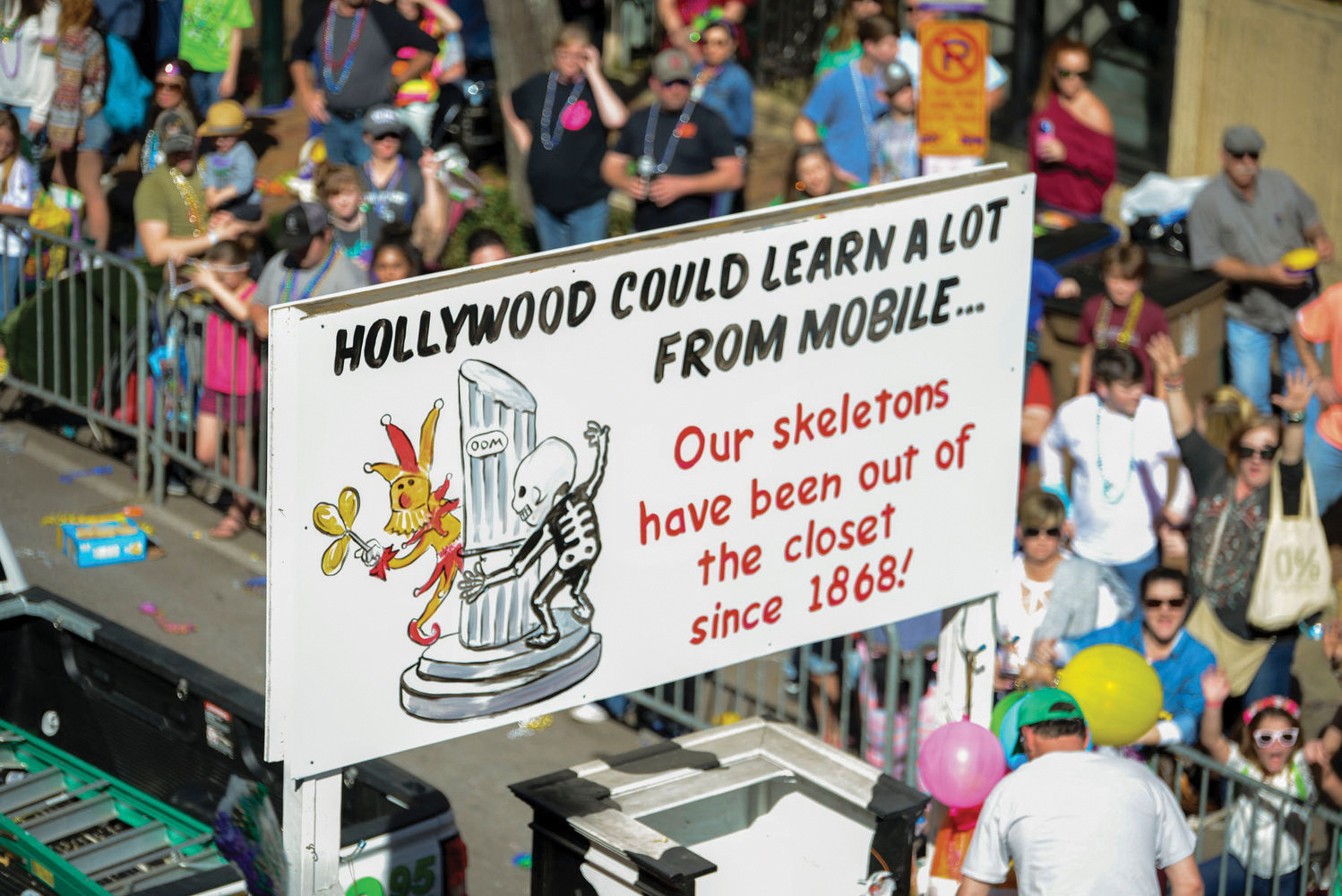
LEFT Poking fun of the city’s so-called elites has been a trademark of the Comic Cowboys from the start, as shown by this 2018 float.
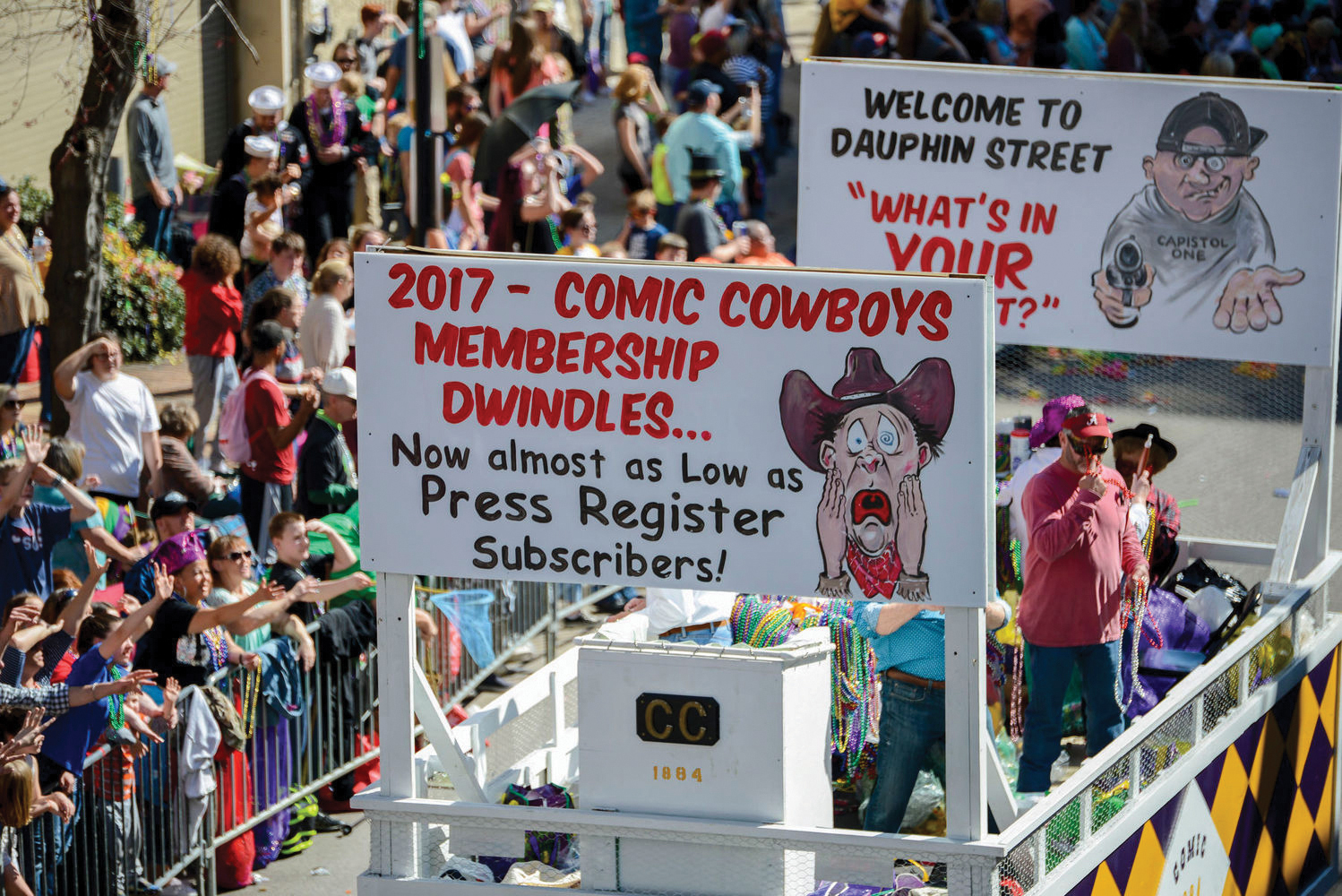
RIGHT A 2018 sign satirizing the demise of the Mobile Press Register.
In both the late 1800s and now, there are jokes about bridges being built and scandals with the police. There is commentary on bureaucracy and much poking fun of the elites. The citizens of the Port City either laugh at the joke, or ask their neighbor what happened in the news that they must have missed. And thus, both missions of the Comic Cowboys have been accomplished, hopefully “Without Malice.”